INTERVIEW: Kate Webster of Deer Shed Festival

Last year I attended Deer Shed Festival for the first time, and I promised myself it would the be the first time of many as it was such a glorious weekend! Having not been to a festival for a few years, I was keen to find one that was as lovely as possible, and suited my needs of being perhaps a little older than the average festival-goer without missing out on any of the best new music. I wanted a festival that was inclusive, chilled-out, family friendly, and of course hosting plenty of amazing female and non-binary bands and artists… And Deer Shed more than delivered on all fronts.

Highlighting a real family-friendly focus, whilst hosting an incredible range of exciting new artists, the North Yorkshire based Deer Shed perfectly filled the festival-shaped-void I’d been feeling, and – with highlights from last year including Self Esteem, CMAT, Straight Girl, Nadine Shah and Denise Chaila – I cannot wait to return in a couple of weeks.

We caught up with festival director Kate Webster to talk more about Deer Shed’s roots, its ethos and inclusive line-up, some of the most special Deer Shed moments of years gone by, and more… Have a read below, and have a listen to our special Deer Shed 2023 playlist, featuring some of our personal faves who’ll be playing at the festival this year, at the bottom of this feature!

Hi Kate! 2023 will be Deer Shed’s 13th year – hopefully lucky for some! Can you tell us a bit about what Deer Shed is all about, and how it all started out?
Deer Shed Festival is a boutique music, arts & science festival based in North Yorkshire parkland, aimed at families who don’t want a dumbed down experience just because you have kids in tow.

What strikes me about Deer Shed and makes it stand out against other festivals at the moment is the good gender balance of the line up – was there an intentional and specific decision to do this, or does it just naturally pan out that way?  
I booked the festival up until our 11th year and initially it happened unconsciously just because of the music I like. After a while, we decided it make it a policy of the festival that our gender split should be 50/50 and also at least one of the headlines needs to be female and/or non binary. It’s been great – because of our size we have been able to give some deserving acts the chance of a festival headline. Can you believe that we gave Goldfrapp they’re first festival headline in 2018?! I find that bonkers!

Over the last 12 years, you’ve hosted some amazing bands and artists including Self Esteem, Nadine Shah, CMAT, Kae Tempest, Anna Calvi, Big Joanie, Ezra Furman, The Go Team! and Honeyblood, but has there been a particular set that stands out for you as a personal highlight over the years?
Kae Tempest for sure. It was 2017, they were promoting Let Them Eat Chaos which is a phenomenal album, and it was also their first festival headline. The actual performance was extra special to me and many of the audience that evening.  The skies darkened, the rain poured and in the distance, lightning flashed. It meant, for those who stayed (and a lot did), the whole experience was electrifying and so moving. I still get shivers now when I think about the power of that evening. It was like nature knew what the backdrop should be for that performance.
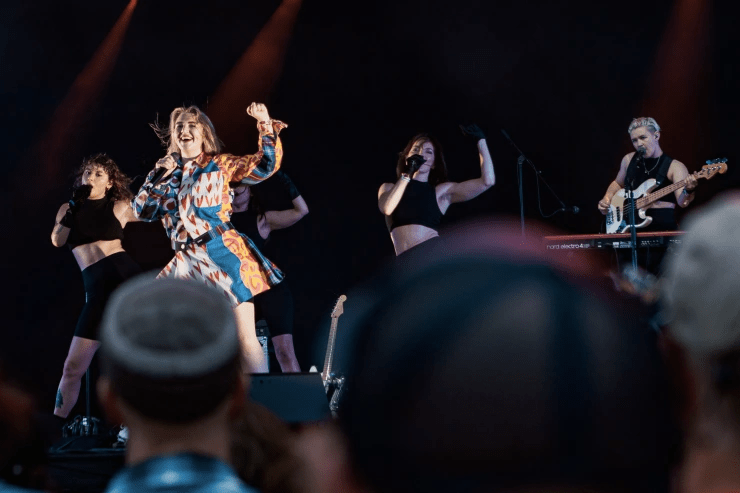

And this year you’ve got some GIHE faves playing (The Big Moon, Dream Wife, This Is The Kit, English Teacher, Sprints…). Curating such awesome line ups must be a lot of work – how do you normally go about it? Is it all based on bands/artists that have got in touch with you over the year? 
We’ve had a booker for the last couple of years – I think Covid meant the job had got harder and I needed a break. It was also a good time to get some fresh ears to help. However, as festival director, I still want input and I think next year we’ll bring it in house again. We generally start with a wish list and play fantasy festival which is great fun; the whole Deer Shed team are into music, so everyone chips in and has suggestions of who they have seen perform during the year or might have new music coming out. We talk to friends in the industry and agents, so see what’s going on. Practically speaking, we only start making offers in Autumn, so that’s the best time to contact us. We must get the headlines in place before moving down the bill which can take some time.

And for any upcoming bands/artists looking to apply for festivals next year, do you have any tips?
Start building a live following in your local venues. Practice to become a great performer and engage with your audience. A festival crowd is different to your own show – you have one song to win them over! Whilst a lot of artists get an online following and good streaming numbers, it doesn’t always translate to live.

There seems to be a definite focus on making the festival as family-friendly as possible, and when I was there last year it just had the nicest, most relaxed vibes I’ve ever experienced at a festival! What inspired the idea to do this, and stand out from other festivals in this way? 
When Oliver and I decided to give it a go, it wasn’t long after festivals like Latitude & Camp Bestival had started and there was no one doing anything similar in the north. I couldn’t see live music like I had done because of family commitments, and many events near by didn’t offer me the chance to see great music and have the kids entertained. So, Deer Shed was really built for me & my friends initially – music fans who happen to have kids. It turned out there were other people like me!

Do you feel much has changed over the last few years in the music industry’s treatment of new artists, particularly female and non-binary artists? 
I think there is more awareness of mental health and agents/managers are now more mindful over booking artists. I also hope the idea of booking a tokenistic female/non-binary act has come to an end… But I do still worry that some young female artists are led a certain way on how they present and what they wear. There seem to be some genres of music where I’m not convinced that a stylist/photographer/label didn’t have a brief to come back with a certain look.  

Finally, as we’re a new music focused site, are there any particular new bands or artists you’d recommend we check out?
I’m totally excited that we managed to book Grove this year. I know they’re not that new but their energy, style & music is infectious. So good live! I’ve not seen Pet Snake live yet, but I’m loving the Liverpool based artist – alt folk/indie at its best, just great songwriting.  

Massive thanks to Kate for answering our questions, and for organising such a stellar festival year on year! Deer Shed Festival 2023 is taking place from 28th – 30th July and headliners include The Delgados, The Comet Is Coming, The Big Moon and This Is The Kit – more information here.

Get ready for the festival by listening to our playlist of brilliant bands playing this year here:

Five Favourites: Sweeping Promises

Following their 2020 debut, Hunger For A Way Out, Kansas duo Lira Mondal and Caufield Schnug – aka Sweeping Promises – have now returned with a new album, Good Living Is Coming For You, is set for release tomorrow.

Taken from the album, latest single ‘Eraser’ showcases the band’s unique colossal energy and quirky, colourful soundscapes. Of the track, they explain that ‘Eraser’ is “a malevolent creep – an overly ambitious, shadowy force who bears an uncanny resemblance to you. She watches your every move, mirrors your motions, and ultimately uses your voice against you without you ever noticing what she’s done. She’s unchecked ambition, a paranoid girl Friday, an overriding impulse to reflect rather than project. She must be stopped at all costs.”

We think one of the best ways to get to know an artist is by asking what music inspires them. So, to celebrate the release of Good Living Is Coming For You, we caught up with Lira and Caufield to ask about the music that has inspired them the most. So, read about their five favourite albums, and make sure you check out the album, and watch the video for ‘Eraser‘ below! 

Caufield’s Picks:

Robert Ashley – Private Parts
One of the albums that has deeply marked my adult life! “A picnic of sorts.” Play this one if you think ambient suffers from a lack-of-personality problem. I will say I am intensely drawn to the second part, ‘The Backyard’, as the raga and Blue Gene Tyranny’s swirly soundscape lock into a groove, and Ashley’s midwestern observations bend abstractly into a kind of suburban noir. John Cheever, meet John Cage! The album’s sly and off-centre thought complex is punk to me. The low voice mix is an editorial red herring, directing the ear towards a narrative that is only ever elliptical and half-understood. The idea of cinema is as suggestive here as the idea of opera. Sumptuous intermedia!

Poison Girlfriend – Melting Moment (1992, re-press Sad Disco)
A new-to-me classic; a triphop phantasmagoria, envisioned by DJ digi-auteur nOrikO. I would recommend visiting the website, as this album’s milieu will be made clear. A first vinyl press arrives imminently via Japanese label Sad Disco (message to universe: the whole PGF catalogue should be pressed!). Anyway, this album is an icy piece of ambient house as well as a particularly form-pushing exemplar of early ’90s Japanese CD-R subculture. Brittle, dithered digital production, awesome spatialisation, surprising arrangements. I like nOrikO’s exploratory vocal delivery (English-speaking on this record), which is dispassionate yet intimate, with an air of danger. I read the characterology of her vocal as being like a femme fatale delivering a doomed-romantic message. In this album, feelings of love and breakdown pixelate into a shape auguring the early internet, a toxic desiring machine: enthralling, lonely, sophisticated.

Optic Sink – Glass Blocks (Feel It, 2023 – forthcoming)
Having left our jobs in 2021, Lira and I run a recording studio out of our vaulted-roof house in Kansas, which at times comes to resemble, for better or worse, an indie music b’n’b. In this capacity, we made the Optic Sink record so I’ve heard it, even though it’s not officially out yet. Perks of the trade, people! Can’t wait for this album to land on Feel It; Lira and I feel a twinge of pride, as we recall the darkened days of the snowstorm (coldwave manifest), hours of party-working in Lawrence, KS, menu-diving around the surrealistic Eventide H3000, on all sides a janky wall of analog synths! Our friends from Memphis, Ben, Keith, and Natalie comprise this band, electrified brainiacs all, and rocknroll expats, which is sympathetic. Travelling to a city near you, god willing!


Lira’s Picks:

Pozi – Smiling Pools (2023)
I was introduced to Pozi via their 176 EP in 2020, and I’ve been captivated ever since. Smiling Pools takes all the excellence of their previous releases and launches it into spectacular new heights with arrangements that are at once skeletal and dense, inviting and dangerous, haunted and hypnotic and hooky. I love how unfettered they sound, yet still so controlled: tightly coiled springs, ready to explode at the slightest provocation. One of the things I love about this band is the vocal interplay between Rosa Brook, Tom Jones, and Toby Burroughs (beautifully demonstrated in the unsettling call-and-response on ‘Through The Door’). ‘Failing’ and ’24 Deliveru’ get the repeat-button treatment a lot. One of the best albums of 2023, and also a really great album to bake a cake to late at night (speaking from experience).

Yukihiro Takahashi – What, Me Worry?
There are some albums I gravitate towards during certain seasons (Mask by Bauhaus in the bare-branched winter, Força Bruta by Jorge Ben for balmy summer evenings), but What, Me Worry? is perfect year-round, no matter the time or season. There’s a song for every moment; ‘It’s Gonna Work Out’ was made to soundtrack zipping around neon-lit highways on a warm July night; ‘All You’ve Got to Do’ is as bright and sparkly as a dewy spring morning. And then there’s ‘Disposable Love’ – “The first time I saw you, I knew it was going to happen” – the first time I heard that chorus, it made me shiver. A whole world of regret and desire contained in those thirteen portentous words! Up to that point, the song is already on the verge of buckling under the weight of its yearning, but still manages to play it cool with bouncy rhythms and fluttering, flute-like synth flourishes. And then that chorus lands, clawing through the mists of all that cool remove…I’m getting goosebumps just thinking about it now. Yukihiro Takahashi’s music is so ambitious and sophisticated; his is an ecstatic strain of pop that twists and turns in ways that are thrilling and kinetic and intuitive.


Massive thanks to Lira and Caufield for sharing their Five Favourites with us!

Good Living Is Coming For You, the new album from Sweeping Promises, is out tomorrow 30th June via Sub Pop. Listen to quirky new single ‘Eraser’ here:

Photo Credit: Shawn Brackbill

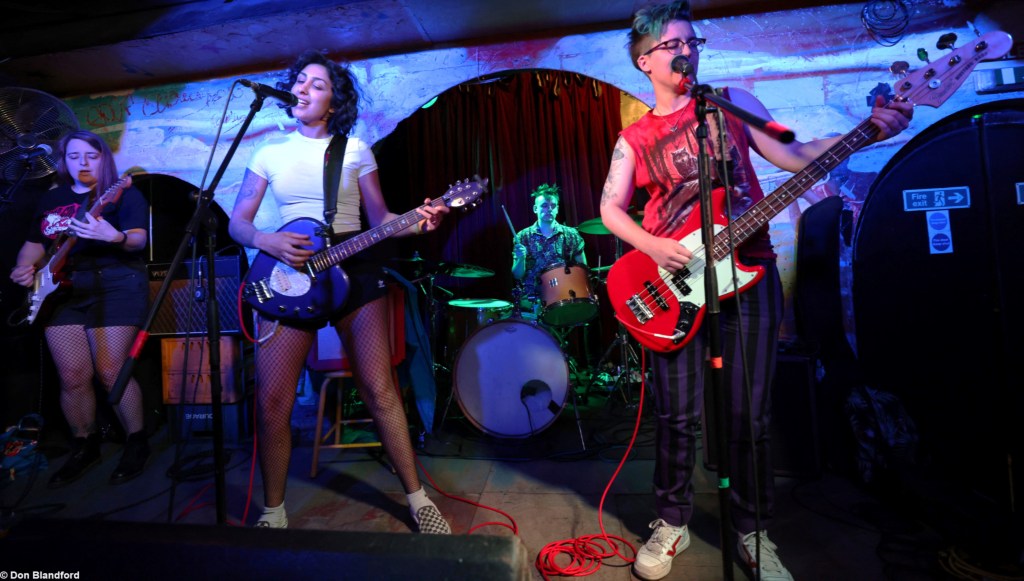
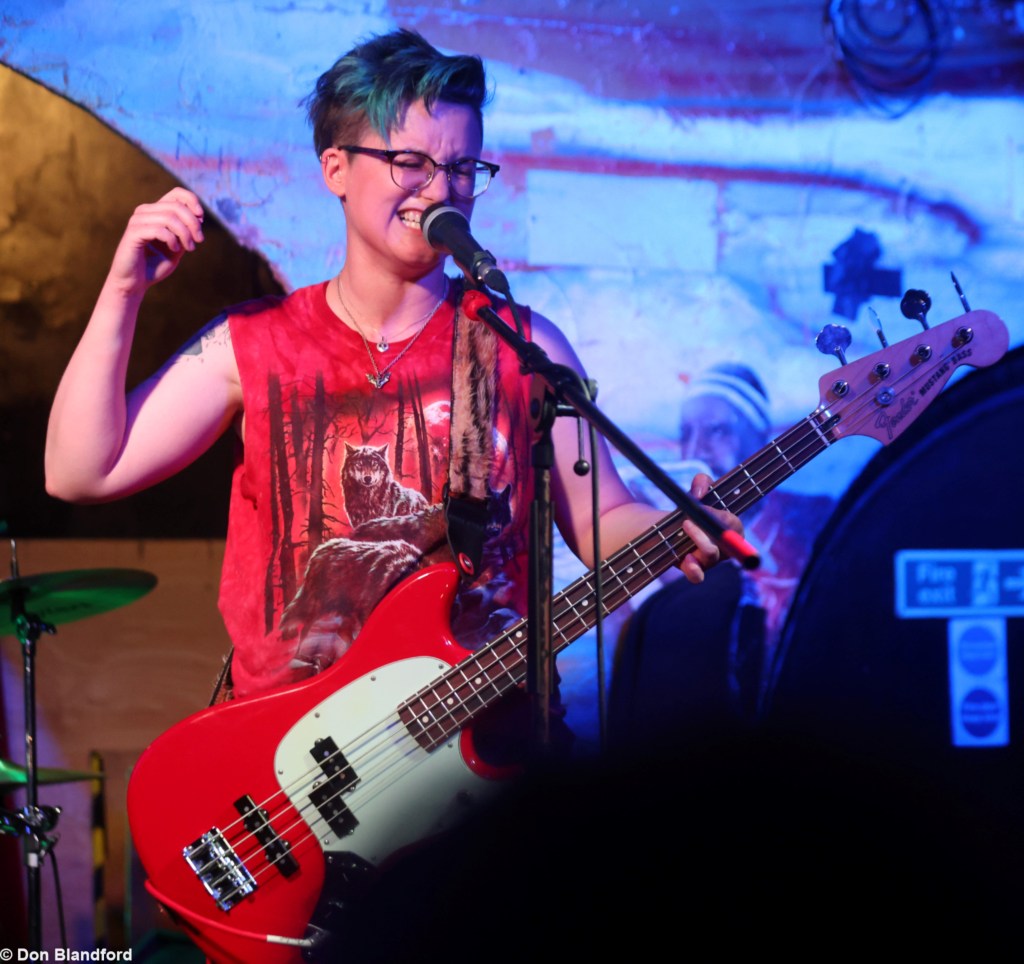
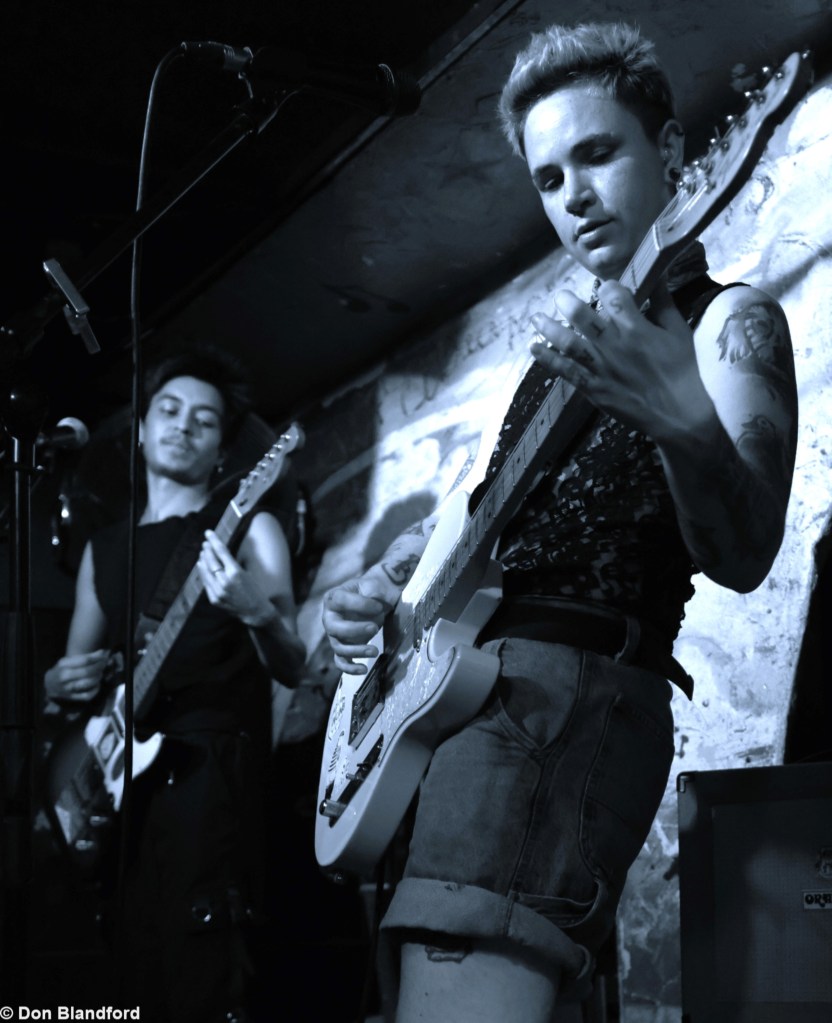
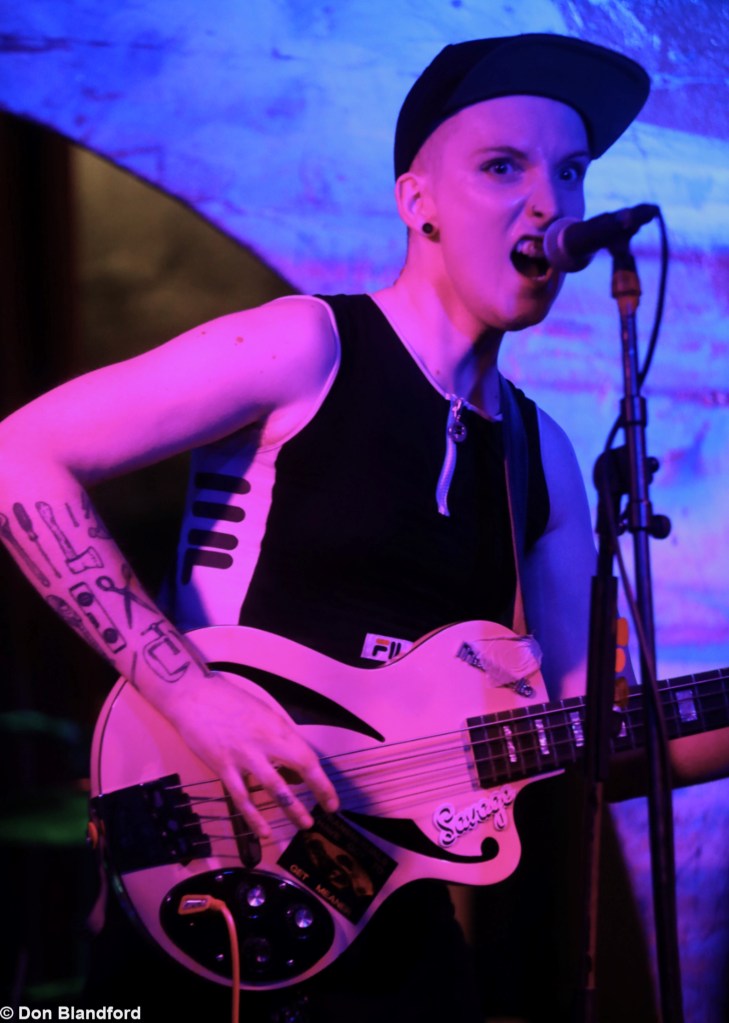
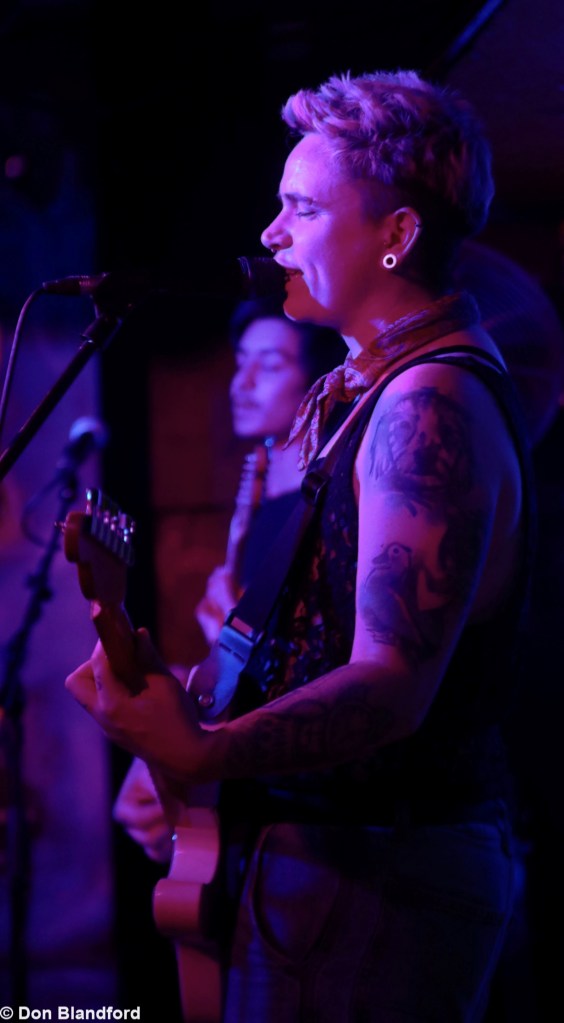
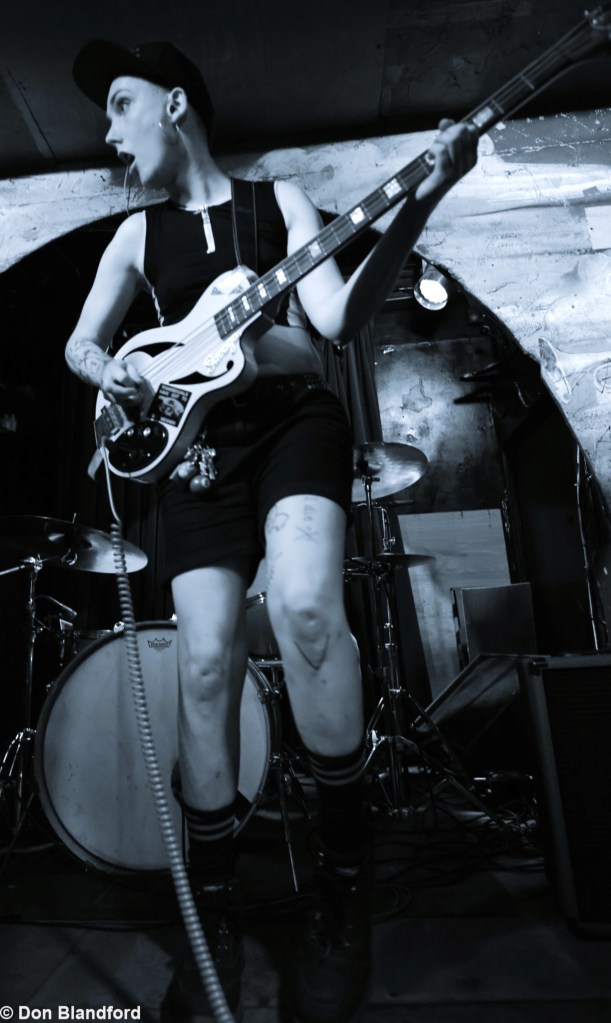
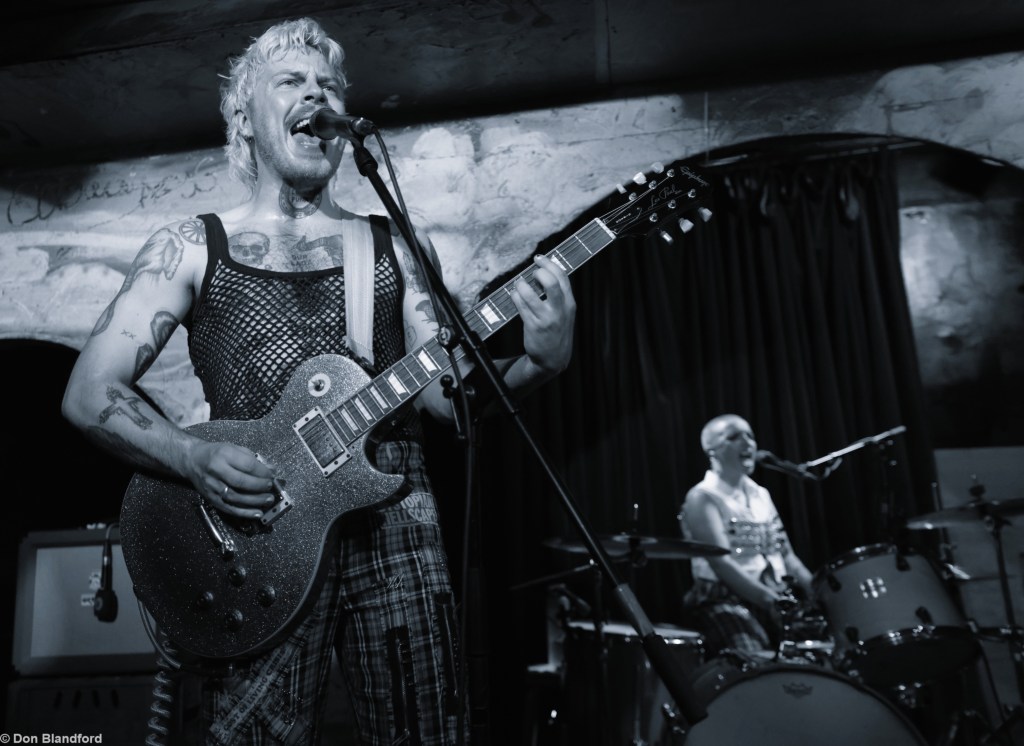
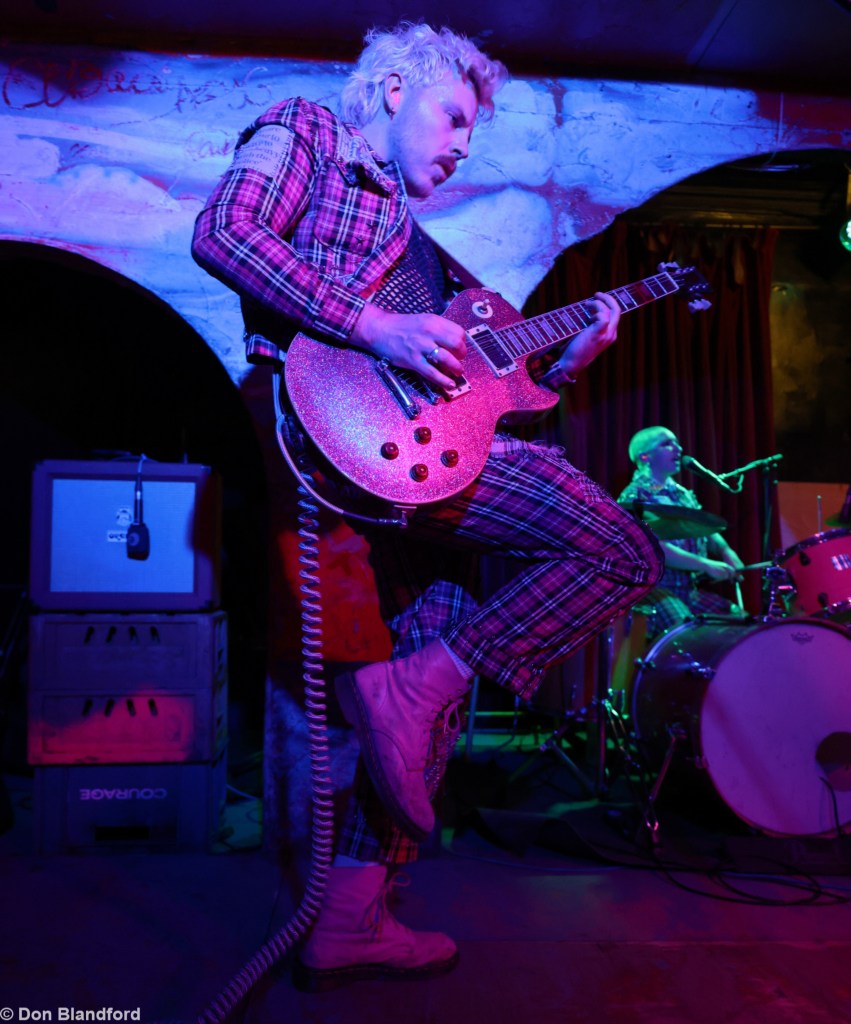
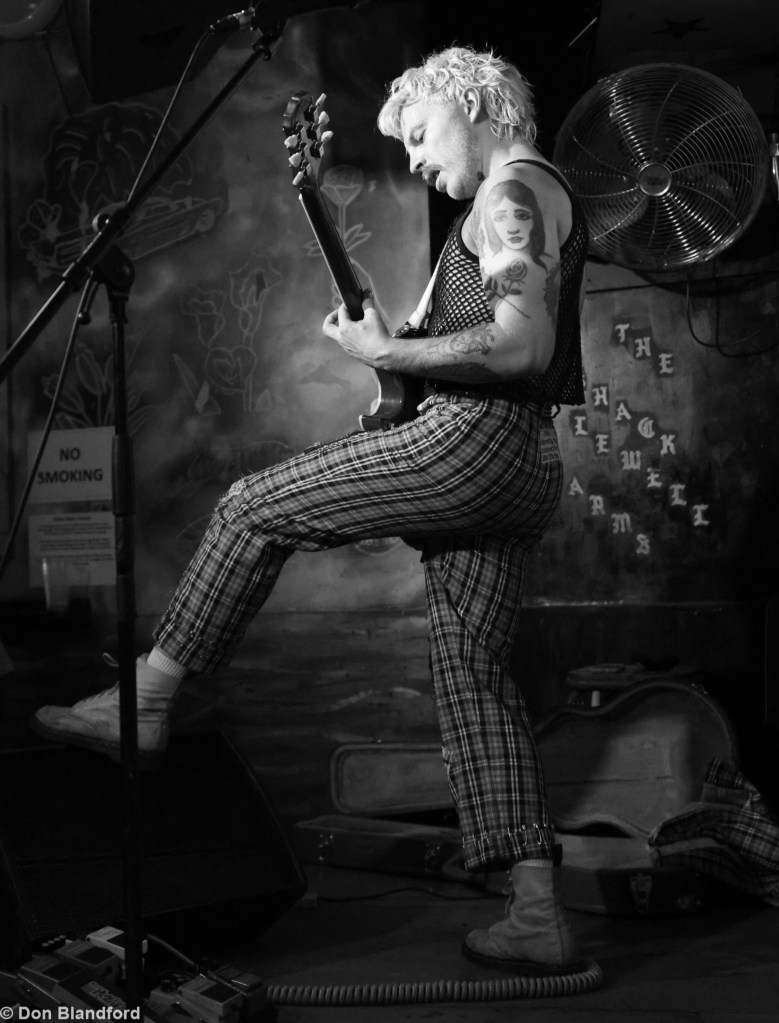
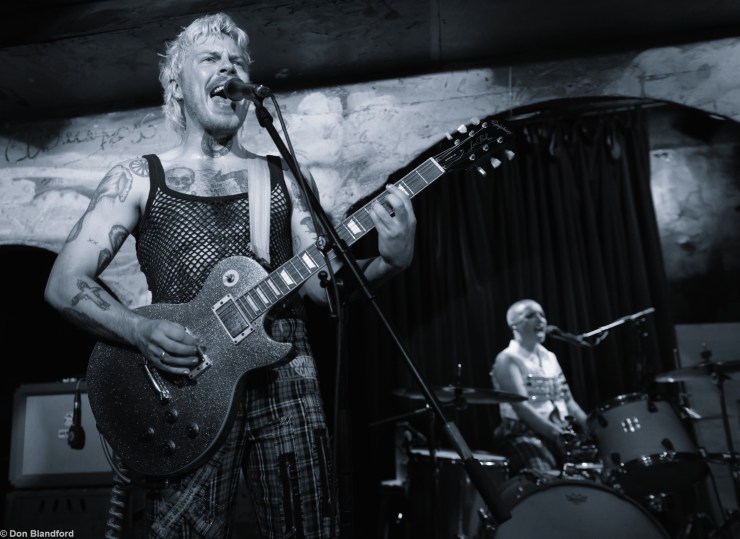
Get In Her Ears Live @ Shacklewell Arms w/ pink suits, 22.06.2023

On Thursday, we were back at Shacklewell Arms with a truly dreamy line-up! Huge massive thanks to headliners pink suits, as well as Chuck SJ And The Rose Quartz Rebellion and Breakup Haircut for being amazing! Thanks too to Paul on sound, and to everyone who came down to support the bands, dance the night away in queer joy, and help us raise over £100 for The Outside Project – an LGBTQ+ shelter, centre and domestic abuse refuge.

GIHE faves Breakup Haircut kicked off the night with their totally catchy joyous punk-pop offerings.

Next up, we feel super honoured to have hosted on of Chuck SJ‘s first full band shows with The Rose Quartz Rebellion. With a fiercely impassioned energy, they delivered a beautifully cathartic set that saw the crowd dancing together in queer joy.

Headliners pink suits blow us away with their immense, riotous queer punk. A truly epic set to celebrate their upcoming Dystopian Hellscape album!


Massive thanks to the three incredible bands who played for us – it truly was a dream of a night, filled with so much beautiful queer joy. We’re back at The Shacklewell Arms next Friday 7th July with a totally epic line-up – Straight Girl headlining with support from ALT BLK ERA (!) and The Dead Zoo. Nab tickets here now!

Photo Credit: Don Blandford / @snapperchap

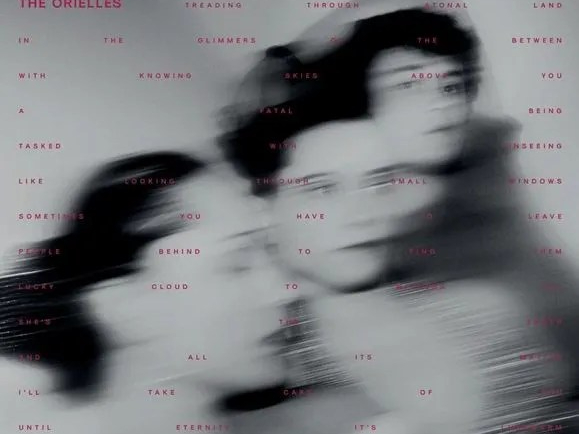
INTERVIEW: The Orielles

Having been a massive fan of Manchester based Sid, Esmé and Henry – aka The Orielles – since first hearing them nearly a decade ago, it’s been wonderful to see them go from strength to strength over the years and continue to create truly unique offerings. Now, following a number of albums, headline tours and even ventures into scoring and directing their own film (La Vita Olistica, 2021), they have released an experimental new collection – an innovative re-working of last year’s Tableau, The Goyt Method showcases the trio’s insightful and sophisticated songwriting, and ability to create exquisite, avant-garde soundscapes.

Following the EP’s release and ahead of catching them at Higher Ground Festival (a one day event at The Roundhouse on 15th July, with an all female line-up), I caught up with Esmé and Sid to find out more about The Goyt Method, their recent tour and their thoughts on being women in the music industry… Have a read!

Hi folks, so nice to meet you – been a fan for a long time! How are you doing at the moment? And what does the weekend have in store? 

Sid: We’ve just come off our European tour, so we’re now spending some time just enjoying home comforts for a bit, catching up with friends and things. We’ve also got a new practice space, so going to be jamming in there, and taking it easy for a few weeks. 

And how was the European tour for you?

Esmé: It was so amazing to play in cities we’ve not been to in years – I think we toured Silver Dollar Moment in a small handful of European cities, but then didn’t get the chance to with Disco Volador, so going back to places like Paris, and probably having one of the best crowds we had throughout the whole of the UK, American and European shows, was really nice to see. It was also really heartwarming to meet a lot of the people who’ve been waiting to see us for quite a while.
Sid: It was really cool as well because, as Es mentioned, we’d not played in Europe for such a long time that when we went out there and we were playing mostly new material, it was nice to see the fans really reacting more to that. In England, when we play, the fans tend to just want ‘the hits’, like singles from previous releases, whereas this time people were really appreciative of actual record stuff, which was dead nice, and obviously something that we’d hoped for – on this tour in particular – as our latest material is quite a step away from older stuff, so it was nice to see people were really enjoying it. 

Is your live set up quite different now that you’re playing newer material? 

Esmé: We still play with Emily Zurowski on keys – she’s a session player, and has her own projects going on, and brings something really different and interesting to the shows – a more synthy / dancey feel. And we as a band are now more leaning towards that synth-heavy side of things, with a lot of the vocals being triggered through samples and that kind of thing. Generally, I’d say the shows now have more room for experimentation than they used to. 

And, when you’re out on tour, do you have any particular essentials that you always take to keep you going while away from home?

Sid: I don’t really have many essentials as such, but I do always need my headphones! I enjoy watching a lot of films, and I’ve got Mubi logged in on my phone, so – if we have a long drive – being able to watch a film makes me feel at home. I can then chat to my friends about it and make recommendations to them! At the moment, I’ve been really into and watching a lot of Wong Kar-Wai films and really love all of those I’ve seen – most recently ‘Happy Together’, which I watched for the first time a couple of weeks ago and really really loved! I really love his visual style – the cinematography’s really great. 
Also, on the last tour we all said we were going to take our yoga mats and make time to do that every day, but it just never happened! You always think you have so much time, but you just don’t. It would be good to get to the point where everything was set up for us and we had a few hours to do some yoga, but we just don’t. 
Esmé: I like to take a good selection of books as well. Though the down time doesn’t come around every day, when you do get a day off and get the opportunity to just sit there with a book, it’s really nice – a nice mindful thing to do. I’ve just started a really big book that I don’t think I’ll be finishing too quickly – it’s called ‘Unsound:Undead’, and it’s a collection of short essays about different approaches of sound that come from sources that aren’t living. Lots of the essays I’m reading are about bodily sounds, or the sounds of disease. And then they also talk about things like the sounds of an atomic bomb or those kinds of sounds that are lesser explored. 

Talking of different and interesting sounds…. You have a new EP The Goyt Method out now via Heavenly Records, which is super exciting! It sounds like there’s some really interesting concepts behind it – are you able to explain a bit about its inspirations and the process of recording it?

Esmé: Yeah, I guess it does link to what I’m reading about. We kind of zoomed out of the record (last year’s Tableau), looked at all of the stems across it and then used a random wheel of fortune to allocate which stems we were going to put back together and create a new song from. And part of that lead us to discover some of the smaller sounds that weren’t necessarily lead hooks or significant parts in the record – so, we took them and expanded them to become the main sound that you hear in these new tracks on The Goyt Method.
Sid: Yeah, when we were recording Tableau, we were really into the idea of randomisation , things like cybernetics and AI within music and how, through this wheel of fortune idea, a song could be done in so many different ways. And it was within these limitations that we were given a new drawing board to work with, and it really pushed us to think of new ways to arrange these melodies to make completely different versions of the songs. That idea really excited us because we wanted to give Tableau a new lease of life. Through making new arrangements of the songs, it was different from just remixing them in a traditional sense. 
Esmé: It definitely speaks to our practice as musicians now and a realisation that we’ve come to since writing Tableau – we’re now less precious about writing a collection of ten songs that we’d demoed and thought about for a year, and then put on an album and then have to move onto the next thing. We like the idea that every song can exist in so many diferent ways, can be played slightly wrong and that still might be the version we go with because it has more feel in it – I guess we’re trying to move away from the idea that everything has to be so final. We’re now more into leaving everything open ended with the chance that it can be worked on and changed to create something different. 
Sid: Yeah, when we first started working with Joel (Patchett) who helped us produce the record, we were recording at a place called Goyt Mill which is in a place called Goyt… And we first came up with the term ‘to goyt’ something – our own way of describing to Joel what we wanted him to do with a particular sound. So, ‘goyting’ something is changing its form in a way that’s random and in a way that a computer might change things – it’s quite complex!
Esmé: It links to the ‘musique concrète’ kind of vibe – the way of making a sound seem completely separate from what it originally sounded like. Or using a sound source that we can modify – often turning raw sounds into something more electronic sounding. 
Sid: Hence the title, The Goyt Method

And was it quite a big team helping you create the record? Or was it just the three of you with Joel?

Esmé: Yeah, it was just the four of us throughout the whole process. The same as Tableau. We were given the freedom to do it that way which was really helpful for us – to be in that creative headspace and work so closely together, just the four of us. A lot of it was just recorded in my bedroom, or at Joel’s house. Just setting up DIY / impromptu spots to capture everything. 
Sid: Yeah, it was a really interesting process reworking all the tracks. Particularly with certain songs – like on Tableau there’s ‘Improvisation 001’and on Goyt Method there’s ‘Improvisation 002’, which is basically just the strings take – we asked the musicians to come back and improvise completely along to the original track, to just feel their way through and not worry about messing up. And we really liked how that sounded as a standalone piece, so put the whole piece of music on as its own track on The Goyt Method
Esmé: I actually heard that in full on NTS the other day – sounded so nice, it’s really beautiful! 

Obviously this EP, and Tableau, seem very different in sound from your earlier releases – can you explain a bit about what inspired you to make this change of direction?

Esmé: It was partly just being given the freedom to do it. It’s always been within us to make this kind of album – so much so that weirdly, to us, it almost feels like a first album again. I think in the past we just maybe didn’t understand that there were different ways of approaching creating an album. As proud as we are of our previous albums, it was very much following the structure of making a demo, then being asked for three singles at least… So, the different sound I think almost came as part of changing the process. 
Sid: And we were listening to a lot more experimental music as well and getting more into electronic music than we had been before. This definitely influenced the process and the outcome a lot.
Esmé: We were also doing our Soho Radio vinyl mixes – we would meet every month and record a two hour mix. This meant we were buying a lot more records for ourselves which lead to a lot more exploration into music – we were holding these records and discussing them with each other, and we really wanted people to have something that they could see as an album that was valued; something to own physically and to discuss. Something that you would have to listen to from start to finish.
Sid: That’s what I was going to say! 

You’ve mentioned about remixing music – and I know that, as well as being an amazing band yourselves, you’ve also remixed songs by some other amazing bands like Peaness and PINS. How do you normally go about remixing other bands’ tracks, and how do the collaborations normally come about?

Sid: Yeah, I feel that it goes quite nicely hand in hand with The Goyt Method. Although we were doing remixing well before we thought about the album, we use very similar techniques and a way of working – finding stems and ‘goyting’ them. Adding new textures. And remixing is something that we’ve always enjoyed doing and inspires a lot of our songwriting. The Peaness one in particular was definitely a favourite – we went a bit wild with it. I remember when we first pitched up the vocals and sped it up we were all in Joel’s apartment, just loving it! *fist pumps* 
Esmé: I think as well when we did the La Vita Olistica film, we realised that editing a film can be quite similar to stepping back and pulling a song apart and piecing it together in different ways. We’ve always been fond of editing as an art or medium, and the way you can create new meanings from things – how you put two things together can be so hugely significant. With remixing we’ve followed that ethos like we’re kind of editors or a film or something. 

With the film side of things is that something you would like to do more of – create more visual accompaniments to your music? 

Esmé: Yeah, I think we’ve definitely realised that it’s all hugely interlinked – our music with visual media, like film or art, like the album covers and stuff. We have really enjoyed making short videos for some of the tracks on Tableau (I think, rather ambitiously, we did intend on creating a video for every single track at the start…) But I think we’d love to do another ten or twenty minute short film to incorporate a few of the tracks from the album together. 

I’m very much looking forward to seeing you live at Higher Ground Festival in July! You’ve touched a bit on how your live set up has now changed – what can we expect at this show? 

Sid: Yeah, I think we will be playing with some of the strings players for this one at Higher Ground. Just because it’s such an epic venue, The Roundhouse. We feel bad about the last London show getting cancelled (at Earth, when we had just done the one at Stoller Hall in Manchester), so we obviously had to rearrange that, and it seems a perfect location to add the strings, which will be really exciting. And I think we’ll bring some different elements of Tableau into the live set too, and play more of a tailored set around the strings. And, although we’d love to do this consistently, I think keeping it for like special one-offs like ths one is a nice thing to do. 

You mentioned about Paris on the last tour being particularly special, and I’ve been lucky enough to see you live a few times – from Green Man festival to headlining The Garage in North London (though I think the first time may have been at The Victoria supporting The Parrots… ?). But has there been a particular gig you’ve played over the years that stands out as a particular highlight for you?

Esmé: When we played the Stoller Hall show I remember saying at the time that it was up there with our top three gigs. Obviously, partly because it was such an amazing set up; we’d never really played to a seated crowd before, and it very much felt like being in a weird David Lynch film, and we all leaned into it, and it was quite a surreal experience! But I don’t know if that’s also because it was our first time playing a lot of Tableau to an audience as well. To be honest, on the tour we’ve just been on there were consistently a lot of favourites, most nights!
The one in Texas as well. We had a show that was cut short, because there was a really ominous thunder storm about to happen, and we were able to play about four songs before it had to be called off. We didn’t realise until afterwards, when everyone showed us videos, that the lightening in the background was moving in syncopation with a lot of the synths – it was just such an epic backdrop to be playing against before the heavens opened. 
Sid: I think we played that particular show with such a weird kind of unique energy where, because it had been such a hot, muggy day (and with this rainstorm looming, and we were a little bit jet-lagged), there was this tension, and we ended up playing really really well. We’d been told that our set was going to be cut short, so we kind of sped through it – it was really punky with loads of energy. We just bashed through the songs, then as soon as we’d finished, this torrential downpour started, and it was so cathartic. 

As we’re an organisation promoting and supporting women and the LGBTQ+ community in music, I just wondered what your thoughts were about the industry today in this respect – how do you feel it is for marginalised groups at the moment, and do you feel much has changed over the last few years in its treatment of female/queer artists?

Esmé: Yeah, the industry’s definitely a tough place for any woman. I mean, most industries are unfortunately! But I think it’s quite heightened in one where expectations around image and how you behave are always prevalent. I think I would say that – although it’s not disappeared, and it’s probably something I’ve hardened myself to – it’s harder as a younger woman. You seem to have to have loads of albums out to gain respect, and to prove yourself a lot more, so lately I’ve not experienced it as much. But definitely when we were both younger there was a lot more difficulty in being taken seriously. I feel like it wasn’t until Sid was about 27 that people stopped calling us teenagers, which was quite belittling… 
Sid: Yeah, I agree. I can’t think of anything we’ve experienced in recent years, which – as Es says, may just be because we’ve hardened to it a bit. But I do think it’s mainly because people seem to give you a lot more respect when you have albums to show, or people just realising you’re actually good. When you’re starting out and you’re younger, and not in the position of being a signed band (and don’t have a ‘team’ behind you), I think that’s when it can be really difficult. And I think that a lot of guys in bands that are starting out are forgiven for being ‘punk’ and lairy – they can scream down a mic and get away with it. Whereas I think when women do something similar it’s seen as being really rubbish, or because we can’t play our instruments or can’t sing in tune. All of a sudden you get some sort of recognition and that seems to go away. It’s a shame that you have to be in that position of having support in order to get recognised or respected. 
Esmé: I would also say that, probably subconsciously, this kind of thing is what might have sparked our leaning towards the more experimental or electronic scenes. I’m not saying sexism is absent from these scenes, but it seems a lot more female heavy and to include a lot more people of colour – it’s a better space for musicians to be diverse and for everyone to be respected and taken seriously. Venues like The White Hotel in Manchester are a great example of this – it’s one of the most diverse venues I can think of in terms of their representation of artists, compared to other venues or more ‘indie’ festival line-ups that are so male dominated, where mostly like just four lads in a band seem to take up most of the space. 

Massive thanks to Esmé and Sid for taking the time to speak to me, and answering my questions! 

The Goyt Method, the innovative new EP from The Orielles, is out now via Heavenly Records. Order here. And catch them live at a number of dates over the next couple of months, including Higher Ground Festival, at The Roundhouse on 15th July.