INTERVIEW: Jasmine.4.t

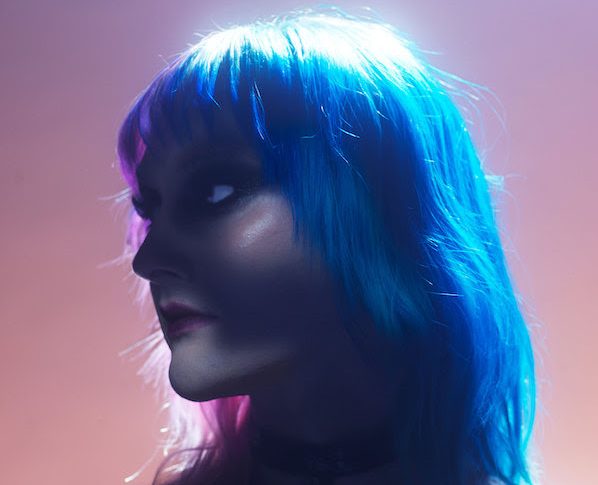
Having just released her exquisite debut album, You Are The Morning, Manchester-based trans artist jasmine.4.t not only featured as one of our own ‘Ones To Watch’ for 2025, but has been receiving tonnes of acclaim over the last few months from publications such as Pitchfork and The Line Of Best Fit, with her latest single ‘Guy Fawkes Tesco Dissociation’ being featured on BBC 6Music’s A List. With the album released via Phoebe Bridgers’ record label, Saddest Factory, it reflects on both the camaraderie and isolation that can be a part of transfeminine life with a stirring glistening emotion. A heartfelt ode to queer friendship, it sparkles with a truly captivating majesty throughout. Whilst it may still only be January, it’s already a definite contender for album of the year.

After catching Jasmine and her band’s stunningly moving performance at The Old Blue Last a couple of weeks back, we were able to have a chat with her about the album, her inspirations and the challenges facing trans artists in the industry, and society in general. Have a read, make sure you check out the album now, and also please consider donating to the Solidarity Fund she mentions at the end of the interview.

Hi Jasmine! Welcome to Get In Her Ears! How are you doing today?
Hi! Thank you! I am very sleepy after getting up at 3:45am to fly to the Netherlands for some shows, but super excited about all that’s going on with my album coming out and the reception it’s receiving. I’m currently on my way to Groningen with my bandmates Eden and Emily, and we are all buzzing.  

Are you able to tell us a bit about what initially inspired you to start creating music?
My uncle left me his guitar when he sadly died by suicide when I was in year two. My dad got me some chord books and I loved learning Jimi Hendrix as a kid. I heard Elliott Smith’s From A Basement On A Hill when I was a teenager, and I deep-dived into his catalogue – my dad borrowed all his CDs from the library and copied them for me. I did the same thing with Iron & Wine. I always wrote alongside learning other people’s songs, and I played in various grunge and punk bands.

I love the glistening energy and raw emotion of your songs, but who would you consider to be your main musical influences?
Elliott Smith and Iron & Wine as I’ve mentioned are big influences, but I think my main influence is Adrianne Lenker. I love her writing, her voice and, in particular, her guitar playing. I am listening to her Instrumentals album right now, it’s my favourite!

You’ve just released your debut album You Are The Morning, which is super exciting! The album reflects on feelings of queer belonging, love and connection, particularly within the trans community – are you able to tell us a bit more about the themes that run through it and the experiences that inspired it?
You Are The Morning is a message of queer hope and solidarity. The songs were written shortly after I came out to those around me, which didn’t go so well. My marriage ended, I tried to move back in with my parents, and when that failed I was homeless for a period. I left Bristol to stay with friends in Manchester where I found community. I fell in love with trans people and met my chosen family, who gave me the strength I needed to start my transition. You Are The Morning is about queer people’s capacity for solidarity but also for change, how we change ourselves and the world around us to bring a brighter future. 

The album’s being released on Phoebe Bridgers’ record label Saddest Factory Records, which is awesome! How did this come about, and what does it mean to you to have been able to work with someone like Bridgers?
I opened for Lucy Dacus in Bristol on her first Europe tour, and we got on really well. She invited me to be tour support for her second album (Historian) tour in Europe – around when my debut EP came out – and we became close and stayed in touch, sharing demos through lockdown. When I got the demos together for the record, I was considering self-releasing, but Joe Sherrin (MOULD/SLONK/Fenne Lily) suggested I submit them to Phoebe Bridgers for Saddest Factory consideration. I didn’t hear back immediately, so I asked Lucy to play the songs to Phoebe if the moment presented itself. I heard back a few months later from Lucy that she had played the songs to Phoebe in the car, and Phoebe was on the phone to her manager discussing signing me! I couldn’t believe it. I opened for boygenius when they came to the UK, and the next day I signed with Saddest Factory. All three members of the band – Lucy, Phoebe and Julien – produced the record. It was a dream come true for me, I’m such a huge fan of theirs, as a band and as solo artists. I feel so lucky. 

And, to record the album, you travelled over to the US to record at the legendary Sound City Studios! How was this experience for you?
Yeah, it was unreal! We had such a good time. I made this band of entirely trans women in Manchester and the label flew me and two of my bandmates – Eden O’Brien and Phoenix Rousiamanis – out to LA. We recorded over two very intensive weeks in that iconic studio. It was such a healing experience, it felt like the hope I wrote into the album the year before was not in vain, because this was on its way. 

I was lucky enough to catch you and your wonderful band live last week at The Old Blue Last – such a beautifully immersive and moving set, thank you. How do you generally prepare for live shows, and what do you enjoy most about them?
Thank you! It was such a nice crowd and my first time playing at that venue. I had such a good time. Travelling as a band of trans women can be stressful at best and dangerous at worst – so before shows we try to relax and hang out together to get in the mindset to perform. The girls are all unbelievably funny, and we don’t take it too seriously. But we know, should anything happen, we have each others backs. Usually, my chosen daughter Yulia Trot comes on the road with us, and her main job is to keep us all safe. Horrifyingly, she has been wrongly imprisoned for her alleged part in dismantling an Israeli weapons factory, on remand until her trial in a year. It is scary going into this year of intense touring without her, but me and the girls are a family and we take care of each other. Hanging with the girls is definitely the best part of playing live. 

Has there been a particular gig you’ve played over the years that stands out as a highlight?
I think my favourite ever show was when we played in the basement of a community favourite pub in Manchester, The Peer Hat. It was for a night that me and some friends organised for the Just Do The Thing transfem meet-up. It was so awesome to play a night of all transfem artists for a majority transfem audience in a packed sweaty basement. 

And, when you’re out on tour, or playing shows, are there any particular essentials that you like to take with you to keep you going?
I always wear my bracelets from my long-distance partners to remind me of their love and support. I always wear at least one Adrianne Lenker hoodie (I’m wearing two right now). I usually take some time before shows to relax and listen to some Adrianne Lenker also.

As we’re an organisation with a focus on supporting new and marginalised artists, I just wondered how you feel the industry is for them at the moment? And do you feel much has changed over the years in its treatment of female and queer artists?
It’s a pretty shit time to be a trans woman in this country. It’s very unsafe; we are constant targets of violence and harassment, besides the common experiences of homelessness and mental health issues caused by continued interaction with systemic transphobia. We have seen the rise of TERFism, a transphobic brand of fascism perpetuated by figures – including JK Rowling – which has led to a huge backslide in trans access to healthcare. This has been compounded by scare tactics in papers – including The Guardian – when reporting about trans healthcare. Recently, Wes Streeting banned the use of life-saving puberty blockers for trans children, when suicide rates for this demographic are extremely high and rising, while our community mourns the highest recorded rate of violent deaths of trans people. This is the backdrop against which we are trying to make our way as artists. I have been lucky enough to have an incredible manager, Jen Long, who has helped keep me safe and I’m surrounded by people I trust. I have a mostly female and largely queer team. But this industry is very male-dominated at all levels, and from my experience pre-signing, trying to navigate it alone, we trans women encounter friction at every turn. Compounded by the everyday shit that trans women have to deal with, it’s no wonder we are so underrepresented in this industry and in society at large. This has intersections with disability rights and racial injustice – those of us who do break through are almost always white and abled. I am disabled (by society’s failure to meet my ME and POTS related needs), though I pass as abled and I think without Phoebe’s seal of approval and without my white and abled-passing privilege, I would still be struggling to get shows. I think a lot of these issues go beyond the struggle for trans women’s equality in the music industry, but it is just societal ills at work and it affects all of us. I think things are definitely improving at a grassroots level, and I definitely feel cared for by the venues I play, but there’s only so much that small venues, indie labels and promoters can do.

And are there any other new artists that you’d recommend we check out at the moment?
My favourite band from Manchester is Ether Mech. They’re fronted by my friend Vivian, a trans woman I look up to and one of the first people I met when I moved to Manchester. I also love Mould, their new stuff is incredible and they’re so good live. I really enjoyed The Pill and Fuzz Lightyear’s sets at the Old Blue Last show also!

Is there anything else you’d like to add about upcoming plans or particular thoughts you’d like to mention?
I’m really looking forward to touring this year but I am feeling worried about doing it without my daughter Yulia. If anyone is able to, please donate to her Solidarity Fund to help us support her in prison, visit her, and help her get back on her feet when she is out. You can donate here.

Huge thanks to Jasmine for answering our questions, and please do consider donating to help Yulia.


You Are The Morning, the debut album from Jasmine.4.t is out now via Saddest Factory Records. Listen / buy now.
INTERVIEW: Aisha Badru

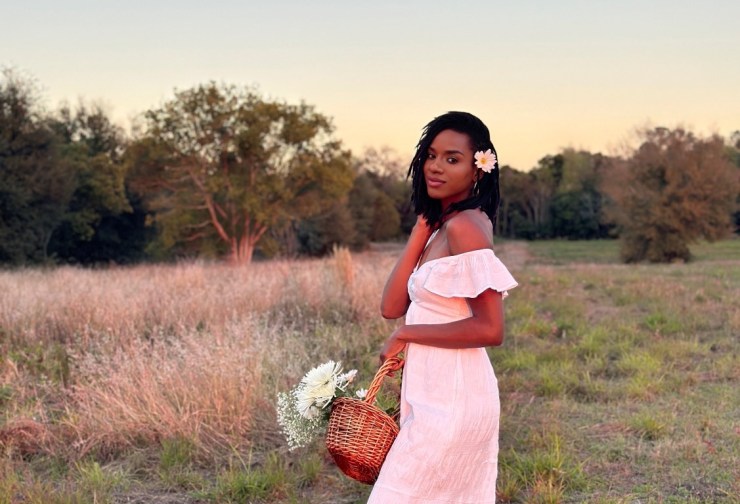
Having released her debut album back in 2018, Nigerian-American artist Aisha Badru has since been reflecting on themes of love, loss and personal growth in her sparkling alt-folk offerings with a distinctive effervescent grace. Now, with the release of her brand new album, The Sun Still Rises, her hope is to combine these personal reflections with more of a collective awareness. To reach people through her beautifully stirring creations; to soothe emotions and offer a cathartic accompaniment to her listeners’ self-care routine.

Following the release of her exquisite new album, we caught up with Aisha to discuss the release, the inspirations behind it, and her own personal practice of self-care and wellness. Have a read, and make sure you have a listen to The Sun Still Rises now!

Hi Aisha! Welcome to Get In Her Ears! How are you doing today?
I’m doing well, thank you! I recently made a big move from Florida to Massachusetts. While I loved my time in Florida, I’m excited to experience the seasons again. I’m originally from New York, so it feels like a return to my roots in some ways.

Are you able to tell us a bit about what initially inspired you to start creating music?
In the early stages of my career, heartbreak was my main motivator for creating music. Writing became a way for me to cope and prove to myself that I was worthy. At 25, I found myself at a pivotal crossroads in my life. On the one hand, I was pursuing a relationship with someone who was emotionally unavailable, and on the other, my music was starting to gain traction. I realised I had to choose between the two, and ultimately, I walked away from the relationship to focus on my music. That relationship was really hard for me to let go of because it symbolised letting go of my old self who had low self-esteem. With that said, the unfolding of my music career has always been a spiritual journey for me — a way to discover my worth, while also reminding my listeners of theirs.

I love the lilting energy and sparkling emotion of your songs, but who would you consider to be your main musical influences?
It’s always a bit tricky for me to pin-point specific influences because I’ve listened to such a wide range of music over the years. But I’d say my earlier work was heavily influenced by folk and acoustic music, especially for how they convey emotion and tell stories in such a raw and intimate way. More recently, I’ve been increasingly inspired by artists and groups that use their music to explore themes of collective healing, resilience, and community. For example, I admire the work of the vocal collective Beautiful Chorus, who create music that fosters peace and connection, and Rising Appalachia, whose songs tell powerful stories of resilience and social consciousness. Ultimately, I’m inspired by music that speaks to the heart and encourages emotional growth as well as planetary healing.

You’ve just released your second album The Sun Still Rises, which is super exciting! I’ve been told that you’d like your music to be “soothing and medicinal” – are you able to tell us a bit more about this and any themes running throughout the album?
With my music, my intention is to offer both consolation and encouragement, especially during times of self-doubt or emotional struggle. Throughout the album, I’ve focused on themes of hope and renewal. It’s about finding peace amidst the chaos and remembering that, even in our darkest moments, there’s always a path forward.

And how would you say the process of recording the album has differed from your previous releases? 
The process of recording The Sun Still Rises was different in that I was much more focused on creating an album with a clear intention around mental health. While my previous releases were also purposeful, this album felt more deliberate in terms of the themes I wanted to explore.  

The theme of wellness and self-care seems to be very important to you. What are the key ways you practise this in your own day-to-day life?
I practice wellness in my day-to-day life by being mindful of how what I consume affects my wellbeing – whether it’s food, social media, music, news, etc. I make adjustments as needed to ensure I’m absorbing things that nurture me and promote a sense of inner peace, clarity, and empowerment. Another essential practice is limiting my time on my phone, which has been really grounding and helps me be more present.

And how would you say this feeds into your songwriting?
My songs are deeply influenced by how I practice self-care in my own life. I strive to create music that uplifts, drawing on the messages and lessons that have guided me along my journey. By prioritising my own wellbeing, I’m able to channel that positive energy and wisdom into my music.

It seems like you’re very busy at the moment – with being a songwriter and a mother of twins -, but are you planning on touring the album at any point soon?
While I’m not planning a traditional tour, I do want to focus on more intimate, curated performances that align with the themes of wellness and connection. This past summer, I had the opportunity to perform at the wellness festival Mycelium, and it was such a meaningful experience. It reinforced my desire to create spaces where music and mindfulness intersect.

And when you’re out on tour, or playing shows, are there any particular essentials that you like to have with you to keep you going?
Water! So many times I forget to hydrate sufficiently, especially when I’m tired and rather reach for coffee.  

As we’re an organisation with a focus on supporting new and marginalised artists, I just wondered how you feel the industry is for them at the moment? And do you feel much has changed over the years in its treatment of female and queer artists?
I don’t think the overall mainstream industry has changed much, but marginalised artists are gaining more power by moving away from established systems and finding new ways to connect directly with their communities. For example, social media and independent platforms give artists the ability to build their following and engage with fans without relying on traditional gatekeepers. From my perspective, this decentralisation is important, as it allows greater autonomy and economic freedom.

And are there any other new artists that you’d recommend we check out at the moment? 
She’s not necessarily a new artist, as she’s already accomplished a lot in her career, but I highly recommend checking out Alysha Brilla. Her message of empowerment and healing really resonates with me. She has a unique sound that spans multiple genres and is always pushing boundaries with her art.

Huge thanks to Aisha Badru for speaking to us!


The Sun Still Rises, the new album from Aisha Badru, is out now via Nettwerk. Download / buy here.

Introducing Interview: Breymer

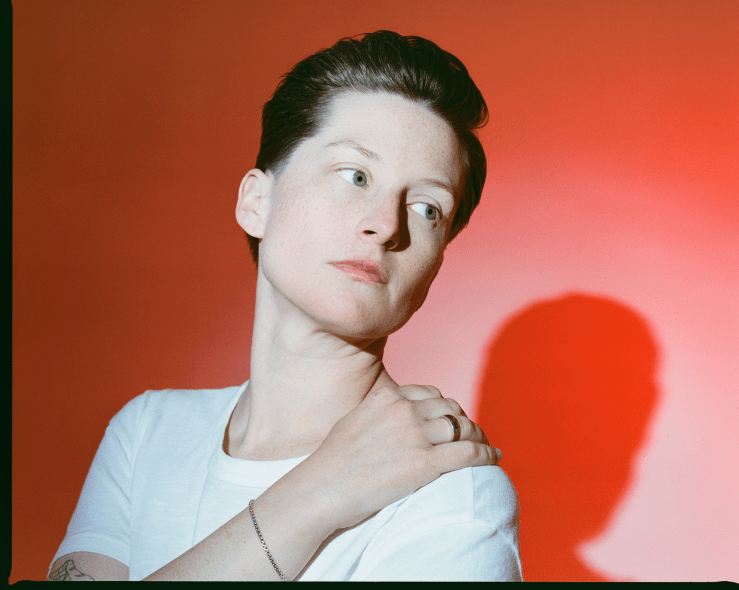
Set to release their new album, When I Get Through, later this month, Minnesota born artist Sarah Walk – aka Breymer – creates sweeping indie-pop anthems, oozing a raw emotion and stirring heartfelt splendour. Exploring their relationship with gender and identity, the album marks the first since they recently changed their artist name – from Sarah Walk to the more androgynous Breymer – to reflect how they feel about themselves after their recent top surgery. Interweaving lush layered vocals and a shimmering textured musicality as it reflects on a personal journey of self-discovery with a stark honesty, it’s a truly exquisite collection.

We caught up with Breymer to find out more about the album, their live shows and being a queer artist in the industry. Have a read and watch the beautiful live video for latest single, ‘The Feeling (When I See You)‘, at the bottom of the article.

Hi Breymer! Welcome to Get In Her Ears! How are you doing today?
Hi there! I’m doing well thanks. Busy as ever preparing for these album release shows!

Are you able to tell us a bit about what initially inspired you to start creating music?
It was never really a decision, I just always found myself gravitating towards the piano writing my own songs. Even as a young kid, around four or five years old, I would refuse to practise piano learning other songs and would instead just sit there and put on performances of my own ideas. I always had this desire to create and share.

I love the raw stirring emotion and glistening musicality of your songs, but who would you consider to be your main musical influences?
I grew up listening to a lot of different music. I like to think of them as inspirations and not influences so much, or at least not intentionally. When I was young I loved pop and rock music — Hanson was my first album (don’t hate on it, that debut LP rules) Third Eye Blind, the Goo Goo dolls… I loved that kind of classic pop melodic sensibility. Then as I got a little older I started to love R&B and hip hop, like Usher and Jay Z, I think it was the rhythm that really was mesmerising to me, and then that turned into folk music like Paul Simon and Joni Mitchell as I got a little older. The last in that core discovery period of my youth was probably indie bands, like Radiohead, Fiona Apple and Phoenix. I like to think there are specific elements of each of those genres that still inspire my music today.

You recently announced the release of your upcoming album When I Get Through, which is super exciting! It’s been described as a collection of songs exploring your relationship with gender and identity – are you able to tell us a bit more about this and how this theme has inspired your writing?
The album really follows my entire journey of getting (and decided to) get top surgery. The beginning of the album opens with a song which documents the first time I ever told anyone (outside of my partner) that I was considering the surgery, but I still had so much internal shame and repression. Throughout the course of the album, I process these emotions and find my way to the final track ‘Anesthesia’ which leads me into the operating room. It’s a deeply personal album, and I wanted the focus to be on the process and the journey instead of the result.

And how would you say the process of recording the album has differed from your previous releases?
Each time I make an album it has a totally different feel to it. A lot of that is based on the way you record, or the arrangement of the songs, but I think the biggest element involves the people you bring in to make the album with you. This album was primarily made by myself and Tyler Chester, who produced it. We had Abe Rounds, my dear friend, play drums as well, but for the most part it was just me and Tyler putting it together. That was a different approach for me because the previous two albums were more of a band dynamic. I think it made for a really personal and vulnerable environment where I felt like I could try and things and make mistakes. Tyler was wonderful in cultivating a really thoughtful and inclusive environment where getting the song right was the priority. There was no ego involved.

Following the album’s release, you’re heading over the UK in November to play a couple of shows. What can fans expect from a Breymer performance?
Well for one, I’m very much looking forward to playing with a full band again. I always have so much more fun on stage with other people, and I’m really thrilled to be bringing back some of my favourite musicians with me. I think the Breymer project has really allowed me to think intentionally about what this new name should represent. And for me, particularly alongside the album content, I want joy and reclamation to be at the forefront. While this album (and performing it) will undoubtedly bring a lot of vulnerability and fragility, I want the end result and the embodiment of who I am now as an artist to be on the other side of this; acceptance, freedom and joy.

And has there been a specific show you’ve played over the years that stands out as a particular highlight?
The best shows for me aren’t necessarily the biggest ones, but the ones where I have the most fun on stage with the people I’m playing with. One show that comes to mind was about 2 years ago at a really small club in London. I was co headlining with a really good friend of mine, and one of my dear friends (and former college bandmate) Lenny Brown who was playing bass with me. He’s just the best and makes any gig 10x better. The other songwriter who I was performing with came on stage to sing a song with me, and for some reason (it was the end of a very long and exhausting tour, so we were sort of losing it at this point) I could NOT stop laughing. I don’t know what got into me, but I just couldn’t even get through the song. Hopefully the audience members didn’t think I wasn’t incredibly unprofessional, but honestly it’s nights like that, particularly when you’re so exhausted, that just lift the mood and make you remember how fun performing with your friends can (and should) be. I think I value that more and more as I get older. It should be fun.

And when you’re out on tour, or playing gigs, are there any particular essentials that you like to have with you to keep you going?
I’ve definitely got my staples that I’ve learned help me a lot. One would be all of my sleep items. I used to be such an easy sleeper, but those days are gone (especially on the road). So now, I need an eye mask, a small fan that I always travel with, and a noise machine I play from my phone. I feel so lame but sleep is SO important and I’ll do whatever it takes. I also love to travel with my aeropress coffee maker. It’s easy to travel with and I’ve found that making your own coffee on the road saves you SO MUCH money. It’s also (most importantly) such a nice way to instil some sense of routine and control into an otherwise extremely unpredictable and chaotic schedule.

As we’re an organisation with a focus on supporting new and marginalised artists, I just wondered how you feel the industry is for them at the moment? And do you feel much has changed over the years in its treatment of female and queer artists?
I saw this article today that said in an interview with 1200 musicians, 67% of female identifying respondents said they had been a victim of sexual harassment, and over 70% discriminated against. Now that may not all be FROM the music industry, but I wouldn’t be surprised. I think there has been a huge shift recently, particularly in mainstream pop, where queer female artists are becoming much more outspoken and on the front lines, and that visibility is amazing. But I also think with that visibility comes more transparency about these other issues, like  discrimination, sexual harassment and severe depression. It’s such a tough industry, even without these things, so when you pile that on top of it, it can feel unbearable.

And are there any other new bands or artists that you’d recommend we check out at the moment?
I played a few shows last week on the east coast and met another artist who was an opening act in Asheville, NC. His name was Michael Flynn and his artist project is called Slow Runner. It was funny because he saw my setup on stage and said he had the exact same setup – same keyboard, and a small drum machine to accompany his playing. We also had weirdly VERY similar outfits on. There was just had this weird ‘cut from the same cloth’ thing going right away. Anyway, I absolutely loved his performance, and I think one of his songs called ‘Vape King’ was probably one of the best written songs I’ve heard in the past few years (it’s not out anywhere, but hopefully he records it soon….). Anyway, he was awesome and we’ve kept in touch and are going to write together via Zoom soon. Moments like that are such gems on the road.

Is there anything else you’d like to add about upcoming plans or particular thoughts you’d like to mention?
I have two more US album release shows ahead of the UK dates that I’m super excited about and working really hard on. We will be playing the whole album top to bottom, raising money for local gender affirmation clinics through raffles from local business donations, and displaying a few LGBTQ+ visual artists work in accompanying gallery spaces at the venues.

Huge thanks to Breymer for answering our questions!


When I Get Through, the upcoming new album from Breymer, is out next Friday 18th October via One Little Independent Records – pre-order here. Catch them live in the UK next month – playing Brighton on 25th November and London on 26th November. More info here.

12th October – US, LA – Wonzimer Gallery
26th October – US, MN – Berlin
25th November – UK, Brighton – The Folkore Rooms
26th November – UK, London – Paper Dress Vintage

Photo Credit: Simone Thompson

INTERVIEW: Scrunchies

With their latest album, Colossal, being one of the last albums that the legendary Steve Albini recorded and mixed, and having supported the likes of Built To Spill and Otoboke Beaver on tour, Minneapolis based riot grrrl-inspired band Scrunchies are cemented themselves as definite ones to watch and are new favourites for sure. I can’t get enough of their raw punk energy and grunge-tinged empowering allure, and highly recommend you treat your ears to the album as soon as possible.

We caught up with Scrunchies to find out more and chat about the experience of recording with Steve Albini, their enjoyment of performing live, their thoughts on the inclusivity and accessibility of the music scene right now, and more. Have a read, and then make sure you watch their fantastically fun music video, created in collaboration with Los Angeles-based “dance aerobics celebration Pony Sweat!

Hi Scrunchies! Welcome to Get In Her Ears! How are you doing today?
We’re good! We are driving home from tour, somewhere between Kansas City, Missouri and Minneapolis, Minnesota. We’re excited to get home to our pets, partners, and beds.

Are you able to tell us a bit about how you initially all got together to start creating music? 
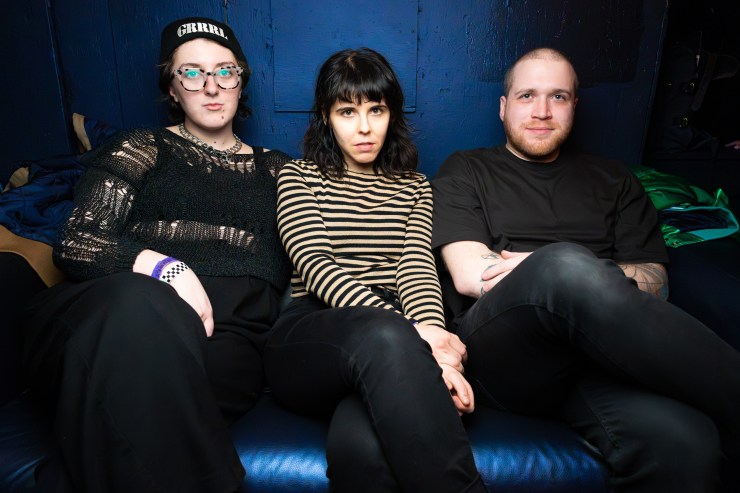
Laura and Danielle were both in bands that had played together over the years (Kitten Forever and Bruise Violet) and ended up playing in a Buzzcocks cover band together called Buzzcunts. We loved playing music together and it had been a while since Laura had fronted/played guitar in a band, so we formed Scrunchies around 2017. We had a few bassists over the years and we met Jeremy through his band Double Grave and had him fill in on some shows on bass, including going on a tour with Built To Spill in 2022. We had such a fun time we asked Jeremy to be permanently in the band and wrote the majority of Colossal with him. 

I love your empowering riot grrrl energy and scuzzy punk sounds, but who would you consider to be your main musical influences?
We all grew up listening to Nirvana, so basically any bands connected to them were hugely influential to us as we were growing up: Sleater-Kinney, the Raincoats, The Wipers, The Breeders, Sonic Youth, the Jesus Lizard, Babes in Toyland, Bratmobile, Hole. We’ve been getting a lot of Fugazi as a reference to our music lately which we didn’t really seek out, but we can appreciate. We have also been listening to a lot of pop music in the car (Charli XCX and Olivia Rodrigo)!

You’ve just released your new album Colossal, which is super exciting! Are you able to tell us about the inspirations behind it? Are there any particular themes running through it?
Feminist themes run throughout the album with an exploration of the insidiousness of modern gender expectations, power, and bodies. I (Laura) keep saying that this album is about “sex, death, and rollercoasters”, but that’s not really catching on outside of my own head… I write lyrics that veer more towards surrealistic and poetic imagery with the hope that they can resonate with people in different ways that are impactful to them. This is also the first full album we’ve written since my former band broke up; it is as significant as a long term relationship ending, and exploring that shift is a big part of the content of this record.

The album was recorded and mixed by the late, great Steve Albini. What was the experience of working with him like? And how did the process differ from your previous releases?
We all have different feelings about the recording process in general, but this specific experience was amazing for all three of us. We love Steve’s music and admire his influences on music culture (including his ability to self-critique and embrace growth). Not only has his work had a huge impact on us and our musical careers, but from the minute we walked into the studio it was immediately a comfortable, honest experience. We were kinda nervous but it quickly became easily collaborative and he had our best interests in mind and wanted to help us get what we wanted. Laura started doing vocal takes and he was like “wait, i have this microphone specifically made for women’s voices”. It immediately made a huge difference in our sound. It was so clear he cared about the outcome and didn’t phone it in at all. He was extremely professional and understood everything and the vision immediately. It honestly probably spoiled us for future recording sessions.

Following the album, you’ve just been out on a big US tour. How’s that been for you? And what can fans expect from a Scrunchies show?
Tour was good, despite the fact that the U.S touring landscape has changed a lot over the past few years and is really difficult right now. But that’s a whole other interview! As far as what people can expect, we like to put a lot of energy into our shows. One of our pet peeves is when a loud and exciting band doesn’t seem excited to be playing their own songs. I (Laura)  really love performing; a big reason I’m in a band is because I like playing shows, so I make sure the shows feel fun and exciting because I think playing shows is fun and I’m excited to be playing them. We like to be as loud as we can be at every show, and we have a lot of good energy together – people have commented “you guys really enjoy playing together and look like you’re having fun” and we are!

And has there been a specific show you’ve played over the years that stands out as a favourite, or particularly memorable?
We’ve opened for Otoboke Beaver from Japan twice and they are SO fun to play with – they go out of their way to meet and interact with their opening bands, take photos with them, etc. Touring with Built to Spill and Prism Bitch in 2022 was such a good experience and they were all the kindest, coolest people. We played Treefort in Boise, Idaho outside during a snowstorm, which was like playing in a snow-globe. 

And when you’re out on tour, or playing gigs, are there any particular essentials that you like to have with you to keep you going?
In no particular order:
Inhaler; Almond butter and bread; Lots of coffee; Red Bull; Eyemask and earplugs for bed; Breakfast sandwich; Swimsuit in case of pool; Quiet time/introvert time; Athletic shorts; A good pillow.

As we’re an organisation with a focus on supporting new and marginalised artists, I just wondered how you feel the industry is for them at the moment? And do you feel much has changed over the years in its treatment of female and queer artists?
Yes and no. The music scene (at least from our vantage point) is definitely more diverse than it was a number of years ago. It is less common to see an all white-cis-male lineup every day of the week than it was a few years ago. There are many venues that have developed Codes of Conduct for their shows that adapt a zero-tolerance policy for harassment. Many places have done away with gendered bathrooms. Many organisers ensure there is an accessibility note for spaces. There are more women/non-men, queer, and BIPOC folks who have made their own spaces to create and share their art. This influx of diversity in the music scene has pulled in different genres (theatre, art, etc) that showcase a huge variety of weird/queer/unique creativity in a bunch of different mediums. Despite all of this, there is still racism, sexism, ableism, fatphobia, homophobia, and transphobia that continues to permeate the music and art scenes. Much of it has become slightly more covert than overt in the past few years, but it’s still there. We see it happening to us, we see it happening to others. This continues to remind us that we need to stand up for and take care of each other – we hope that we are doing what we can to compassionately hold each other to accountability.

And are there any other new bands or artists that you’d recommend we check out at the moment? 
We played with an awesome band called Violet Approach in Kansas City, amazing queer feminist punk band! The two bands that opened our Colossal release show- In Lieu and Mary Jam – are two of our favourites in Minneapolis right now. Heet Deth out of Chicago are a two piece who sound HUGE. Amazing live show, fantastic people. Skorts out of NYC blew us away at our Brooklyn show at Baby’s All Right, we’re so excited to see what comes next for them! There are so many amazing young queer kids starting pump bands in the Midwest- we had the opportunity to talk about them and the bands in Minneapolis that THEY love in this article – lots to check out in there!

Is there anything else you’d like to add about upcoming plans or particular thoughts you’d like to mention? 
Right now we’re focusing on promoting Colossal, getting back on the road (along with some at-home shows) and hopefully getting over to Europe! 

Massive thanks to Scrunchies for answering our questions! Make sure you watch the fantastically fun video for ‘Generatornow:


Colossal, the new album from Scrunchies, is out now via Learning Curve Records. Order here.

Photo Credit: Darin Kamnetz