Introducing Interview: Lindsay Ell

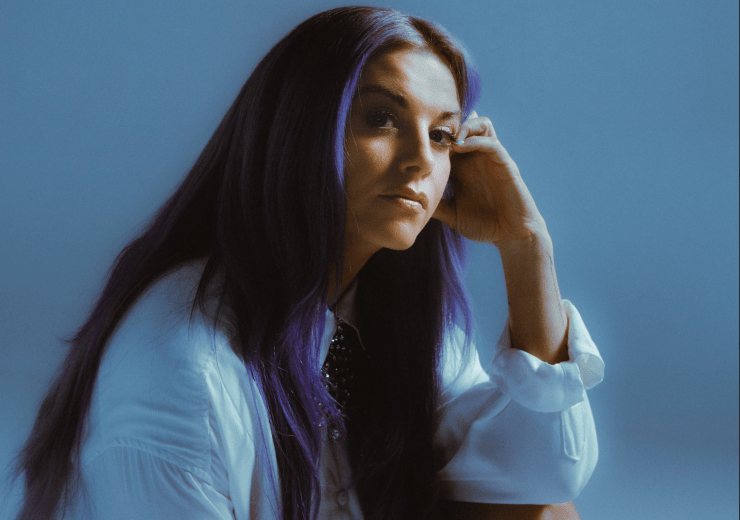
Having been wowing crowds playing guitar live with the legendary Shania Twain in the UK over the last couple of months, singer-songwriter Lindsay Ell is also a renowned artist in her own right. Not only did she win ‘Single Of The Year’ at the Canadian Country Music Awards last year for the twinkling emotion of last year’s catchy ‘Right On Time’, but – following playing with Shania’s band at BST Hyde Park a couple of weeks ago – she also sold out Omeara in London the following day for her own show.

We caught up with Lindsay to find out more about the experience of playing with her hero, what inspires her, being a woman in the music industry today, and more. Have a read and then listen to the awesome playlist that Lindsay has put together for us, of some of her favourite contemporary country artists!

Are you able to tell us a little bit about what initially got you into music, and playing the guitar?
I grew up in a really musical family – my parents and grandparents all played instruments, and my brother and I started playing piano when we were six years old. By the time I was eight years old, I thought the guitar was a lot cooler, so I asked my dad to start showing me a few things on it. The first guitar riff he taught me was ‘Stairway to Heaven’. After that, I never looked back! 

I just saw you playing with the legendary Shania Twain at BST Hyde Park on Sunday – you were incredible! And it was so lovely to see all the band members so in sync with each other and having such a great time on stage! It must have been such an amazing experience – how was it for you?
BST Hyde Park was one of the most memorable shows I’ve ever played, and also my favourite with Shania so far; Hyde Park seemed like the perfect ending to such a legendary run (getting to play Glastonbury as well!). There is something about that stage that makes a show feel larger than life and the energy in the heart of London is something that’s hard to describe in words. Shania has been the most wonderful human, welcoming me so brilliantly on her stage each night. I’m honoured to have been a part of her world this year. 

And how did the opportunity to play with Shania come up for you? Had you previously been a fan?
To say I’ve been a fan of Shania would probably be the understatement of the century. Shania is the reason I started singing when I was a little girl. It’s crazy to think the song that made me fall in love with Shania, ‘No One Needs To Know’, is now a song I get to play on stage with her every night. Life is truly wild and surprising in those full circle moments. I toured with Shania last year on the Queen Of Me tour, which was so incredible! Then, at the beginning of this year, when I got the call to see if I wanted to come out and play guitar for her, the offer was one I couldn’t resist!

As well as playing with legends like Shania Twain and artists like Maren Morris, you’re also a solo artist in your own right and write fantastic country-pop anthems – I love the catchy hooks and emotion-strewn power of songs like ‘How Good’! What are the main things you tend to draw inspiration from when writing songs?
I want to write songs from an honest place, because I think the more honest a song is, the better chance it has to connecting with someone else. I feel that we’re all fighting similar battles on opposites sides of the same war sometimes, so usually I tend to pull inspiration from my own life, or from stories I’ve heard friends tell me. As long as I can connect to it in some way, I can write a song about it. 

And you’ve also just played a sold-out show at London’s Omeara, which I was sorry to miss! How was that for you? Was it the first time you’ve played in London?
My sold out show at the Omeara was so incredible. This is probably the tenth time I’ve played London, but I’m always so happy to be back and see the best fans on the planet! I felt so loved as they sang all the words to b-sides off my last couple records, and I was able to preview some brand new songs for them. Overall, it was such a great night. 

You won ‘single of the year’ at the CCMAs last year for your song ‘Right On Time’, which is so fantastic – big congratulations! How does it feel being classed as a ‘country’ artist, and how much would you say you’re influenced by and fit into the genre generally?
Winning ‘single of the year’ at the CCMAs for ‘Right On Time’ was such an incredible night. Most of the time I don’t really see myself as country, and to be honest have been told so many times that I’m “not country enough” for the genre. I grew up loving songwriters like Joni Mitchell, Carole King and Shania, and since I started writing music, my goal has been to create the most honest songs I can. When I moved to Nashville fifteen years ago, and got offered a deal from a country record label, I just figured that my music could cross over to many genres, and – because of the messages in my songs – I felt like country fans could relate. I’m so grateful for all of the amazing fans that I’ve met through country music, but if I were being honest, I don’t know if I’ve ever truly ‘fit’ into the genre. At the end of the day though, I don’t think fans care if they’re listening to a “country” song or a “pop” song, or a “rock” song, I think people just like to listen to the music they like to listen to. So at this point in my career, I see myself as more of a singer-songwriter than classified as a country artist, and truly, I just hope that I can keep making music that feels honest; that people want to listen to. 

Are there any other contemporary country artists that you’d recommend we check out?
I am very excited for the genre of country music, and the wider tent it’s casting with artists like Noah Kahan and Zach Bryan. It’s really inspiring to see artists like Kacey Musgraves being true to herself and her sound, and letting it evolve compared to letting a genre tell her where she needs to go. I’m a huge fan of her latest record, Deeper Well

As we’re an organisation that focuses on promoting women and queer folk in new music, how would you say the industry is for them at the moment? And how has your experience been in what can often seem like a male dominated environment?
Thank you so much for all you do for women and the queer community! I will say that I think the industry is better now than it’s ever been in supporting these minorities. However, we still have a long way to go. The ratios are still very uneven, and although there doesn’t seem to be a linear solution to the problem, I think the best thing that women and queer artists can do is keep releasing great music. 

And do you have any advice for young women who might want to get into making music right now?
If you’re wanting to make music right now, I think the most important thing to figure out is who you are and what you want to say: why now? Anyone can sit in their bedroom today, write a song, and release it hours later… But you have to think, why should anyone care? When you can distill what you want to do down to a few sentences, I think the path on what you need to do and where you need to focus becomes really clear. It should all revert back to your reasons why. 

Massive thanks to Lindsay for answering our questions! Have a listen the awesome playlist that she put together of some of her favourite contemporary country artists here.

INTERVIEW: Tina Edwards

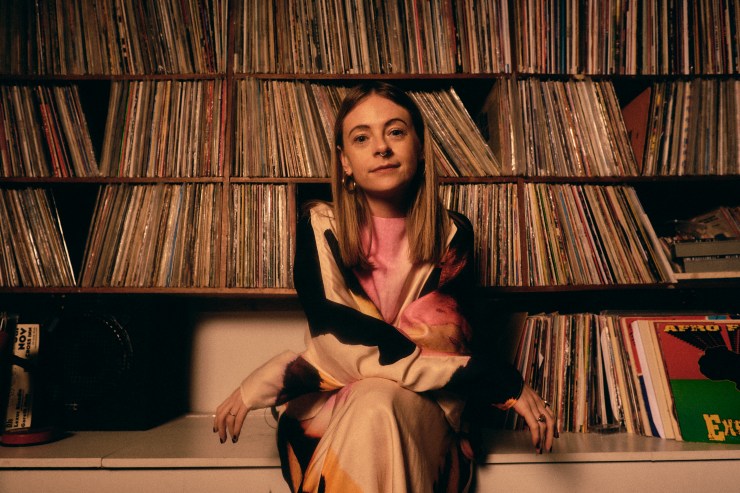
Ahead of Rhythm & Taste, a one-day jazz and food festival happening at Design District on Greenwich Peninsula this Saturday 20th July, we caught up with Tina Edwards who is going to be DJing at the event. Exploring beats as delicious as the eats, with a spread of New Orleans-inspired food, plus crate digging from Peckham Soul, sets from an eclectic line-up of great artists – including bassist and producer Marla Kether – in addition to Edwards, the event looks set to be a lot of fun; a perfect summer day out.

Find out more about Tina Edwards, her love of jazz and its pioneers, being undermined as a woman in the industry, and what to expect from her set on Saturday in our interview below. Have a read, and then make sure you have a listen to her luscious ‘Spitting Fire‘ jazz-filled playlist on Spotify!

Hi Tina, thanks for chatting with us! How are you doing today?
I’m very well, thanks! I’ve been away from home a lot over the last couple of months and this week’s been my first week home without looking at a suitcase! I’m feeling nicely rooted. 

Are you able to tell us a little bit about what initially got you into music, and into DJing specifically?
Although my Mum has a different taste in music to me, her passion for it was infectious. I’ve always been quite an introspective person, and music has always helped me to understand nuanced things about myself or the world. I got into DJing through radio, especially Worldwide FM. It was my first contact with CDJs, and so my curiosity naturally flowed into sharing music in a way that was new and exciting for me. I’ve been DJing now for six years but so many people around me have been doing it since they were teenagers. I still feel like a newbie! 

I was lucky enough to catch you DJing at The Roundhouse as part of Higher Ground Festival last year, and loved the uplifting funk-fuelled grooves of your set! But has there been a particular set you’ve played throughout your career that stands out as a highlight? 
Thanks! It’s really hard to pin down one so I’ll just highlight a couple from this year; firstly, my Glasto debut! I played Platform 23 and HMS Sweet Charity; both filled my cup in different ways. Secondly, I made my debut at Detour Disco—a nomadic festival which is held in different difficult to reach places every year. I warmed up for DJ Paulette and got to play a disco edit of Ain’t No Mountain High Enough on a 3000km mountain, Piz Gloria, which featured in a Bond movie. We all sang at the top of our lungs. A pinch me moment! 

And how do you normally go about choosing what records to play? Do you have any particular go-to faves that you always play, no matter what? 
I focus on keeping my records circulating so that every set is different, but for sure, every DJ has their go tos that they know often go down well. There’s not a track that I ‘always’ play, but Onegram’s AEO (Slowly Dub), recently reissued by Jazz Room Records, is perfect for so many moments. It’s a euphoric, mid-tempo little ditty that works as a palette cleanser, a mid-set cool down or an uplifting closing track. 

And now you’re set to play as part of Rhythm and Taste festival at Greenwich Peninsula on 20th July, which sounds like an awesome day! Can you tell us a bit about how you got involved in this, and what you’re most looking forward to about the event?
I’m really looking forward to this, shout out to Matt Nightingale for inviting me down. It’s a treat to play for people who are arriving with open-minded ears, just open to having a good time. I’ll be bringing lots of latin and dance-floor jazz for this to try and coax out the sun. 

The event’s focused around jazz and its culture. How much of an influence would you say the genre has on you and the records you choose to play? 
Jazz is a thread that runs through a lot of the music that I play, but that could be in obvious ways or very subtle ways. Essentially, I value and celebrate black music — dance music is black music. It’s important for me to continually learn about and understand the origins of the music that I play out. 

Do you have a particular favourite Jazz artist? 
I couldn’t pin it down to one but right now, I’m really enjoying listening to and sharing music from Pharoah Sanders and Donald Byrd. 

And how much of an influence would you say the infamous women pioneers of jazz still have on music today? 
Not as much as they deserve. Music press and other structures have long thrown an invisibility cloak over female jazz musicians, in comparison to everyone else. And today, syllabuses in conservatoires are guilty of not under-representing female artists. A lot of jazz musicians I know, my age or younger, weren’t taught about the works of female jazz musicians. If we’re not teaching people about the achievements women, we’re telling them that it’s fine to overlook them. That needs to stop. 

Are there any contemporary jazz artists that you’d recommend we check out? 
A whole bunch! One of my Spotify playlists called Spitting Fire, named after the BBC One documentary I hosted in 2022, is full of artists that I recommend. 

As we’re an organisation that focuses on promoting women and queer folk in new music, how would you say the industry is for them at the moment? And how has your experience been of DJing in what can often seem like a male dominated environment? 
Often women’s knowledge will be undermined; I’ve had several sound engineers explain to me out of the blue how a mixer works — I already know, that’s why I’m here! Hahaha. Things are slowly changing and the likes of yourselves, He.She.They, Saffron and lots of other collectives are making positive differences. I run a night called Queer Jazz with Jelly Cleaver; we’re building a community of queer jazz artists and fans, and it feels really good to provide these talented musicians with extra opportunities to perform. 

And do you have any advice for young people who might want to get into DJing now? 
Visit open decks events, look out for workshops, and don’t be afraid to reach out to people for advice. No question is too basic or too silly. We all start from the same place.

Massive thanks to Tina for answering our questions!

Catch Tina Edwards’ set at Rhythm & Taste festival this coming Saturday 20th July at Design District on Greenwich Peninsula. And, in the meantime, listen to her ‘Spitting Fire‘ playlist to get you in the mood!

Photo Credit: Joe Magowan

Introducing Interview: Samantha Lindo

Having released her debut album. Ancestry, towards the end of last year, Bristol-based artist Samantha Lindo has received acclaim from the likes of BBC 6Music and BBC Introducing, and is a regular on the live circuit, having performed at festivals such as Boomtown Fair and Bristol Jazz and Blues festival.

Having received support from the Arts Council and the Mobo Fund of Help Musicians UK to create and release the album, throughout the collection Lindo reflects on her compelling family history, whilst drawing on themes of climate justice and dual heritage identity with a stirring emotion; her rich, soulful vocals rippling throughout shimmering jazz-tinged soundscapes.

We caught up with Samantha to find out more about her experiences of writing and recording the album. Have a read and make sure you check out the album now!

Hi Samantha, welcome to Get In Her Ears! Are you able to tell us a bit about what initially inspired you to start creating music? 
I’ve sung from when I was small – being in plays and concerts, where people came together around the arts, were some of my most cherished childhood memories. I guess once I was an adult and had been in several different projects singing other people’s songs, I was in a place in my life where I wanted to start exploring my own inner world and my own healing – and I started creating music from there.

I love your soulful jazz-tinged sounds, but who would you consider to be your main musical influences?
I would say genre-wise I would describe my sound as spanning the realms of spiritual jazz, gospel, folk and spoken word. In terms of artists, my sound is inspired by classic artists like Marvin Gaye, Carole King and Minnie Riperton, as well as contemporaries such as Robert Glasper, Cleo Sol, Sault, and Jordan Rakei.

You recently released your debut album Ancestry, which is very exciting! The album reflects back on your family history – are you able to explain a bit about what inspired you to focus on this as a concept? 
During lockdown in 2020 I reconnected with my second cousin in Canada over WhatsApp and zoom. She lived in JA until she was seven, whereas my dad was born in the UK. She was so much more connected to our family history than my dad is, and has pictures, stories and all this amazing information. Viewing it all through the lens of the BLM movement and world issues, gave it all a different dimension. It felt so healing and strengthening to connect to the heritage and history that I’d come from and gave me a new perspective on the future. I felt really inspired to delve deeper into those stories and that process through music. 

And what was the writing and recording process like for you?
It was a multi-layered process. The original jamming and improvising around each story was really intimate: me connecting to my different ancestors and being open to what emerged. I’d then share that with my partner Dylan who might structure some chords and musically respond to what I had heard. Then I took a set of rough songs to Alex Veitch, who workshopped each one with me, disrupting my usual process, and finding different chord flavours and structures. We then took the rough recordings to producer, Doug Cave, who helped me imagine each track as a full arrangement before we took them into rehearsals with the band for several days before we recorded the main full band tracks. After that there was a lot of reflection and layering with various session musicians and recording of all the harmonies. I found the labour of all the harmonies the hardest, whereas the performance of the lead vocals flowed really easily. I honestly loved the process. We did most of it in Doug’s house, and I’d bring home cooked lunches and we’d hang out in the garden so there was a really relaxed but hard working feel to it all.

You also received funding from the Arts Council to help with the album – how did you find the experience and applying for this, and what advice could you give to other musicians when applying?
Find your own narrative, what you are saying and why, and also know who you are wanting to talk to, who your audience is. Think of some measurable goals that will let you know you have made the thing you want to and delivered it to the people you wanted to. Be as specific as possible. And get someone to help you who has done it before. There are also sessions you can go to to give you more information about the funds and how to apply. 

What can fans expect from your live show?
Playing live is my favourite thing about being an artist. You can expect a compelling, moving vocal performance; storytelling that helps you connect with the music and yourself and a new and different way. And the musicians are also at the top of their game, so it will be an all round immersive, beautiful experience, I hope. 

And when you’re out on tour, are there any particular essentials that you like to take with you to keep you going when away from home? 
I tend to prioritise keeping as well as I can. Echinacea & apple cider vinegar to keep colds at bay. Diffuser with essential oils for good sleep. Yoga mat for pre-show stretching and warm-ups, and my massive water bottle.

As we’re an organisation keen to support new artists, we just wondered how you feel the industry is for new artists at the moment? And do you feel much has changed over the years in its treatment of female and queer artists? 
I think the platforming of female and queer artists has increased massively over the last decade. Having had a baby this year, I’m also really excited about groups emerging of mothers in music, exploring how to advocate for and support one another when so much of the industry is way behind on being aware of inclusivity in this area. 

And are there any other new artists you’d recommend that we check out? 
Marla Kether & Holyseus Fly.

Now that the album’s out, what are you looking forward to in 2024? 
My live show at the Bristol Beacon in April, and then festivals in summer. I can’t wait to be playing the album live. I look forward to seeing you at one of the shows!

Ancestry, the debut album from Samantha Lindo, is out now.

Introducing Interview: Becca Mancari

Having received acclaim from the likes of the New York Times and queer publication them, and collaborated with big names such as Hayley Williams (Paramore) and Julien Baker (boygenius), Nashville artist Becca Mancari has just released their latest album, Left Hand. Rippling throughout with a beautifully heartfelt emotion and twinkling musicality, it offers a dreamy and gently empowering reflection on queer identities and our relation to the natural world; a shimmering and relatable ode to being your true self.

We caught up with Becca to discuss their new album, processing past trauma, being a queer artist today, and more. Have read below, and make sure you check out the exquisite new album!

Hi Becca, and welcome to Get In Her Ears! Are you able to tell us a bit about how you initially started creating music?
I actually started at a very young age! I felt safe when I was making music, and I always loved how the act of writing music helped me really feel connected to myself. I had so much fear as a young kid, and this helped me not feel alone! 

I really love your dreamy, twinkling musicality and emotion-rich vocals, but who would you consider to be your main musical influences?
I think the emotional music came from listening to Sharon van Etten, and then I also used to listen to mewithoutyou, and they helped me explore my religious trauma. 

And how much would you say your religious upbringing feeds into what you now create? 
I think that it really helps me see how it matters to find your own way, and to not be in a group think. The good parts that I received from my upbringing though were that I learned how to really be around so many different kinds of people. I learned how to love myself, with or without the love of religious people, and I am thankful for the chance to grow even deeper in love with the world around me! I fought for that hard! 

You’ve recently released your new album Left Hand,  which is very exciting -congratulations! It seems to reflect a lot on your childhood and family, are you able to explain a bit more about this?
I only started to fully process all of what happened to me as a kid recently, but it’s so important for me to keep healing and being in therapy! I started therapy in late 2020 and it was the first time that I had ever been in it, and it really did save my life. But for me, I process my feelings through music – I finally do feel like this is my last record about the past, and I am really looking forward to what’s next. 

And you also seem to draw inspiration from the natural world in your writing – how does this normally come about, and how do you feel it links to the emotions you’re expressing throughout the album? 
I grew up in a tiny town with only about 800 hundred people, so nature was such a big part of my childhood. I feel like I get physically sick and definitely emotionally unwell if I am not in nature.  So, I really wanted to honour what nature does for us all on this record, and also talk about how important it is for us to protect her!

It seems like you went through quite a difficult time after the release of your last record (The Greatest Part, 2020), was the process of creating this latest record a cathartic process for you? It certainly seems to emanate some really comforting uplifting energy and queer joy! 
Yes, this record really did bring me to the next level of self love and self acceptance! It’s been a really long journey for me in this way, and I am so glad that you feel the queer joy on this album! I make music for everyone, but especially the queer community! 

After initially starting the studio session to record the album with a producer, you then made the decision to produce the album yourself. What lead to this decision? And how was the process for you?
The process with that other producer was so terrible that I left it feeling like I needed to make a change to really start learning how to produce on my own! And thankfully my longest collaborator and dear friend Juan Solorzano was ready and able to co-produce the record with me, and it ended up being a record that really changed my life. I was on a path that was not really the right one, and by making this record myself I really feel like it changed the whole course of my life. 

You’ve collaborated with various other artists on the album (including personal favourite Julien Baker!). How did you decide on who to work with for the album? And how did the collaborative process go? 
So, living in Nashville for so long it was just a natural thing to make friends with other artists, and I feel so lucky to be able to collaborate with them on their music as well! We just end up working together because it’s fun and easy. With Julien, I knew that she was getting into engineering, and so I was like hey “Jb, do you want to engineer your own vocals?”, and she was just super down for it!   

You’ve played a lot of exciting live shows over the last few years, including one with Hayley Williams (Paramore) in Madison Square Garden, and sharing a stage with the likes of Sheryl Crow and Brittany Howard at Nashville’s LGBTQ+ benefit Love Rising. How were these experiences for you? And is there a particular show you’ve played throughout your career that stands out as a highlight?
I really appreciated Hayley asking me to do the Love Rising show because that show really meant so much to me and the community that I am in. It’s always really nerve-racking to be asked to play someone’s music with them because you want to make sure that you do it well, but H is just one of the best people I know, and has always made me feel seen and supported! 

As a queer person making music today, how do you feel the industry is for new artists at the moment? And do you feel much has changed over the last few years in its treatment of gender non-conforming and LGBTQ+ artists? 
I do think that there are way more opportunities for us than there were, but it’s STILL such a struggle and the industry is still geared to cis straight white people. So, my true hope is that the industry changes completely from the ground up! As queer people we are still fighting for our lives, and so I really hope we are not only respected for our music, but also that our lives are protected.

As we’re a new music focused site, are there any other upcoming artists you’re loving right now that you’d recommend we check out?
Bloomsday! They are a great non-binary queer band out of Brooklyn, and they are opening a bunch of dates for me! 

Finally, what does the rest of 2023 have in store for you? 
Tonnes of touring all over the United States, and then making a plan to come to the UK and EU early next year!

Huge thanks to Becca for answering our questions! We can’t wait for them to come over to the UK sometime soon!

Left Hand, the new album from Becca Mancari, is out now via Captured Tracks. Listen / order here.

Photo Credit: Sophia Matinazad