Introducing Interview: Joanna Sternberg

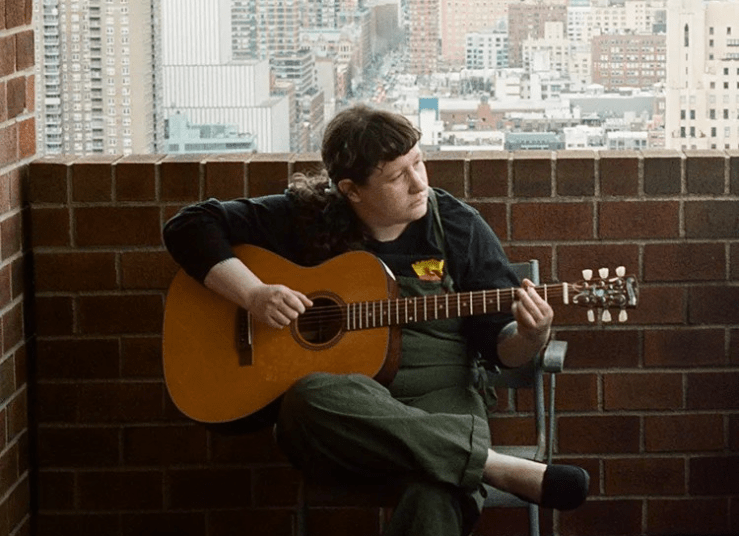
With acclaim from the likes of Rolling Stone and Pitchfork, New York based artist and multi-instrumentalist Joanna Sternberg has just released their second album, I’ve Got Me. Recorded with producer Matt Sweeney and engineer Daniel Schlett, Sternberg masterfully played every single instrument on the record, and solely wrote each and every song, showcasing their ability to create a truly exquisite, genre-spanning collection. With an education in Classical and Jazz music, throughout the album Sternberg weaves a rich tapestry of beautifully lilting folk-strewn sounds alongside reflective narrative lyricism; all brought together with their raw, impassioned vocals. A truly exquisite listen.

We caught up with Joanna to find out more about the album, their influences, the industry today and what’s next… Have a read!

Hi Joanna! Welcome to Get In Her Ears! Can you tell us a bit about yourself?
Hi! My name is Joanna Sternberg. I’m a singer songwriter and visual artist, and I play a bunch of musical instruments too. I live in New York City and I just put out my second record.

Are you able to tell us a bit about how you initially started creating music? 
I initially started creating music because when I was little I would sing to myself and hum a lot, and so my parents sent me to piano lessons. And then in middle school I taught myself guitar and electric bass and then, in high school, I learned double bass and then I went to college for double bass. Then I wound up learning how to sing when I was twenty one. So, I guess that’s the full story! And then the songwriting came.

I really love your stirring folk-strewn musicality and reflective narrative lyricism, but who would you consider to be your main musical influences?
Thank you! Well, I really love Louis Armstrong, and I really love folk music. And I really love The Beatles, and blues. But, I guess in terms of influences that are people, I guess Louis Armstrong, Randy Newman, The Beatles, Elliott Smith, Billy Strayhorn. 

And how would you say your experience and training in Jazz and Classical music feeds into what you now create?
I would say it feeds into it a lot because I really go to Jazz and Classical for melodic and chordal ideas the most, probably, and I think they complement each other really well and can be interchangeable a lot of the time. I feel so lucky to have the Jazz and Classical background because it really enabled me to write songs.

You’ve just released your brand new album I’ve Got Me,  which is very exciting – congratulations! Are you able to tell us a bit about it? Are there any particular themes running throughout it? 
I’ve Got Me is a collection of songs I wrote just basically about the span of human emotions. All the songs are just autobiographical about me, but I think anyone can relate to them. I’m singing it about certain things, but that doesn’t mean the person listening has to know what that means. They can have their own thing. It’s for them. It’s just songs that I want to make people feel less alone. That’s the theme, I guess. 

You play all the instruments on the record and had a very large part in its production – what prompted this decision? And what was the recording process like for you? 
I really, really wanted to always play all the instruments on my own record – I just always had a dream of that. I thought it would be a magical experience and I wanted to try it, and I was right! It was the most fun thing, and everyone around me validated it – everyone in the studio told me that it sounded great, and as long as they said that, I was ready to keep going. It just was so fun and it allowed me to be myself as much as possible. The recording process was really great once we got into the studio. It was fantastic working with Matt Sweeney – everything was so easy and comfortable and meant to be, really. It was all very natural and awesome, and the best possible circumstances. 

You’ve played a lot of live shows in various forms across New York City, from playing bass in jazz bands to supporting Conor Oberst, but is there a particular show you’ve played over the years that stands out as a highlight? 
A show I was really proud of was my record release. I released it before the pandemic, and I had the record release show at this place called The Glove, which I really used to love to play at that has now closed. It was a DIY venue, and it was just a really special show and the place was packed with people I love. All my friends who played were great, and at the end we all jammed together, and it was just really special and I was really proud. I miss that place.

And are there any other current venues in New York that you really love too? 
Right now, I really love playing at Union Pool – it’s a great venue. And I also love playing at Sunny’s Bar when out on tour.

When out on tour, are there any particular essentials that you like to take with you to keep you going when away from home? 
I definitely like to take my art supplies, because then I can make merch while I’m travelling, as well as just draw for myself – so, it’s always good to have my sketchbooks and stuff. And I also have my Nintendo Switch to play Animal Crossing!

How do you feel the industry is for new artists at the moment? And do you feel much has changed over the last few years in its treatment of female/gender non-conforming and queer artists? 
I think it’s been a lot more inclusive over the last few years for queer artists and non male artists, and that’s really great. And I think people are really bringing awareness to Inclusivity and making a big point to care about it. Regarding the industry for new artists at the moment, I guess it’s good, but can be a little scary. The internet is a little intimidating and can lead to a lot of bad things, but it can also be useful and nice if you’re careful on it. But it is hard not to come across really upsetting things of how badly people treat each other. So, I guess the internet could be a tool to use, but it could also be something that can be dangerous. So, it’s kind of complicated, but the internet is the thing really – it all seems to be based around that now!

As we’re a new music focused site, are there any other upcoming artists you’re loving right now that you’d recommend we check out?
Oh my gosh, there’s so many upcoming artists that I recommend you check out! One of them is my friend Liam Kirby, who’s such an amazing songwriter. He’s on Instagram and he’s putting out a record, we’re just figuring out how to get that out there. And then my other friend, Jackie West, is another really amazing songwriter and she’s putting out a record soon that she is finishing up. She’s on Instagram, but she’s always playing shows. So I would say to check both of those two out ASAP if I was you! 

Finally, what does the rest of 2023 have in store for you? 
I get to go on two really exciting tours! One of them is opening for Kurt Vile – so exciting! Then I get to open for Angel Olsen – so amazing, that’s going to be great. And I think I might be coming to the UK too. So, all of that is so cool. And yeah, I’m just so happy with everything!

Massive thanks to Joanna for answering our questions!

Their exquisite new album, I’ve Got Me, is out now via Fat Possum records. Check it out here.

Photo Credit: Michael Leviton

INTERVIEW: Kate Webster of Deer Shed Festival

Last year I attended Deer Shed Festival for the first time, and I promised myself it would the be the first time of many as it was such a glorious weekend! Having not been to a festival for a few years, I was keen to find one that was as lovely as possible, and suited my needs of being perhaps a little older than the average festival-goer without missing out on any of the best new music. I wanted a festival that was inclusive, chilled-out, family friendly, and of course hosting plenty of amazing female and non-binary bands and artists… And Deer Shed more than delivered on all fronts.

Highlighting a real family-friendly focus, whilst hosting an incredible range of exciting new artists, the North Yorkshire based Deer Shed perfectly filled the festival-shaped-void I’d been feeling, and – with highlights from last year including Self Esteem, CMAT, Straight Girl, Nadine Shah and Denise Chaila – I cannot wait to return in a couple of weeks.

We caught up with festival director Kate Webster to talk more about Deer Shed’s roots, its ethos and inclusive line-up, some of the most special Deer Shed moments of years gone by, and more… Have a read below, and have a listen to our special Deer Shed 2023 playlist, featuring some of our personal faves who’ll be playing at the festival this year, at the bottom of this feature!

Hi Kate! 2023 will be Deer Shed’s 13th year – hopefully lucky for some! Can you tell us a bit about what Deer Shed is all about, and how it all started out?
Deer Shed Festival is a boutique music, arts & science festival based in North Yorkshire parkland, aimed at families who don’t want a dumbed down experience just because you have kids in tow.

What strikes me about Deer Shed and makes it stand out against other festivals at the moment is the good gender balance of the line up – was there an intentional and specific decision to do this, or does it just naturally pan out that way?  
I booked the festival up until our 11th year and initially it happened unconsciously just because of the music I like. After a while, we decided it make it a policy of the festival that our gender split should be 50/50 and also at least one of the headlines needs to be female and/or non binary. It’s been great – because of our size we have been able to give some deserving acts the chance of a festival headline. Can you believe that we gave Goldfrapp they’re first festival headline in 2018?! I find that bonkers!

Over the last 12 years, you’ve hosted some amazing bands and artists including Self Esteem, Nadine Shah, CMAT, Kae Tempest, Anna Calvi, Big Joanie, Ezra Furman, The Go Team! and Honeyblood, but has there been a particular set that stands out for you as a personal highlight over the years?
Kae Tempest for sure. It was 2017, they were promoting Let Them Eat Chaos which is a phenomenal album, and it was also their first festival headline. The actual performance was extra special to me and many of the audience that evening.  The skies darkened, the rain poured and in the distance, lightning flashed. It meant, for those who stayed (and a lot did), the whole experience was electrifying and so moving. I still get shivers now when I think about the power of that evening. It was like nature knew what the backdrop should be for that performance.


And this year you’ve got some GIHE faves playing (The Big Moon, Dream Wife, This Is The Kit, English Teacher, Sprints…). Curating such awesome line ups must be a lot of work – how do you normally go about it? Is it all based on bands/artists that have got in touch with you over the year? 
We’ve had a booker for the last couple of years – I think Covid meant the job had got harder and I needed a break. It was also a good time to get some fresh ears to help. However, as festival director, I still want input and I think next year we’ll bring it in house again. We generally start with a wish list and play fantasy festival which is great fun; the whole Deer Shed team are into music, so everyone chips in and has suggestions of who they have seen perform during the year or might have new music coming out. We talk to friends in the industry and agents, so see what’s going on. Practically speaking, we only start making offers in Autumn, so that’s the best time to contact us. We must get the headlines in place before moving down the bill which can take some time.

And for any upcoming bands/artists looking to apply for festivals next year, do you have any tips?
Start building a live following in your local venues. Practice to become a great performer and engage with your audience. A festival crowd is different to your own show – you have one song to win them over! Whilst a lot of artists get an online following and good streaming numbers, it doesn’t always translate to live.

There seems to be a definite focus on making the festival as family-friendly as possible, and when I was there last year it just had the nicest, most relaxed vibes I’ve ever experienced at a festival! What inspired the idea to do this, and stand out from other festivals in this way? 
When Oliver and I decided to give it a go, it wasn’t long after festivals like Latitude & Camp Bestival had started and there was no one doing anything similar in the north. I couldn’t see live music like I had done because of family commitments, and many events near by didn’t offer me the chance to see great music and have the kids entertained. So, Deer Shed was really built for me & my friends initially – music fans who happen to have kids. It turned out there were other people like me!

Do you feel much has changed over the last few years in the music industry’s treatment of new artists, particularly female and non-binary artists? 
I think there is more awareness of mental health and agents/managers are now more mindful over booking artists. I also hope the idea of booking a tokenistic female/non-binary act has come to an end… But I do still worry that some young female artists are led a certain way on how they present and what they wear. There seem to be some genres of music where I’m not convinced that a stylist/photographer/label didn’t have a brief to come back with a certain look.  

Finally, as we’re a new music focused site, are there any particular new bands or artists you’d recommend we check out?
I’m totally excited that we managed to book Grove this year. I know they’re not that new but their energy, style & music is infectious. So good live! I’ve not seen Pet Snake live yet, but I’m loving the Liverpool based artist – alt folk/indie at its best, just great songwriting.  

Massive thanks to Kate for answering our questions, and for organising such a stellar festival year on year! Deer Shed Festival 2023 is taking place from 28th – 30th July and headliners include The Delgados, The Comet Is Coming, The Big Moon and This Is The Kit – more information here.

Get ready for the festival by listening to our playlist of brilliant bands playing this year here:

INTERVIEW: Lucy O’Brien on Karen Carpenter

Having been big fans of author and journalist Lucy O’Brien for some time now (Dusty: The Classic Biography, Skin: It Takes Blood and Guts), and even getting a mention in the revised edition of her incredible She Bop: A Definitive History Of Women In Music a couple of years back, we were excited to find out about her latest venture: a biography of one of the most iconic women in music of the 20th century – Karen Carpenter, forty years after her passing. An insightful reframing of the often perceived ‘tragic’ figure, Lead Sister offers a fresh perspective on the life of Karen Carpenter; whilst touching on the sadness of her story, placing a focus on her strength and innovative drive. 

After reading the book and attending its London launch at Soho’s Century Club a couple of months back, I was lucky enough to catch up with Lucy to find out more about what inspired her to write the book and what she discovered about Karen along the way… 

Primarily known both for her angelic voice and struggles with Anorexia Nervosa, Karen Carpenter was so much more than merely the delicate front woman we’re so often presented with; as O’Brien points out – “No way she was just submissive – she was the driving force of the band… And it’s interesting to see this picture emerging of this forthright, pioneering woman.” As so often seems to be the case, Carpenter’s history seems to have been buried by the media’s perception of her and how a woman in the industry should be, and so it’s wonderful that O’Brien made it her mission with Lead Sister to reframe this existing narrative: “It was time to revisit her story and look at it through a new lens. Not only the eating disorder that she struggled with, but also how much she achieved despite that. Was she really just a submissive puppet? I doubt it. To achieve that level of success in the US music industry in the ‘70s, which is a hard place to be, I knew there had to be more to the story.” 

This uncovering of a subject’s narrative, finding new material and piecing the story together piece by piece is key in the job of biographer (“almost like a detective”), and something that O’Brien is no stranger to. Being able to cast a new light on stories told, taking into perspective the attitudes of the times and a deeper understanding of certain issues, is something she has done with previous books – revisiting her biography of Dusty Springfield in 2019, for example, she was able to explore the LGBTQ+ issues and Springfield’s sexuality more than she would have thirty years before for the original 1989 edition. Society’s attitudes shift, and so too do the voices we hear. Up until now we had only really heard one voice in the Karen Carpenter story – that of Richard – and O’Brien believed it was now time for that to change: “…. the story that emerges is the story of the people that want to contribute. Previous biographies, ones approved by family, tended to portray Karen as the victim – as someone with not much agency. What was great with this book, I was talking to people who hadn’t done many interviews before – giving a fresh perspective.”

Having briefly touched on Karen Carpenter’s story in She Bop, O’Brien jumped at the chance to focus on her story in more depth when Pete Selby (98 Books – Miki Berenyi, Jenniffer Otto) asked if she wanted to do a full biography: “I’ve always been fascinated by her and her amazing, fluid wonderful emotional voice. That juxtaposition of the perfect lush pop of The Carpenters and then the sadness within a lot of the music, and the lyrics.” One of the things that appealed to her the most was Karen’s strength of character and unrelenting energy for what she loved – like drumming. “When she joined the school marching band, that’s when things turned around for her and she found liberation through drumming. She used to go to a drum shop in LA where mostly male drummers would hang out. She would hang out with them and swap stories. She got her parents to buy her a drum kit. She had pictures of people like Buddy Guy on her bedroom wall at the age of 15. She had a vision. She was such a committed drummer. Realising things like that – I realised she was quite a tough cookie.” 

This passion for what was (and still is in some respects) quite an usual instrument for a woman to play marks Karen Carpenter out as somewhat ahead of her time, as did her fierce drive and determination: “She was very competitive in terms of wanting to succeed. Talking to head of promotion at A&M, he was in awe of her encyclopaedic knowledge of the music industry and radio stations across the country.” So, certainly not just a submissive counter-part to her brother – in fact, from the stirring account of their childhood in Lead Sister, it often seems as though she was the ‘tough’ one in their relationship, frequently sticking up to his bullies at school, or being reprimanded for her cheeky sense of humour. O’Brien reflects on these more ‘masculine’ qualities of Karen when we speak; speculating that perhaps, had she been alive today, she may have identified as more gender-fluid as she did not fit into the conventional ‘feminine stereotype’ that was certainly prevalent at the time. 

However, despite her strength, she faced opposition to her love of drumming as The Carpenters started to achieve success, with huge pressure put on her from both Richard and other men on the team, to stop ‘hiding’ behind the kit – “this is such a contradiction in terms”, O’Brien responds, “how can you ‘hide’ behind drums – drums are the most expressive instrument. She was really expressing herself.” Sadly, though she resisted it for a long time, it seems that she lost the battle to be able to stay doing what she loved, and was almost ‘de-skilled’ by having to simply stand up front and sell the songs, “be a decorative front woman”. Understandably, this must have dented her confidence and been very frustrating for someone with such massive skill and passion – “… even though she had amazing voice, that wasn’t all there was to her…”, O’Brien explains, “… Every moment she could, she would find time to play the drums – like on their 1976 tour, she’d play an amazing drum solo right in the middle of concert.” (This tour is actually where the name of the book comes from, as – when the Carpenters toured Japan – a magazine mistakenly referred to her as the ‘lead sister’ of the band. She loved this title so much that she had it made into a t-shirt which she wore whilst thrashing out some beats at every opportunity on tour.) 

It was particularly heartwarming, then, for O’Brien this year, on the 40th anniversary of Karen’s passing, that a new emphasis seemed to be on her skill as a drummer: “That was what people were emphasising, much more than in the past when focus was always on her ‘silken’ voice – it’s really interesting how what we see and what we appreciate has shifted in terms of her expertise and what she symbolised.” 

The way in which Karen Carpenter struggled to fit into traditional ‘feminine’ roles is not a new perception. When speaking to some of her closest friends, O’Brien discovered how she had often found it difficult to fit in. Petula Clark, for example, reflected on Karen adjusting to the Beverly Hills culture, trying to turn herself into an “uptown Beverly Hills Queen” when that really wasn’t her; she was essentially just a musician’s musician, a “tom boy”. Remembering one particular instance, she told O’Brien of when she felt extremely uncomfortable seeing Karen feeling pressured to present herself in a certain way that wasn’t her true self, at a bridal shower she held at a country club with Beverly Hills socialites (before briefly marrying a real estate developer). Reflecting on how it seems that Karen wasn’t allowed to fully express herself and pursue what she was really passionate about, both in her professional and personal life, may go some way to explaining the root of her mental health struggles – “striving to become someone she wasn’t; someone that really wasn’t her.” 

However, looking back at Karen’s life, it’s clear that other factors could have played a part. When she was twelve, for example, the family moved from Connecticut to LA, primarily to help Richard with his career (“he was seen as the gifted musician”). Being uprooted at this age is bound to be difficult for anyone; especially as someone who been a straight A student, with lots of friends, keen on sports and very active, suddenly being moved to somewhere completely new where she did not know anyone. After they moved, Karen stopped playing sports and withdrew into herself, often binge eating and not feeling motivated to achieve (until she found marching band, and drumming later on). “All those facts were there”, O’Brien points out when reflecting on Karen’s struggles, “but no one thought to look at them and realise that it would been very traumatic…” 

O’Brien admits that it was difficult at times to delve into what Karen went through; from her somewhat dysfunctional upbringing and family relationships, to the later stages of her eating disorder – “it did become quite dark”, she reflects, “… it’s heart rending how much you realise she was struggling with it on her own. There wasn’t even a language for it – it was seen as slimming gone too far, and there nothing around to help… When it’s chronic, it is very hard. She did get to the chronic stage and she found it impossible even just looking in the mirror, the body dysmorphia was so strong.” 

Just listening to the Carpenters now, and what still seems to resonate so much, is how “you can hear the pain in her voice and the way she sings”; it’s deeply stirring, and O’Brien’s beautifully sensitive reflection immerses you in Karen’s story with a moving grace. Just reading the book, let alone having to research it, I have been deeply affected at times, and felt a strange, poignant connection to Karen Carpenter and what she went through; as O’Brien recalls George McKay (Skinny blues: Karen Carpenter, Anorexia Nervosa and Popular Music) telling her in one conversation – Karen really gets into your head. 

However, O’Brien tells me that speaking to those that knew Karen best, the light shone through; the strength of the person behind the public figure – “the more I could see the survivor in there, the pioneer.” One such person was Cherry Boone O’Neill, of the famous ‘70s sister pop group, The Boones. A close friend of Karen’s towards the end – and someone who had undergone similar experiences with a showbiz family, and also struggled with Anorexia herself -, she was able to offer a lot of insight and deeper understanding into the ‘real’ Karen. Having found a way through her illness, she was able to offer Karen a lot of advice; one of the key things she said to her when she was particularly struggling during the late ‘70s was that she should move away from LA, and from the industry – “Eating disorders are classed as addiction – so, you need to be away from the stress and circumstances that are creating this”, O’Brien explains, “… and, for Cherry, she had to move to Oregon, do intensive psychotherapy and take medication. It took a long time to recover, and she had to stop singing for a while.” However, for Karen, this was not option – she couldn’t stop singing, it was so important to her. In a way, it seems that her determination and unrelenting drive to get things done were ironically what prevented her from getting well herself – the feeling that there were a lot of people in the industry and family that were relying on her to keep everything going (especially whilst her brother Richard was in rehab).

Choosing not to take her friend’s advice, Karen went on to create her first solo album in 1979. Although, physically, she was deteriorating by this point, “I think she was just enjoying herself”, O’Brien reflects, “… she was nearly 30 and growing into an adult woman and wanted to explore the music of liberation at the time…” The recording of the album saw her delve into disco and soul with an array of incredible musicians (including Billy Joel’s backing band) – “Karen loved it. She was able to ditch that goody two shoes image that in America had seemed to hamper her reputation.” As a former boyfriend, Tom Bahler, joyfully reminisced with O’Brien, “she could certainly kick booty”. It seems poignantly bittersweet that Karen was able to finally express herself and find this cathartic joy through what she was creating so near the end, particularly thinking about what else she could have gone on to do; producer/arranger Bob James sharing with O’Brien that he really felt that she was on a journey and could have gone to have a great solo career. O’Brien is keen to highlight the enterprising and adventurous sense of spirit that shone through Karen even so near the end. With this album, for example, she travelled to New York and got herself a producer and some musicians, all in a very short space of time and independently: “That’s what I really enjoyed about her as I explored what she did and the people that she interacted with”, O’Brien reflects, “… the humour and strength that she approached things with.” Sadly, however, “it was the case with Karen that her spirit was willing, but the body was weak. By then, she just didn’t have the physical strength to push it through.” 

Although it is impossible to ignore the ‘darkness’ – the struggles she endured and the tragedy of Karen’s untimely passing – throughout Lead Sister what strikes you is this innovative artist’s effervescent, tenacious spirit, and it seems this spirit was present throughout the whole of O’Brien’s experience of researching and writing the book: “I did feel Karen was there, nudging me – almost assuring me, ‘that’s how I want people to remember me.’” A time when her presence seemed strongest was when O’Brien visited the studios where the Carpenters recorded their music (now Henson Studios) – “… there was this element of psycho geography that was quite transcendent.” The engineers, even now, still wish Karen goodnight at the end of every day. 

And it’s not just in those studios that Karen’s presence seems resonant today; people continue to be intrigued and inspired by her, whilst also – 40 years on – continuing to feel a striking sadness about her story. O’Brien speculates: “With Karen’s death, a bit like with Amy Winehouse, there was sense of collective failure, particularly within the music industry. With lots of people I interviewed, there seemed to be this feeling of collective failure and trauma – even after all these years, people are still asking why, wanting to ensure that something like that doesn’t happen again.” Thankfully, things have progressed somewhat in society’s understanding of eating disorders and the industry’s awareness of artists’ wellbeing today, and we can hope that this ensures its female subjects in particular are healthier and happier – “There’s a lot more awareness now within the industry, and within record companies in particular, about artists’ mental health and wellbeing, and making provision for that. It is now usually a part of management practice, and there is a whole discourse about how to look after artists, particularly female artists, and singers who may be vulnerable to eating disorders, given the relentless pressure to look ‘sexy’ or ‘glamorous’ to sell the music.”

However, had Karen still been physically with us today, O’Brien feels that she would have been a strong advocate for young women and non binary folk in the industry, helping to push things forwards for their wellbeing: “I think she would have been such a key figure. I can imagine her leading drumming workshops and being a mentor for young musicians. I can also imagine her being on panels – she was so engaged with so many things, and I think she had great business sense as well.” 

Finally, I ask O’Brien what she feels artists today could learn from Karen: “That passionate pursuit of what drives you”, she replies, “…to allow yourself to be completely immersed – utterly single minded in what you want to do. That joy in which Karen approached music. Even though it’s such a sad story, I just knew that when she was in studio, creating music, singing her heart out, she was happy. She was completely in herself.” Even in her short time with us, Karen Carpenter was able to create so much and become such an inspiration to others – she was determined, innovative, tenacious and courageous. And witty. All qualities which are highlighted beautifully throughout Lead Sister – a truly refreshing perspective on this well-known story, amplifying the voice of the person who matters the most, Karen. It truly allows her strengths to shine; to embolden others, and to leave a lasting imprint of her sparkling spirit: “… it’s like she’s here now”, O’Brien ponders, “… it’s as though she’s saying ‘Don’t remember me with sadness, just remember me with joy.’”

Lead Sister: The Story Of Karen Carpenter is out now via 98 Books. I strongly recommend getting yourself a copy of it here. Be prepared to feel the true presence of Karen with you throughout, thanks to O’Brien’s thorough research, compelling storytelling and empathetic reflection.

Mari Lane
@marimindles

Introducing Interview: Alien Chicks

Having been massive fans of Alien Chicks since first hearing funk-fuelled single ’27 Stitches’ last summer, our love of the South London trio has continued to grow since having them blow us away playing live for us at Shacklewell Arms in December, and they have continued to showcase their unique creativity and unrelenting energy with each new release.

Now, fresh from selling out a headline show at The Lexington – with acclaim from the likes of BBC 6Music’s Steve Lamacq and Tom Robinson – and with frenzied new single ‘Candlestick Maker‘ out now, we decided to catch up with Alien Chicks to find out more…

Hi Alien Chicks! Welcome to Get In Her Ears! Can you tell us a bit about yourselves, and how you started making music together?
We are a Brixton based post punk trio. I’m Stefan – I play bass and sing. I’m Josef I play guitar and sing. I’m Martha – I play drums. Stef and Josef met in tap class, and then we started playing guitar together when we were about 17. We moved to Brixton to try pursuing music and met Martha in a practice room in Peckham.

We love your frenzied funk-fuelled sounds , but who would you say are your main musical influences?
We are really into a range of stuff, from black midi to Abba, and I think this comes through in our songs. There’s also a lot of rap influence in the vocals – Josef is really into rappers like Ocean wisdom and Denzel Curry.

You’ve recently released your new single ‘Candlestick Maker’, which is very exciting! Are you able to tell us a bit about it? And how would you say it differs from your previous releases?
‘Candlestick Maker’ is a fun song with some pretty dark themes. I think it’s different to our other stuff because it’s more dancey!

You’ve just headlined an epic sold out show at The Lexington – a fantastic night (and the biggest mosh pit I’ve seen for a while)! How was that for you? And, for those who missed it, what can fans expect from your live shows?
The Lexington was incredible! We expected it to be great, but it blew away out expectations! The crowd were wild from start to finish and it really felt like a momentous occasion – one we have been working towards since we started a band. Fans can expect high energy, erratic songs and an atmosphere like no other!

Is there a particular live show you’ve played that stands out as a highlight?
The Lexington defo stands out – it was awesome! The Windmill gigs in general are also always amazing, full of energy and excitement!

And, when out on tour, are there any particular essentials that you like to take with you to keep you going when away from home? 
Idiocy, Martha’s laptop so she can “work”, game… and Josef’s bandana. 

How do you feel the industry is for new artists at the moment? And do you feel much has changed over the last few years in its treatment of female and queer/LGBTQ+  artists? 
I feel like there’s more representation of oppressed genders and minority groups, but there’s definitely still more work to be done. We think Get In Her Ears is a great movement and really helps to promote marginalised and underrepresented groups.

As we’re a new music focused site, are there any other upcoming bands you’re loving right now that you’d recommend we check out?
House Arrest, Man/Woman/Chainsaw…

Finally, what does the rest of 2023 have in store for Alien Chicks?
We will hopefully be releasing an EP, and will be playing in The Hundred Club in November! COME ON DOWN!!!

Massive thanks to Alien Chicks for answering our questions! Watch the new video for ‘Candlestick Maker’ now:

‘Candlestick Maker’ is out now via Hideous Mink Records. Catch them live at The 100 Club on 2nd November – tickets here.