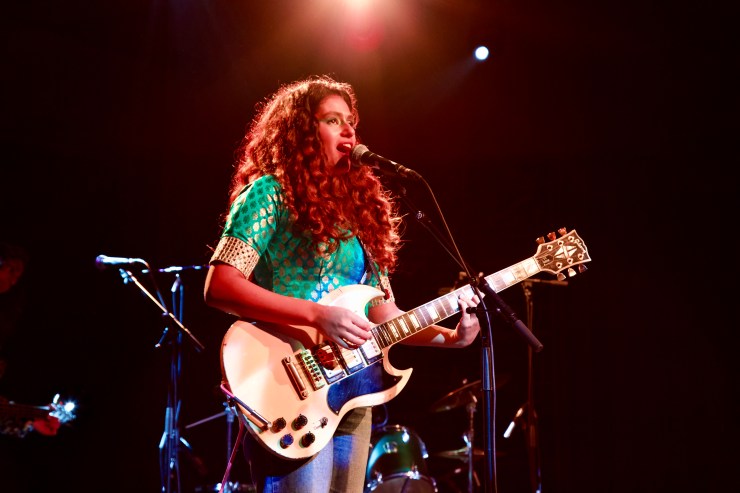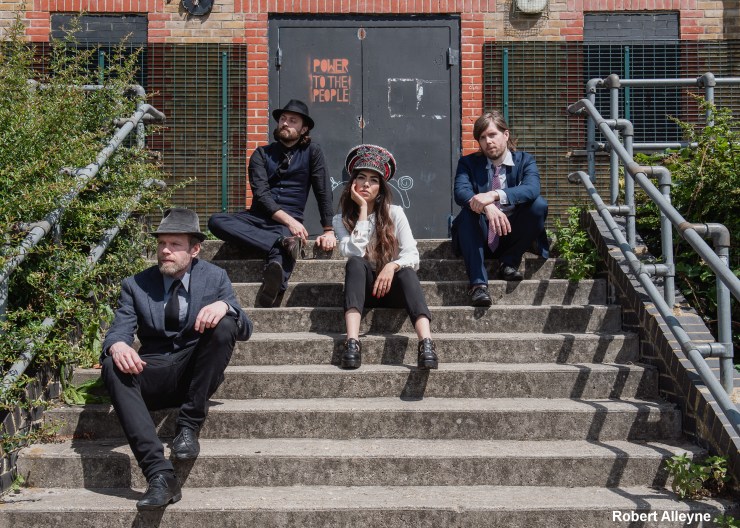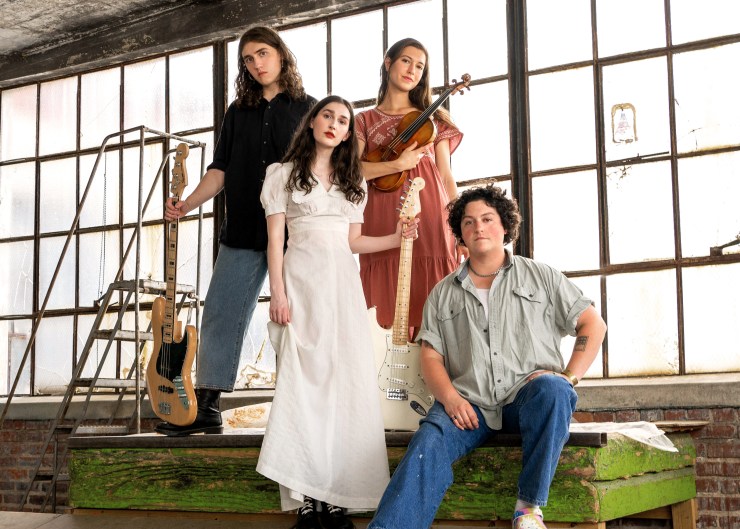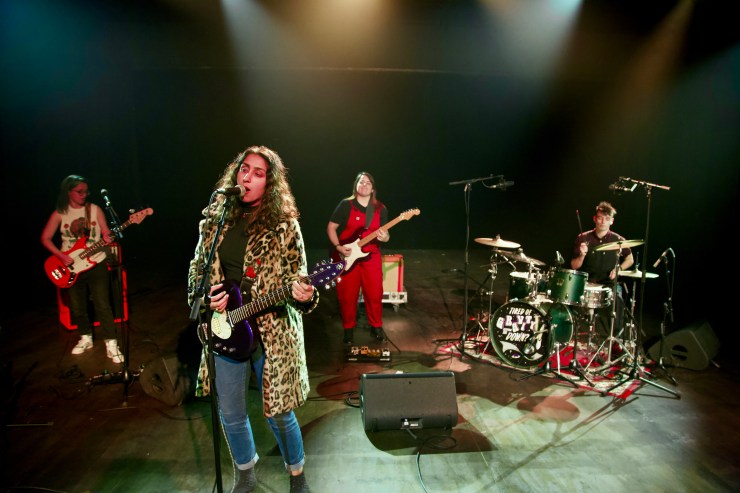
Introducing Interview: Alice Hubble

Set to release her new album Hexentanzplatz this Friday, innovative London based artist Alice Hubble has previously captivated us with poignant singles such as ‘Power Play‘ and ‘My Dear Friend‘. With her distinctive euphoric, synth-driven energy and glitchy ‘80s-inspired musicality, we’re already huge fans of the soaring, ethereal soundscapes she creates.

Ahead of the release on Friday, we caught up with Alice to find out more about the album, what inspires her and her thoughts on the treatment of women and non-binary people in music at the moment… Have a read!

Hi Alice, welcome to Get In Her Ears! Can you tell us a bit about yourself?
Hello! Thank you, it’s great to be here! I’m Alice Hubble, an electronic pop musician, based in London, originally from Leeds. I make music with my collection of vintage synthesisers, which combines pastoral instrumentals and budget pop in equal measure. My first LP came out in 2019 and the second is coming out this month via Happy Robots.

What initially inspired you to start creating music?
It’s hard to think what initially inspired me to create music cause it feels like it’s always been there. I was one of those music nerd kids, always singing and playing in music groups. In my 20s and a lot of my 30s I was in various bands, albeit to very limited successes. In mid 2018 I decided to focus on my own solo musical creation and Alice Hubble as we know it was born. I’m very inspired by creating ‘otherly’ worlds in music, recreating my imagined worlds sonically. As a person, I’m always pushing to contradict expectations and I attempt to do this in my music. Writing lyrics can be a form of therapy for me to unpack my lived experiences, but I also write about things that matter to me – particularly a highly inclusive form of feminism.

You’re about to release your new album Hexentanzplatz at the end of this week – are you able to tell us a bit about this? Are there any particular themes running throughout the album? 
The album was recorded in October 2020, with half of the songs written during the lockdown in 2020. Though I chose to stay away from writing about the lockdown, I feel the unease and anxieties of the time are very present in the music. The album is called Hexentanzplatz, named after the German mountain. The mountain is steeped in magic and legend and is famous for its Walpurligsnacht celebrations. The name translates literally to mean Witches’ Dance Floor, which really is too perfect. Recurring themes on the LP are illusion, feminism and protest. Illusion creeps into my songs a lot, whether it’s a projected myth of an unbeknown subject of my affections, the illusions we create on social media or your re-imagination of a place in your head. I’ve always been fascinated about how a real place or moment can exist so differently in two people’s minds. 

And how have you found recording and promoting an album during these strange times? 
It’s definitely been strange, I’ve been lucky that the pandemic gave me more space to focus on my music – I was on furlough with my day job, so I had time to spend writing and recording at home. I got to travel to Germany and visit the Harz mountains and learn about Hexentanzplatz and then to Ramsgate in October to record the LP. I also got to play a gig in May just after things started to lift which was really great. I spent 2019 being so busy that I was burnt out, so spending a lot of 2020 focusing on my mental health and having a quiet time was really good for me. It also gave me the chance to record a collaborative EP with Bradford based musician Andy Abbott (under the name ADRA Hubble) and do things I thought I’d never have the confidence to do like host a Facebook chat show and start my radio show. It was disappointing to have things cancelled, but it wasn’t something I dwelled on too much, there were bigger tragedies of the pandemic. I very much see myself as one of the fortunate ones over the last year and feel grateful for what I achieved in this time.

We love your shimmering, euphoric electro soundscapes, but who would you say are your main musical influences?
Thank you! Oh my, it’s hard to narrow down. The bands that have always been with me are the classic synth pop bands – Kraftwerk, OMD, New Order. The Beach Boys have also been such an influence to me. For Alice Hubble, sonically I’ve been inspired by Sally Oldfield, School of Seven Bells, Goldfrapp, Book of Love, Susan Sundfor, to name a few.

We have been particular fans of your recent single ‘Power Play’ – described as the closest thing you’ve written to a protest song, it’s inspired by the #MeToo movement. Are you able to tell us a bit more about this? And, in relation to this, how do you feel the music industry is for women/non-binary people at the moment – do you feel that things have improved over the last few years
Thank you! It means a lot to have people respond to the song. ‘Power Play’ is a track that was, on the whole, written in lockdown 1. I feel like a lot of anger and frustration that came out of that time was channeled into the track. At the time I’d looked at Twitter and seen that one of the musicians whose hideous behaviour had been a focus in the #metoo movement was back Tweeting and interacting with fans as normal. And it got me thinking “have things really changed? Do people move on to different things once the moment has passed?” It all started with the menacing synths and, as the track was so angry sonically, I wanted the lyrics to be a call to arms of some sorts. The mass hex of Brock Turner as an act of resistance and resilience (to quote the song) always really intrigued me as a form of activism and I read a lot around this to inform the lyrics. With the subject matter being so triggering, it was a song that needed careful consideration to get just right. It’s definitely getting better for women/non-binary people in the industry but there is still a long way to go. There is better representation generally – I just came back from Green Man where there were so many amazing women/non- binary performers at the festival. There’s also a greater understanding of mental health awareness, and discussions taking place about what behaviours in the industry are not helpful for women/non-binary people. The male ego power-trip that was accepted as the norm for years is now being recognised for what it is, and there are people in the industry trying to make changes. My brother is trans, so naturally trans rights is an issue close to my heart. I have noticed there is more awareness in the general public of trans and non-binary people compared to twenty years ago, which is great. But I feel there is still a long way to go, and a lot of educating still to do, particularly with how polarised society is. I find all the ‘anti-woke’ and TERF rhetoric very disturbing, particularly in the way that they present themselves as reasonable people (when they clearly aren’t!).

How have you been connecting with your audience and other musicians during the pandemic?
I played a few online shows including a Zoom show, the shows went ok but I’m not sure I’d rush to do them again as it’s so hard to connect with an audience that way. I’m also not sure how long people’s attention span is for a Zoom gig these days. It’s great to use digital to connect with audiences in different ways than the typical live performance. I really enjoyed doing the Hubble’s House Party chat show, partly as it felt like such an achievement and we had a great crowd watching. I also did an Instagram DJ set for Divine Schism which was great.

And has there been anything/anyone specific that has been inspiring you, or helping to motivate you, throughout these strange times? 
Hexentanzplatz and music making in general helped give me a purpose during this time. I think 2020 would have been a lot harder for me if I hadn’t had a creative project to throw myself into. I also consumed a lot of TV and books. My partner and I have done a lot of travelling through culture to take us outside of our reality. We got really into watching travel shows like Race Across the World. I also went on a bit of a deep-dive reading about the ’60s hippy trail trekkers after watching The Serpent, and found Rodham by Curtis Sittenfeld a bit silly but a welcome break from real life politics.

As we’re a new music focused site, are there any other upcoming artists or bands that you’d recommend we check out?
Sister Wives from Sheffield are awesome!

Finally, in addition to the release of your album, what does the rest of 2021 have in store for you?
Alongside the album there’s a fantastic video which will be out soon, created by illustrator Katherina Rival. I’m going on a mini tour in October which, fingers crossed, will happen as expected. It would be great to see you there!

Massive thanks to Alice for answering our questions!

Hexentanzplatz, the upcoming new album from Alice Hubble, is set for release this Friday 10th September via Happy Robots. Catch Alice on her UK tour:

7th October – Folklore, London
8th October – The Cold Store, Nottingham
15th October – Wharf Chambers, Leeds
23rd October – West Hill Hall, Brighton (supporting Laetitia Sadier)
31st October – The Moon, Cardiff

Photo Credit: Tom Hilverkus

INTERVIEW: Bad Waitress

Having just released their debut album, No Taste, Toronto band Bad Waitress have been become firm favourites over the last few months with the riotous, raging power of singles such as ‘Strawberry Milkshake‘ and their playful recent video for album track ‘Rabbit Hole‘. With scuzzy, pulsating hooks and immense, seething vocals, we just can’t get enough of their frenzied, empowering drive and dark, swirling energy.

We spoke to the band to find out more about the new album, what inspires them, and their feelings about how the music scene is for women and non binary people at the moment… Have a read!

Hi Bad Waitress, welcome to Get In Her Ears – thanks so much for joining us! How are you doing today?
We’re doing real good thanks! Thanks for speaking with us. 

How did you all initially meet and start creating music together? 
Kali came down from the big white north and met Moon, they started jamming occasionally and Katelyn dropped some heavy hints that they wanted in on the jams too. Kali messaged Nicole on Facebook a couple years later when they needed a new bassist… And the rest is history!

We big fans of your raging, energy-fuelled sound, but who would you say are your main musical influences? 
Sonic Youth, Idles, PJ Harvey, The Birthday Party, Gang of Four! 

You’ve just released your debut album No Taste, which is super exciting! Are you able to tell us a bit about the album? Are there any particular themes or inspirations running throughout it? And how does the writing process normally work within the band?
A lot of the stuff discussed in the songs is reflective of turbulent childhoods, political unrest, complicated relationships and uncomfortable expectations being forced on you. The band is definitely a place to air out our frustrations and make sense of the world around us. Sometimes Kali will bring lyrics and a structure and the rest of us will work off of that, other times we just start jamming and latch on to a certain riff or beat and it turns into a song somehow. It’s very much a collaborative process – each of us brings something unique to the mix.

How have you found recording and promoting an album during these strange times? Have you had to adjust the way that you’d normally do things? 
We actually recorded this album in the summer of 2019 – it was originally going to be released in 2020, but we decided to hold on to it until we figured out what the heck was going on with the world. We’ve definitely had to work on our online presence more; we did some weird variety show type stuff on our Instagram live, we did a Twitch stream, we’ve done a couple livestream shows. It’s been a lot more internet based stuff, but it seems like live-in-the-flesh type situations are on the horizon, so maybe we won’t have to figure out how to get big on tiktok just yet. 

We love your latest vibrant Mad Hatters-esque video for album track ‘Rabbit Hole’ – are you able to tell us a bit about the inspiration behind this song and its magnificent visuals? 
We just really like having fun with the videos we make. We’re all into weird horror movies, Kali and Katelyn especially, so we draw from that a lot. It’s a chance for us to live out whatever crazy fantasies we dream up that day. ‘Rabbit Hole’ is a pretty dark song about being trapped in the comfort of depression – we didn’t want to have a drab depressing video for it though, so we went the complete opposite direction visually. 

You’ve previously described the main premise of forming the band as being that you “just wanted to get together and play music with people who weren’t old men” (which sounds like a great reason to me!). How do you feel the music scene is generally for women and non binary folk at the moment? Do you feel that much has changed or improved over the last few years? 
We love seeing how many more bands there are nowadays made up of women, trans people and non binary people. Honestly though, there’s still a long way to go. We still get backhanded compliments, or weird micro aggressions about how impressed people are that we can actually play our instruments, or people assuming we’re finding some success because we’re not men, or people telling us what we should do with our music or stage presence, as though they know better. There’s also a lot of misgendering (Moon and Katelyn are non binary, Kali and Nicole are women) and that’s exhausting. But there’s also a beautifully supportive community that we’re a part of, full of people that are constantly learning and lifting each other up. There’s lots of work still to do, but there’s also lots of people willing to put in that work and make the scene a better place for everyone. 

The last year has obviously been difficult for everyone in different ways, but has there been anything or anyone specific that has been inspiring you, or helping to motivate you, recently?
Our local music scene is really inspiring. There’s been so many cool things coming out of the pandemic. Houndstooth is a bar that’s been hosting shows safely, with a band playing inside behind windows and people can watch from the street. Our friend Danny Alexander made a short film about local musicians and how they were dealing with quarantine. Ultra is a Toronto-based zine that creatives can contribute anything to – poetry, music, photography, interviews. Lootbag Records put out a few compilation albums, and there’s been a bunch of bands releasing new music. Everything our friends have been making inspires us to keep creating!

And it’s obviously quite difficult organising anything right now, but – in addition to the release of the new album – what else does the rest of 2021 have in store for Bad Waitress?
We’ve got a tour coming up with Kills Birds in December, which we’re really stoked about! We can’t wait to tear it up on stage again; that’s where we’re really at home. Hopefully 2022 is the time for music to really be able to come back full force. 

Finally, as we’re a new music focused site, are there any other new/upcoming bands or artists you’d recommend we check out?
The Effens, Wine Lips, Your Grandad, Burner, Piper Maru, Animatist, Kali Horse, Hot Garbage, Mother Tongues… Just to name a few!

Massive thanks to Bad Waitress for answering our questions! Watch their latest video for ‘Manners’ here:


No Taste, the debut album from Bad Waitress, is out now via Royal Mountain Records.

Photo Credit: Kate Dockeray 

5 Things We Learned At Wide Awake Festival

Brockwell Park was buzzing with excited energy on Friday 3rd September, packed with hundreds of music fans keen to hear the sounds of the eclectic mix of underground talent who were booked to play Wide Awake‘s debut festival. Postponed due to the Covid-19 pandemic last year, the appetite for hearing live music was unsurprisingly tenacious from the moment the festival gates opened and watching the crowds dance and sing along to the likes of IDLES, Goat Girl, black midi, Lena Willikens, Black Country, New Road and headliners shame gave us an overwhelming sense of joy (heavily aided by multiple cans of Red Stripe.)

We’ve condensed 10 hours of live music down to 5 key points that we’ve filtered through our GIHE lens and shared them with you below…

1. Self Esteem is a beacon of hope

Rebecca Lucy Taylor and her bandmates delivered a truly empowering set during their headline slot on the Moth Club stage, complete with a stunning light show and dancers too. When Taylor walked on stage with the words “But There Is Nothing That Terrifies A Man More Than A Woman That Appears Completely Deranged” lit up behind her silhouette, we knew we were in for a treat. Her powerful voice and relatable lyrics filled the tent with a sincere and playful joy.

2. Porridge Radio are great

We’re well aware most people already know this, but Brighton four piece Porridge Radio really impressed us with their stellar mid-afternoon performance on the Bad Vibrations stage. Fronted by captivating vocalist & lead guitarist Dana Margolin, the band ripped through their setlist full of indie bangers with impressive flair. We’ll definitely be catching them live again in the future.

3. Stumbling across a new favourite band feels just as good as re-visiting old favourites

We’ve missed the electric feeling that flows through your cells when you unexpectedly hear a great song in the distance by a new band you’ve never seen live before. Porridge Radio are a prime example here, but we also found ourselves drawn to the sounds of Snapped Ankles and The Murder Capital on the Moth Club stage, as well as Mandy, Indiana‘s set on the So Young stage. We were sad to miss Dream Wife, who had to cancel last minute due to contracting Covid-19, but GIHE favourites Goat Girl distracted us from this gap in the line-up with their charming yet brooding set on the main stage.

4. Brockwell Park is an ideal location for a music festival

We may be saying this solely because 2/3s of GIHE are based in South London, but Brockwell Park felt like the perfect location for a day of indie, leftfield and electronic music. Packed with independent food & drink stands as well as the main bars, it felt like we’d been transported out of London for the day when the sun was shining and the music was blaring from all directions.

5. We’ve really missed music festivals

From running into old friends, making new ones in the queues for the portaloos and generally just watching everyone else have a total blast, Wide Awake really made things feel “normal” again for a split second. We’re hoping that next year, everyone will feel confident enough to come back to Brockwell Park to sample some of the incredible bands and artists who made the festival feel as exciting and unique as it did this year.

Photo Credit: Luke Dyson (www.lukedyson.com)

Kate Crudgington
@KCBobCut

INTERVIEW: Sleigh Bells

With the release of their new, sixth album, Texis, set for release on Friday, genre-defying duo Sleigh Bells have been firm favourites over the last decade, and have provided many musical memories – from dancing the night away to the immense energy of the likes of ‘Rill Rill’ or ‘Infinity Guitars’ throughout my 20s, to watching *that* scene of Jessica Jones on repeat, purely because of the incredible power that ‘Demons’ adds to the narrative. 

So, I was extremely happy to speak to vocalist and songwriter Alexis Krauss last week about the new album, her collaborative process with producer/guitarist Derek Miller, the formation of Sleigh Bells and her involvement with organisations supporting young women in her community. 

Currently staying in New York, Krauss is looking forward to heading up to the mountains for a few days respite before the excitement of next week – as well as the release of the new album on Friday 10th September, they are also due to play some shows; their first live performances in three years. “It will be surreal to be back on stage. And it’s the first time we’ve ever done an anniversary show for Treats. Especially after the pandemic, it’s going to be really interesting to see what it feels like to be in a room with that many people again!” Next week’s shows are set to be the first of many continuing for the rest of the year – “And then in 2022, we have a February tour scheduled, but that’s just in the US. So, hopefully we’re able to get over to the UK and do some international touring. We’re just in that wait and see phase at the moment!” 

Fingers crossed they’re able to cross the pond, as their live set is nothing short of spectacular. And, thankfully, Krauss seems very fond of the band’s London fanbase – “London is one of my favourite cities to play – we’ve had such great shows and such great energy from the crowd there.” This energy of the crowd is really the main focus for the band when playing shows, rather than how they may perform technically – “For us it’s all about the energy in the room, how excited the fans are… It’s all about the fans and how they’re feeling.” This is one of the reasons Krauss cites The 9.30 Club,  a venue in Washington DC, as one of her favourites to play; that and the delicious cupcakes that the supportive in-house team will provide on arrival! Cupcakes and live music does sound like a dream combination. 

Live music aside, Krauss’ main focus at the moment is the new album – “Our primary focus is just to support Texis and hopefully get as many people as possible to listen to it!” Having originally planned on releasing the album in Spring last year, due to the pandemic, they decided to hold off – “We went home and into lockdown and then, instead of releasing it at that time, we decided to wait. Although music is really healing, it just didn’t feel right. So we waited, and we kept writing, and now here we are.” Despite this delay to its release, Miller and Krauss had actually been working on Texis for a good few years: “Derek and I started working on this album right around the time we finished Kid Kruschev – an EP/mini album that we put out a few years ago. And the transition from the writing and recording process from that album to this one was pretty seamless. There’s a couple of songs on Texis – ‘Red Flag’ and even ‘Justine Go Genesis’ – that kind of came right on the heels of KK’s writing process. And once we had those two songs, we thought it was feeling good…” If you haven’t listened to  ‘Justine Go Genesis’ (the band’s latest single), you really must – it’s an explosive, exuberant example of what Sleigh Bells do best: an immense, wonderfully chaotic cacophony. As Krauss explains: “‘Justine Go Genesis’, especially, to me, is definitely one of the hallmark songs on the record – it just has an energy and an attitude that I really love. It has a kind of sass to it. Instrumentally, I think it’s one of Derek’s strongest, it’s abrasive but it also has this kind of joy to it. I think when Sleigh Bells does Sleigh Bells best we have that marriage of opposites: the happy/the sad, the angry but also the sweet and feminine. And this song just seems to have that polarity to it. It feels good. It makes you want to move, it makes you want to dance. I immediately thought about that song being played live.” 

In addition to ‘Justine Go Genesis’, when asked if she has favourite track on the new album, Krauss reflects: “There’s a track called ‘Hummingbird Bomb’. There’s something about it that’s very chaotic, but I think it’s also one of my favourite moments of music – it feels hopeful. And I love that. It just doesn’t feel like something we would have created in the past; something we wouldn’t have had the guts to leave it as it is. We would have maybe thought it was ‘too pretty’ or didn’t sound like our band. But I think it somehow manages to feel like Sleigh Bells but has this heartfelt quality to it that I really like.”

So, once the duo had a couple of new songs under their belts, they felt able to continue to create more in a similar vein – their confidence in the likes of ‘Justine Go Genesis’ and ‘Red Flag’ fuelled the fire for Texis as a whole. Of the writing process, Krauss continues: “Derek has said that he no longer felt ashamed to just be him – to let his musical instincts prevail, keep the guitars heavy, keep the riffs. It was simple but immediate, and he didn’t want to shy away from a lot of the things he’d done previously in his production. I think that really just set a tone that felt really good – it’s very visceral, and vocally and melodically the writing came pretty naturally for the whole album.” And the way that Miller and Krauss worked together as a team seemed to have developed naturally too – “Derek was a bit more patient with the process than he had been in the past, so by the time he sent me a track and lyrics it felt pretty darn close to being final. For me, that was a real motivation to bring my best possible work to it. So, when I sent a demo back with my vocals added, it was almost like having a final demo.” 

This consistently collaborative way of working seems to have always been extremely important for the duo – to work as a complete partnership – with Miller taking the lead on putting together the instrumental basis of the tracks whilst Krauss adds the lyrics, as she explains: “I’ll weave through what Derek sends me and figure out what I like, and from there assemble something that seems right. Or I’ll just look at certain words and sometimes a melody will just come about. Sometimes one word or lyric can inspire the rest. And then once I have the melody I try to look for a lyric that will sing to that melody.” Generally, she says, Sleigh Bells’ songs aren’t narrative driven, and so the focus will be more on whether or not it sounds good than it lyrically making sense. However, on Texis, some of the tracks do have a more definite theme – ‘Justine Go Genesis’, for example, is very character driven: “It was good to challenge myself to find the voice of that character. And then vocally we brought in a few other women who I’ve worked with in the past to add additional vocals, to add that really stacked ‘60s Shangri Las vocal effect, and it was great to have those different tones. I’m so glad we did – it just adds more intensity and more vulnerability and variety to a lot of the chorus vocals.”

The majestic wall of sound created in ‘Justine Go Genesis’ and previous single ‘Locust Laced’ really is impressive, and – I comment – appears to hark back to the band’s earlier releases, reminiscent of the driving, frenzied energy of much of Treats and Reign Of Terror. Whilst Krauss agrees, she appreciates the value of more recent albums Jessica Rabbit (2016) and Bitter Rivals (2013) too – “I think it took these albums to get us to where we are today. On those two, there was a lot of experimentation happening, which I think was really wonderful; we were really curious about different sounds and production and personally for me I was interested in using my voice in a different way from how I had done on Treats and Reign Of Terror. So I think those two albums really helped us explore different pathways and curiosities, though I think some of that experimentation worked and some of it didn’t – it felt a bit disjointed at times. But Texis wouldn’t exist without all the previous ones, so I’m grateful for those searching times, because I think it enabled us to arrive where we are now. We now feel more confident, we’re more sure of where we stand.” 

The evolution of Sleigh Bells’ distinctive sound all started back in the noughties in New York City, though they very nearly didn’t come together as musical partners. Discussing the early days, Krauss reflects: “Derek had recently moved up from Florida with the soul purpose of starting a band and I was in the midst of my teaching career. Although I’d always been involved in music from a very young age, when I met Derek I was busy teaching full time and I didn’t really have any time to think about anything else.” Thankfully, however, Krauss and Miller met during the summer break, and the rest is history: “We just really connected, and there was an eagerness on his part to share what he’d been working on, and I was able to share a few of my past demos. Had we met in December, I never would have given him my email as I just didn’t have the capacity to think about anything other than teaching. But we met and it was early July and I had time. I was missing the creativity of music and I was looking for something to distract myself.”

Although it was in New York that Sleigh Bells initially formed and started creating music together, Krauss emphasises that they really don’t see themselves as a typical ‘New York band’ of that time: “We were both in a way detached from the Brooklyn scene at that time – Derek because he was a recent transplant and me because I was so focused on what I was doing and so invested in my students. When we would record and write it would happen in our apartments and it was a very private process. Obviously then, when we started playing shows, that’s when we became a bit more immersed in the scene and connected with people like MIA and Spike Jonze. That’s when it started to become quite surreal!” And then, despite being based in New York, after their first couple of shows there, the duo were to start touring internationally and so never really spent a significant amount of time in the city as a band: “ In a way, I think we’ve spent the same amount of time playing in London as we have in New York in terms of playing shows. Our fan base in London feels just as strong as our fan base here. I don’t feel super married to New York as a musician.” 

Wherever they’ve been, however, Sleigh Bells have certainly stood the test of time over the last twelve years; whether playing in the US, the UK or anywhere else in the world, they’ve accumulated a huge and loyal fanbase, whilst their sound continues to develop in an exciting way with each new release. However, Krauss reflects, people have often found it difficult to pigeon-hole them into a specific genre over the years (a quality I think that only goes to show how wonderfully unique they are!): “With live music there was definitely some confusion about what we were and what we fitted into – we weren’t quite a band, we weren’t a DJ set. We weren’t quite rock, we weren’t quite pop, we weren’t quite electronic. People didn’t know how to categorise us or what festival bill to put us on. We played an EDM festival once, and that was confusing!” These days, though, she feels that artists seem less focused on fitting into a specific category, and therefore listeners are enabled to have more eclectic tastes: “Now there’s less loyalty to genre and you see more artists incorporating electronic music into their “rock” songs and vice versa… There’s just more borrowing and cross pollination happening. And playlisting also has a huge impact on the way that people listen to music – I think people now are much more likely to listen to a variety of genres or artists at once, and so when they see bands live they’re a bit more flexible as to what type of show they anticipate.”

A recent example of this ‘cross pollination’ of genres is Halsey’s latest album If I Can’t Have Love, I Want Power – a collaboration with Trent Reznor, which Krauss has been listening to and reading about recently. An album which isn’t afraid to be “weird” or make “strange decisions”, and not fit into any specific playlists. “I just really like that perspective”, Krauss reflects, “I’m obviously a huge NIN fan and think it’s great that an artist like Halsey would take those risks.” She is a big fan of similar artists who are not necessarily definiable into any one category, and is happy for Sleigh Bells’ sound to continue to be “too messy” to fit under any one label: “I think it’s funny to have folks trying to figure out what we ‘fit into’. Even to this day, when people ask me what kind of music we are, I just describe it – I think labels are a bit unnecessary.”

In addition to the perception of genre changing over time, we discuss how the music scene has changed for women and non binary folk, and the sexism that has existed since Krauss started creating music: “I was in a put together all girl pop band in the late ‘90s and definitely experienced a sort of sexism, with male executives treating me as an archetype for what a ‘woman in music’ had to be. I saw a lot of that gross approach to sexualising women. And when Sleigh Bells started, it still seemed to be a more male dominated space. On festival bills especially, you would really notice how few women were headlining, and a lot of crew members/ behind the scenes folk tended to be men.” However, this is something that Sleigh Bells have always been very conscious of, consistently making a distinct effort to be inclusive in their approach: “We have always made an effort to have as many women on our crew as possible, and we also try to have as many women as possible on our team as a whole – whether it’s our publicist, or booking agent, or attorney. I think we have always done the work to try and make our operations as gender equal as possible. And when it comes to choosing support bands, it’s always been really important to me to have women or gender non conforming people.”

And, thankfully, Krauss personally has never had any particularly negative experiences with men in the industry: “I personally have had a really positive experience as a woman in music, in terms of my outward facing interactions with fans. I’ve never had a really negative experience on stage where I’ve felt violated. But our band is relatively small, so I can’t imagine what it’s like to have thousands of people commenting on you or coming to your shows. Obviously when you increase the numbers, you increase the variables. I feel very fortunate that I’ve had a really positive experience.” And she feels hopeful about the future, sure that there has been an improvement from when she first started out as a musician: “Now, with the younger generation in music, there are a lot more women, and a lot more non binary people, and it’s beautiful.”

Increased opportunities for women of all backgrounds is an important issue for Krauss, not just in music but in the community as a whole; something that is reflected in her work with the organisation she co-founded – Young Women Who Crush, an amazing sounding organisation for young women and gender expansive youth from New York City public schools, inspiring them to discover the outdoors and develop their leadership skills. Discussing how this came about, she explains: “I’ve loved working with young people for a long time and I fell in love with rock climbing around 2013/2014. It was something I would do with my really good friends when we were out west on tour. It just became a really important part of my life and I wanted to create a space for women in rock climbing because rock climbing at the time was – and still is to some degree – a very male dominated space. And so it started with a couple of other women and myself organising these programmes for women and then we realised how powerful that was, and so then we thought it would be great to start something specifically for young women, for high school girls.” After outreaching to a couple of schools and speaking to different teachers, the programme was able to start in 2017, with a small cohort of NYC girls. Now, the programme has evolved and grown, but the aim remains the same: “Our core programme is that we work with a group of girls at the indoor climbing gym – we work with them for the entire school year and then we culminate with some outdoor climbing trips in the summer.” And now that the programme has been running for a few years, Krauss explains how great it is to see how far their students have come: “Now we’re about to get into the new school year and bring some new folks on, and we have this growing community of girls who entered in their first year of high school who are now about to start college, and then some girls who started in their last year of high school and are now almost graduating college. So, we have this amazing community of young women. It’s a huge part of my life.” But Young Women Who Crush is about much more than simply teaching these students how to rock climb, it’s about diversifying opportunities for these young women, and creating a completely inclusive space: “It’s about eliminating a lot of the barriers to the outdoors that a lot of folks face when trying to get into outdoor activities – whether it’s rock climbing, hiking, snowboarding – the outdoors can be really expensive. Even though people think of the outdoors as a neutral space, it’s not always the case – there’s a lot of racial and socio economic barriers.” This organisation therefore stands out as an incredibly important part of the community, and an invaluable resource for many young women; something that Krauss is immensely proud to be a part of and hopes to continue running for many years to come. 

Another cause close to Krauss’ heart is Native rights and protecting the sacred lands and ways of life of the Indigenous community: “I wouldn’t say I’ve earned the title of advocate or activist, but I’ve done work out in Utah to try and protect the Bears Ears National Monument.” While she recognises that the Biden administration is taking some positive steps in this area, she is aware that there is still a long way to go, as protective status of this land still has yet to be reinstated. Although she doesn’t credit herself with being an activist per se, Krauss has been involved in various campaigns to raise awareness and funds for Indigenous communities: “I try to do what I can as a musician/storyteller to try and use that as a tool to help. And I’ve been so fortunate to meet so many elders and Indigenous people who work really hard for their community. So I feel like I’ve played a very very tiny part in helping!” She goes on to explain the importance of continuing to have, sometimes difficult, conversations with the Indigenous community: “I just want to elevate and amplify their voices by having these conversations about giving land back, and acknowledging their existence. It’s not always easy, but I just try to learn as much as I can.” Whilst she’s modest about the ways in which she can help, I think we could all do with taking a leaf out of Krauss’ book in educating ourselves as much as possible, and doing all we can to amplify the voices of marginalised communities in society.

Although I could continue talking to, and learning from, Krauss for hours, I feel that I have already taken up too much of her New York morning and think I should let her get on with her day. However, with Get In Her Ears being a new music focused organisation, I can’t let her go without asking the all important question of what she’s been listening to lately: “I really love SZA – I love all of the new tracks she’s been teasing. I also really like Turnstile – they’ve been around for a while, but they’ve just released a new album called Glow On which I’m loving. A good friend of ours produced it – it’s pretty heavy but also has these great pop instincts. We’re also touring with a band called Kills Birds – they’ve just put out a track called ‘Rabbit’. We actually made our latest video with the lead singer, Nina, who’s also a director. I’m really stoked for people to hear them!” 

And so, with the anticipation of Texis coming out next week, we say our goodbyes and I’m extremely grateful to have had the opportunity to speak to an artist who I’ve been a fan of for so long. Someone who has not only spent many years creating innovative music, but who dedicates a great deal of time to promoting, and working with, worthy community causes. I feel that this passion and strength of character of Krauss’ shines through in all that Sleigh Bells do, and I cannot wait to listen to the new album in its entirety; to immerse myself in the driving energy and frenzied motivational force of each and every track. To be inspired by the utterly unique, enigmatic power that this duo seem to so seamlessly create. And I’ll just keep crossing my fingers that Krauss and Miller make it across the pond sometime in the not-too-distant future to reunite with their dedicated London fanbase.

Texis, the new album from Sleigh Bells, is set for release digitally/CD on Friday 10th September via Lucky Number. Vinyl releases will be available on 3rd December. Pre-order here.

Photo Credit: Chris Vultaggio