
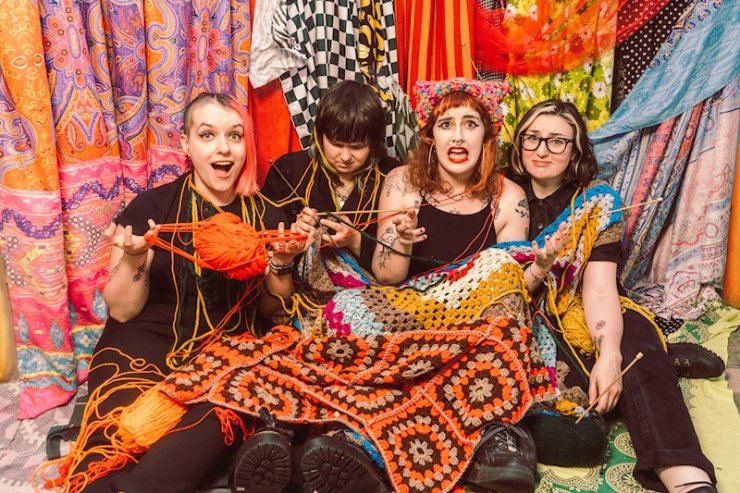
Since they shared their debut single ‘Big Shouty‘ with us back in 2020, Problem Patterns have been lighting up our musical radar with their relatable, riotous anthems. The Belfast-based DIY punks have progressed from making music together as a hobby, to becoming a personal favourite of Riot Grrrl icon Kathleen Hanna, winning a Northern Irish Music prize, and supporting the likes of Le Tigre and Dream Wife on tour. These accomplishments are the product of sheer determination, authentic friendship and a shared defiance in the face of adversity.
On their debut album Blouse Club, Alanah Smith, Bethany Crooks, Beverley Boal and Ciara King use their collective talents to rage against misogyny, classism and homophobia in both societal and industry spheres. Not defined by traditional band structures, Problem Patterns routinely switch up instruments and mic duties for their songs, which makes for a refreshing take on the subject they’re tackling. This collective instinct, raw emotion and radical resilience permeates each of the twelve tracks on their debut full length record.
Powerful opener ‘Y.A.W‘ – an acronym for ‘Yes All Women’, antagonising the social media hashtag ‘Not All Men’ – is a visceral rumination on the universal rage and despair that permeates our consciousness in the wake of public violence towards women, in particular, the misogynist killings of Sarah Everard and Aisling Murphy. It’s a vehement, necessary anthem for women and girls who have spoken out against violent misogyny only to be told they’re “just a bitch who can’t take a joke”.
As Alanah demands “Who do we call for help? / When the help seems like a threat to me?” her bandmates create a cathartic cacophony of relentless sound around her. ‘Y.A.W’ is such a direct moment of unleashed anguish that it sets the precedent perfectly for everything that follows on Blouse Club. The aptly titled ‘Big Shouty’ is based on the band’s own personal experiences of sexist bullshit, with each verse tackling some of the comments they’ve received during their time together. Problem Patterns’ ability to recycle this rage into hard-hitting, but hugely enjoyable anthems is what makes Blouse Club so compelling.
Whether it’s Bev gleefully chanting “When the people are hungry / they’ll eat the rich!” on ‘Advertising Services’, Ciara screaming through the chorus on ‘A History Of Bad Men Part II’, or Alanah acknowledging the burnout that comes with chronic illness on ‘Picture Of Health’ (“I will never be the picture of health / I just wanna be better to my self!”) there’s always a palpable sense of relief when Problem Patterns unpack these unfiltered feelings and frustrations. Drummer Beth undoubtedly feels this in every cell of her body when she steps up to the mic to perform the excellently named ‘Lesbo 3000’. She directly calls out the homophobia experienced by queer women, with her extended screams of “Call me a Dyke!” making for a bold and empowering moment of reclamation.
The band serve listeners another vital dose of this empowerment on the seminal ‘TERFs Out’. Alanah rightfully highlights that “LGB is nothing if not for the T!”, as they tackle transphobic attitudes. The track reiterates all that Problem Patterns stand for and provides a vital statement of support for their trans friends and fans in the process. The anthemic ‘Letter Of Resignation’ flows in a similarly cathartic vein, as Bev steps forward to celebrate queer ally-ship and tear down those who discriminate against the LGBTQ+ community, specifically in places of employment. “I’m standing up for who I believe in / you can’t fire me, I’m leaving!” she chants in playful defiance, surrounded by riotous riffs and marching beats.
On ‘Pity Bra‘ (which GIHE premiered ahead of the album’s official release!), Alanah tells the story of an important night that Problem Patterns spent watching Sleater-Kinney back in 2020, that strengthened the creative foundations of the band. It serves as an interlude on Blouse Club, but it’s transient moments like this that accurately reflect the importance of nurturing platonic bonds, as they can be just as passionate and fulfilling as other relationships.
The band provide further aural antidotes and release more pent up frustrations on ‘Who Do We Not Save?’ and ‘Poverty Tourist’. The latter calls out the appropriation of working class culture in the music industry, whilst the former takes aim at the incompetent Tory government and their continued attempts to privatise the NHS. Both are bursting with the group’s trademark empathy, anger and wit, helping to offset the anxiety of the uncertain times we’re currently living through.
Named after the unofficial speakeasies that were frequented by women in the wake of World War II when they were denied the right to drink in public bars, Blouse Club is the musical manifesto of four friends whose sound refuses to remain underground. Together, Problem Patterns use their collective talents to create riotous feminist punk anthems that provide comfort and catharsis in equal measure, and their debut album is a powerhouse example of these undeniable skills.
Follow Problem Patterns on bandcamp, Spotify, Twitter (X), Instagram & Facebook
Photo Credit: Carrie Davenport
 Get In Her Ears