Introducing Interview: Sophie Mahon

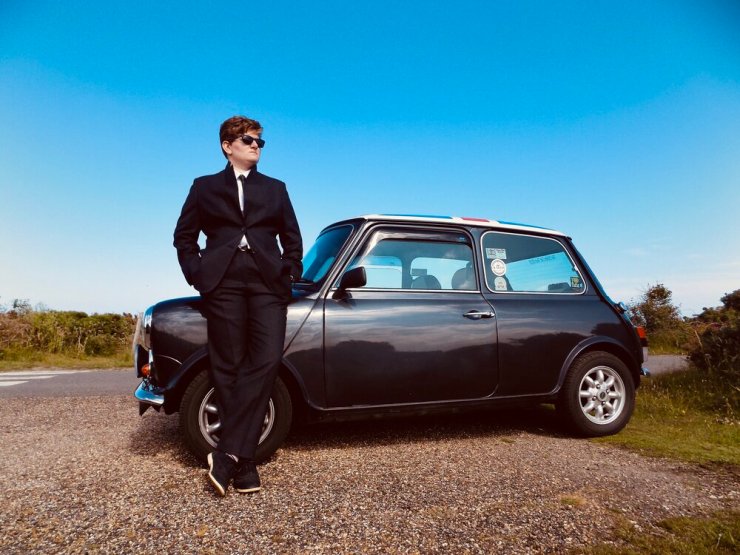
Set to release her debut album in October, Suffolk-based artist Sophie Mahon left the Royal Navy to pursue her love of music back in 2013, and hasn’t looked back since.

Inspired by the life and films of Humphrey Bogart, and with musical contributions from the likes of Emily Dolan-Davies (Bryan Ferry, Kim Wilde, The Thompson Twins), Martin Dobson (Eurythmics, Jimmy Sommerville and Siouxie & the Banshees), Bogart’s Eyes showcases Sophie’s unique ’80s inspired allure and poetic songwriting. Latest single ‘In A Lonely Place‘ offers a swirling synth-pop anthem, propelled by a shimmering energy and heartfelt emotion.

We caught up with Sophie to find out more…

Hi Sophie Mahon, welcome to Get In Her Ears! Can you tell us a bit about yourself?
Hello! I’m 28 years old and I live in Suffolk. I have a band called Sophie Mahon & The Ready Mades, which has an ’80s inspired New Wave/Art Rock kind of sound. We’ve been going for a few years now and are slowly getting a name for ourselves around the area. I take inspiration from books, films, poems and art generally, when writing lyrics, and I am influenced by many things sonically but mainly the New Romantic era of the Eighties.

How did you initially start creating music?
I discovered Bryan Ferry and Roxy Music while waiting to join the Royal Navy, when I was about 18 years old. I then started learning a lot about music – listening to a lot of different bands from the ’80s, eventually teaching myself guitar, kidding myself that I was just doing it to occupy my time until I went to training. I went and did six months training with the RN before realising life’s too short to not do what you enjoy, so I left and went to music college. The rest is history. 

Your new album Bogart’s Eyes is out in October – can you tell us what it’s all about? Are there any themes running throughout the album?
Bogart’s Eyes is exactly what it says on the tin really: it’s inspired by the 1940s icon/legend Humphrey Bogart. I got into his films a couple of years ago and got a big hit of inspiration, writing a song for each film I watched. I admire his acting hugely and just him as a person; he was a kind, gentle, honest and colourful character; I wanted to show the other sides to him as well as the hard boiled, cynical tough guy he is always remembered for. The idea of the album is from a fan point of view – the way you feel when you discover something/someone new for the first time, who has a profound impact on you, and the way it takes over your thoughts. Like with the track ‘Casablanca’, it’s “easy to enter but hard to leave” – the intro and outro join up, so before you know it (if you leave the album on loop) you find you are back at the start going around again. Each song is connected to a film in some way and takes inspiration from either a quote, a scene, a character or even a dream you have because of it; covering feelings of loneliness, love and longing as it goes along. I have aimed for it to be like a Film Noir take on ABC’s ‘The Lexicon Of Love’.

You’ve been compared to the likes of The Human League and Roxy Music, but who would you say are your main musical influences?
Bryan Ferry/Roxy Music, David Bowie and Duran Duran I would say are my main three musical influences, with other odds and ends added in between. They are all very unique, without being afraid to experiment and explore whenever they write something new. I think I admire them so much because they manage to bring something almost high brow to the mainstream, and dabble around the edges of it, without compromising on their own principles. They introduce their listeners to new things because of their lyrics and ideas, whether that be books, films or other music. And I think that is a wonderful thing. It is also the way they keep artistic control over all aspects of their brand and music, from album artwork to fashion. It’s a lot of extra work, but it pays off dividends when put alongside the music – it adds to that sophisticated escapism that they provide, which I wish to emulate.

In ‘normal times’, how is your local music scene? Do you usually go to see lots of live music?
It’s pretty good around East Anglia. I am very lucky that I have Bury St Edmunds, Ipswich and Norwich not too far away, all of which have decent music scenes and very supportive venues. There is also the John Peel Centre in Stowmarket which is a great venue too. I mean at the moment, like everyone else, I haven’t seen a lot of live music recently but I did a lot before the pandemic. I try to go see live music often, whether that’s a friend’s local band or an artist I admire.

And what can fans expect from your live shows?
Just good music to escape into and tap your toes to, or even dance if you feel that way inclined! My band and I aren’t the shoe-gazing types – we like to dress up and really give all we’ve got. That’s the thing with this industry, all you owe the audience is a good performance, so I will always give that. If the audience themselves want to get out, dress up to the nines and drop the weight from their shoulders, I hope we can provide a lovely space for them to get lost in.

As we’re a new music focused site, are there any new/upcoming bands or artists you’d recommend we check out?
To my shame I don’t know many – I tend to explore backwards listening to albums and bands I keep meaning to listen to. The newest bands/artists I listen to and I like are Christine & The Queens, La Roux and The Weeknd. There was a very wonderful band I discovered at a festival, called ‘Her’s’, and they were quirky and warm, but unfortunately they both were tragically killed in a traffic collision a few years ago. I still recommend you check out the catalogue they left behind, especially the song ‘Harvey’. The only other artist I would recommend, and I am biased because she is a dear friend of mine, is Lucy Grubb. She is a country/Americana artist, but her lyrics are witty and – even if you don’t like that kind of thing – Lucy will win you over. She is a lovely mixture of Paul Simon and Johnny Cash.

And how do you feel the music industry is for new bands at the moment – would you say it’s difficult to get noticed?
I would say it’s very, very difficult unless you sound like something that has been successful before, but then you will get dropped very quickly. It’s a very hard thing to judge as record labels (mainly big ones) will only take artists if they have done the leg work and have achieved a certain amount of followers/listeners. I suppose I have learnt a lot from artists from the ’80s, so I have a skewed/old fashioned way of seeing it, but it is very clear that labels aren’t willing to take the risk anymore on new artists, unless they are a sure thing. They certainly wouldn’t give them time to develop as artists, like labels would have done a few decades ago. I mean the industry obviously has changed a lot, which is understandable, but it is more about quick money than finding an investment. Don’t take that as a total rant! As that’s more at the top end. I would say there are many very lovely people around who are there to support new artists, especially local radio stations and BBC Introducing – without them it is hard to make that first big leap and that makes all the difference.

Finally, what does the rest of 2021 have in store for Sophie Mahon?
Now my first single ‘In A Lonely Place’ is out, the next thing is a gig supporting The Wendy James Band (Transvision Vamp) on August 27th at the Norwich Art Centre. Then the second single ‘Bogart’s Eyes’, complete with a stop-motion animation music video is out on 3rd September. The band and I then have another gig at The Empire in Great Yarmouth on 9th September, and then, finally, the whole album Bogart’s Eyes will be out on 1st October! We may also have a very exciting gig after that on 2nd October but that is still being sorted…

Massive thanks to Sophie for answering our questions!

Bogart’s Eyes, the upcoming album from Sophie Mahon is set for release on 1st October, and the title track will be out on 3rd September.
INTERVIEW: Grace Petrie

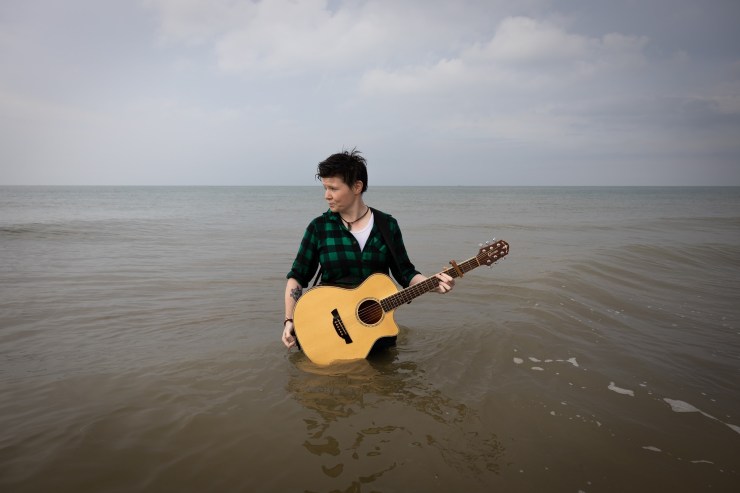
Having been a big fan of Grace Petrie and her politically-charged, but beautifully catchy, folk-strewn anthems since first hearing 2018’s Queer As Folk, I was excited to hear that she’s set to release her brand new album, Connectivity, on 5th October. Ahead of the album’s release, I was lucky enough to chat to Grace about the new album, the struggles of the last eighteen months, the joy of playing live and being a butch lesbian woman in the music industry today.

Settled at home, her dog Frank firmly positioned on her lap (who only interrupted once with a small growl when someone put something through the door), Grace is still on a high from playing her first non-socially distanced show since Covid hit last night. Playing as part of the City of Culture events in Coventry, it was an amazing experience – “it was unbelievably emotional actually, I even burst into tears at the end of the show.” Having desperately missed the experience of playing live over the last eighteen months, she was once again reminded of the feeling of playing to a room full of people singing along to her songs – “There’s just nothing like it in the world. It was wonderful to be back at it, and it left me with a hope that it’s possible that there’ll be an end to all this.”

It’s lucky that she enjoyed it so much as, following a couple more festival appearances over the summer, Grace’s UK tour starts in September, pretty much non-stop through to December – “I’ll have to keep taking my vitamin C and eating Weetabix for that run of tour dates!” This upcoming tour is actually the culmination of about four tours into one – “I had the Spring 2020 tour, then those dates got moved to the Autumn, then both of those were moved into 2021, and then more were scheduled this year. So, some people must have bought tickets about 2 years ago – that’s a long wait, so a lot of anticipation. I just hope I can live up to people’s expectations!” 

It hasn’t been an easy wait for this return to ‘normality’ however. Having suddenly had to cut her Australian tour short last March, Grace went abruptly from having the time of her life to lockdown; questioning whether she’d ever play live again – “I’ve never taken for granted being able to play gigs and I’ve been immensely lucky. I always thought if it ends today I would have had a really good run. But it really did feel that we had reached the pinnacle; we had this amazing experience thinking ‘how could life be this good?’, then all of a sudden it stopped! There was an element of living my dreams and then it all being over.” On 12th March 2020, Grace and her fiddle player Ben Moss had played to a sold out crowd in Sydney at Marrickville Bowling Club – “it’s quite unassuming, it almost looks like a working men’s club. But it was packed, and it was so much fun. We had this amazing gig and went out for beers afterwards.” Then sadly, they were soon thrust into reality – “We were watching all of our friends on social media start to get worried, but we were so detached from it on the other side of the world. There was a period of about 48 hours when we went from not imagining that Covid would impact us, then 24 hours after that, a festival we were supposed to play was cancelled. So then we thought we could just hang out in Sydney over the weekend until our flights home the next week. But over the course of that day, the Friday, it just all started to look a lot more serious. I began to think we should change our flights. So, we left on the Saturday and I think we were lucky to get out. When we got home on the Sunday, it was like whiplash: three nights ago we’d been playing this amazing gig, then suddenly we were back at home and not allowed to leave the house.” Thankfully, however, Grace did not have to go through lockdown alone as Ben ended up having to stay with her for six months – “I’m just grateful I wasn’t on my own, it was good to have a pal with me going through what was a bonkers time. We’ve come out of it much closer than we were, there’s not many people I could spend six months locked in a house with. But we got through it!” 

Grace and Ben didn’t just get through it, they made the most of their time together musically by posting a series of cover songs on social media throughout the first lockdown. “We posted a song beginning with each letter of the alphabet. It got more difficult the further down the alphabet we got – it turns out there’s really not that many songs beginning with X, but we got there!” And what started out as something just for fun then turned out to be something incredibly worthwhile in more ways than one – “After a couple of days, people started offering money to donate towards the songs. I was fortunate that I had the government self-employment fund, so we directed funds towards to The Big Issue, which obviously struggled a lot throughout lockdown as none of the vendors were able to sell it. So, that felt like a really good thing to do, every day posting these covers. It was nice to feel that in some way we could be a little bit useful at a time when we felt utterly useless. By the end of the run I think we’d raised £11,000, which felt like a really worthwhile use of time.” As well as these intimate cover song performances, Grace and Ben also took part in a number of fundraising live streams – “We did a live stream benefit for Bush Hall and The Y Theatre in Leicester – just little things. But I know a lot of people who were doing really essential work throughout the lockdown, and I felt quite useless, so it was really good to do something of benefit with our skill set.”

This interaction with her fans via social media was massively important, and a real source of comfort, to Grace throughout the lockdowns – “Ultimately it was engagement with the audience that kept me sane. I’m a very extroverted person, I’ve always wanted to perform. So, I think I would have been really unhappy without this interaction. Like lots of people, my mental health has been up and down, I’ve managed to keep the worst of it at bay, but if it weren’t for the internet I would have really had a terrible time. Just knowing that there were people checking in, and watching our videos – as daft as they were. The idea that people are out there, and they will be there when this is over. That’s the thing that kept me sane.” Receiving messages of gratitude and hope from fans in response to the songs and live streams that she was posting throughout the pandemic really brought home for Grace that, although she may have a ‘non essential’ job, what she does can really help people connect and has an important impact on people’s lives – “It really made me think: people really do need that connection. Music offers us something different. It gets to a different part of the brain, to a different part of the heart.”

It’s this sense of connection to, and solidarity with, other people to keep us going through hard times that has formed the main basis of the new album, as is even evident in its title, Connectivity. “The older I get, the more I believe that we all need human connection more than anything else. We need to know we’re working for the common good. I don’t think it’s good for anybody to just be looking out for yourself and fuck everyone else, even though the whole system of capitalism is based around that.” 

Written and recorded throughout the pandemic, Connectivity promotes a message of resilience and solidarity through the most chaotic and lonely time – “None of us have ever been through anything like we have over the last two years… There was something incredibly simultaneously inspiring and creatively difficult about the experience. We were all going through this same thing together. There’s never been anything in my life that’s been so universal, everyone in the world going through the pandemic. But what everyone was going through was total isolation. And it was this weird feeling of being in the same moment, but all so separate from each other.” Whilst the album reflects on both these personal feelings of isolation and hopelessness, as well as more universal political themes, Grace emphasises how the two are inextricably linked, how the politics of the pandemic are inherently personal – “… It chimed a lot with me, as someone who considers themselves as very left wing, my brand of politics/what I believe in are certainly not winning in the world at the moment. I think coming immediately off the loss of the 2019 election virtually straight into the pandemic, I was in this space where I was trying to find a handle on how you keep going with the knowledge that we might never win, how it’s starting to look like we might not win this in our lifetime. And then the pandemic happened and it was this massive feeling of despondency and hopelessness, but also this feeling of incredible resilience and solidarity and compassion that I think the pandemic strangely brought out in people.” Although we’re being governed by a right wing government who’d tell us otherwise, what has got so many of us through this tough time has been a sense of community and togetherness that perhaps we took for granted or weren’t aware of before; Grace reflects – “I’ve lived in my street for two years and it was the first time I felt a sense of community, the neighbours were checking in on each other. I remember being in the supermarket and interacting with the cashiers and having these profound moments of conversation and connection with them, being so grateful for what they were doing and then immediately afterwards thinking ‘why did I never say that before?’ I’m so grateful for what they do and their contribution. This team needs everybody to work.” So, whilst it’s been the most traumatic of times, Grace feels there are threads of hope and humanity to be found – “In the way that we rebuild, there is an opportunity to look after each other. That’s ultimately what my politics is and what I try to get across with these songs.”

However, whilst inherently political, Grace feels that Connectivity is a much more intimate body of work than its predecessor, Queer As Folk, partly because of the different way in which it was written and recorded, due to the restrictions of the pandemic – “It was a strange process writing it with the pandemic happening. I am a very live orientated artist, and I’ve always written songs on the road. My style of writing is that I workshop the songs whilst on tour, and I might change it depending on how it’s reacted to live. For most bands and singers it’s the normal thing to have this album of material that no one’s heard yet, but for me it’s a really new, really strange feeling to have this body of work that I have no idea if it’s any good!” Whilst most of its predecessor was recorded live, in one take, making Connectivity was very different – “We took a lot longer to record this album, and it was quite a painstaking experience. Whereas with Queer As Folk it was mostly recorded live (what you hear me doing was all one take), this was very different. I was playing to clicks and the producer Matt, who has amazing ears, really demanded the best from me. It was good, it was what I needed.”

Writing the album in isolation, rather than whilst on the road, inevitably lead to more introspection than there might normally be – “On this album there’s a lot of songs that I think of as more confessional, more personal… I think some of that is massively because of the process that went into making it, just me and the producer in the studio. Playing it live for the first time last night, I realised how intimate some of it was, and I don’t know if it’s stuff that I would have written if I’d been gigging all the time. When you’re on tour, you feel you have to present a certain version of yourself, whoever that is, to this room of people, and have to do that again and again. But a bit of solitude and self-reflection is definitely conducive to more honest songwriting.” This isn’t to say that Connectivity stays clear of politics, but it’s a different sort of politics to when Grace was younger – “My politics has changed. When I was 20 and recording for the first time, I thought my generation would change the world. Now I’m 34 and every time I campaign for an election I lose! Although some sentiment on the record might come across as more cynical, I actually think it’s just a bit more mature. Socialism is a lifelong struggle and it always will be, and I certainly don’t plan to give up.”

Despite the implicit political angle to Connectivity, there’s “… less strident protest music that you might associate with Queer As Folk.” There is no ‘Black Tie’ on the new album, for instance; that was something that Grace needed to say at the time, and now it has been said – “‘Black Tie’ was probably the most important thing I’ve ever had to say. It was a message of self acceptance as a butch woman. It had taken me to the age of 30 to come to terms with that, and be able to stand on stage and say that I accept it. To get to that pride felt like a beautiful and amazing thing to share, and that song had a massive response, particularly from a lot of young, queer people.” As opposed to being explicitly political in the way that songs such as ‘Black Tie’ or ‘Pride’ are, the new album marks a different kind of protest – “I suppose you could say it’s a collection of reflections on how to keep going in a world that every day is telling you that you’ve already lost. That is a rebellion in itself: the whole system wants you to believe that the right thing to do is just shut up about it and look out for yourself. But some days the only thing you can do is to keep believing.”

Our first taste of Connectivity comes in the form of beautiful new single ‘Storm To Weather’, the song from the album that is “most tied to the pandemic”. A song with an uplifting message of hope, Grace wrote it during the first lockdown, with quite a few references that could be specific to that period of time. However, Grace hopes that this kind of thinking could apply to a lot of different situations – “I worry about writing things that are too topical, especially with politics, because things are constantly changing. With this album, I made a conscious effort to write things that are a little more general. Although I wrote this song thinking it was really pandemic specific, listening back to it now – 18 months later – I think it does apply to a lot of my political feelings generally.” And, as with the album as a whole, it carries an empowering message of solidarity and resilience – “The main line of the chorus is ‘I will love you forever and we’ll dance again next year’, and that’s a general political call to arms. Socialism and solidarity and progressive politics, these are things that will weather the storm, these are ideas that will stay forever. Better days will come and we will live to see them.” This sentiment seems particularly resonant now, at a time when – in addition to living with a global pandemic – we are also seeing some terrifying effects of climate change with a government who does not seem to care about anyone except the super rich; a time when, as Grace believes, socialism and left-leaning ideas are necessary for our survival. “I don’t think we’re going to survive if we keep going the way we’re going. I think that’s becoming increasingly clear. So, I’m really just trying to put across that message of resilience – we have to stay the course, and keep putting forward these ideas. And it’s going to be hard, and we’re going to get battered, but we’re in it together, even if we’re not side by side.” 

This necessary feeling of unity and togetherness is particularly important for the LGBTQIA+ community; a community that Grace is very much a part of, and is known for advocating for. We discuss how she feels that her identity as a butch lesbian woman is treated within the music scene – “I’ve definitely had mixed responses in the folk scene. It’s mostly a specific type of prejudice that butch women face: it’s homophobia, but it is misogyny as well. It’s a strange intersection between the two.” Grace recalls a number of times when a crowd’s reaction to her has been less than welcoming because of her appearance – “I’ve experienced a lot of people just not liking me from the moment I walk on stage… I can tell when there are people who are predisposed not to like me, so I can come prepared to tell jokes, be self-deprecating, and bring them on board. But I can tell it’s going to take me ten minutes to get to the point of acceptance that a feminine woman in a dress would start from. These people expect their acts to look and sound in a certain way.” She describes this as an unconscious sort of misogyny, this immediate reaction of suspicion or dislike from men just because they may not find her aesthetically pleasing – “I do still come up against members of the audience who are perturbed by woman who is uninterested in the male gaze; there is nothing about me that is appealing to men. That’s not to say I don’t have male friends and male fans, but I’m not trying to be attractive to men. I’m not trying to appease them. And I think there are still a lot of men who walk through the world which is designed for the male gaze, and find something disconcerting about a woman who doesn’t care about what they think.” 

However, Grace feels lucky that the majority of her audience tends to be female and non-binary (partly thanks to her involvement with The Guilty Feminist Podcast), though recognises that this may not always be the case – “I do think that it can still be quite a male dominated scene. So, that’s why it’s so good that there are initiatives like Get In Her Ears / Girls To The Front / Safe Gigs For Women. It’s great that we’re taking these actions to make it a less male dominated space. I think I’m quite unusual in that, in my audience, men are the minority, and it does always feel like a nice supportive feminist atmosphere when I play. And I think that’s entirely down to having had opportunities in comedy, which tends to be a more gender balanced audience.” Whilst Grace feels that things are getting better for women and LGBTQIA+ artists in the music scene, she still feels there’s a long way to go – “My major thing is that I still think line-ups need to be more diverse across the board. It is still shockingly unbalanced. And, at the end of the day, it’s something that women have been saying forever. But we don’t have the power to book ourselves, it’s in the hands of the big men who control the industry. We still have so far to go.” She is completely right, this is something that us at Get In Her Ears could rant and rave about forever! 

Something else that Grace and I have in common is our love of new music. Although Grace feels like she often struggles to keep up to date with new artists due to being too busy gigging herself to attend other gigs, she is making a post-pandemic resolution to go to see more live music, and would recommend we listen to Muncie Girls’ Lande Hekt who supported her gig in Coventry last night – “She’s such a brilliant songwriter”. Other current earworms include Anna Oakes-Monger who supported Grace on tour in 2019 and writes “really amazing political songs” and Australian artist Alex Lahey.

Having already probably taken up too much of Grace’s (and Frank’s) time, I thank Grace for speaking to me so generously, and let her get on with her day. Hoping to catch her live in Croydon on 12th November at Stanley Halls, I am incredibly excited to listen to Connectivity – a collection of songs that promises to be as uplifting as it is poignant, a perfectly cathartic listen for these strange times. A perfect follow up to the necessary power of Queer As Folk, showcasing the importance of artists like Grace Petrie in uniting us with the connection that music brings, offering a comforting message of solidarity and resilience at a time when we need it the most.

Connectivity, the upcoming new album from Grace Petrie, is set for release on 5th October. Pre-order via bandcamp now. And find tickets to her extensive tour dates this Autumn/Winter here.

ALBUM: Nun Habit – ‘hedge fun’

There is nothing about Nun Habit’s debut album hedge fun that would suggest it was recorded in a single hasty weekend between lockdowns. The band describe it as “a rejection of the corporate and mundane and a celebration of everything there is to love about queer DIY music”. They have absolutely lived up to that description in every beat of this record.

The album opens with the smooth, relaxed ‘Slip N Slide’. Deep, gentle notes ease you into the track, with burbling synths and warm vocals dancing around a rich bass line. This sets the scene for the rest of the album, which is constructed expertly out of the band’s signature synth and string combo playing over that rumbling bass. ‘Slip N Slide’ builds into a powerful climax, launching effortlessly into the high energy of ‘Marigolds’.

hedge fun fluctuates in terms of pace and energy. The tracks fit together comfortably, creating a vibe that ebbs and flows with a natural rhythm. Some tracks slow right down so that they feel more like beat poetry, with a gentle pace and cool beats. Others match the fast pace and high energy of ‘Marigolds’, with that raw screaming sound that sweeps you up into a chaotically wonderful whirlwind of synths and drums.

The real magic of this album is how much emotion is packed into every note sang – every vocal note is heavy with expression, whether it’s one of the more nonchalant tracks or the roaring impactful ones.

‘TinderHingeHer’ in particular takes you on an emotional rollercoaster just through its energy. It begins cool and laid-back, as you swipe aimlessly through dating app profiles, at first casual. But it soon ramps up into a raw, emotional cry as you go through the motions getting increasingly desperate to find someone to connect with.

Lyrically, the album touches on so many aspects of contemporary life and the feelings they inspire, both the happy and difficult. hedge fun captures that rare place where emotions intersect – where they clash and where they reach a fleeting sense of harmony, before you’re plunged back into the overwhelming cacophony of reality.

Finally, the collection ends on one of the more relaxed-sounding tracks – the poignant, short-but-sweet ‘One More’ – reflecting on the ups and downs of relationships with the band’s trademark honesty and wit.

hedge fun showcases all there is to love about Nun Habit and their knack for fusing together an eclectic mix of both musical genres and lyrical subject matter in the most uplifting of ways. A cheering sonic exploration that demands multiple listens, and will leave you looking forward with uncertainty but optimism for what this band are going to do next.

Listen to, and buy, hedge fun on bandcamp here.

Kirstie Summers
@ActuallyKurt

Track Of The Day: Lala Lala – ‘Diver’

Following previous albums Sleepyhead and 2018’s The Lamb, Chicago-based artist Lillie West – aka Lala Lala – has now announced the release of a brand new LP, I Want The Door To Open. Set for release in October, the collection offers an epic sonic exploration of persona and presence; a subtle insight into an artist’s quest to fully be themselves in a world full of barriers.

Epitomising the album’s themes of self-discovery and growth, first single ‘Diver‘ flows with a shimmering haze and magnetising allure. Oozing Lala Lala’s trademark dreamy, lo-fi scuzz, it builds with a cinematic splendour and subtle grandeur as layers of almost orchestral musicality (with contributions from musician Nnamdi Ogbonnaya) are interwoven to create something beautifully stirring. Exuding a raw emotion and sweeping ethereal grace, it offers an endearing intimacy; exposing us to West’s refreshing honesty and a heartfelt vulnerability. An exquisite exploration of life’s journey to find our true selves.

Of the track, West expands:

I want total freedom, total possibility, total acceptance. I want to fall in love with the rock. (The rock in question is a reference to Sisyphus, the mythical figure doomed by the gods to forever push a boulder up from the depths of hell.)… I think it’s easy to feel like we keep making the same mistakes over and over again, that we’re Sisyphus. The key is falling in love with the labor of walking up the mountain.” 

Directed by Brielle Brilliant & West, ‘Diver’ is accompanied by a glistening new video. Watch it now:

I Want The Door To Open, the upcoming new album from Lala Lala, is set for release on 8th October via Hardly Art.

Mari Lane
@marimindles

Photo Credit: Michael Schmelling