INTERVIEW: Mykki Blanco

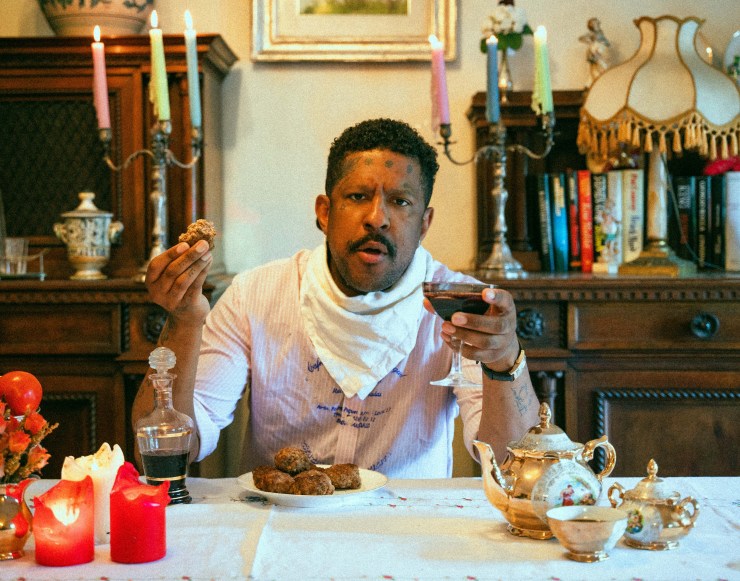
Mykki Blanco really doesn’t need any introduction from us. We’ve been massive fans of the queer pioneer and innovative artist for many years now; they’ve been a huge inspiration to the team and have dazzled us with their live performance more than once. So, we’re super excited that they’ll be releasing a brand new EP later this month. 

Postcards From Italia is set for release on 22nd September, and offers an instantly uplifting collection of colourful, danceable anthems. Fusing together influences ranging from Euro dance beats to Country hooks, we can’t get enough of the funk-fuelled energy and effervescent spirit that runs throughout. 

Fresh from celebrating Copenhagen Pride, Mykki spoke to our Tash Walker last month about the upcoming EP, how the music industry’s changed over the last decade, their queer inspirations and more. Have a read, and make sure you tune into our next show on Soho Radio on Monday 18th September to hear some of the chat there! 

We’re massive fans of you, and it’s an honour to have you speaking to us today! We obviously have quite a few questions for you, but we’d love to focus on your upcoming new record Postcards From Italia, which feels quite different from your previous albums. So, how are you feeling about its release?

So, Postcards From Italia is an EP – it’s only 15 minutes long! But sonically, it really continues the musical journey that started with releasing Broken Hearts & Beauty Sleep in 2021, and then Stay Close To Music, which was a very, very contemplative, very melodic record, in 2022. Most of the songs for Postcards From Italia, even though they’re upbeat, were actually recorded in that same kind of time period as those other two records, so it just really continues a very stark departure into kind of what my music sounds like now, and not what my music has sounded like for roughly the last ten years. I think if a musicologist were to note any markers on my sonic journey, there’d basically be the beginning of my career up until the pandemic, and then the pandemic kind of marks a very stark difference in not only the quality of my music, but just the sonic journey. And I just think that, for me, everything that I’ve come out with since 2020, has, has been like “this is my sound” – this is the music that I make, and less and less of kind of an ever winding journey. I don’t know. I mean, I guess there’’ll always be an element of a journey. But yeah, I think what I’m now creating reflects more how I really feel.

You’ve described this as your “Italian Cowboy Era” – can you explain?

I didn’t say that actually. I think someone from Pitchfork or one of the first music journalists that got the new press release kind of put their own spin on it after listening to some songs, and they said that, and then the record label said that and now people are saying that… Which I guess I’m okay with!

I think the label of “Italian Cowboy Era” maybe came from the lead single ‘Holidays In The Sun’ – the way in which my tone and cadence, and the way in which I delivered the lyrics, is a reference to country music – country music like over Euro dance production… And there are two other songs where I give a similar country western vibe, like ‘Magic On My Back’…  Wow, I get it, that’s why they probably said that! 

You got it. You reclaim it! 

I just reclaimed it. Not joking. I had not thought about that.

You’ve mentioned it already, but ‘Holidays In The Sun’,  the current single, is such a tune. I love the ‘90s dance vibe. The first time I heard it, I think in just the first ten seconds my head and my shoulders were moving away – it’s so infectious. And then magical. And ‘Magic On My Back’ was another one – it’s so sexy. It’s got this really sexy groove to it.

Thank you! I just wanted to release something upbeat – something really fun. So, I’m actually about to start grad school. I’m moving to Switzerland to do an MFA in Fine Art, because I want to focus on Environmental Humanities in painting. I’m really interested in ecology, but kind of like post colonial ecology. So, like ecological studies through Africa and Asia and South America, rather than through a Eurocentric lens – like environmental chronology. The programme is almost two years long, so I wanted to put out something fun before I start school, because once I start, I’ll have to have my head down to study! 

I also read that you didn’t start writing until you were 25. So, it’s interesting now that you’re going into this other phase of going to grad school and looking into art and ecology. Why is that do you think? Was it a conscious decision to start writing at 25? Or was it just the right moment, just something that you were you were drawn to?

It was really my first manager that pushed me into music. As a child, I lived in two places – I lived in the Bay Area outside of San Francisco, and I also lived in North Carolina. And I was just always naturally very drawn to theatre; I loved performing in front of people, and I also loved creative writing. Then, as a teenager, that manifested into me doing more theatre and I found out about performance art. But then I went to art college – well, I went to two different art colleges and dropped out of both, but still very much thought that the trajectory of my adult life would be centred in the art world. I thought I’d figure out some way of working as a contemporary artist and writer, but I never saw myself as a person who would go on to do journalistic writing. But, about ten years ago, I published a book of poetry, and one of the things I am really invested in doing this year, in grad school, is beginning to actually really write either a novel or (very) short story. But, back to your question! I thought I was very much going to have this trajectory as a contemporary artist in the traditional sense, and it was not until I met someone named Charles Damga, who owned a record label called UNO Records in New York, that I started to think more about writing. Basically, Charlie came to a few of my performances – I was doing these performances at different parties, and I was starting to release things online and, I guess for that time, it felt very original, on the cusp of something that people had not seen before. And I just remember, Charlie and I had this conversation where he said something along the lines of “I feel like you’re making music and you don’t know that you’re making music”, but I was still very much in this art world context about everything. And he asked me if I enjoyed songwriting, and if I’d ever considered working with producers, and I was like “I don’t know what a producer is…” So, he suggested giving it a try and pairing me with someone, and I was like “Sure”, and he linked me up with about four different producers and I started to understand that I can communicate certain ideas and together we could translate the production into a song. I didn’t really know what I was doing, I was just enjoying myself, but then over a couple of years I realised that, though I didn’t know how to produce in a traditional sense, I always know sonically the cornucopia of songs or influences that I want. And it was really this exercise in, not only growing in confidence with myself, but as a songwriter, that helped me understand that I could do it, even though I’m not ‘classically trained’ in composition or anything. It was also the community of producers in the community and other musicians that helped me reocognise that I had a talent for something, even though it was undefined. 

Looking back at your career, it’s been amazing! You’ve worked with some really incredible artists, but you’ve also clearly worked really hard to get where you are today, doing lots and lots of touring. How does it feel to you looking back over the years, to where you are today?

One thing I would say is that I’m very fortunate to have come along at the time that I did, because I don’t think I would enjoy the politics of being a brand new artist right now. I feel that with every generation that crops up every five or so years, there’s some select artists who really push the envelope sonically, through their imagery and aesthetics through their message. The universe seems to equip them in ways to persevere beyond whatever challenges the music industry, or society in general, might be placing on them. But I think there are a set of challenges right now for new artists which mean it’s just become harder; I would say it’s become harder for new artist to really make a living and to have a real quality of life. Even though I’ve experienced so much transphobia and homophobia, and had certain media outlets be so rude and inhumane to me at certain parts of my career, I think at that time many paradigms around being queer and being trans were being completely blown open. I was able to explore, or maybe come to terms with, my gender, maybe a path was widening that did not exist before. A true spiritual experience. 

I feel that, unless you were a musician during the last ten years involved in a certain kind of underground culture, maybe you wouldn’t understand this… But, from around 2012 to 2020, something happened where, because of the internet – things like Tumblr and Twitter, and the whole nature of social media – it really transformed and changed communities all over the world. People were able to say “Hey, listen to this indie / feminist / punk band / queer rapper”, and people were able to hear their music on the internet and book them. This created a network globally, where historically artists that would have really dwelled in the underground were able to have agency; to actually make money, to actually look forward. And that’s really important, and I don’t hear people talk about that enough. Sadly, with the pandemic, a lot of that has been diminished; and the effects of that are not completely over. There has been such a reduction in independent venues; a reduction in bookers and people who are willing to book independent underground acts. The network globally is still there, in a sense, but it has diminished. I really see now, again, the dominance of pop stars in a way that I saw it ten years ago, because pop stars are always going to be there. But in the last nine years, it seemed like music listeners were getting more invested in indie underground artists. And ok, your pop fans are always going to be your pop fans, but I’m seeing this dominance again of major label artists. And that kind of scares me, because it feels like we’ve gone back in time, and it’s such a shame because it felt like things were starting to really shift for artists at certain tiers that were not a part of the major label system. 

This comes back a bit to what you were saying about what you were experiencing within the industry – I remember I think maybe it was around, 2016, I saw the video of your days reciting the Zoe Leonard poem, ‘I Want A Dyke For President’, and it was just so perfect. It felt so powerful and apt to bring those words to life at that period of time. You’re an artist who is always pushing for people to see the world differently, I think. And I think sometimes I also think that when you’re queer, and you’re born into a world where you don’t make sense, you sort of have to break it down and build it back up in a way that you can then insert yourself into it. Which allows us, or some queer people, a chance to see the world so differently, and to think differently. And I’m really glad to have had that experience. But I wanted to ask you, who helped you to see your future when you were growing up?

Yeah, I feel like – even though it’s well intentioned – there is a very neoliberal need to commodify and kind of glamourise queerness. But I get it, because then it becomes or can lead to the celebrated education of queerness. But it sort of is like we’re only seeing the pretty people… When I look on Instagram, and I look on Twitter, I love seeing a trans male activist with 850,000 followers, and I love seeing all the trans women who are gaining accolades and I love it when I’m able to connect with other gender-nonconforming queer people who now have large platforms. But it’s still this thing where a lot of the people that shaped me are what you might consider ‘outlaw’ queer people; people that don’t necessarily live in the big cities, that may have existed through sex work, or through anarchist or more community networks. They are just being naturally gender nonconforming, and so much of society – even mainstream LGBTQ society – might find them unruly, or even unattractive. But it’s these people, my friends from these communities, that I would say have really nurtured the radical ideas that formed the foundation of my true virtues. 

When I think about specific people that you might know, there’s Brontez Purnell who I’ve known since I was 18. And I think Alli Logout from Special Interest is someone whose politics are on the money and I feel like whenever I’ve encountered them, they’re always giving me this nice, fresh perspective on something. Then there’s Ericka Hart, who I would consider an activist; she talks a lot about intersectionality, and her partner is trans. They just had a baby and so she talks a lot about this intersection of being black in America, and queerness.

 And, finally, I’d like to name one more – Munroe Bergdorf. I’ve known Munroe for a long time and she inspires and interests me. I’ve really followed her journey closely, and she does feel to me like an infiltrator, because she is able to slip into the mainstream, glamorous radar, but she knows her shit and she knows the real deal. No matter how glamorous she is, and no matter how many talk shows she goes on, I never hear her giving a palatable answer just for the sake of making the mainstream feel comfortable or better about themselves. 

Yeah, I met her about 10 years ago when she DJ-ed for this charity and LGBT helpline charity that I volunteer for, and it was just before she started to, like jump onto the platform that she’s on now. It’s been amazing to watch her, and she’s never faltered in her her views or her purpose – she is she knows who she is, and she knows what she’s going for. 

Okay, I’m conscious that I don’t want to keep you for longer than you have to! So, lastly, I see you’ve hit up a couple of dates across a number of European festivals over the last couple of months, and we’ve all seen you a bunch of times in London, at Southbank Centre and Village Underground when you played there, which was outstanding! We were left absolutely buzzing, like properly fizzing under our skin! So, has there been a particular event you’ve played that’s stood out to you over the years? 

It’s so difficult to answer this question because it’s been almost 11 years of so many different kinds of gigs… But I would say that, honestly, I can be in any room; it doesn’t have to be 1000 people, it could be just 400 or 500 people who are really engaged and watching me, singing the words back. I’ve had that big festival experience, and maybe one or twice in my career when that huge big room didn’t feel any less powerful than a smaller one. But when 400 or 500 people are just completely engaged in what you’re doing – sweating and pouring our hearts out into each other – it feels very special. I like to create a moment sonically and aesthetically, and when it all comes together cohesively, and people are engaged with what I’m doing, that feels good. Because I’ve been doing this long enough to know – I mean what is a career, but a string of continuous moments? 

Totally. I feel like that about archiving as well.  The lack of archives there have been past a certain point, and censorship and all of that sort of stuff. And so, you doing these things on an ongoing basis as an artist is so important. 

Thanks so much for taking the time to chat with me, Mykki. And, best of luck with the record!

Okay, thank you so much for having me. And big love to all of you out there!

Hugest thanks to Mykki for taking the time to chat to us! Their upcoming new EP, Postcards From Italia, is out 22nd September via Transgressive.

Photo Credit: Cecilia Chiaramonte

EP: Dream Phone – ‘Dream Phone EP’

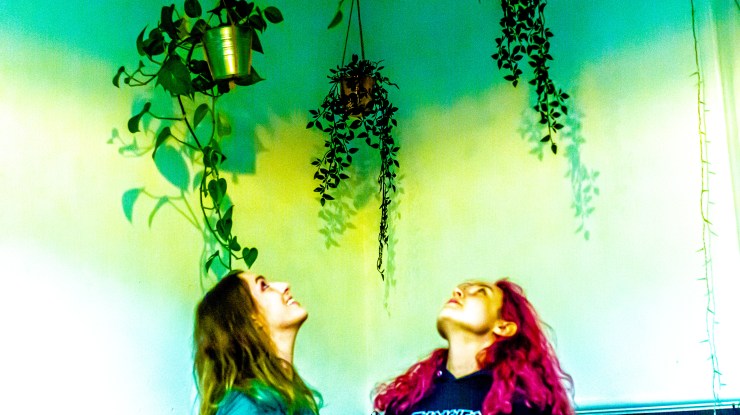
Fuelled by snacks, Pepsi Max, and 100 gecs on repeat, Oxford glitch-pop duo Dream Phone – aka Hannah Watts and Jenny Bell (last seen ‘caught in the act of looking weird’ as half of Junk Whale) – get ridiculous for their DIY debut extended play with ten minutes of synth-driven hyper-pop melodies and pitch-shifted lyrical pandemonium!

Opening with the infectious one, two, three, four, ‘strut’, Dream Phone sparkle with an off-kilter electronic groove (“If you can’t find me in the dark / I’ll be here by the searchlight”) before exposing us to the extreme temperature of their own personal ‘hell’; a hot mess of obnoxiously upbeat noise and auto-tuned self-destructive attitude: “I can do what I want now / It’s none of your concern / Gonna cut my hair short / Because I’m not really listening to / What you say what you say what you say!”

Piercing your heart with a wooden stake, the ‘bad girls’ sink their fangs into riot grrrl for this next track, taking inspiration from Kathleen Hanna’s Le Tigre and Julie Ruin, and transforming their already unique pop sound into something otherworldly. Dream Phone’s ode to Buffy The Vampire Slayer is a celebration of friendship and “finding your partner in crime”; a euphoric glitch-pop beatdown for the BBC 6Music generation. “Going to the club / Dance up on some hunks and / Maybe kill some monsters / Or crash a cop car!”

Deliberately artificial in its production and sound, ‘no’ is an “anti-people-pleasing” pop anthem for those of us who struggle to say fuck “no” (“You ask, I sigh but I agree / You can always count on me / I will lie on the ground for you / You can wipe your feet on me”); opening with an electronic blast beat before glitching out into synth cyberspace! Closing their self-titled EP with ‘i don’t want to talk to you (at the show)’, the dreamy duo set boundaries and get anti-social: “Clinging to my beer / Everything’s too loud in here / I can’t concentrate / On what you’re shouting in my ear.”

Dream Phone ooze hyperactive energy, enthuse an ethos of DIY disorder, and, throughout their wonderfully eclectic debut EP, occupy the brain with vivid musical imagery.


The debut EP from Dream Phone is out now via independent record label Divine Schism. Buy on bandcamp now.

Ken Wynne
@ken_wynne

INTERVIEW: The Orielles

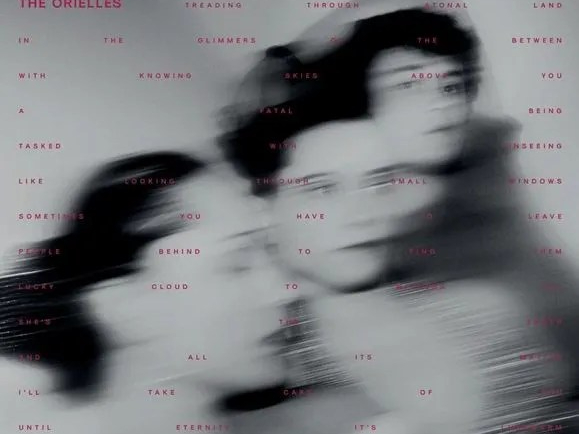
Having been a massive fan of Manchester based Sid, Esmé and Henry – aka The Orielles – since first hearing them nearly a decade ago, it’s been wonderful to see them go from strength to strength over the years and continue to create truly unique offerings. Now, following a number of albums, headline tours and even ventures into scoring and directing their own film (La Vita Olistica, 2021), they have released an experimental new collection – an innovative re-working of last year’s Tableau, The Goyt Method showcases the trio’s insightful and sophisticated songwriting, and ability to create exquisite, avant-garde soundscapes.

Following the EP’s release and ahead of catching them at Higher Ground Festival (a one day event at The Roundhouse on 15th July, with an all female line-up), I caught up with Esmé and Sid to find out more about The Goyt Method, their recent tour and their thoughts on being women in the music industry… Have a read!

Hi folks, so nice to meet you – been a fan for a long time! How are you doing at the moment? And what does the weekend have in store? 

Sid: We’ve just come off our European tour, so we’re now spending some time just enjoying home comforts for a bit, catching up with friends and things. We’ve also got a new practice space, so going to be jamming in there, and taking it easy for a few weeks. 

And how was the European tour for you?

Esmé: It was so amazing to play in cities we’ve not been to in years – I think we toured Silver Dollar Moment in a small handful of European cities, but then didn’t get the chance to with Disco Volador, so going back to places like Paris, and probably having one of the best crowds we had throughout the whole of the UK, American and European shows, was really nice to see. It was also really heartwarming to meet a lot of the people who’ve been waiting to see us for quite a while.
Sid: It was really cool as well because, as Es mentioned, we’d not played in Europe for such a long time that when we went out there and we were playing mostly new material, it was nice to see the fans really reacting more to that. In England, when we play, the fans tend to just want ‘the hits’, like singles from previous releases, whereas this time people were really appreciative of actual record stuff, which was dead nice, and obviously something that we’d hoped for – on this tour in particular – as our latest material is quite a step away from older stuff, so it was nice to see people were really enjoying it. 

Is your live set up quite different now that you’re playing newer material? 

Esmé: We still play with Emily Zurowski on keys – she’s a session player, and has her own projects going on, and brings something really different and interesting to the shows – a more synthy / dancey feel. And we as a band are now more leaning towards that synth-heavy side of things, with a lot of the vocals being triggered through samples and that kind of thing. Generally, I’d say the shows now have more room for experimentation than they used to. 

And, when you’re out on tour, do you have any particular essentials that you always take to keep you going while away from home?

Sid: I don’t really have many essentials as such, but I do always need my headphones! I enjoy watching a lot of films, and I’ve got Mubi logged in on my phone, so – if we have a long drive – being able to watch a film makes me feel at home. I can then chat to my friends about it and make recommendations to them! At the moment, I’ve been really into and watching a lot of Wong Kar-Wai films and really love all of those I’ve seen – most recently ‘Happy Together’, which I watched for the first time a couple of weeks ago and really really loved! I really love his visual style – the cinematography’s really great. 
Also, on the last tour we all said we were going to take our yoga mats and make time to do that every day, but it just never happened! You always think you have so much time, but you just don’t. It would be good to get to the point where everything was set up for us and we had a few hours to do some yoga, but we just don’t. 
Esmé: I like to take a good selection of books as well. Though the down time doesn’t come around every day, when you do get a day off and get the opportunity to just sit there with a book, it’s really nice – a nice mindful thing to do. I’ve just started a really big book that I don’t think I’ll be finishing too quickly – it’s called ‘Unsound:Undead’, and it’s a collection of short essays about different approaches of sound that come from sources that aren’t living. Lots of the essays I’m reading are about bodily sounds, or the sounds of disease. And then they also talk about things like the sounds of an atomic bomb or those kinds of sounds that are lesser explored. 

Talking of different and interesting sounds…. You have a new EP The Goyt Method out now via Heavenly Records, which is super exciting! It sounds like there’s some really interesting concepts behind it – are you able to explain a bit about its inspirations and the process of recording it?

Esmé: Yeah, I guess it does link to what I’m reading about. We kind of zoomed out of the record (last year’s Tableau), looked at all of the stems across it and then used a random wheel of fortune to allocate which stems we were going to put back together and create a new song from. And part of that lead us to discover some of the smaller sounds that weren’t necessarily lead hooks or significant parts in the record – so, we took them and expanded them to become the main sound that you hear in these new tracks on The Goyt Method.
Sid: Yeah, when we were recording Tableau, we were really into the idea of randomisation , things like cybernetics and AI within music and how, through this wheel of fortune idea, a song could be done in so many different ways. And it was within these limitations that we were given a new drawing board to work with, and it really pushed us to think of new ways to arrange these melodies to make completely different versions of the songs. That idea really excited us because we wanted to give Tableau a new lease of life. Through making new arrangements of the songs, it was different from just remixing them in a traditional sense. 
Esmé: It definitely speaks to our practice as musicians now and a realisation that we’ve come to since writing Tableau – we’re now less precious about writing a collection of ten songs that we’d demoed and thought about for a year, and then put on an album and then have to move onto the next thing. We like the idea that every song can exist in so many diferent ways, can be played slightly wrong and that still might be the version we go with because it has more feel in it – I guess we’re trying to move away from the idea that everything has to be so final. We’re now more into leaving everything open ended with the chance that it can be worked on and changed to create something different. 
Sid: Yeah, when we first started working with Joel (Patchett) who helped us produce the record, we were recording at a place called Goyt Mill which is in a place called Goyt… And we first came up with the term ‘to goyt’ something – our own way of describing to Joel what we wanted him to do with a particular sound. So, ‘goyting’ something is changing its form in a way that’s random and in a way that a computer might change things – it’s quite complex!
Esmé: It links to the ‘musique concrète’ kind of vibe – the way of making a sound seem completely separate from what it originally sounded like. Or using a sound source that we can modify – often turning raw sounds into something more electronic sounding. 
Sid: Hence the title, The Goyt Method

And was it quite a big team helping you create the record? Or was it just the three of you with Joel?

Esmé: Yeah, it was just the four of us throughout the whole process. The same as Tableau. We were given the freedom to do it that way which was really helpful for us – to be in that creative headspace and work so closely together, just the four of us. A lot of it was just recorded in my bedroom, or at Joel’s house. Just setting up DIY / impromptu spots to capture everything. 
Sid: Yeah, it was a really interesting process reworking all the tracks. Particularly with certain songs – like on Tableau there’s ‘Improvisation 001’and on Goyt Method there’s ‘Improvisation 002’, which is basically just the strings take – we asked the musicians to come back and improvise completely along to the original track, to just feel their way through and not worry about messing up. And we really liked how that sounded as a standalone piece, so put the whole piece of music on as its own track on The Goyt Method
Esmé: I actually heard that in full on NTS the other day – sounded so nice, it’s really beautiful! 

Obviously this EP, and Tableau, seem very different in sound from your earlier releases – can you explain a bit about what inspired you to make this change of direction?

Esmé: It was partly just being given the freedom to do it. It’s always been within us to make this kind of album – so much so that weirdly, to us, it almost feels like a first album again. I think in the past we just maybe didn’t understand that there were different ways of approaching creating an album. As proud as we are of our previous albums, it was very much following the structure of making a demo, then being asked for three singles at least… So, the different sound I think almost came as part of changing the process. 
Sid: And we were listening to a lot more experimental music as well and getting more into electronic music than we had been before. This definitely influenced the process and the outcome a lot.
Esmé: We were also doing our Soho Radio vinyl mixes – we would meet every month and record a two hour mix. This meant we were buying a lot more records for ourselves which lead to a lot more exploration into music – we were holding these records and discussing them with each other, and we really wanted people to have something that they could see as an album that was valued; something to own physically and to discuss. Something that you would have to listen to from start to finish.
Sid: That’s what I was going to say! 

You’ve mentioned about remixing music – and I know that, as well as being an amazing band yourselves, you’ve also remixed songs by some other amazing bands like Peaness and PINS. How do you normally go about remixing other bands’ tracks, and how do the collaborations normally come about?

Sid: Yeah, I feel that it goes quite nicely hand in hand with The Goyt Method. Although we were doing remixing well before we thought about the album, we use very similar techniques and a way of working – finding stems and ‘goyting’ them. Adding new textures. And remixing is something that we’ve always enjoyed doing and inspires a lot of our songwriting. The Peaness one in particular was definitely a favourite – we went a bit wild with it. I remember when we first pitched up the vocals and sped it up we were all in Joel’s apartment, just loving it! *fist pumps* 
Esmé: I think as well when we did the La Vita Olistica film, we realised that editing a film can be quite similar to stepping back and pulling a song apart and piecing it together in different ways. We’ve always been fond of editing as an art or medium, and the way you can create new meanings from things – how you put two things together can be so hugely significant. With remixing we’ve followed that ethos like we’re kind of editors or a film or something. 

With the film side of things is that something you would like to do more of – create more visual accompaniments to your music? 

Esmé: Yeah, I think we’ve definitely realised that it’s all hugely interlinked – our music with visual media, like film or art, like the album covers and stuff. We have really enjoyed making short videos for some of the tracks on Tableau (I think, rather ambitiously, we did intend on creating a video for every single track at the start…) But I think we’d love to do another ten or twenty minute short film to incorporate a few of the tracks from the album together. 

I’m very much looking forward to seeing you live at Higher Ground Festival in July! You’ve touched a bit on how your live set up has now changed – what can we expect at this show? 

Sid: Yeah, I think we will be playing with some of the strings players for this one at Higher Ground. Just because it’s such an epic venue, The Roundhouse. We feel bad about the last London show getting cancelled (at Earth, when we had just done the one at Stoller Hall in Manchester), so we obviously had to rearrange that, and it seems a perfect location to add the strings, which will be really exciting. And I think we’ll bring some different elements of Tableau into the live set too, and play more of a tailored set around the strings. And, although we’d love to do this consistently, I think keeping it for like special one-offs like ths one is a nice thing to do. 

You mentioned about Paris on the last tour being particularly special, and I’ve been lucky enough to see you live a few times – from Green Man festival to headlining The Garage in North London (though I think the first time may have been at The Victoria supporting The Parrots… ?). But has there been a particular gig you’ve played over the years that stands out as a particular highlight for you?

Esmé: When we played the Stoller Hall show I remember saying at the time that it was up there with our top three gigs. Obviously, partly because it was such an amazing set up; we’d never really played to a seated crowd before, and it very much felt like being in a weird David Lynch film, and we all leaned into it, and it was quite a surreal experience! But I don’t know if that’s also because it was our first time playing a lot of Tableau to an audience as well. To be honest, on the tour we’ve just been on there were consistently a lot of favourites, most nights!
The one in Texas as well. We had a show that was cut short, because there was a really ominous thunder storm about to happen, and we were able to play about four songs before it had to be called off. We didn’t realise until afterwards, when everyone showed us videos, that the lightening in the background was moving in syncopation with a lot of the synths – it was just such an epic backdrop to be playing against before the heavens opened. 
Sid: I think we played that particular show with such a weird kind of unique energy where, because it had been such a hot, muggy day (and with this rainstorm looming, and we were a little bit jet-lagged), there was this tension, and we ended up playing really really well. We’d been told that our set was going to be cut short, so we kind of sped through it – it was really punky with loads of energy. We just bashed through the songs, then as soon as we’d finished, this torrential downpour started, and it was so cathartic. 

As we’re an organisation promoting and supporting women and the LGBTQ+ community in music, I just wondered what your thoughts were about the industry today in this respect – how do you feel it is for marginalised groups at the moment, and do you feel much has changed over the last few years in its treatment of female/queer artists?

Esmé: Yeah, the industry’s definitely a tough place for any woman. I mean, most industries are unfortunately! But I think it’s quite heightened in one where expectations around image and how you behave are always prevalent. I think I would say that – although it’s not disappeared, and it’s probably something I’ve hardened myself to – it’s harder as a younger woman. You seem to have to have loads of albums out to gain respect, and to prove yourself a lot more, so lately I’ve not experienced it as much. But definitely when we were both younger there was a lot more difficulty in being taken seriously. I feel like it wasn’t until Sid was about 27 that people stopped calling us teenagers, which was quite belittling… 
Sid: Yeah, I agree. I can’t think of anything we’ve experienced in recent years, which – as Es says, may just be because we’ve hardened to it a bit. But I do think it’s mainly because people seem to give you a lot more respect when you have albums to show, or people just realising you’re actually good. When you’re starting out and you’re younger, and not in the position of being a signed band (and don’t have a ‘team’ behind you), I think that’s when it can be really difficult. And I think that a lot of guys in bands that are starting out are forgiven for being ‘punk’ and lairy – they can scream down a mic and get away with it. Whereas I think when women do something similar it’s seen as being really rubbish, or because we can’t play our instruments or can’t sing in tune. All of a sudden you get some sort of recognition and that seems to go away. It’s a shame that you have to be in that position of having support in order to get recognised or respected. 
Esmé: I would also say that, probably subconsciously, this kind of thing is what might have sparked our leaning towards the more experimental or electronic scenes. I’m not saying sexism is absent from these scenes, but it seems a lot more female heavy and to include a lot more people of colour – it’s a better space for musicians to be diverse and for everyone to be respected and taken seriously. Venues like The White Hotel in Manchester are a great example of this – it’s one of the most diverse venues I can think of in terms of their representation of artists, compared to other venues or more ‘indie’ festival line-ups that are so male dominated, where mostly like just four lads in a band seem to take up most of the space. 

Massive thanks to Esmé and Sid for taking the time to speak to me, and answering my questions! 

The Goyt Method, the innovative new EP from The Orielles, is out now via Heavenly Records. Order here. And catch them live at a number of dates over the next couple of months, including Higher Ground Festival, at The Roundhouse on 15th July. 

EP: The Ethical Debating Society – ‘Mutual Indecision’

Writing bubblegum pop melodies before tearing them apart with riot grrrl moxie, The Ethical Debating Society’s (TEDS) DIY punk attitude and multi-faceted lo-fi sound has been preserved on their latest six track extended play, Mutual Indecision; a collection of previously unreleased songs recorded at Sound Savers – Mark Jasper’s Hackney warehouse studio.

Produced by Jasper (Witching Waves), mastered by Dai Jones, and released by Radical Possibilities, the Mutual Indecision EP features vocalist/guitarist Tegan Christmas, vocalist/guitarist Kris Martin, and drummer Eli Tupa obliterating rough DIY indie with cathartic and justified rage! Opening with pop-punk anthem ‘Poor Liam‘, the three-piece examine the “alright-jack-shit generation” under the microscope; the “petri-dish for patriarchy”. “You have, and you are, a tool / That’s so fucking precious…”

Emoticon‘ – another whiplash-inducing headbanger – disturbs with distorted chaos, Tegan and Kris harmonising over obnoxious guitar riffs, frustrated with social change. Kicking over her drum kit and strapping on her guitar, Eli shreds lo-fi sludge on ‘Prawn Operation‘; screaming Spanish lyrical angst against male entitlement, before switching back to percussion for the punishing ‘Paywall’ – life as commodity: “Buy, buy, or bye bye.”

Pantomine‘ follows with equally irresistible visceral lyricism; challenging alpha male bullshit as abrasive riffs strain under the ferocity of raw instrumentation. Closing with ‘London Particular‘, the London-based trio implore you to look around: your estate regenerated and community lost… “…the fog clears and your heritage has gone. Now all the flats and all the shops ask you for money you haven’t got.”

Following their 2015 debut LP, New Sense, and in anticipation of their long-awaited sophomore record, Mutual Indecision delivers equally spontaneous scuzz, sounding as if TEDS got together in the studio, hit record on analog, and jammed unapologetically through the feedback – an imperfect punk record that is chaotically perfect.

mutual indecision e.p. by the ethical debating society

Catch The Ethical Debating Society playing live for us next month, on 19th May at Shacklewell Arms, supporting Hypsoline with Rom Coms. Tickets here!

Ken Wynne
@ken_wynne