LISTEN: GIHE on Soho Radio with Blue Loop (23.10.25)

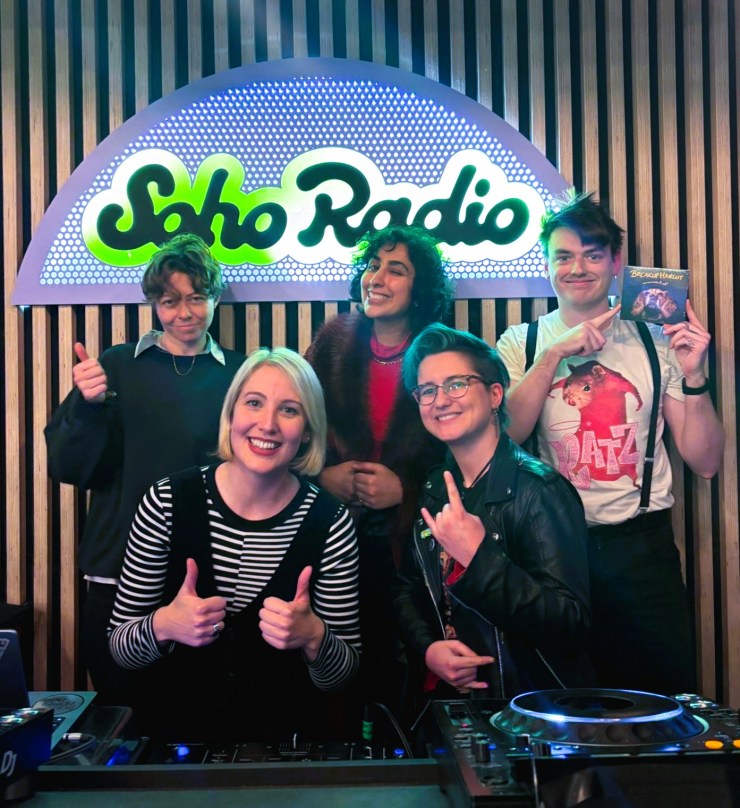
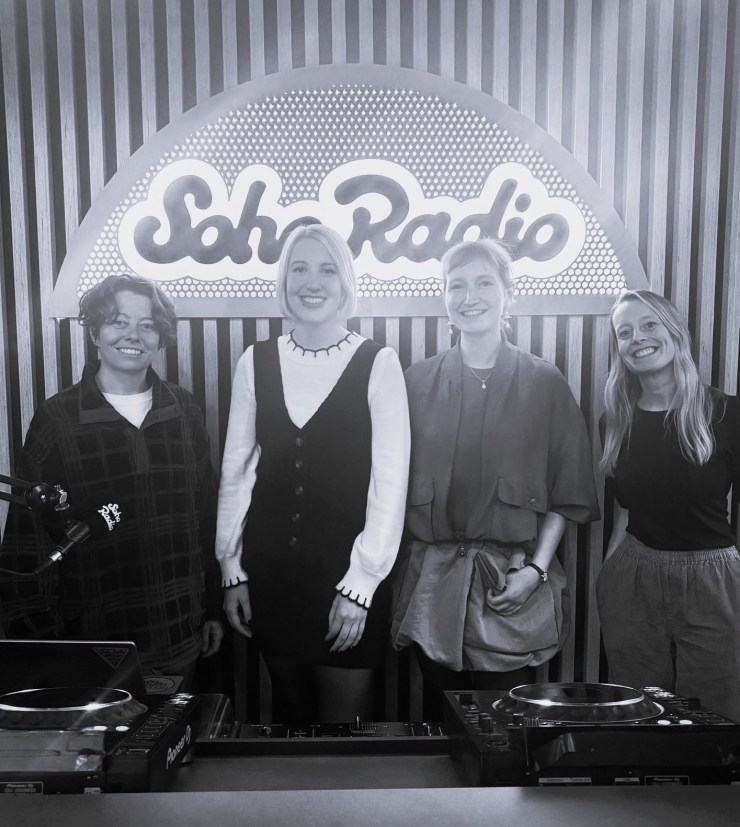
Tash, Kate and Mari were all back in the Soho Radio studio together, bringing listeners their usual eclectic mix of new music tunes from some of their favourite female, non-binary and LGBTQIA+ artists. They were also joined by London-based electronic musician and producer Emma Hall aka Blue Loop to talk about her upcoming debut album, Cycles.

Set for release on 7th November, Cycles is a deeply personal work for Emma, inspired by her experiences of being diagnosed with and undergoing treatment for breast cancer – for which she is now in remission. Emma spoke candidly about the context and inspiration behind specific tracks, the people she collaborated with on the record, and shared her excitement for the listening event and Q&A session she’ll be hosting on Saturday 8th November at The Cavendish Arms in Stockwell, South London, to help celebrate the release. You can grab a ticket here.

Listen back to the show below:


We’ll be back on Soho Radio on Thursday 13th November from 16:00-18:00 (GMT)
 Make sure you tune in via DAB or download the new Soho Radio app!
You can also listen at www.sohoradiolondon.com

Tracklist
Planningtorock x Bronski Beat – Smalltown Boy
Kelly Lee Owens – ASCEND
Nourished by Time – Crazy People
feeo – The Hammer Strikes The Bell
better joy – steamroller
Samia – Cinder Block
Whitelands – Glance
skullcrusher – dragon
Dogviolet – Now
Hadda Be – New To The Office
F*Choir – Ceasefire (You Cannot Stop The Sun)
Beverley Glenn Copeland – La Vita
Blue Loop – All Of You
**Interview with Blue Loop**
Beth Gibbons – Whispering Love
Pien – Totally Honest
HAAi – Voices (Tash’s Track Of The Show)
Hilary Woods – Taper (Kate’s Track Of The Show)
Breakup Haircut – I’m Okay (I Lied) (Mari’s Track Of The Show)
congratulations – This Life
No Other News – Flowers
Brain Leak – Moon Eyes
Madi Diaz – Ambivalence
Ailbhe Reddy – Align
Shy Charles – Come Little Children

LISTEN: GIHE on Soho Radio with Estella from Big Joanie (18.09.25)

Tash and Kate were back in the Soho Radio studio bringing listeners their usual eclectic mix of new music tunes from some of their favourite female, non-binary and LGBTQIA+ artists. Mari offered the team some of her “musical musings” too!

They were joined by DIY punk icon Estella from Big Joanie to talk about her solo work as ellaments, her new music ventures with “supergroup” Widget, her future recording plans with Big Joanie and her plans to DJ at our SOLD OUT all-day GIHE 10th birthday gig at The Cavendish Arms on Saturday 27th September (join the waiting list on DICE here)

As if that wasn’t enough, Estella is also an advocate for so many incredible organisations. She spoke about her work with DIY punk festival Decolonise Fest, youth-based music initiative Spark The Noise (formerly Girls Rock London), her upcoming panel appearance for Perfect Pitch at Brixton Hill Studios and her ongoing work with Good Night Out, who campaign for safer nightlife. Make sure you check them all out!

Listen back below:


We’ll be back on Soho Radio on Thursday 23rd October from 22:00-00:00 (GMT)
 Make sure you tune in via DAB or the new Soho Radio app!
You can also listen at www.sohoradiolondon.com

Tracklist
Donna Summer – Autumn Changes
james K – idea.2
Weakened Friends – Tough Luck (Bleed Me Out)
TTSSFU – forever
Lōwli – What’s It All For?
Jouska – Season Of Dread
DEBBY FRIDAY – Bet On Me
Tusks – Adore (I. JORDAN Remix)
Sijya – I Only Want To Crash
Klein – rich dad poor dad
TRACEY – Sleazy
Lucky Iris – I just wanna dance
ellaments – Remedy
**Interview with Estella**
Hayley Williams – Parachute
LOBSTERBOMB – Falling
Jessie Mac – Trans is Beautiful (Tash’s Track Of The Show)
Blue Loop – Luxury Chords (Kate’s Track Of The Show)
jasmine 4.t – I Can’t Believe I Did This Without You (Mari’s Track Of The Show)
adults – patterns
Tyler Holmes – Copy
Cormorant Tree Oh – The Wrong Kind
MUMMY – They Who Knew
Problem Patterns – Classic Rock Has Become My Prison

INTERVIEW: Lisa Meyer (Supersonic Festival)

(Photo: Lisa Meyer)

Championing alternative music and celebrating experimental art-forms is the lifeblood of Birmingham’s Supersonic Festival. Founded in 2003, the multi-venue event has become renowned for showcasing a unique array of musical and artistic talent from heavy and alternative genres. Get In Her Ears were lucky enough to attend the festival for the first time in 2024, where we saw Gazelle Twin, THE NONE, Emma Ruth Rundle, Tristwch Y Fenywod and many more (read our highlights feature here.)

The line-up for this year’s edition of Supersonic – which runs from 29th-31st of August – is equally as impressive. GIHE favourite Penelope Trappes brings her stunning album A Requiem to the festival for the first time. Aussie instrumental-doom project Divide and Dissolve will return to pulverize eardrums with their gargantuan-yet-graceful noises and inimitable Zambian-Canadian rapper BACKXWASH will also return to share her corrosive beats and scathing lyrics with festival goers.

“I think of heaviness not necessarily as an amplification, but as music that is reflective of our world that we’re living in, and we’re living in really heavy times,” shares Artistic Director Lisa Meyer, deftly articulating why Supersonic Festival resonates so strongly with its loyal attendees. She is the creative force leading the dedicated team who have been curating this eclectic event for over twenty years. As the CEO of Capsule and the founder of the Home Of Metal project too, Lisa has dedicated her life to following and championing alternative culture.

“I think because we’re in Birmingham; the DNA of Birmingham is Black Sabbath, Godflesh and Napalm Death, but [Supersonic] is not, as I would call it, a ‘dude fest’ or a straight-forward metal fest,” she explains. “It’s about exploring heaviness across genres. There is a darkness to a lot of folk or electronic music and sometimes the most gentle, beautiful music has a sadness and a heaviness [to it],” she continues, citing Irish experimental doom-folk band ØXN as a great example. “There are heavy drones within their music, but Radie Peat’s voice cuts through you in a way that I think is as full-on as a metal band. It’s more about the feeling that [the music] creates within you.”

This emotional connection is something we were struck by at our first experience of Supersonic in 2024. It made us want to dig deeper and find out what goes on behind the scenes in order to bring this eclectic community-based festival to life. When we speak to Lisa over Zoom, it’s just three weeks until the next edition of Supersonic. Despite mentioning several setbacks throughout our conversation (which we’ll get into in more detail later), Lisa’s aura is equally as calm as it is enthusiastic. She clearly relishes talking about artists, past and present, who have shaped her personal tastes and who ultimately lead her to start Supersonic.

Originally from London where she felt “spoiled” in terms of her exposure to alternative music and culture, Lisa moved to Birmingham in 1994 to gain independence and to study a fine art degree. As a young teen, she says she frequented the weekly Feet First indie club night at the Camden Palace (now KOKO), which she considers to be her “grounding” for getting into music. “Looking back on it, it was probably dodgy as hell,” she smiles, “but I was 14 and me and my friend Lisa – we were called ‘The Two Lisas’ – got to see so many live indie bands; from Doctor and The Medics through to Lawn Mower Death and Meat Beat Manifesto.”

Lisa also recalls her parents playing Black Sabbath and Jethro Toll on the stereo on car journeys as a child, hearing the Songs of Leonard Cohen and The Velvet Underground around the house, and obsessively playing the 7” vinyl of Kate Bush’s iconic ‘80s hit ‘Babooshka’ from her Dad’s record collection. She also cites the Pixies, The Cure and Sisters of Mercy as big influences during her teens. This exposure to so many varied and contrasting musical genres seems to have been the catalyst for everything that she did next.

When she moved to the midlands, she remembers being “shocked” at the lack of cultural spaces in Birmingham compared to London, where she had constant access to gigs and art exhibitions. “But when there isn’t anything there, you [can] create from nothing,” she adds wisely. “It’s the perfect environment to create something yourself.” She began frequenting DIY punk all-dayers in places like Bradford, Leeds and Nottingham, before she started hosting gigs herself in the basement of the student house that she shared with 11 other people. “It sounds glamorous, but it was a very rundown house, and because of that, it gave us absolute freedom,” she comments. She quickly gained a solid reputation in the DIY scene for being a great promoter; always paying bands fairly and making sure they were fed and looked after, something she states was a rarity on the local scene at the time.

From these early experiences, Lisa gained the essential knowledge which led her to start up her own official arts organisation. In 1999, alongside friend Jenny Moore, she co-founded Capsule, a platform dedicated to producing events and exhibitions for curious audiences in Birmingham. As well as championing new and exciting alternative art, Capsule serves a more personal purpose for Lisa. “Although I’d studied fine art, my passion was music and being a music fan, but I was also incredibly, painfully shy,” she reveals. “I wasn’t someone that stood at the front of a gig or wrote a zine. I didn’t feel like I had a voice particularly. I think putting on gigs gives you a purpose. It gives you a reason to be sociable, but kind of on your own terms.”

This new found confidence, combined with an eye-opening trip to Barcelona’s Sonar Festival in 2001, laid the foundations for Supersonic. “I was absolutely blown away by the fact that the festival happened at the MACBA, which is the Museum of Contemporary Art in Barcelona,” she recalls about the galvanizing live music experience. “At that time, Jenny was doing a photography degree and I had done a fine art degree, so we wanted to bring together that sort of visual aesthetic [too]”. Seeing UK experimental-noise artist V/Vm (aka Leyland James Kirby) play inside a beautiful Gothic church seemed to blend these two things together for Lisa.

“V/Vm were dressed as a chicken and a love heart. They had those big Spanish hams and they were on turntables with cabbages and meat juice was flying out into the audience,” she shares. Fast forward two years later to 2003, and Lisa and Jenny had booked V/Vm to play the first ever Supersonic Festival at The Custard Factory in Digbeth, alongside Coil, Pram, The Bug with The Warrior Queen, LCD Soundsystem and metal bands from the local scene.

“It was a really eclectic mix and I guess at that time, no one else was really doing that,” Lisa comments. She acknowledges that festival line-ups were generally geared towards a single genre, and that the electronic music scene in particular felt inaccessible to lots of fans. “It was very boy-sy…you had to be an ‘expert’ to be into electronic music at that time, it just felt really hostile,” she shares. Lisa wanted to create a “welcoming space” with no rigid genre barriers and no gate-keeping – something that GIHE felt was one of the most impressive and coherent elements of last year’s Supersonic festival.

Creating and sustaining something as original as Supersonic has been equally as life-affirming as it has been challenging for Lisa, for numerous reasons. In 2012, her creative business partner Jenny took a step back from Capsule and Supersonic in order to focus on her young family, which was an eye-opening experience for Lisa, who became the sole Director, Artistic Director and CEO. “I think because we ran it together, we were almost oblivious to risk, because we had each other, so we just made stuff happen,” she shares. “Jenny was absolutely brilliant at fundraising and the budgets and as I used to call it ‘the adult stuff’. So suddenly, I had to inherit this weight of responsibility and it was also at a time when the Arts Council really didn’t understand the value of experimental music or adventurous music.”

Lisa explains that Supersonic received “tremendous pushback” from Arts Council England in the early days of applying for funding. She tried to make it clear in her applications that at its core, Supersonic was about supporting an ecosystem that was not too dissimilar to theatre. Theatre brings in ticket income, but this is subsidised to support the production and the making of it – whether that’s a West End musical or an obscure performance piece. She had to lobby hard to make sure that the festival was not misinterpreted as a purely commercial venture.

“I started to understand the role I can play in terms of supporting more emergent artists and making sure that the line-up is diverse,” Lisa extrapolates. “I think in the early days, just making the thing happen was an act of resistance. Being two young women in that male-dominated field was enough of a thing. Whereas now, I wouldn’t say we’re in a comfortable position, but there’s an inner confidence to be able to kind of make sure that that’s part of our mission and our goal with Supersonic.”

This year’s edition of the festival continues that vital mission. Between BACKXWASH, Divide and Dissolve, Zahra Haji Fath Ali Tehrani, BUÑUEL and Penelope Trappes (to name just a few), Supersonic’s line-up seamlessly sets an exciting and necessary precedent for diversity in all its forms. Lisa has always been meticulous with her curation though, and this is something that’s developed over time. “Because we’re really limited in our budgets, that makes me have to be extremely creative and really careful in terms of who I’m programming, so there’s no filler and it means that everyone’s there for a reason,” she shares. “There’s an un-said relationship between each artist and the journey that I’m trying to create within a day or over the weekend.”

Despite this dedication and attention to detail, Lisa confesses that she is not immune to imposter syndrome. She has always felt that her relationship to music has been based on gut feeling, obsessive listening and intuition, rather than technicalities like being an “expert” producer or a music-maker herself. When asked if she has ever seriously considered giving up Capsule and Supersonic because of this, she humbly replies that despite the numerous sleepless nights, it doesn’t really feel like a “job” to her – it’s more of a calling.

“I think probably now I’m unemployable,” she laughs. “I’ve done this for 20+ years, I don’t know anything different. When it actually comes together and you have that weekend where there’s that sense of community and you’ve been able to create a sort of critical mass for relatively unknown artists, and your audience feels part of something that feels really important, like we’re part of this global community – that spurs us on for the next year.”

It’s not just imposter syndrome that Lisa has had to battle. In recent years, the gentrification of the Digbeth area where Supersonic is held has caused her immense stress. In the inaugural days of the festival, Lisa remembers Digbeth feeling a bit like the “Wild West” as it had minimal infrastructure in terms of proper street lighting or cash points. This allowed her and her team to build their own infrastructures within the warehouse spaces they rented and to create the “blueprint” for Supersonic, but it’s a different story today.

“As the years have gone on, developers have come in and taken those spaces, and developers are not supportive of culture, especially outsider or counterculture,” she comments. Lisa has had to compromise to keep Supersonic alive. In 2024, for the first time ever, they had to switch to using a commercial venue – The O2 Institute – due to developers making it too difficult to use their original, formerly independent space. This year, Lisa has shared the news that Supersonic’s Marketplace – the festival’s hub for food, selling records, socialising and DJ sets – will have to relocate to Zellig Building for similar reasons.

These changes are not just inconvenient logistically, they incur costs that Lisa is desperately trying not to pass on to the festival’s loyal attendees, but this is becoming increasingly difficult. “Supersonic is meant to be a celebration of the underground, but if it’s too expensive, people can’t attend,” she states, but she is battling hard to make sure this doesn’t happen. “We have started a solidarity ticket scheme where people who can afford to pay a bit more, buy a more expensive ticket and that means that we can work with partners like O121 Queercore and Decolonise Fest to do massively subsidised tickets to their networks. So we’re trying, but it sort of feels now like Supersonic happens against all odds, which is quite exhausting. I’d say this year, I’ve never known it as hard as ever before, in every element of putting a festival together. It feels like this year may well be the nail in the coffin of it being in Birmingham,” Lisa sighs, “unless something really radically changes in terms of whether the council starts to intervene in some way.”

Lisa’s determination in the face of such adversity isn’t just admirable – it’s vital. She has invested time and money creating a platform where artists and fans feel truly valued, and in today’s climate of grassroots music venues closing on a fortnightly basis according to The Music Venue Trust, that cannot be underestimated. She has spent time nurturing authentic relationships with the artists who play Supersonic, leading them to not only return to play, but to also become fans of the festival themselves.

“Last year, we had Bonnie Prince Billy headlining, but he came because he was interested in seeing ØXN and Robert Aiki Aubrey Lowe,” Lisa shares. “This year, we’ve got Poor Creature performing, who is Cormac from Lankum [who played last year], and Ian Lynch and Maxine Peake are coming back to DJ too. They want to come as punters, which is really lovely. We’ve built up relationships with people like Stuart Braithwaite (Mogwai) and Elizabeth Bernholz (Gazelle Twin) over the years, so they feel that if they’ve got a new project, Supersonic’s the place for them to try that out, which is great.”

Connecting curious minds and cultivating pure, primal connection to music is what the festival is all about. Unfortunately, we can’t attend Supersonic this year, but we urge you to buy a ticket and immerse yourself in all of the weird and wonderful creations that the festival has to offer. You won’t be disappointed.

Photo Credit: Cat Dineley

Kate Crudgington
kate_getinherears

FIVE FAVOURITES: Me Lost Me

By exploring the binary oppositions of hope and despair, experimental Newcastle-based artist Jayne Dent aka Me Lost Me pushes herself to her emotional limits. On her most recent album, This Material Moment, released in June via Upset the Rhythm, she examines the power of “words as a material”, how we interpret them and their contrasting abilities to physically soothe or sting us in life’s rawest moments.

She was inspired to write her fourth record after she attended a workshop with Julia Holter, where she explored the catharsis of automatic writing techniques and “chance-based writing strategies,” resulting in her most personal and vulnerable offering to date.

We think one of the best ways to get to know an artist is by asking what music inspired them to write in the first place. We caught up with Me Lost Me to ask about her “Five Favourites” – and she picked five albums by an eclectic range of artists who have inspired her songwriting techniques.

Check out her choices below and scroll down to watch the official video for Me Lost Me’s single ‘A Painting of The Wind’ too…


A note from Me Lost Me: I’m an album listener through and through. I love being lost in another world for 30-60 minutes, popping my headphones on, going for a walk and being whisked away. I chose these 5 album specifically because of the lasting impact they’ve had on the music I make as Me Lost Me, from when I was a teenager to just after I’d released my first record, when I was figuring out where I wanted to go with my music.

1. Patrick Wolf – Lycanthropy
Patrick Wolf has a lot to answer for! I grew up with the folk music my parents loved and then suddenly, here was someone drawing on that tradition and screwing with it. Crunchy intense pop electronics with these melodic motifs that felt so rooted in the music I knew and loved, but fresher, weirder and darker.

When I was a teenager I had a ukulele that got accidentally smashed to the point of it being unplayable. Later that year, I won tickets to a gig and meet ’n’ greet in London. A friend and I travelled down from Chesterfield, and I took what was left of this ukulele for him to sign (I didn’t have a record player at the time so I figured there was no point getting a vinyl for the signing). When we spoke, I told him I wanted to write music and remember him saying basically, “well, do it then, start right now”, and on the ukulele he wrote “Jayne, follow the star” (quoting some of his lyrics). I still have it.

I think I needed the permission, perhaps, to just go for it. His first few albums really presented me with the idea that you can play with older forms and ignore genre boundaries. I think that was massive for me then, and clearly stuck with me.

2. Bjork – Homogenic
I struggled to pick a Bjork album, but Homogenic was probably the first one I really fell in love with. In the end, I also had to choose this one because the “emotional landscapes” line in ‘Joga’ is something I’ve held onto as a conceptual ideal of the music I want to make – emotional landscapes – and I still go back to this idea when I write and arrange stuff.

The blend of organic and electronic sounds is so well done, it’s a proper cyborg album, fleshy and robotic in equal parts. Its hard to pick a stand out track, they are all amazing for different reasons and speak to me differently on each listen through. You have songs like ‘Unravel’, so intimate and vast at the same time and the simple visual metaphor in the lyrics is beautiful. Then tracks like ‘Bachlorette’ so full of this angry feral beauty, not as many belt-along tunes as other Bjork albums but they still get me going.

She manages to express this messy, tangled web of emotions and make me feel them along with her. I’ve always thought if I could ever make someone feel that way with my own music, I’d be so happy.

3. Einsturzende neubauten – Ende Neu
There’s a theme emerging here perhaps, artists that capture a multitude of things at once. The reason I love this album isn’t how well knitted together these different elements are, however, the thing I love most about Ende Neu is how the different flavours clash up against each other, it’s delightfully jarring. Its got that classic Einsturzende Neubauten intensity, but it manifests differently in each track. It’s got chant-along tracks like ‘Was Ist Ist’ and the creeping menace of ‘The Garden’, industrial moments, classical moments, and Blixa’s voice – super sweet one moment and pig squealing the next.

I love this album because it’s proof that you can lean into different feelings and flit around. You can be extremely serious and intense and then also be daft, give people whiplash if you like – an album doesn’t need to be a vibe-monolith. ‘The Garden’ is the stand out track for me. It’s the track that made me fall for Einsturzende Neubauten in the first place, it’s so simple but insistent. The lyrics are almost amusingly mundane “you will find me if you want me in the garden / unless its pouring down with rain” but then suddenly expanded out into this abstracted, time-stretching poem.

4. Laurie Anderson – Big Science
When I was studying fine art as an undergrad, I was playing around with musical forms, making sound art and performance art. In a tutorial, I was advised to listen to Laurie Anderson. This album completely blew apart my idea of art and music as separate entities, and rightly so – why would they need to be separate? Why did I ever think they were?

It changed how I framed my work completely and the whole Me Lost Me project came out of this desire to blur art and music – folk and electronic, past and future – and this album was so important for that. It’s a delirious dizzying and surreal experiment in storytelling. It gives snapshots into these strange narratives that are just out of the reach of reality, echoed by the combination of her voice and vocoder, such an uncanny valley feeling. It still gives me goosebumps.

5. Jenny Hval – Blood Bitch
I heard this album after I’d released my first record, Arcana, while I was putting The Good Noise together. It was the first of Jenny Hval’s work I’d come across and it instantly hooked me. It has everything I love: surprising twists, moments of jarring collage, of softness, of raw emotion, moments of addictive, euphoric pop choruses, lyrics I want to investigate, to know intimately. It’s a journey through so many emotional states, it’s the kind of album you want to crawl inside of.

I’ve been a huge fan of her work since and every record is stunning in different ways. I appreciate an approach to album-making that is almost like a collection of related art pieces, not necessarily the same medium, but linked with a through line. It’s like a concept album, I guess, but not in a classic “this has a linear narrative” way. Jenny Hval’s albums instead feel like explorations of an idea and an investigation into something, asking questions that are too messy for a simple answer.

Thanks to Me Lost Me for sharing her favourites with us!

Follow her on bandcamp, YouTube, Spotify, Instagram & Facebook

Photo Credit: Amelia Read