
The Get In Her Ears team have put together another eclectic mix of new music for your listening pleasure! Our March Playlist features post punk anthems, Riot Grrrl ragers, grunge, shoegaze & dream-pop musings, indie & alt-folk tunes and some electronic & experimental sounds. Scroll through our recommendations below!
In order to best support the female, LGBTQIA+ and non-binary artists that we love here at GIHE, we’ve moved away from using Spotify. We now have an account on TIDAL, so please follow us on there! We’ve also included YouTube/bandcamp links for all of the tracks below, so there’s plenty of ways for you to get your new music fix.
You can still access our GIHE profile on Spotify (which we do not have a paid subscription for) but we urge you to use TIDAL, bandcamp or YouTube instead. Happy listening!
CLICK HERE TO LISTEN ON TIDAL
VERO – ‘Dumb It’
Stockholm trio VERO have been firm favourites of mine since they released their debut LP, Unsoothing Interior, back in 2022. Fast forward four years, and they’ve shared a brand new equally as excellent record titled Razor Tongue. The band have retained their trademark sardonic lyrics and brooding riffs, but they deliver them with a potent new confidence, something which this track ‘Dumb It’ skilfully exudes. It was such a privilege to see them playing live at their debut London show at The Shacklewell Arms this week. You definitely missed out if you weren’t there.
(Kate Crudgington – Features Editor)
steel. – ‘Kismet’
Since being captivated by their swirling dark allure at Decolonise Fest last year, I’ve been a big fan of Liverpool post-punks steel., and I’d be surprised if you’re not a fan too after listening to new single ‘Kismet’. Instantly immersing you in their brooding majestic splendour, it showcases the band as purveyors of the most spellbinding of soundscapes. I cannot wait for steel. to play for us at The Great Escape on Saturday 16th May! They’ll be part of our showcase at The Beach Stage, along with other faves Problem Patterns, The Baby Seals, YAKKIE and Jessie Mac – keep your eyes peeled on our socials for more details.
(Mari Lane – Managing Editor)
Kathryn Mohr – ‘Doorway’
Taken from her second album, Carve, due on 17th April via The Flenser, Oakland-based artist Kathryn Mohr has provided another distinctively moody offering with this single. The lyrics to ‘Doorway’ were lifted from her own notebook, giving listeners a deep insight into her thoughts as she unravels them over restless, reverb-heavy riffs. Her upcoming record is a poignant reflection on the multi-faceted nature of memory, intimacy and isolation and how these things inform our understanding of ourselves over time. I can’t wait to hear it in full. (KC)
Upchuck – ‘Last Breath’
A track that lives up to its name! The urgency that underscores Upchuck’s latest single ‘Last Breath’ is palpable. It’s taken from their most recent album, I’m Nice Now, which smoulders with defiance and anarchic spirit. The Atlanta-based punk band will be returning to the UK in June this year to play gigs across the UK, including a headline show at Oslo in East London on 28th June. (KC)
CLT DRP – ‘What Is She For?’
A striking blend of jagged riffs, commanding beats and direct lyrics, Brighton-based art-punks CLT DRP have returned with this phenomenal new track. ‘What Is She For?’ dissects the notion of traditional gender roles and questions why these perspectives still haven’t shifted over time. “This single is a not-so-subtle protest to the endless requirements you have to meet as a DIY AFAB fronted band,” explains CLT DRP vocalist Annie Dorrett. Together with their bandmates, Annie is preparing to bring CLT DRP’s vital energy back to our eager ears with more new music in the very near future. (KC)
Lifeloose – ‘Lifeloose’
Described as “just two girls who want to let loose”, London-based experimental duo Lifeloose have sonically achieved just that on their debut self-titled single. Together Aldi Ho and Josie Silverman create playful, wonky electro-pop tunes shaped by their desire to overthrow their formal Guildhall Music School education and create their own sound. The result is an infectiously endearing blend of silliness and sincerity, all underscored by a really “good fucking beat”. (KC)
BIG|BRAVE – ‘the ineptitude for mutual discernment’
Capturing the complexity of how it feels to exist in the uncertainty of today’s world, acclaimed heavy trio BIG|BRAVE’s latest single is a disarming blend of gritty distortion and hypnotic vocals. ‘the ineptitude for mutual discernment’ is lifted from the band’s upcoming tenth album, in grief or in hope, which is set for release on 12th June. It’s a heavy record for heavy times, underscored by intense empathy and a desire to explore the binary oppositions of human nature. (KC)
Lauren Auder – ‘no outline’
Happy album release day to London-based composer and producer Lauren Auder! Today (27th March), she has shared her second LP, Whole World As Vigil, which this single ‘no outline’ features on. Described as “the most literal track on the record,” it was inspired by the overwhelming heartbreak Lauren endured whilst writing her new record. Her beautiful blend of tender keys, richly emotive vocals and electronic textures make for bittersweet listening. (KC)
Dose – ‘Chump Change’
I’m so pleased that Dublin four-piece Dose are back with new music! This single ‘Chump Change’ is a witty rumination on what it feels like to be left hollowed out by an unhealthy romantic connection. By deliberately incorporating elements of “slightly cheesy” rock and roll with their hazy dream-pop sounds, Dose make light of the uneasy feelings that inspired the tracks conception. ‘Chump Change’ is the first insight into what the band’s upcoming EP will sound like, due for release on Pizza Pizza Records this May. Check out the accompanying David Lynch-inspired video below, directed by guitarist & vocalist Lizzie Fitzpatrick and featuring bassist Lauren Heron. (KC)
deary – ‘Alma’
Following on from their gorgeous epic shoegaze single ‘Alfie’, London-based trio deary have shared another dreamy offering titled ‘Alma’. Lifted from the band’s upcoming debut album, Birding, which is set for release on 3rd April via Bella Union, ‘Alma’ is an airy blend of lush vocals and shimmering riffs, inspired by themes of growth, resilience and kindness. “I see ‘Alma’ as an embodiment of our band,” explains vocalist & guitarist Dottie. “It has been with us for a long time and changed with us along the way…In this song, I am talking to my younger self who made the decision to look after us and become a better person.” (KC)
Lemonade Sin – ‘Hold The Frame’
Ahead of the release of their upcoming third album, London-via-Devon supergroup Lemonade Sin have shared a dreamy new single. Reflecting on the dynamic between Baby and Johnny in the film Dirty Dancing, it ripples with a hazy Twin Peaks-reminiscent energy, as wispy vocals float over ethereal keys creating a blissful yet somewhat disconcerting soundscape. Nothing For A Pair, the new album from Lemonade Sin, is set for release on 17th April. (ML)
Misty Coast – ‘Spring’
Released to coincide with the Spring equinox, this aptly titled track from Norwegian duo Misty Coast is a breath of fresh air. ‘Spring’ is the third single the band have shared from their upcoming album, Always Sun, which is set for release on 24th April via Melodaze Records. Psychedelic riffs, soft vocals and field recordings of the duo’s winter stay in Tokyo permeate the track, providing listeners with a bright, lilting slice of psych-pop. ‘Spring’ is also accompanied by a DIY video, shot on location in Tokyo that you can watch below. (KC)
Gladie – ‘I Want That For You’
An exhilarating anthem inspired by friendship and self-compassion, ‘I Want That For You’ is the latest single from Philadelphia-based rockers Gladie. It’s taken from their recent album, No Need To Be Lonely, which they shared via Get Better Records earlier this month. Full of defiant lyrics and racing riffs, the track is a cathartic reflection on moving through times of struggle. Vocalist Augusta Koch explains the context further: “It kind of encapsulates to me the whole message of No Need To Be Lonely…I often think about how easy it is to see the beauty and wonderful qualities in someone else but how hard it is to apply that same love to yourself. ‘I Want That For You’ is basically about encouragement and wanting everyone to stick around, even when it’s really hard, including ourselves.” (KC)
IRKED – ‘Settle Down’
Described as “a garage-punk hate letter to the world,” North-East punks IRKED are gearing up to share their upcoming debut album, Grievance. Set for release on 1st May via Wrong Speed Records, it’s a deeply personal, visceral dismantling of the politics of gender, employment and class. On their latest single ‘Settle Down’, the band tackle the ingrained sexism that adds to the stresses of everyday life, that lead to women feeling exhausted and inadequate. (KC)
YAKKIE- ‘Lean Out’
Having been guests on our February Soho Radio show, and having blown us away with their immense live show on more than one occasion, epic supergroup YAKKIE have released one of the most powerful and resonant albums, not just of the year, but perhaps ever. Kill The Cop Inside Your Head really is a perfectly fierce and necessary catharsis for all women and marginalised communities, and comes complete with some of the most incredible, grunge-fuelled riffs you’ve ever heard. This track ‘Lean Out’ offers a seething retort against corporate feminism and how women’s labour has been historically undervalued, instead calling for real change which comes with community and collaboration, rising against the systems that oppress us. It’s now more important than ever to have bands like YAKKIE, not afraid to speak up for what’s right and use their platform as a real force for change. I’m extremely grateful they exist. (ML)
ScareBears – ‘Softboy Disco’
The second single from Bristol feminist punks ScareBears, ‘Softboy Disco’ explores themes of emotional manipulation and toxic masculinity as a seething sense of urgency and frenzied energy fizzes throughout. Another immense anthem from this supergroup of sorts (featuring members of The Menstrual Cramps and Mondo Wave), offering a scathing retort against that all-too-common ‘nice guy’ facade. We cannot wait for ScareBears to come and headline our next gig at The Cavendish Arms on 23rd April, with support from longtime faves Comic Sans and First Timers alumni Magpie Conspiracy (featuring Jemma Freeman). Tickets are on DICE now and cheaper in advance. (ML)
Gouge Away – ‘Figurine’
I still have Florida-based heavy band Gouge Away’s 2024 track ‘Stuck In A Dream’ embedded in my skull, but I’m glad to hear they’ve lost none of their potency on this new single. ‘Figurine’ is their first release on Run For Cover Records, and it’s inspired by vocalist Christina Michelle’s reflections on her childhood as a timid “people pleaser”. Full of her distinctive, dynamic vocals and the bands visceral beats and riffs, it’s a rallying cry for love and acceptance, whether you’re well behaved or not. (KC)
NEXT TO NADA – ‘Nan’s In a Punk Band’
London-based punks NEXT TO NADA are back with this excellently named new single. The band describe the track’s narrative as “the story of a punk band, a cannibal vicar and your nan,” which is set over fuzzy guitar riffs and off-kilter lyrics to create a devious slice of doom-pop. Recorded in a single day at Subfrantic Studios with Liam Gunning, the band used a myriad of equipment – including a Fender HodRod Deveille, an Ampeg SVT 3 Pro head and the legendary MIDAS H3000 analogue console – to bring their anarchic sounds to life. (KC)
The Empty Page – ‘A Feminine Ending’
Following impassioned recent single ‘Death On Our Side’ the latest single from long-time favourites, The Empty Page, offers a stark rejection of the beauty standards and expectations placed on women in a world largely dictated by the whims of problematic men. A searing critique of the patriarchy, the track seethes with the band’s trademark reverb-strewn hooks and fierce gritty energy. Kel from the band expands: “Women’s voices need to be louder than ever in 2026. Decades of progress driven by the feminist movement are in danger of being rapidly undone in a world of out-of-control male egos… it’s more significant than ever to criticise the pervasive and deeply concerning message that only young women are attractive, desirable, or of any value whatsoever.” (ML)
The Black Wizards – ‘Killing The Buzz’
New favourites for sure, Porto based trio The Black Wizards are storming into spring with their first new music since 2018. Propelled by relentless riffs and underscored by a fierce blues-driven groove, ‘Killing The Buzz’ offers a gloriously energised, yet impossibly cool, slice of rousing garage-rock. I can’t wait to hear more. (ML)
Black Water County – ‘People’
With the recent release of new EP, Second Best, Dorset folk-punks Black Water County trace a journey from individual alienation to a shared resistance, with each track on the collection exploring a different emotional response to the state of society right now, and ultimately celebrating the power of collective defiance. Whilst reflecting on the instinct to withdraw from the world when times are hard, focus track ‘People’ is propelled by lilting hooks and the fierce energy of front person Shan Byrom’s vocals, showcasing the band’s ability to fuse a resonant sense of rage together with their trademark uplifting spirit. An impassioned rallying cry to all who may be feeling demoralised by the world, Second Best offers a much-needed catharsis and message of hope at a time when we need it the most. The EP is out now via We Go To 11, the artist-lead sub-label of Trapped Animal Records. (ML)
Frances Murray – ‘The Woods’
Simmering with a slow-burning anger, ‘The Woods’ is the latest single from Essex-born, Brighton-based musician and producer Frances Murray (fka BLAB). Taken from her upcoming debut solo album, Dreamer, which she’ll be self-releasing on 10th April, the track begins with her deceptively steady vocals, but builds to an agitated chorus that bitterly laments a lack of self-autonomy. (KC)
Alice Mary – ‘Spiral’
Having played live for us many moons ago, songwriter Alice Mary has now shared her first single in four years. Born from the isolation of the covid lockdowns and produced by Grace Banks (Marika Hackman, English Teacher), ‘Spiral’ offers a lilting yearning for connection, oozing a raw emotion and gritty musicality. Self-described by Mary as “slow-burn indie-rock for overthinkers”. (ML)
Eleanor Hooper – ‘Every Fibre Of Me Is You’
Independent artist Eleanor Hooper provides a poignant reflection on maternal experience on this tender track. Inspired by “the first moment of separation after exclusive breastfeeding,” Eleanor uses her beautifully layered vocals, folk influences and choral textures to give this encounter the resonance she deeply feels it deserves. ‘Every Fibre Of Me Is You’ is lifted from her debut EP, FIBRES, which is available to listen to online now. (KC)
Lemoncello – ‘Articulate Animal’
I had such a lovely conversation with Irish duo Lemoncello for The Line Of Best Fit back in 2024, so I’m pleased to see that they’re sharing new music again. Released via the esteemed Claddagh Records, this track ‘Articulate Animal’ is a song that truly “gets to the heart of things” with its gorgeous vocal floating over a hypnotic cello drone. It will be the opening track on Lemoncello’s upcoming new album, Perfect Place, due on 8th May. (KC)
Modern Woman – ‘Daniel’
Set to release their debut album in May, London art-rock band Modern Woman offer an immersive, ethereal splendour with latest single ‘Daniel’. Written whilst songwriter Sophie Harris was camping near a lake in Wales, it captures the sparkling sense of calm and pastoral majesty that can be felt in nature; a raw and intimate moment amongst the quirky energy of some of the band’s other, livelier tracks. Johnny’s Dreamworld, the upcoming debut album from Modern Woman, is out on 1st May via One Little Independent Records. (ML)
Ailsa Tully – ‘Womb Room’
Having been big fans of Welsh songwriter Ailsa Tully for many years now, the GIHE team were really pleased to hear that she released her debut album earlier this month. Written in the year following her father’s death from cancer, Womb Room offers an intimate exploration of grief; raw with emotion and rippling with a desperate sense of longing and melancholy throughout, the album also shimmers with moments of hope and the comfort that love can bring us. As Tully’s distinctive resonant vocals flow seamlessly, different sonic elements are interwoven into each song; from rich keys, soaring strings and Tully’s unique bass-playing technique, to natural field recordings and even snippets of her father playing piano (‘He’s Leaving’). It’s truly an exquisite collection; a poignant and heartfelt reflection on grief and the search for a sense of belonging that can follow. An eclectic tapestry of soundscapes, each beautifully stirring in its own right. Womb Room, the debut album from Ailsa Tully, is out now. (ML)
ESYA ft. Jessy Lanza – ‘Chasing Desire’
‘Chasing Desire’ is the eponymous track from ESYA’s upcoming debut album, which is set for release on 10th April via AOK records. The solo project of Ayse Hassan (Savages, Kite Base, 180db) ESYA’s latest release features the sounds of Canadian Hyperdub artist Jessy Lanza. It’s another experimental, lilting soundscape from an artist who is committed to exploring all aspects of her sound. ESYA wants to encourage others to do the same and “demystify” the process of making electronic music by hosting Chasing Desire interactive exhibitions in London, Glasgow and Bristol in the lead up to the release. She will be at eARTH Space on Hoxton Street in London between 10th-12th April. More details here. (KC)
Gabi Garbutt ft. Jemma Freeman – ‘Radical Love’
Set to release their third album later this year, London artist Gabi Garbutt has now shared the first taste of what to expect. Featuring GIHE fave Jemma Freeman on backing vocals, guitars and synths, ‘Radical Love’ was initially inspired by writer/activist Sara Ahmed’s notion of ‘Queer Phenomenology’, as well as essays by legends such as Audre Lorde and Martin Luther King, and offers an empowering and uplifting anthem. Of the track, Garbutt explains – “[this song explores] how a radical love is urgently needed to face a world falling apart with humanitarian crisis and climate crisis.” (ML)
th’sheridans’ – ‘Painted’
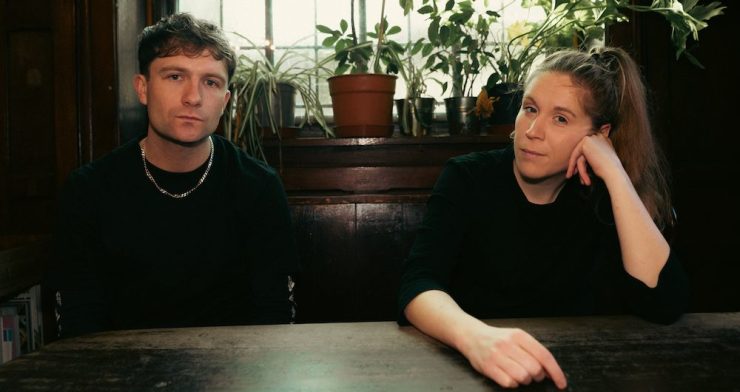
After more than a decade creating music together, London-based band Adam Karenina Sherif and Julia Oertli aka th’sheridans returned to our ears with brand new music this month. Self-described as “blonking through the dystopia as best we know how”, they remain the perfect purveyors of scuzzy indie-pop; interweaving poignant issues whilst oozing an uplifting effervescent euphoria. Originally recorded back in 2023 and completely mixed and mastered by the band, new single ‘Painted’ offers a stirring resonance for right now, showcasing the band’s ability to create a sparkling sense of hope despite our fears and frustrations. ‘Painted’ is accompanied by an unlikely cover of Carly Rae Jepsen’s ‘Emotion’ as a virtual b-side. Originally commissioned by some friends to arrange the song for a wedding, the duo felt it thematically complemented their new single perfectly: whilst ‘Painted’ is rooted in reality as they experience it, ‘Emotion’ is about everything they could be doing if things were different. (ML)
 Get In Her Ears