NEW TRACK: Problem Patterns – ‘Letter of Resignation’

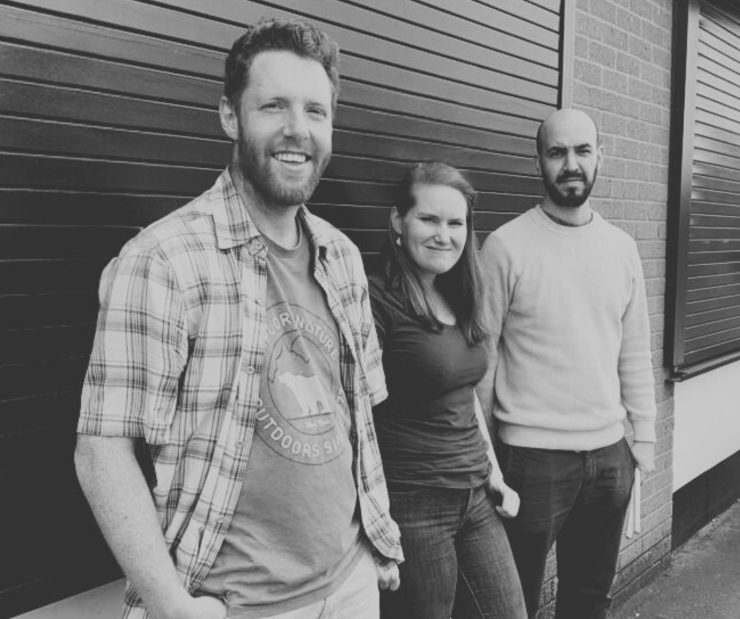
Fresh from supporting electro-punk icons Le Tigre on their Manchester and Glasgow UK tour dates, GIHE favourites Problem Patterns have shared their tenacious new single ‘Letter of Resignation’. The Belfast-based Riot Grrrls have also announced the title of their upcoming debut album, Blouse Club, which will be released later this year via Alcopop! Records.

A live highlight when they played it during their set at Brighton’s Great Escape festival earlier this year, ‘Letter of Resignation’ sees guitarist Beverley Boal step forward on vocals – and what a force she is. Not defined by traditional band structures, Problem Patterns routinely switch up instruments and mic duties for their songs and it always makes for a refreshing take on the subject they’re singing about.

This time, the band are celebrating queer joy and ally-ship as they tear down those who discriminate against the LGBTQ+ community, specifically in places of employment. “I’m standing up for who I believe in / you can’t fire me, I’m leaving!” chants Bev in gleeful defiance, as her band mates create a joyful cacophony of punk noise around her.

Bev explains the context of the new track eloquently: “‘Letter of Resignation’ is for anyone who has left a job, space or situation because people there were judgmental of, or discriminated against them or others for being different, and they stood up for who they believe in. For me, I grew up hearing the phrase ‘hate the sin, love the sinner’ in churches (always in the same context, as if being gay was the ultimate sin) and it still feels like an attack when I hear the preachers in the street.

Genuine love does not force us to become what we are not. Genuine love extends beyond those who look, act and think like yourself. Genuine love doesn’t inspire violence. Two thirds of queer people have experienced violence or abuse due to their sexual orientation or gender identity. More than half of Northern Irish queer youth say they are not fully accepted by their family. Mental health struggles including self-harm are far more prevalent in the LGBTQ+ community. Those perpetuating ‘traditional’ views have a lot to answer for. And, after so many sexual abuse scandals in the church, it seems like they would be better off trying to keep themselves right.”

‘Letter of Resignation’ is accompanied by a super fun, Pride inspired video, which the band shot in Holywood just outside of Belfast. Directed and edited by Brendan Seamus with input from Bev, the visuals show Problem Patterns unapologetically marching and dancing around the Northern Irish town, featuring vocalist & guitarist Alanah playing a briefcase like it’s a guitar, bassist Ciara throwing some serious shapes by the seaside and drummer Beth acting as a cranky old man.

“Brendy also did our ‘Day & Age’ and ‘Y.A.W’ music videos,” Bev explains. “He always does an amazing job of capturing our fun chaotic energy. Fuelled by Nutmeg’s vegan café and baffled by the amount of churches on the main street, we got ice cream at the beach even though it was a bitter cold Sunday. In the face of hatred, we stand for queer joy. I think that’s the duality of our band and this music video. On one hand, we’re protesting the powers that want to tear us down, but on the other hand, we’re celebrating and proud of who we are and what we believe in. And you can tell we mean business when we’re in our suits, even if we’re having a dance at the seaside.”

Kathleen Hanna (Le Tigre/Bikini Kill) described Problem Patterns as her “new favourite band” and after watching the visuals for their new single, we can totally see why. They’re fun, furious and full of energy, and we can’t wait to have them headline for GIHE again at the Sebright Arms in Hackney later this year on 17th November. Support comes from indie-pop band Fightmilk and the shoegazey sounds of Dogviolet. Tickets are cheaper in advance, so make sure you grab one from DICE.

Watch the video for ‘Letter of Resignation’ below.

Follow Problem Patterns on bandcampSpotifyTwitterInstagram & Facebook

Problem Patterns UK Live Dates 2023
15.07.23 – Berlin, My People Fest (w/ FAIM, Dying For It)
22.07.23 – Liverpool, Crapfest (w/ Crapsons, Piss Kitti)
19.08.23 – Glasgow, Core Festival
26.08.23 – Kettering, Greenbelt Festival
17.11.23 – London, Sebright Arms (headlining for Get In Her Ears)

Photo Credit: Carrie Davenport

Kate Crudgington
@KCBobCut

ALBUM: Dream Wife – ‘Social Lubrication’

“Music isn’t the cure, it’s the remedy.”

Following their 2018 self-titled debut LP, and 2020’s sophomore record, So When You Gonna…, London-based trio Dream Wife – consisting of Rakel Mjöll on lead vocals, Alice Go on guitar/backing vocals, and Bella Podpadec on bass/backing vocals – are set to release their highly anticipated, riotous third record, Social Lubrication on 9th June via Lucky Number; a collection of playful, political punk with a lust for life. Entirely self-written and self-produced by Dream Wife and mixed by legendary duo Alan Moulder (Yeah Yeah Yeahs, The Killers, Depeche Mode) and Caesar Edmunds (Wet Leg, Beach House), Social Lubrication perfectly channels their live wire intensity into ten tracks of raw truth.

Opening with riot grrrl moxie, the infectious Bella bassline of ‘Kick in the Teeth’ (“I spent so much of this youth questioning my value / Lolita’s all grown up now, who knew?”) is followed by the scuzzy Alice Go Go Go riffs of ‘Who Do You Wanna Be?’. Rakel’s rebellious attitude screaming for increased collective action – away from soul-destroying “social media activism without action” – and decreased hyper-individualism. “Exhausted by the pressure to feel somewhat empowered / It’s only 8AM, and I haven’t even showered / Guess perseverance is the boldest thing one can do.”

‘Hot (Don’t Date a Musician)’ evokes the playfulness of CSS and the rock and roll grit of Motörhead. “Don’t date a musician / They’ll think your competition / I was never competition / I was just… hot” Rakel states, her on-the-nose humour backed up by a refusal to be reduced or intimated for being a woman who makes music. Title track’Social Lubrication’ flows in a similar vein, as the trio, exhausted, refuse to pander to patriarchal bullshit. Rakel delivers her spoken word verses with urgency across distorted garage guitar: “What’s it like to be a woman in music, dear? / You’d never ask me that if you regarded me as your peer.”

‘Mascara’ is a love letter to the mundane – but no less important – moments of life, and provides brief respite before Dream Wife are out for blood with ‘Leech’. Screaming for empathy and calling out double standards through frenetic fuzz (“Fuck those who call themselves a friend, but they don’t lift a finger! / Fuck that WhatsApp group where they got points for nailing a fresh-faced singer!”) before crescendo-ing into cathartic feedback. (“Nobody really wins in a patriarchal society. We all lose.”)

‘I Want You’ and ‘Curious’ leave us lusting over Social Lubrication. the first is a filthy Be Your Own Pet-esque punk rocker, and the second is a hot bisexual/polyamorous anthem (“She loves you but she is curious about her love for me… / You’ll all be middle-aged men one day / And I’ll be a middle-aged Dream Wife”). Nostalgic for the early noughties, Dream Wife enter the stratosphere with the New Pony Club/Yeah Yeah Yeahs-inspired ‘Orbit’, closing Social Lubrication with a pulse-racing, disco-punk groove. It’s an unapologetic record that speaks to “systemic problems that cannot be glossed over by lube,” and that’s something we fully endorse at Get In Her Ears.

Pre-order your copy of Dream Wife’s new album Social Lubrication here

Follow Dream Wife on bandcamp, Spotify, Twitter, Instagram & Facebook

Ken Wynne
@Ken_Wynne

Photo Credit: Sophie Webster

INTERVIEW: The Orielles

Having been a massive fan of Manchester based Sid, Esmé and Henry – aka The Orielles – since first hearing them nearly a decade ago, it’s been wonderful to see them go from strength to strength over the years and continue to create truly unique offerings. Now, following a number of albums, headline tours and even ventures into scoring and directing their own film (La Vita Olistica, 2021), they have released an experimental new collection – an innovative re-working of last year’s Tableau, The Goyt Method showcases the trio’s insightful and sophisticated songwriting, and ability to create exquisite, avant-garde soundscapes.

Following the EP’s release and ahead of catching them at Higher Ground Festival (a one day event at The Roundhouse on 15th July, with an all female line-up), I caught up with Esmé and Sid to find out more about The Goyt Method, their recent tour and their thoughts on being women in the music industry… Have a read!

Hi folks, so nice to meet you – been a fan for a long time! How are you doing at the moment? And what does the weekend have in store? 

Sid: We’ve just come off our European tour, so we’re now spending some time just enjoying home comforts for a bit, catching up with friends and things. We’ve also got a new practice space, so going to be jamming in there, and taking it easy for a few weeks. 

And how was the European tour for you?

Esmé: It was so amazing to play in cities we’ve not been to in years – I think we toured Silver Dollar Moment in a small handful of European cities, but then didn’t get the chance to with Disco Volador, so going back to places like Paris, and probably having one of the best crowds we had throughout the whole of the UK, American and European shows, was really nice to see. It was also really heartwarming to meet a lot of the people who’ve been waiting to see us for quite a while.
Sid: It was really cool as well because, as Es mentioned, we’d not played in Europe for such a long time that when we went out there and we were playing mostly new material, it was nice to see the fans really reacting more to that. In England, when we play, the fans tend to just want ‘the hits’, like singles from previous releases, whereas this time people were really appreciative of actual record stuff, which was dead nice, and obviously something that we’d hoped for – on this tour in particular – as our latest material is quite a step away from older stuff, so it was nice to see people were really enjoying it. 

Is your live set up quite different now that you’re playing newer material? 

Esmé: We still play with Emily Zurowski on keys – she’s a session player, and has her own projects going on, and brings something really different and interesting to the shows – a more synthy / dancey feel. And we as a band are now more leaning towards that synth-heavy side of things, with a lot of the vocals being triggered through samples and that kind of thing. Generally, I’d say the shows now have more room for experimentation than they used to. 

And, when you’re out on tour, do you have any particular essentials that you always take to keep you going while away from home?

Sid: I don’t really have many essentials as such, but I do always need my headphones! I enjoy watching a lot of films, and I’ve got Mubi logged in on my phone, so – if we have a long drive – being able to watch a film makes me feel at home. I can then chat to my friends about it and make recommendations to them! At the moment, I’ve been really into and watching a lot of Wong Kar-Wai films and really love all of those I’ve seen – most recently ‘Happy Together’, which I watched for the first time a couple of weeks ago and really really loved! I really love his visual style – the cinematography’s really great. 
Also, on the last tour we all said we were going to take our yoga mats and make time to do that every day, but it just never happened! You always think you have so much time, but you just don’t. It would be good to get to the point where everything was set up for us and we had a few hours to do some yoga, but we just don’t. 
Esmé: I like to take a good selection of books as well. Though the down time doesn’t come around every day, when you do get a day off and get the opportunity to just sit there with a book, it’s really nice – a nice mindful thing to do. I’ve just started a really big book that I don’t think I’ll be finishing too quickly – it’s called ‘Unsound:Undead’, and it’s a collection of short essays about different approaches of sound that come from sources that aren’t living. Lots of the essays I’m reading are about bodily sounds, or the sounds of disease. And then they also talk about things like the sounds of an atomic bomb or those kinds of sounds that are lesser explored. 

Talking of different and interesting sounds…. You have a new EP The Goyt Method out now via Heavenly Records, which is super exciting! It sounds like there’s some really interesting concepts behind it – are you able to explain a bit about its inspirations and the process of recording it?

Esmé: Yeah, I guess it does link to what I’m reading about. We kind of zoomed out of the record (last year’s Tableau), looked at all of the stems across it and then used a random wheel of fortune to allocate which stems we were going to put back together and create a new song from. And part of that lead us to discover some of the smaller sounds that weren’t necessarily lead hooks or significant parts in the record – so, we took them and expanded them to become the main sound that you hear in these new tracks on The Goyt Method.
Sid: Yeah, when we were recording Tableau, we were really into the idea of randomisation , things like cybernetics and AI within music and how, through this wheel of fortune idea, a song could be done in so many different ways. And it was within these limitations that we were given a new drawing board to work with, and it really pushed us to think of new ways to arrange these melodies to make completely different versions of the songs. That idea really excited us because we wanted to give Tableau a new lease of life. Through making new arrangements of the songs, it was different from just remixing them in a traditional sense. 
Esmé: It definitely speaks to our practice as musicians now and a realisation that we’ve come to since writing Tableau – we’re now less precious about writing a collection of ten songs that we’d demoed and thought about for a year, and then put on an album and then have to move onto the next thing. We like the idea that every song can exist in so many diferent ways, can be played slightly wrong and that still might be the version we go with because it has more feel in it – I guess we’re trying to move away from the idea that everything has to be so final. We’re now more into leaving everything open ended with the chance that it can be worked on and changed to create something different. 
Sid: Yeah, when we first started working with Joel (Patchett) who helped us produce the record, we were recording at a place called Goyt Mill which is in a place called Goyt… And we first came up with the term ‘to goyt’ something – our own way of describing to Joel what we wanted him to do with a particular sound. So, ‘goyting’ something is changing its form in a way that’s random and in a way that a computer might change things – it’s quite complex!
Esmé: It links to the ‘musique concrète’ kind of vibe – the way of making a sound seem completely separate from what it originally sounded like. Or using a sound source that we can modify – often turning raw sounds into something more electronic sounding. 
Sid: Hence the title, The Goyt Method

And was it quite a big team helping you create the record? Or was it just the three of you with Joel?

Esmé: Yeah, it was just the four of us throughout the whole process. The same as Tableau. We were given the freedom to do it that way which was really helpful for us – to be in that creative headspace and work so closely together, just the four of us. A lot of it was just recorded in my bedroom, or at Joel’s house. Just setting up DIY / impromptu spots to capture everything. 
Sid: Yeah, it was a really interesting process reworking all the tracks. Particularly with certain songs – like on Tableau there’s ‘Improvisation 001’and on Goyt Method there’s ‘Improvisation 002’, which is basically just the strings take – we asked the musicians to come back and improvise completely along to the original track, to just feel their way through and not worry about messing up. And we really liked how that sounded as a standalone piece, so put the whole piece of music on as its own track on The Goyt Method
Esmé: I actually heard that in full on NTS the other day – sounded so nice, it’s really beautiful! 

Obviously this EP, and Tableau, seem very different in sound from your earlier releases – can you explain a bit about what inspired you to make this change of direction?

Esmé: It was partly just being given the freedom to do it. It’s always been within us to make this kind of album – so much so that weirdly, to us, it almost feels like a first album again. I think in the past we just maybe didn’t understand that there were different ways of approaching creating an album. As proud as we are of our previous albums, it was very much following the structure of making a demo, then being asked for three singles at least… So, the different sound I think almost came as part of changing the process. 
Sid: And we were listening to a lot more experimental music as well and getting more into electronic music than we had been before. This definitely influenced the process and the outcome a lot.
Esmé: We were also doing our Soho Radio vinyl mixes – we would meet every month and record a two hour mix. This meant we were buying a lot more records for ourselves which lead to a lot more exploration into music – we were holding these records and discussing them with each other, and we really wanted people to have something that they could see as an album that was valued; something to own physically and to discuss. Something that you would have to listen to from start to finish.
Sid: That’s what I was going to say! 

You’ve mentioned about remixing music – and I know that, as well as being an amazing band yourselves, you’ve also remixed songs by some other amazing bands like Peaness and PINS. How do you normally go about remixing other bands’ tracks, and how do the collaborations normally come about?

Sid: Yeah, I feel that it goes quite nicely hand in hand with The Goyt Method. Although we were doing remixing well before we thought about the album, we use very similar techniques and a way of working – finding stems and ‘goyting’ them. Adding new textures. And remixing is something that we’ve always enjoyed doing and inspires a lot of our songwriting. The Peaness one in particular was definitely a favourite – we went a bit wild with it. I remember when we first pitched up the vocals and sped it up we were all in Joel’s apartment, just loving it! *fist pumps* 
Esmé: I think as well when we did the La Vita Olistica film, we realised that editing a film can be quite similar to stepping back and pulling a song apart and piecing it together in different ways. We’ve always been fond of editing as an art or medium, and the way you can create new meanings from things – how you put two things together can be so hugely significant. With remixing we’ve followed that ethos like we’re kind of editors or a film or something. 

With the film side of things is that something you would like to do more of – create more visual accompaniments to your music? 

Esmé: Yeah, I think we’ve definitely realised that it’s all hugely interlinked – our music with visual media, like film or art, like the album covers and stuff. We have really enjoyed making short videos for some of the tracks on Tableau (I think, rather ambitiously, we did intend on creating a video for every single track at the start…) But I think we’d love to do another ten or twenty minute short film to incorporate a few of the tracks from the album together. 

I’m very much looking forward to seeing you live at Higher Ground Festival in July! You’ve touched a bit on how your live set up has now changed – what can we expect at this show? 

Sid: Yeah, I think we will be playing with some of the strings players for this one at Higher Ground. Just because it’s such an epic venue, The Roundhouse. We feel bad about the last London show getting cancelled (at Earth, when we had just done the one at Stoller Hall in Manchester), so we obviously had to rearrange that, and it seems a perfect location to add the strings, which will be really exciting. And I think we’ll bring some different elements of Tableau into the live set too, and play more of a tailored set around the strings. And, although we’d love to do this consistently, I think keeping it for like special one-offs like ths one is a nice thing to do. 

You mentioned about Paris on the last tour being particularly special, and I’ve been lucky enough to see you live a few times – from Green Man festival to headlining The Garage in North London (though I think the first time may have been at The Victoria supporting The Parrots… ?). But has there been a particular gig you’ve played over the years that stands out as a particular highlight for you?

Esmé: When we played the Stoller Hall show I remember saying at the time that it was up there with our top three gigs. Obviously, partly because it was such an amazing set up; we’d never really played to a seated crowd before, and it very much felt like being in a weird David Lynch film, and we all leaned into it, and it was quite a surreal experience! But I don’t know if that’s also because it was our first time playing a lot of Tableau to an audience as well. To be honest, on the tour we’ve just been on there were consistently a lot of favourites, most nights!
The one in Texas as well. We had a show that was cut short, because there was a really ominous thunder storm about to happen, and we were able to play about four songs before it had to be called off. We didn’t realise until afterwards, when everyone showed us videos, that the lightening in the background was moving in syncopation with a lot of the synths – it was just such an epic backdrop to be playing against before the heavens opened. 
Sid: I think we played that particular show with such a weird kind of unique energy where, because it had been such a hot, muggy day (and with this rainstorm looming, and we were a little bit jet-lagged), there was this tension, and we ended up playing really really well. We’d been told that our set was going to be cut short, so we kind of sped through it – it was really punky with loads of energy. We just bashed through the songs, then as soon as we’d finished, this torrential downpour started, and it was so cathartic. 

As we’re an organisation promoting and supporting women and the LGBTQ+ community in music, I just wondered what your thoughts were about the industry today in this respect – how do you feel it is for marginalised groups at the moment, and do you feel much has changed over the last few years in its treatment of female/queer artists?

Esmé: Yeah, the industry’s definitely a tough place for any woman. I mean, most industries are unfortunately! But I think it’s quite heightened in one where expectations around image and how you behave are always prevalent. I think I would say that – although it’s not disappeared, and it’s probably something I’ve hardened myself to – it’s harder as a younger woman. You seem to have to have loads of albums out to gain respect, and to prove yourself a lot more, so lately I’ve not experienced it as much. But definitely when we were both younger there was a lot more difficulty in being taken seriously. I feel like it wasn’t until Sid was about 27 that people stopped calling us teenagers, which was quite belittling… 
Sid: Yeah, I agree. I can’t think of anything we’ve experienced in recent years, which – as Es says, may just be because we’ve hardened to it a bit. But I do think it’s mainly because people seem to give you a lot more respect when you have albums to show, or people just realising you’re actually good. When you’re starting out and you’re younger, and not in the position of being a signed band (and don’t have a ‘team’ behind you), I think that’s when it can be really difficult. And I think that a lot of guys in bands that are starting out are forgiven for being ‘punk’ and lairy – they can scream down a mic and get away with it. Whereas I think when women do something similar it’s seen as being really rubbish, or because we can’t play our instruments or can’t sing in tune. All of a sudden you get some sort of recognition and that seems to go away. It’s a shame that you have to be in that position of having support in order to get recognised or respected. 
Esmé: I would also say that, probably subconsciously, this kind of thing is what might have sparked our leaning towards the more experimental or electronic scenes. I’m not saying sexism is absent from these scenes, but it seems a lot more female heavy and to include a lot more people of colour – it’s a better space for musicians to be diverse and for everyone to be respected and taken seriously. Venues like The White Hotel in Manchester are a great example of this – it’s one of the most diverse venues I can think of in terms of their representation of artists, compared to other venues or more ‘indie’ festival line-ups that are so male dominated, where mostly like just four lads in a band seem to take up most of the space. 

Massive thanks to Esmé and Sid for taking the time to speak to me, and answering my questions! 

The Goyt Method, the innovative new EP from The Orielles, is out now via Heavenly Records. Order here. And catch them live at a number of dates over the next couple of months, including Higher Ground Festival, at The Roundhouse on 15th July. 

NEW TRACK: Touch Excellent – ‘Record’

A tenacious anthem that takes aim at the failures of the healthcare system when it comes to treating women, non-binary and transgender folks, Touch Excellent have shared their debut single ‘Record’. Fuelled by the Dublin-based band’s collective anger, the track is a brief but powerful blast of attention-grabbing pop punk noise.

Playfully self-describing themselves as “Ireland’s most transgender band (surely)”, Touch Excellent create raw, frenzied, politically-driven cacophonies that are designed to dismantle the systems that oppress us. Together, Lenny (vocals/bass), Ló (rhythm guitar/vocals) and Amber (drums) transform their feelings of hopelessness and injustice into loud, cathartic, catchy anthems that address the issues facing young people today.

Their debut single ‘Record’ is inspired by the band members own experiences with the medical system, the recent Cervical Check scandal in Ireland, and the ongoing fight for reproductive rights around the world. The song is laced with medical imagery and descriptions of procedures that will be familiar to many women, and the band hope the track will offer a moment for rage, respite and relief in spite of these stressful moments.

Describing themselves as “a band for people who care about the issues and love a good live gig,” 2023 looks set to be an exciting year for Touch Excellent. The four piece played a show at Anseo on Camden Street in Ireland last night (May 25th) to celebrate the release of their debut single ‘Record’, and they will be releasing more material later in the year.

Listen to ‘Record’ below.

Follow Touch Excellent on bandcamp, Spotify, TwitterInstagram 

Kate Crudgington
@KCBobCut