INTERVIEW: Gazelle Twin

Elizabeth Bernholz’s life is inherently strange. Whether she is talking backstage with Gary Numan about ghosts, creating dark and exhilarating electronic music under her moniker Gazelle Twin, or immersing herself into normal family life; she embraces the oddity of it all.

Last time I spoke with the producer, composer and visual artist in April 2022, she was in her home studio, reflecting on the tenth anniversary of her debut album, The Entire City. She expressed that she was still using her music as “a way to get through life” and hinted that there was more to explore through this medium. What she was subtly alluding to was her fourth full-length record; the shadowy, spine-tingling Black Dog, released in October last year via Invada Records.

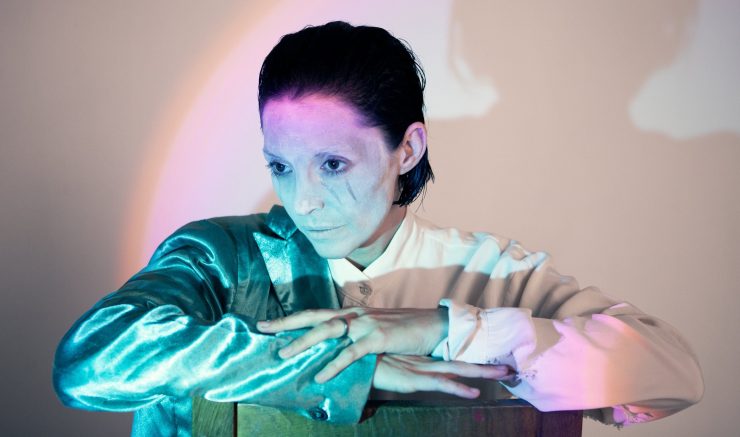
Usually veiled by costumes or characters for all of her work as Gazelle Twin, one of the most startling elements of Black Dog was that Bernholz had removed her mask. Facing her demons with no shield, this bold act paved the way for an exquisitely raw, truly haunting piece of art, on which Bernholz reflects on her experiences with the paranormal, postpartum depression and the powerful fears and inner forces that direct us through life.

When Bernholz performs the album live, it’s another beast entirely. Falling somewhere between a dark lullaby and intense sleep paralysis; Black Dog shape-shifts between plaintive and poignant, ghastly and graceful, as Bernholz switches between spotlights and shadows, standing and seated. She will be bringing this hair-raising performance to Birmingham’s Supersonic Festival on Friday 30th August. Eclectic acts such as Grove, Emma Ruth Rundle, Mary Lattimore and One Leg One Eye will also be playing the festival across the weekend (tickets are available here)

“I love Supersonic, it’s my favourite festival in the UK,” she smiles. The last time Bernholz featured on the line-up was in 2018, performing tracks from her third record, Pastoral. “It’s always a really great crowd and I really love Birmingham as well. This will probably be one of the last Black Dog shows that I do in its current form, too. I’m looking forward to it.”

To date, Bernholz has only performed Black Dog at a small number of venues across the UK since its release in 2023. There are several reasons for the limited shows, including production and logistical touring costs. But there’s another factor too. Bernholz explains that with this particular record, due to its deeply revealing and personal nature, there is a strong emotional toll that comes with each performance.

“Some of the very raw emotions that were pouring out into that record are still being lived now,” she reflects. Bernholz is referring to going through pregnancy, childbirth and motherhood for the second time during the Covid-19 pandemic, and how this led to her excavating her past. “I’m obsessed with the past, which is probably no surprise by now,” she laughs. “I’m one of those people that’s constantly trying to process those periods of my life. Those formative years where you’re working things out and who you are – I’m still doing it. So a lot of those questions that came up are still not answered and still part of my creative occupation really.”

This instinct to examine and understand these parts of herself is part of the process of performing Black Dog live. She comments that layering things with “weirdness” and a “dark charge” allows her to inhabit “another world” when she is on stage, which makes things more manageable, but she was initially very nervous about sharing it with live audiences.

“I do still find the shows hard,” she reveals. “I sit down for a lot of it and I’m making eye contact with the audience, so I make myself as vulnerable as I can be. After a show, often, there’s a lot of adrenaline and tears and I haven’t always had that. I [usually have] adrenaline, anxiety and then a lot of exhilaration. It’s been a journey. I am enjoying the shows, but they are a bit of an ordeal as well. I’m okay with that. It feels like I’m doing something important for me, at the very least, and hopefully that does come across to audiences as well.”

As with all things, time has helped to ease some of this anxiety, which Bernholz likens to the process of being tattooed. “There is a certain degree of numbing that happens. The pain is really intense at first, but then it becomes okay and it’s quite nice. I’m at that stage now, mid-tattoo, going with it and trying to make the most of it. I’ve been doing a lot of shows in places I’ve never really done before, so that’s been really nice.”

In addition to her “momentous” sold out headline show at London’s historic Bush Hall – more on that to come – Bernholz has cherished the opportunity to connect with new audiences in new locations on this tour. “I’m not a massively touring artist, but when I get the chance to do a gig in a place where I’ve never been before, I’m always really happy to do it,” she comments. As part of the first run of Black Dog shows, Bernholz performed at The Glass House in Newcastle, which marked her debut gig in the North East.

“It’s a big classical venue and the people that came along to that were a total mixture,” she recalls. “A lot of people took a punt on it, it was something quite new to the venue, maybe a bit weirder than their usual programming. I had a chat with a couple of music students afterwards and they were just surprised and happy that they’d got to see something like that in their city. It made me feel good.”

Bernholz is also looking forward to returning to play in Glasgow in September. “This show, compared to my previous set ups, is more expensive,” she willingly admits. “There’s more people involved, there’s a baseline of tech requirements that we have, and proper staging and production. So the chance to do stuff away from London, with this level of production is great.”

A common thread that connects the places and people that Bernholz performs to is gratitude. She instinctively taps into the atmosphere of each location, something which is especially true of her London show at Bush Hall last year. “I love London gigs. I have an amazing following there and I love visiting London as much as I can,” she enthuses. “I think it is a bit of a beacon, so if something works in London, you can trial it to a bigger audience first, and take it further out.”

She continues to reflect on the “epic” nature of her London Black Dog live debut. “I was so anxious. The sound check didn’t go particularly well, we had a haunted sound desk,” she smiles. “I was in a weird zone before the show. I felt supercharged with anxiety. I think, being an anxious person generally, I’m always on some level of tension, but it was ramped up. But it did me a favour, because the show was actually a huge release.”

Bernholz’s anxiety about performing is not rooted in insecurity, it comes from a place of wanting to bring the intrinsic worth of her visions as Gazelle Twin to life. “I’m more sure of myself on that stage than at any other time in my life,” she shares. “I love that experience, it’s like having a lucid dream. As somebody who is socially not amazingly confident – suddenly being a person that can eyeball people and be incredibly vulnerable at the same time – it’s like getting to live a different life for a bit. I loved the Bush Hall show. The energy in the room was extraordinary. I could feel electricity in the air.”

As a spectator at Bush Hall, I can confirm that it was an exceptional performance. Bernholz’s necromantic spirit and otherworldly vocal range ricocheted off the archaic walls of the old music hall. The crowd of fans and friends were silent and spellbound, including electronic music pioneer Gary Numan. “Gary and his family came backstage afterwards and then we just spent about an hour talking about ghosts,” Bernholz shares. “The whole thing was like an insane dream. You can’t make it up, really.”

A new dream that Bernholz will be making a reality in the near future is a specially commissioned show at another prestigious London venue. In November, she will be performing alongside the London Contemporary Orchestra at The British Library, on a Black Dog inspired piece that will open the venue’s new season, Tales of the Weird: An Autumnal Festival – a celebration of the strange, the uncanny and horror. Ticket holders will also have access to the new exhibition, Medieval Women: in their own words.

“It’s a perfect positioning to present Black Dog in almost an acoustic form,” Bernholz shares. “I’ve been saying that it will be like the ‘Victorian version’,” she laughs, before adding “that sounds awful actually.” Bernholz insists she won’t be “cosplaying as a Victorian”, but she will be transforming the intensely layered and electronic music of Black Dog, offering her listeners a new perspective on the record. “Weirdly, when I was writing Black Dog, I had orchestral scale in my mind,” she shares, “I kept that, with the hope that one day we could do this version and hopefully record it as well.”

Bernholz has collaborated with conductor Robert Ames before, but she is especially excited to work with the London Contemporary Orchestra for the first time. “It’s a brilliant opportunity to be able to do that within the majesty of The British Library as well, with all of that incredible literature and history around,” she comments. “I’m so excited. Hopefully we’ll be able to transport it as well, and do it a few more times. Hopefully in the UK and maybe abroad as well.”

2024 continues to be a busy year for Bernholz. As well as balancing her Gazelle Twin performances alongside her normal everyday life as a parent, she is also preparing to acknowledge the 10th anniversary of her second album, Unflesh. Released back in September 2014 via her own imprint Anti-Ghost Moon Ray, this Gazelle Twin record marks a significant point in my own life as a music fan and journalist. It changed my idea of what electronic music could be, so I suspect it holds a deeper reverence for the creator.

When I ask how she feels about the upcoming anniversary, Bernholz jokes that it makes her “feel old”, before revealing that she considers Unflesh to be her “true love” album. “I think I hit on something that I have never been able to get rid of – I hit what Gazelle Twin truly was meant to be for me,” she explains. “I look back on Unflesh and I just think ‘God, I’m so glad I did it, and I did it without giving a shit about how it was going to do, or what it was. It was just urgent and I just went for it without any expectations.”

Much like the inception of Black Dog, on Unflesh, Bernholz was exorcizing a lot of pent up emotions. “It was a huge thing for me, coming out of a past mental state which I hadn’t acknowledged until I’d made the album,” she recalls. “It was like this floodgate situation that allowed me to be creative with expressing those types of things. I think even beyond that, Unflesh has just been a bit of a template for how I approach making things. I don’t know how I’ll feel about Black Dog in 10 years time. I made it how I wanted to make it, but it’s funny, these things have a different meaning to you when you’re the person making it.”

This key “difference” is that Bernholz says she can listen back to Unflesh, and it doesn’t provoke a “horrible full body cringe” and force her to contemplate what could have been added or edited, which is something she has experienced when reflecting on other works. “I can still listen to that album – and this isn’t to pat myself on the back – but I am proud of that work. “I still think there’s mileage in it and more to take from it,” she explains. “I think there’s mileage in that visual world. If there was another chapter, what would that be? [What if] it was in a different form, like a book?” she extrapolates.

Fans will have to wait until September to find out exactly what Bernholz has planned…


Follow Gazelle Twin on bandcampSpotifyInstagramTwitter & Facebook

Photo Credit: Teri Varhol

Kate Crudgington
@kate_crudge

INTERVIEW: Circe

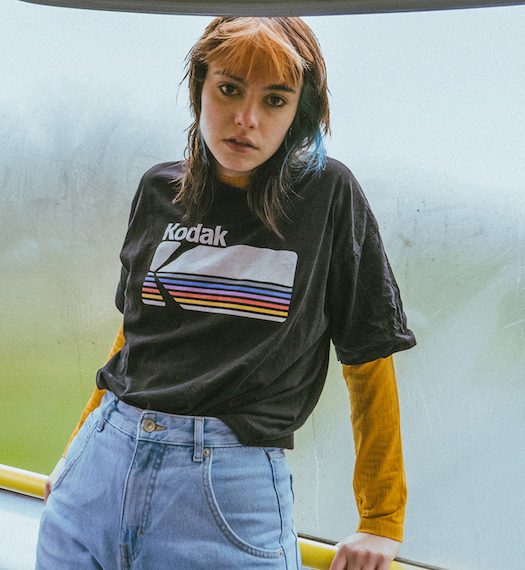
A creator of evocative, cinematic dark-pop, Circe’s electronic soundscapes dazzle the senses and simultaneously dissect social norms with breath-taking grace. Since the release of her debut EP, She’s Made Of Saints, in 2020, I’ve been a huge fan of her charged, intoxicating tunes. When I spoke to her via Zoom at the beginning of May, her vibrant energy and charm transcended the screen, as we explored the themes and iconography behind her visuals, the inspiration for the tracks on her EP and most surprisingly, her inability to tell the difference between the panpipes and the flute as a small child…

Hello Circe, how have you been? How have you been coping with lockdown and the pandemic over the last few months?

Covid-19 has been absolutely awful for the people who have been directly affected by it, but – and this might sound bad – I was one of the lucky ones during lockdown. At heart, I’m a nerd and I like to just be on my computer making music. So there was a moment of self acceptance where I thought, “Oh, I’m just gonna make loads of music!” and the days went past and the whole EP came out of me while I was just set up in my bedroom.

I think I’m a natural loner. Without sounding completely wanky, I like living through music, living through movies and living in a world with those characters. It might be because I went to art school, but I like to create a whole world around me with each song, which is what I did with my first EP. I changed my bedroom to make it feel like a movie set.

That sounds really safe & wholesome! So where did it all start musically for you? Was there a specific artist or person who inspired you to start making music?

I have the cheesiest little answer for this. I remember this so well. I was 5-6 years old and we were walking into town with my Mum, and this man was playing the panpipes. I feel like way more people used to busk with panpipes back then? It was really beautiful and it made me cry my eyes out. My Mum was like “why are you crying?” and I didn’t know, I didn’t quite understand. I thought it just sounded really beautiful.

I don’t think my Mum had fully seen what was going on – she had four kids with her – but when we got home I was trying to explain the beautiful sound, but she couldn’t work out what I meant. I said I saw a man blowing into something and she said it was probably a flute. So for ages I thought the panpipes were a flute, so for years I was asking “can I have a flute? Can I have a flute?” When I was 13 my Mum rented me a flute, and obviously when I opened it “I was like, what the hell is this?” but I was still really excited to play it. So I played that classically for a really long time and did the whole classical thing, playing in orchestras and stuff. Then when I was 17 I got a guitar. But it all started with a flute and some panpipes…

That’s so sweet and you’re right, you never see people busking with panpipes anymore. It’s a lost art. Talk to me about your recent single ‘Going Down’. What were the influences for the sound and visuals?

When my Mum was moving house, I went and helped her pack up and sort through some stuff, and I found my teenage scrapbook that was kind of like a diary, and it was just so amazing to read it all back because it was so unbelievably passionate. There were loads of bits of poetry and stuff, and there was a piece that wasn’t exactly erotica, but I was definitely on the periphery of discovering my sexuality and what it means to be a woman, so I was writing these little stories about it as a teenager. I thought it was cool, so I kept it.

Then one day when I was on my way to my studio, I was I was listening to ’99 Problems’ by Jay-Z and I was so into the beat. I don’t play drums, but I make all my own beats, so when I got into the studio I was making a beat and I knew it would be a big bombastic song kind of like Jay-Z, and I thought, “can I put these erotic stories over this?” So I did, and then it just became this mad little song. It’s about teenage liberation and finding your sexuality.

Did you have fun making the video for it?

It was so fun. I guess it’s a bit like what I did with my teenage scrapbook, I just collected loads of pictures, poetry, stuff about cults, shots from Baz Luhrmann’s Romeo & Juliet and I fitted some Catholic Church stuff around it too. Then I filmed myself, and I tried to get that sort of innocence where, as a young woman, you know, you’re objectified all the time, you can’t walk down the god damn street without someone calling you a slut for absolutely no reason, so to come home and be like, “I’m gonna be really sexy and really into myself as a sexual being.” It’s all about that really, that’s what I’ve tried to convey.

The idea for my character in the video was kind of inspired by a character in Euphoria called Kate. She starts doing online webcam dancing and sex cam-ing and she’s just the most amazing character. It’s a much more complex storyline than just that, but she was a big influence.

That’s so great that you were just in your own space getting to fully enjoy that freedom of expression, whereas when you try and take that into the world, lots of people have an opinion about it – like you said. That’s such a lovely thing to be able to enjoy.

Something which we have to talk about is your contribution to the Dream Wife Megamix compilation album on bandcamp. It’s all of GIHE’s favourite musicians coming together to make music for a good cause (Rainbow Mind), tell us how you got involved…

I’ve known Alice from Dream Wife for a really long time, because I went to art school in Brighton at a similar time to her. She was on the first people to record my first ever demos. She really got me into it and she was like “you should do like production as well,” and that’s how I got into it. We kept in touch and we’ve done bits and pieces, but yeah, she contacted me and asked if she could use ‘Ten Girls’ for a project and I was like ‘Yeah!’ and then she said she was mixing it with a Sleigh Bells song, and I was like, ‘Yeah!’ Dream Wife are amazing. They do so much campaigning work for such amazing charities and they’ve always been a really good voice for change.

Let’s go back to your 2020 EP, She’s Made Of Saints, because it’s just it’s SO GOOD. It’s cinematic and mysterious, but it also tackles heavy themes like toxic masculinity, the policing of female sexuality (which we’ve already touched on) and even the manipulative behaviour of cult leaders. You explore these themes in such a poetic way, how do you take subjects like this and transform them into dark pop songs? 

Thank you so, so much, that’s so so lovely! I know I’m a songwriter, but I think of myself as a writer in general, and I think with these themes I was writing a story, or a little movie and it all turned out to sound just like a soundtrack. It’s like I’m directing it as Circe. So maybe that’s my way of condensing the big stuff, but some of it does often come from something I’ve seen, or experienced too.

With ‘Ten Girls’, I can 100% remember it so well. I was watching The Handmaid’s Tale, and in one episode, one of the women that’s been kidnapped gets away, she gets in a car and just runs over this horrible guard and it’s obviously violent and mad, but it just, oh my god, it just made me bawl my eyes out. It had the most amazing piece of music behind it and I was just like – I’ve got an idea – and I wrote ‘Ten Girls’. It came out really quickly. I often write a song quite fast, I get an idea and then I just build from that. You need to still stay true to those first characters, those first stories, that first line you came up with, but then you can build around it.

I’ve seen The Handmaid’s Tale, so I know the exact scene you’re talking about! Whoever organises or selects the music for the show should get in touch with you, because you could easily write the whole score for it.

I feel like a lot of artists have goals to tour the world and stuff, which would be amazing, but my absolute golden dream is to soundtrack a TV show. I feel like that’s what I was built for!

Absolutely. On a side note, did Steve Harrington from Stranger Things ever get in touch to say he’d heard your track ‘Steve Harrington’?

It’s so funny, because I did an interview on Radio 1 with Jack Saunders and then the next day, Joe Keery who plays Steve Harrington was on talking about his own band and I was like, “Do I have the guts to say ‘hello, I wrote a song about you'” – but I didn’t. If it ever got to the Stranger Things people, I don’t know what I’d do. I’m quite shy with people, so my way of fan-girling is to write a song. I did go to see the music of Stranger Things live at Southbank Centre though, that was one of the best nights of my life.

As we’ve already mentioned, there are lots of cinematic influences on your sound & visuals – David Lynch, Baz Luhrmann, The Handmaid’s Tale, Stranger Things – but what is it about the style of these directors and shows that you like so much?

To sum it up, I think a lot of the time when I was growing up, I felt quite uncomfortable in my own skin. I’ve always been told I’m too emotional, that everything I do is just too much, so I took solace in things like Romeo & Juliet. I was like, “that’s quite a good level to live at; it’s bombastic, romantic, outrageous, cameras fucking everywhere, sped up then slowed down” – it made me feel so comfortable and happy! That’s the world that I live in, in my own head.

I think with all of these things – including Stranger Things and Twin Peaks – there’s a cosiness to them and they’re completely their own thing. They are outrageous and beautiful and I think I just feel comfortable at that level and in that world. It’s fantasy, but it’s grounded in human emotion, love and storytelling. I’m just absolutely not interested at all in living in the real world, you know? I have no connection to it. I have friends and people I know who are doing sensible things and getting married, and I’ve got probably about 10 wedding dresses in my wardrobe just because I love dressing up and inventing stories about brides running away…

I think your way of living sounds more fun and I love that you have 10 wedding dresses that you can throw on when you’re running away from reality.

I know live music is still on the backburner at the moment due to Covid-19, but do you have any plans to play live when things are safe again? Are you planning to release more music too?

Yes, there’s definitely more music to come this year. I think what I’m hopefully planning to do is play a Circe show. I’m not that interested in playing just a conventional gig, because to me, it just doesn’t feel quite right for Circe. So my plan is to build an installation piece with live elements to it. It will definitely feel more like an immersive kind of experience.

That sounds great, I’ll be there. Finally, are there any artists or bands that you recommend we listen to?

I’ve got two, and they’re both completely different to Circe.

One of them is called Amour, who is also called Megan. They’re so young and they’re just absolutely killing it. They make pop music that’s on the edge of Pale Waves, but even cooler. And then a duo I think you might know called ARXX. I absolutely love them, they’re so talented, if I had a label I would sign them in a millisecond. Fantastic song-writing. I can see them being absolutely massive. I have like no doubt, I think they will really take off.

Thanks to Circe for answering my questions.

Follow Circe on Spotifybandcamp, YouTubeTikTok, Twitter & Instagram

Photo Credit: Rachel Povey

Kate Crudgington
@kate_crudge

INTERVIEW: Kynsy

Since the release of her debut single ‘Cold Blue Light‘ last year, GIHE have been big fans of Dublin-based multi-instrumentalist Kynsy (aka Ciara Lindsey.) Her lyricism offers a refreshingly honest perspective on the world around her, whilst her self-described “rowdy pop” sounds provide space for reflection and escapism, often within the same song.

We caught up with Kynsy ahead of the release of her debut EP, Things That Don’t Exist, to talk about lockdown-learning curves, how working with co-producers and her band mates has helped to flesh out her sound, the underrated trait of humility, and to reminisce about the deeply humbling and emotional experience of seeing David Bowie’s cocaine spoon at an art exhibition in Brooklyn…


Let’s start at the beginning – who, or what would you say first got you into writing and playing music?
My Dad’s a musician, but he never really showed me any specific rock artists, maybe he was waiting for me to turn the right age, but I was always listening to stuff that was in the charts, even though I wasn’t that inspired by it. When I was having a really low point as a teenager, my Dad showed me this music video – ‘Rebel Rebel’ by David Bowie – and I thought it was amazing. I think I was at that age where you begin to realise that it’s actually okay and kind of cool to be weird. Bowie just clicked with me and I knew then that I wanted to be in a band and I wanted to write music like that.

David Bowie seems to have that kind of affect on most people. He’s definitely one of my favourite artists.

He’s an absolute hero. So many people I know cried when he died. I went to New York in summer 2018, and I went to see the David Bowie Is exhibition at the Brooklyn Museum. It was really hard to get tickets for, but I somehow managed to swing it and I went and I walked around and I was crying the whole time. I got to see all of his famous outfits which was mad.

I went to the same exhibition in London at The V&A in 2013! Did you see his coke spoon too?

I remember that as well! I told my friend about it, it was mad. I was really hungover when I went to the exhibition, so I remember walking around feeling a mixture of being really emotional and being extremely hungover as well.

That’s a good way to approach anything in life.

Let’s talk about the singles you’ve released prior to your debut EP – ‘Cold Blue Light’ & ‘Happiness Isn’t A Fixed State’. They were both born from personal experiences. Would you say your song-writing process is usually autobiographical? Do you find it more natural to write what you know?

The majority of the time I do prefer to write from personal experience. I think you can be much more emotional and vulnerable, and you can connect with the audience more if you’re talking about a real incident that’s happened to you.

Congratulations on releasing your debut EP, Things That Don’t Exist. Talk me through your memories of making the record, and the context behind your latest single ‘Elephant In The Room’…

Things That Don’t Exist is a collection of four songs that I’ve worked on over a couple of years. The reason why I chose these songs is they’re all very different, they all have this high energy to them that I really like. Each one has their own personality, but I also felt they were kind of contrasting as well, and I like to create contrast and juxtaposition in my music.

‘Elephant In The Room’ is the first song on the EP and it’s a lot poppier than the other stuff. Lyrically it’s reflecting on a darker time in my life when I was using escapism to deal with my problems. I was feeling kind of alienated from myself and trying to run from myself. ‘Elephant In The Room’ is that known metaphor – something you don’t want to mention or talk about, but that everybody knows is a thing – so this song in particular is about being 18-19 years old with my friends, going through a dark time and partying too much and realising that it was something that had to stop, but no-one would ever say it out loud. When I was writing it I was reflecting on that, and I was using the song as a conscious kind of wish to not go back and make the same mistakes when trying to deal with my problems.

But there’s an element of hope in there too. All of the songs on the EP are a bit sad and melancholic, but there’s a glimmer of hope. I like to try and have a positive message, even if it’s only something small.

That’s definitely a good way to frame a song. What are your main memories of recording the EP?

I recorded most of the songs in a studio in my college before Covid, and one of the songs called ‘Dog Videos’ was recorded during lockdown, which was interesting. I had to email my band being like “can you send me a bass line? Can you send me some trumpet?” so everyone recorded from home and sent their stuff over to me so I could mix it myself. Then I got my friend Joseph to go with a drummer and record in a studio in London, then he sent over the drum stems to me and I had to compile it all myself and send it off to be properly mixed. I usually work with a co-producer, so it’s the first time I’ve had to do it all myself. I learned an awful lot, it was really stressful but really good at the same time. I was forced to learn how to bounce out stems and get into the nitty-gritty of the technology side of it.

Equally, I learned a lot from the co-producer who I worked with when I was working in the studio, watching how they work and how they think when it comes to arranging songs. So it was a combination of both of those things.

In future, do you think you’ll have a 50/50 split when it comes to working by yourself and working with other people on new material?

A bit of both, but I would lean more into doing it with people, especially producers. Right now, I don’t think I’m confident enough in my own skills to completely get a track together properly by myself. That’s not me being down on myself, that’s just how it it. I know I did it for ‘Dog Videos’ on the EP, but it was very stressful and I get into my own head a little bit. It’s so easy to do when you’re just starting out with producing, so you need someone else to turn around and say “that’s done” or “send me the stem, I’ll fix that,” instead of me trying to get into all of these technical areas. I do think I would lean more into working with other people. Their ideas can help to get you out of your own rabbit hole sometimes, you know?

I will probably always write and demo stuff on my own though. I will layer guitars and come up with bass lines and stuff like that. The initial ideas I will do on my own, but bringing those ideas to the band and the producer just brings it such a level higher. The songs wouldn’t be the same if it weren’t for that group of people being there. You need those extra voices there sometimes.

It sounds like you have the balance right. Do you have a favourite track on the EP? If so, why?

Probably ‘Dog Videos’ because I think I’ve been the most vulnerable with my lyric writing in that song. One of my goals as a songwriter is to try to be as vulnerable with myself as possible, just because I think that’s how you connect with people properly. It’s great to hear a song and be like “Oh wow, I feel like that too! Why does no-one ever talk about this?” I like the instrumentation on ‘Dog Videos’ too. I got a really good drummer and I got trumpets on it, which I never thought I’d end up doing. I have a really good friend who plays trumpet who I just hit up and asked if they’d play something for me and the next day he sent the stems over, which was really cool. I feel like I really hit the goal of opening up and being vulnerable with this song.

NME named you in their TOP 100 LIST, The Irish Jam named you as one to watch for 2021, and GIHE featured you on our Tracks Of 2020 list. How are you feeling about having the spotlight on you? Is it a bit nerve-racking or is it exciting?

Overall I’m happy with the attention. Everyone wants to work hard on something and for it to go well, and the main thing for your music is you want it to reach fans so that you can get a following through them. Everything in the press about me means I’ve been able to reach more people. Even with the NME thing, a few teenagers have messaged me personally about it and I just thought that was really nice, so I messaged them back to say thank you, because it means people are really listening which is nice!

I try not to think about the press stuff too much though, because any form of validation can mess up anyone’s head. Even though it is nice and positive, I don’t want to get stuck on it. In my head, there’s still a lot of work to do and I’m always trying to get deeper into the writing process and deeper into myself, that’s the main thing. They’re my main values. Trying to be a better writer, write like myself and trying to create meaning. The reviews are great and all, but they can really obscure your goals and style and I’ve seen that happen to people.

One of the down sides of today is because of social media – and the lockdowns as well – artists aren’t having natural interactions with their fans, they’re just seeing everything online. It’s so easy to slip into the idea that people are only liking this, or liking that. Obviously there’s no gigs at the moment either, so there’s no way you can actually physically see people’s reactions to your music. I think the main thing is just being aware of that and keeping on your own path, focusing on why you started making music in the first place.

I don’t want to come off super negative about it, but I think people will know what I mean. It’s just if people are telling you you’re great all the time, it’s going to get to your ego and your music’s going to suffer. Humility is one of the strongest personality traits you can have and it’s only going to do you good.

I think you’re right, it’s so important not to get side-tracked by other people’s opinions of you.

Finally, do you have any new artists or bands you’d recommend we listen to?

Sorry had an album come out last year and I listened to that a lot. I think they’re really cool, kind of like The Kills, I love the mix of electronic and rock stuff. Another band called Do Nothing. I went to one of their gigs in December in Dublin and unfortunately there weren’t that many people at the gig, which was bad for them but good for me afterwards because it meant I got to hang out with them for a bit!

I’ve been listening to a lot of Micachu & The Shapes as well, they’re kind of like sorry but more experimental rock stuff. Mica Levi is a producer and a writer and she is unreal, she’s someone I’d love to work with.

Thanks to Kynsy for answering our questions!

Listen to Kynsy’s debut EP Things That Don’t Exist here.

Follow Kynsy on Twitter, Facebook, Spotify & Instagram for more updates.

Photo Credit: Paula Trojner

Kate Crudgington
@KCBobCut

INTERVIEW: Miss Grit

A genre-defying artist who has spent much of her life feeling out of place in rooms full of people, multi-instrumentalist Miss Grit has a sound that ricochets between atmospheric, angular and anthemic. The Korean-American musician has shared two tracks from her upcoming EP, the title track ‘Impostor’ and previous single ‘Dark Side Of The Party‘ and both offer a refreshing insight into her talent as a songwriter and producer. 

We had a quick catch up with Miss Grit (aka Margaret Sohn) to talk about her new record, how she’s managed to overcome feelings of intense self-doubt to create her captivating music, and her brand new single ‘Impostor’ which you can listen to below.


How are you Margaret? How are you coping during the on-going pandemic?
Good! I can’t complain. Watching a lot of anime and trying to stay away from the news.

Impostor syndrome is something that your new EP addresses on many levels, including class, race and gender. You said you felt like you were “impersonating a musician” on your previous EP, so has this new project given you more confidence in your abilities as a songwriter?

Definitely! I think that was my main take away from the previous EP. It gave me the push to keep writing and that’s how the Impostor EP started.

You produced the new EP yourself so you could have full creative control. Did you try new techniques? What did you learn from the process?

With this EP, I wrote and produced it with a band in mind compared to the previous EP. I tried to not go too crazy on the production end because I wanted the energy and momentum in the songs to do a lot of the heavy lifting. But I think for the next project I’ll try a less moulded approach and start with a blank space.

Any advice for new musicians who are looking to do the same thing?

Just remember there are no rules! It took me really long to unlearn that and I’m still unlearning all the stupid made up rules I have in my mind about how to be a “songwriter” or a “producer”.

Do you have a favourite track on the EP? If so, why?

I think the first track on the EP called ‘Don’t Wander’ has a special place in my heart, because the creation process for that was as organic as it had felt for me and just kind of spilled out of me. It was really refreshing to write and came to be by itself.

You’ve just shared the EP’s title track ‘Impostor’ today (Jan 13th). Talk us through your writing process for this track and what you love most about it.

It was a song that just felt so good to play and the lyrics kind of got to the bottom of my feelings at the time. It started with the guitar riff and was built from there. My favorite part is the ending. It felt like a nice atmosphere to wrap up the EP with a cozy blanket.

As a new music blog, we always ask artists to recommend a new band or artist that they’ve been listening to recently. Any suggestions for us?

Definitely Pearla, Closebye, Kate Davis, and Pom Pom Squad. They’re all really fucking cool. And I’ve been listening to Nilüfer Yanya’s new EP on repeat.

Finally, if you had to explain your music in three words, what would they be?
Organized bleep bloops.

Thanks to Margaret for answering our questions.

Follow Miss Grit on bandcampSpotifyInstagram & Facebook for more updates.

Photo Credit: Natasha Willson

Kate Crudgington
@KCBobCut