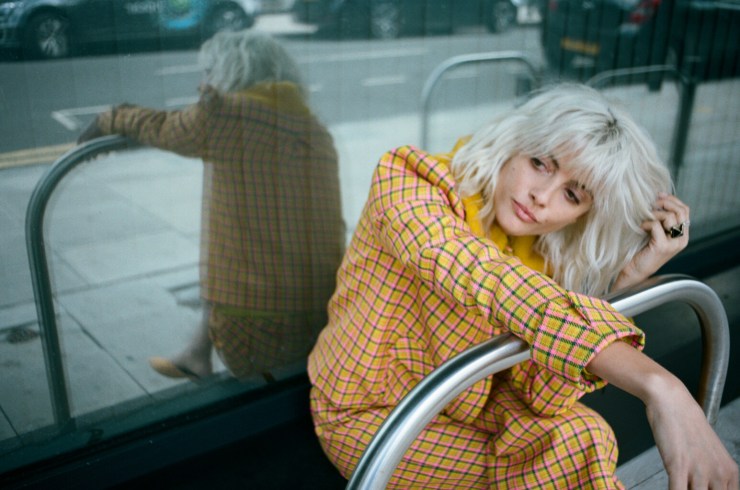
STILL SPINNING: The Joy Formidable – ‘The Big Roar’

Our Still Spinning feature focuses on records that we consider to be iconic – whether that’s for popular, or personal reasons – and celebrates our enduring love for them. Get In Her Ears Co-Founder & Features Editor Kate Crudgington talks us through why Welsh alternative trio The Joy Formidable’s debut album, The Big Roar, released in January 2011, is still one of her most influential listens today.


At the tender age of nineteen, I discovered The Joy Formidable through a crush I was trying to impress. Naturally, that crush faded over time, but my sheltered ears had been introduced to a new world of music outside of the charts. It’s that priceless personal affiliation with the songs on The Joy Formidable’s debut album The Big Roar that’s kept me listening to the record for the last decade.

Formed of Ritzy Bryan, Rhydian Dafydd & Matt Thomas, The Joy Formidable dropped The Big Roar in January 2011, two years after their debut EP A Balloon Called Moaning, and twenty year old me fell head over heels in love with it. I bought the limited edition boxset which included the album, a pin badge, a CD of live recordings and a piece of Ritzy’s smashed guitar. I worked part-time in retail earning minimum wage back then, so it took a hefty chunk out of my pay-check, but I felt like I’d struck gold.

The record was littered with singles I already knew – ‘Whirring’, ‘Austere’, ‘Cradle’ & ‘The Greatest Light Is The Greatest Shade’ – so listening for the first time flooded me with familiar excitement. As the title suggests, The Big Roar rips and roars with vital, visceral urgency, plunging listeners into overwhelming waves of sound before allowing them to resurface and breathe again. At the time, I thought it was a bold move to open an album with a 40 second cacophony of indiscernible clacking noises, but it laid the foundation for the spiralling opener ‘The Everchanging Spectrum Of A Lie,’ which rushes the ears with swelling riffs and urgent vocals. This track, along with ‘I Don’t Want To See You Like This’ brim with cathartic guitar wails and commanding beats, encouraging listeners to be “courage’s child” and break away from the past.

I remembered the stomping rhythms of ‘Cradle’, Austere’, ‘The Magnifying Glass’, ‘Chapter 2’ and ‘A Heavy Abacus’ because I’d heard the band play them live. After seeing The Joy Formidable headline The Garage in Islington in 2009, I remember leaving the venue with the overwhelming feeling that I’d seen something that was going to change my life. I know that sounds dramatic, but watching Ritzy Bryan shredding her guitar, singing lead vocals and thrashing her white-blonde hair around the stage with her bandmates galvanized my idea of what a guitar band should be, and quite frankly, who I wanted to be – I wanted to be just like her.

When I used to frequent the dancefloor at The Pink Toothbrush on a Saturday night – one of the only alternative clubs in my home county of Essex – DJ Darren B would play ‘Whirring’ in its entirety so my friends and I could thrash about to it. The thudding drum beats and punchy lyrics kept me stomping on those floorboards for hours. Even now, I can remember pushing open the double doors to enter the club, hearing a Joy Formidable song playing and feeling like I’d truly arrived at a place of happiness. Maybe I’m just overly sentimental, but the trio provided the soundtrack to so many of my clearest memories.

My ribs still remember the thrill of being hit by the ear-swelling sounds of ‘Buoy’ when I heard it live for the first time at Kentish Town Forum. From the subtle allure of Ritzy’s opening guitar riffs, to Rhydian’s dense buzzing bass lines, it’s an all-consuming aural blur. I love the way they spit the last lines “And you should have talked / and you should talk too / ’cause in twenty years / you’ll be a fucking mute” – their urgency complimented by dizzying riffs and Matt’s relentless percussion. Bassist Rhydian takes the vocal lead on ‘Llaw=Wall’, which like ‘Buoy’ has a colossal drop in.

The opening track on A Balloon Called Moaning, but the closing one for The Big Roar, ‘The Greatest Light Is The Greatest Shade’ still sounds as shadowy and hypnotic today to me now as it did back in 2009. It’s a song that I’ve turned to at so many different points in my life, that my heart overflows with nostalgia when I hear it.

After penning such a passionate essay about The Big Roar, it might surprise you to know that I didn’t review the album when it was first released. When I looked up some reviews by respected music publications, one labelled it a “brit-pop” revival record, but I don’t think that’s the best comparison to make. The most important thing is, The Joy Formidable just sound really fucking good on this album.

Listen to The Big Roar on bandcamp or Spotify.

Kate Crudgington
@KCBobCut
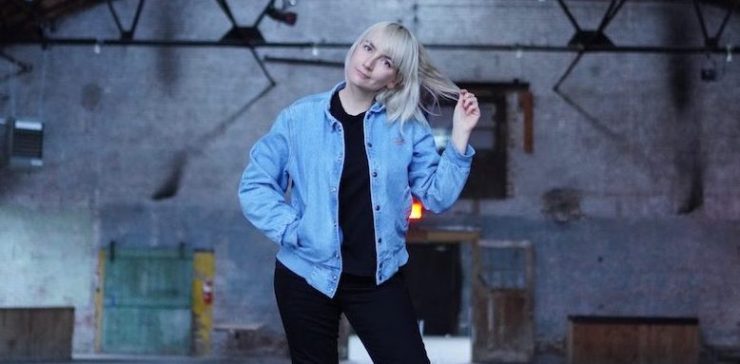
ALBUM: Harkin – ‘Harkin’

Armed with experiences from a life of touring and collaborations, Harkin has taken her first steps towards a solo journey with her eponymous LP. The album is set for release on 24th April via Hand Mirror, a new label set up by Harkin and her partner, poet & live arts organiser, Kate Leah Hewett.

Well known for being a touring member of Sleater-Kinney, Wild Beasts, and Kurt Vile and Courtney Barnett; Harkin has teamed up with Stella Mozgawa (Warpaint) and Jenn Wasner (Wye Oak & Bon Iver) to help record her debut album – but this doesn’t take away from the fact that it’s all Harkin, through and through.

Opening with the booming guitar of ‘Mist on Glass’, Harkin is off to a powerful start as bold, sharp vocals carry through from one track to the next. The swagger of ‘Nothing the Night Can’t Change’ gives way to the softer sonics of ‘Decade’, before the first highlight of the 10-track production comes in the form of thumping beats and husky vocals of ‘Up To Speed’. Next track ‘Bristling’ follows the same path, with a soundscape of drums and guitar.

At the halfway point, ‘Dial It In’ passes by, followed by interlude ‘Red Virginia Creeper’ before the undeniable stand out track of the album breaks through. The foreboding, looming and brilliant ‘Sun Stay With Me’ is the beginning of an eerie mood that travels through the remaining tracks of the album. Penultimate offering ‘New France’ is soaked in reverb-ridden sonics, and spoken word-esque delivery, vibrating with a presence that’s felt even after the last notes fade.

Harkin closes with the ringing acoustic stylings of ‘Charm and Tedium’, with a razor sharp focus on Harkin’s raw vocals. Completed over 16 days dotted between Harkin’s gruelling tour schedule, Harkin is a collection of gritty but smooth songs that showcase a unique trajectory; combining the warmth of nostalgia, with the glitchy pace of the modern world.

Pre-order your copy of Harkin’s debut album here.
Follow Harkin on Spotify and Facebook for more updates.

Photo Credit: Tomm Roeschlein

Malvika Padin
@malvika_padin26

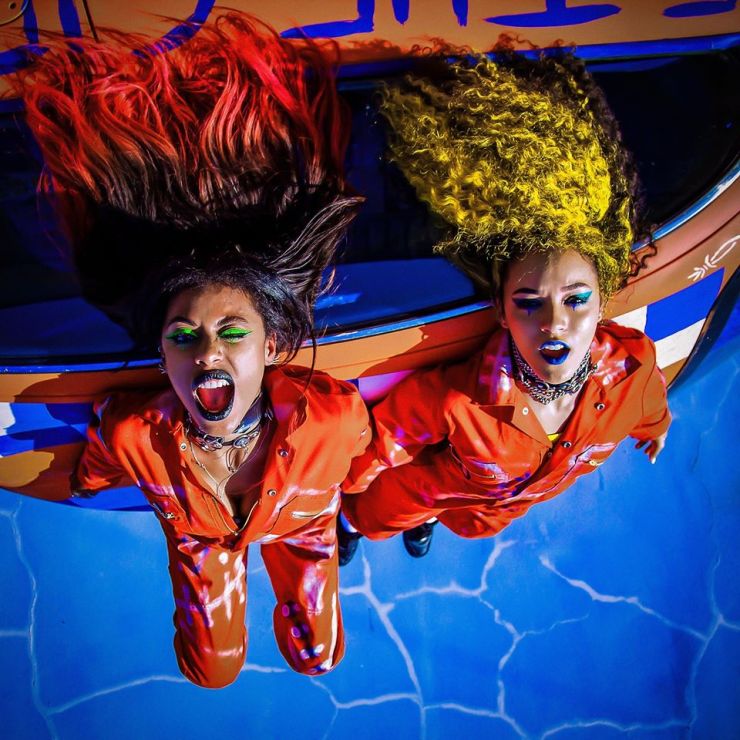
ALBUM: Nova Twins – ‘Who Are The Girls?’

Driven by devious bass lines and ferocious lyrics, Nova Twins‘s debut album Who Are The Girls? is an aural uppercut that proves the London-based duo’s furious instinct for writing anarchic anthems. Formed of Amy Love & Georgia South, the pair have been praised by Rage Against The Machine’s Tom Morello for their genre-defying tunes and their debut LP is bursting with their trademark heavy sound.

Released via 333 Wreckords on 28th February, Who Are The Girls? is a raw, abrasive collection of thundering bass lines, uncompromising rhythms and wicked riffs. Opener ‘Vortex’ – home to the lyric the album is named after – is the perfect introduction to their noise. Swirling, distorted bass and pounding beats permeate the track, as vocalist Amy rips through verses with enviable vocal power. She possesses a stunningly clear voice; it’s as if she needs no amplification when switching between shouts, snarls, and smoothly delivered lines with ease.

‘Play Fair’ and ‘Taxi’ are assaults on the senses, with more of Georgia’s mind-melting distortion blaring throughout. Armed with her instrument and her pedal board, she executes ear drums with lethal force on the pulverising ‘Devil’s Face’. Listeners should heed Amy’s warning to “get out my way” on following track ‘Not My Day’, after which the brilliant ‘Bullet’ kicks in. The track is a powerful statement against street harassment and the myth that women are “asking for it” if they dress in a certain way. Amy’s lyrics are the ultimate weapon against such insults, making it crystal clear that those who touch without permission are not fucking welcome.

You can take a walk on the “wild side” when the belting ‘Lose Your Head’ bursts through, before being schooled by more of Amy’s savage lyricism on the menacingly slow ‘Ivory Tower’. Hair-raising screams and ear-shredding riffs dominate penultimate track ‘Undertaker’, before ‘Athena’ closes the record. Named after the Greek Goddess associated with warfare, it’s an apt way to end a collection of genre-defying, lethal new tunes.

Nova Twins’ battle cry for equality and diversity on Who Are The Girls? resonates long after their record stops spinning. They are a force for fun, for fury, and – most importantly – for change in an industry that still can’t/won’t book a female-fronted band to headline a major festival. Nova Twins have us riled, re-energised, and ready to ask for more.

Pre-order your copy of Nova Twins’ debut album here.
Follow the band on Facebook and Spotify for more updates.

Kate Crudgington
@KCBobCut

INTERVIEW: Noga Erez

When I meet Noga Erez in Clapton, East London, on a Sunday afternoon, she’s trying on suits for an upcoming photo shoot with her Stylist David Evans. There’s a vintage-looking Mulberry suit, an incredible “Beetle-juice” striped number (David’s reference) as well as a colourful pink & orange play suit. “There’s something psychological about play suits, you always need to pee when you’re wearing them” jokes Erez, and I nod enthusiastically because I know the #playsuitstruggle.

I feel at ease around her; her clothes and her comments are practical as well as cool; a great combination in an artist who has been on the rise since the release of her debut album, Off The Radar, in 2017. I ask her what she’s most proud of about this record: “Because of the many things surrounding the making of the album, and the people I partnered up with, I was able to really make it my way and keep it very authentic. That is something that I feel I had to challenge with the new album, ‘cos making a second album is always kind of a reflection on your first, and there are expectations. Whereas with the first, no-one expected anything of me. That’s the spirit that I want to maintain: something that is very authentic and not compromising in any way.”

This defiant spirit underscores her second LP, which is set for release in 2020. There has been a minor compromise though, but not in a negative way. Together Erez and her partner Ori Rousso have written “too many songs”, so they need to refine their track list: “We’re in a situation where we have a lot of songs to choose from right now. Maybe we have to say goodbye to some of them and release them separately. We’ve been writing so much music, and it’s been over a period of over more than two years, so  it kind of feels like the ones we wrote at the beginning are not the same as the ones that we write now. It’s weird, an album is a documentation of chunk of a person’s life, it’s spread over what feels to me like such a long time, it’s going to look like an album from different periods of time.”

This idea of documentation is something that fans and journalists were quick to pick up on after her debut release. In a 2017 interview with The Guardian, Erez said she had been called “brave” for speaking out about the conflicts in her hometown of Tel Aviv. I ask her if she still thinks its necessary to confront these issues alongside her music, and her response is incredibly diplomatic: “I am in no way a politician or an activist, or anything like that. I’m considered to be politically aware. During the time that I wrote Off The Radar, I was kind of obsessively connected to what was happening. I get periods of time in my life when I’m more like that, and sometimes I’m the opposite. Anything that has to do with the media especially, I feel like the more I read it, the more I get a different perspective. I’m just being flooded with information. It’s so hard for me to tell what is reality, and what is not. Being confused is one thing, but also feeling like someone wants me to be confused is another. So I just want to shut myself off and not be touched by that every now and then.”

“I still feel like I would have to handle the fact that this is where I come from, but what I gradually discovered is I never needed to talk about it as much as when it was included in the album campaign. It was weird to me. But, that story made me stand out in a way, so I feel like if I want to be very selfish, I would probably still continue to talk about it as I can’t really avoid it, I’m going to be asked about it, so I still try to maintain to some kind of connection with what is happening. But I really do feel like the best thing that I can represent right now that will be really genuine is how very confused I am about everything. The only thing I can say is that I have no idea. We look for people who tell us things, accurate things, but I cannot provide that about where I come from, or about this world, and I kind of feel like the problems of my country are minor problems. The world has bigger issues, the more the conversation becomes a global conversation, I think there’s a benefit for all of us to start talking beyond our boundaries.”

“There’s such a nationalistic kind of conversation going on about taking care of the poor people of your country, or the political problem of your country, or the surrounding countries. But the thing that we should all try to consider is our main problems, as of today, are global problems. The more we talk about the world in a global way, the better.”

Fans of Erez’s track ‘Global Fear’ will certainly resonate with her sentiments. I change the subject back to her new album, and ask what details she can share with me. “I’m not obliged to keep anything a secret, and that’s the atmosphere surrounding this whole new project. The first album, I needed to tackle more political issues. It felt to me like I had to explain to people that the fact that I come from that place, doesn’t mean that I represent what that place represents. Now that I feel like I’ve checked that box, it’s a more personal album. I feel like it’s kind of a cliché to say “it’s my most personal project yet”, but I love this new album so much that I don’t want to give up any of the songs.”

“I kind of feel like this album is going to be divided in to sections. Parts of it still deal with more global issues and things that have been going on in the world that I still have to reflect on, but there’s a personal side to things because these past two years after releasing Off The Radar were an amazing two years career-wise, but at the same time personally, we dealt with Ori’s Mum passing away. She died of cancer, and she wanted to die at home, and we saw her in the process of that. There was so much to process – so many amazing things – but so many fucked up things. It was just a mixture of all of it at once. Which is life! But sometimes you feel that everything is intense on both sides, so that is a major part of it. And also, having the perspective of being an artist that already has some music out there, and realizing what being an artist and being a persona is all about. That’s where it touches.”

Blending the personal and the political is something Erez does exceptionally well, as some of her standalone singles ‘Bad Habits’ and ‘Cash Out’ (feat. SAMMUS) have shown. I’m particularly intrigued by the video she created to accompany ‘Cash Out’. The visuals tell a story of a society without men, where women are left to fend for themselves, pitted against each other in punishing street-fights. I ask her about the creative process behind these visuals, which prompts her to talk about the development of her lyricism: “The songs take you to places. Whenever a song is done – I’m going through this process now with the second album – I realise that after writing the lyrics, I understand them so differently. Sometimes, you understand them immediately, but with other songs you leave them behind and when you read the lyrics again you’re like “what the fuck was I talking about?” This is why I love this second album so much, because I’m reading the lyrics and I’m like “I can’t believe I wrote this!”. This is a perspective that I didn’t even know that I had.”

“The thing about words, they are so deceiving. Words are the worst form of communication. I feel like music is so accurate. It captures something in a way that words could never do. But the fun thing about words, is that you meant something, but then you can forget about it, and when you come back to it, it means something so different. It feels like you are reading something that was written by someone else. That’s kind of how my videos are made. With ‘Cash Out’, I was basically writing a checklist of how to be a very strong and successful woman in today’s world. It’s the most cliché checklist: “eat breakfast / not too much / be skinny / not too much…” all those things and a lot of contradictions in between. Then, when I re-read the whole thing, I felt there was some kind of internal violence to it.”

“I feel like sometimes the voices that I have in my head are extremely violent. I am being very violent towards myself. In a way, I feel like that is a very female thing. I don’t think Ori – my partner in life and in music – struggles with the same inner conflicts or inner violence. ‘Cash Out’ was just me taking the violence that I have in my head, those voices that keep telling me to do something – it doesn’t matter how well I’m doing, they are still there – it’s never enough. So the women in this ‘Cash Out’ world are all me. And I’m taking myself in to a battle scene, a fight scene, and I put myself in front of my other self and go ahead and let them kick each other’s asses. I never thought about that when I wrote it, but that’s what happened.”

It’s strangely comforting to hear that Erez struggles with self doubt, like so many women in both the music industry and in wider society. I attempt to reassure her by saying that her persona is formidable, showing no signs of insecurity, and that both her music and her performance style translate as incredibly confident. Her reply is very diplomatic: “I’m happy that I’m able to be very frank about the fact that that’s just not the case. I think it’s hardly ever the case. There’s something very selective about the way I choose to present myself, like all of us, I deal with a lot of shit that is pure weakness, and things that I have to tackle in myself. There’s a lot of insecurity in me, but then eventually I become more aware of the fact that weaknesses are something that you have to grab on to and say okay, that’s the most valuable thing in life. Failures are the most valuable lessons in life. If you get straight A’s in tests – then good for you – but if you fail a test, then it’s the best possible scenario. Easier said than done, but that’s where I’m trying to go mentally.”

I ask about her collaborations with SAMMUS and ECHO, and if she consciously collaborates with other female rappers. As the words leave my mouth, I already feel like I have made a mistake by bringing gender in to the question. This is something I strive to leave out of the majority of my interview questions for GIHE, but today I’ve slipped up and I’ve left it in. But, as Noga has just pointed out, mistakes are valuable, and her response is authentic: “No, I don’t seek to collaborate with any musician because of their gender. Gender plays a very minor role. The one thing that I hate, is when I read about “female rappers”, that kind of gives me the cringe, even though I know it is necessary from the standpoint of people who write about music, and even from the standpoint of someone who reads it.”

“We’re still in a place where you have to add “female” to everything. It’s a language thing, it’s so weird. In Hebrew, you have a gender for every word, in English you have to add something in order for it to be gendered. That’s why words and language can be so fucked up, because it changes the atmosphere about everything. So in English, you have to make that distinction sometimes, which is sometimes for better, sometimes for worse. In Hebrew, I feel like the fact that you have a word for a female singer and a male singer, doesn’t give you the option to look at things from a non-gender perspective. I think about these things so much, but I have a collaboration with a rapper on my new album who happens to have a penis, I really truly don’t give a fuck about none of that. It just has to really feel right. Both ‘Chin Chin’ and ‘Cash Out’ are songs from a female perspective. So it made sense to work with women.”

“I find myself needing to balance the issue of gender whenever I have to curate a playlist. What I do immediately, naturally, I put a lot of men on it. My stars, a lot of them are male – Frank Ocean, Kendrick Lamar. Then I get conscious about that, so I add female artists in. That’s me being real with you about making a conscious decision to have some kind of positive discrimination. It’s a progress. Expecting it to be naturally what we want it to be, you have to be realistic. I feel like when I released my first album in the midst of the #MeToo movement, people were kind of putting the feminist suit on me. I’m a lot of things, a feminist is one of them for sure, but it took a place in the conversation that is larger than the role that is actually plays in my life.”

Her honesty is refreshing, and I re-frame the question, asking her what she thinks makes for a good collaboration. “That’s a good question, especially as I feel collabs have become like a marketing thing, more than they are an artistic thing. But I don’t judge, I think collaborations are great, so the most important thing is that the person that you have on your track gives a really good new perspective to the subject that you were tackling. That’s what happened to me with SAMMUS. When she sent that verse for ‘Cash Out’, Ori & I were at home listening to it, and we were both reacting the same – “Wowwww…what the fuck did she just do!?” – that is how it should be.”

“I knew her music for a while, and I knew she was an amazing lyricist. She’s a poet, and there’s something about her voice, and where she comes from, and her background; I knew it was going to be something different. The song’s concept is a list of things you have to do to be a “good woman”, a “strong and successful” woman even from a feminist world. So my list was so different to hers. In my list, you have to be skinny, but in her world as a woman of colour, that’s just not it. It was one of the things that made me realise that we’re not all in the same boat, you know? We’re in the same boat in the sense that we are being told what do to, who to be, what to wear and what to look like, but that varies depending on who you are. When we are all seen as “women” it flattens it, I feel. So a good collaboration would be having someone twist something so well that it helps you learn something new.”

I ask her what she learned from her collaboration with Israel’s esteemed Camerata Orchestra in 2018. Renowned artist Shlomi Shaban invited Erez to perform re-worked songs from her debut album at Tel Aviv’s prestigious Performing Art Center, and it was captured on film and recorded as a special release titled RaDaR Reworked. I also ask her about the practical side of rehearsing with a live band, as usually she performs solo. “It’s good that you mention rehearsals, because there weren’t many of them. I got this opportunity handed to me, funded by someone. It was perfect. They did a lot of performances, but I was the only one who brought 80 microphones to the venue and recorded and filmed the whole thing.”

“Ori mixed it and it was crazy, such hard work, but I knew that I had gold in my hands. For me it was surreal, because I always imagined myself with an orchestra, but it was something that was supposed to come so much later. We’d started preparing all of the orchestrations about a year in advance, and the reason we had to prepare it so well was because we had only one rehearsal with the orchestra. Unfortunately, that’s how it is with orchestras who don’t have a lot of money. It made it an even more stressful experience, just getting used to the atmosphere of having this whole thing behind me, I would have loved to have spent more time with it.”

“Honest to God, I had a really bad time the two weeks before that show. I wasn’t able to sleep, I wasn’t able to go to the bathroom, so when I got on stage I was a mess. It came out great, but I feel like I had to compensate for a lot of it afterwards in the process of mixing and keeping it dynamic. There’s something dynamic about an orchestra, there’s something dynamic about classical music. Sometimes it’s really soft, then it goes really loud – and I knew that because I’m coming from a background of studying composition, so the dynamic thing was so important to me. I wanted to tackle that as a performer, but that was the one thing that just did not happen. It was loud and stressed, but luckily that is something you can easily fix in mixing. Honestly, the process was a disaster” – she laughs at this comment – “but Ori was able to do such a great job with helping that sound dynamic.”

It’s mad how even when she doesn’t feel like she’s at the top of her game, Erez still creates captivating music. I ask her what artists are currently captivating her: “I’ve been coming back to the latest James Blake release in the last few days, because the first time I heard it I didn’t actually like it, but it grew on me. Also, Tkay Maidza. She’s an Australian rapper. I would love to collaborate with her. I discovered her through a collaboration that she did with a band called J-E-T-S. She’s fabulous. She also just did a song with JPEGMAFIA called ‘Awake’. I love her.”

My time with Noga Erez is now up, so I thank her profusely for her willingness to answer my questions, and for making such an addictive debut album. She hugs me goodbye, but before I leave, she asks “So, is Get In Her Ears a play on “Get In Her Pants”?” I laugh sheepishly and explain the only thing I’m trying to “get into” are good records, and interesting interviews with artists I admire. With Noga Erez, I’ve accomplished exactly that.

Follow Noga Erez on Facebook | Twitter | Instagram for more updates.

Photo Credit: Timo Kerber 

Kate Crudgington
@KCBobCut