Five Favourites: Supersaurus

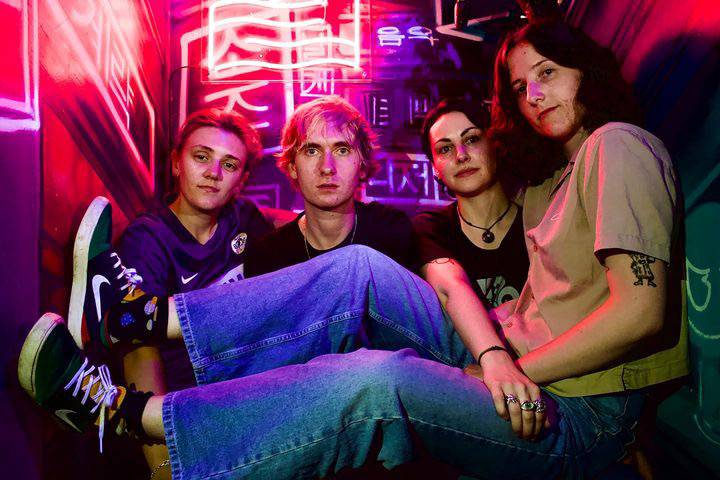
Self described “non-binary fronted indie-pop girl band”, London-based Supersaurus’ influences range from MUNA to The 1975, and with acclaim from the likes of BBC Radio 1 and BBC Introducing, they’re really starting to hone their place as esteemed creators of sad-pop bangers. Reflecting on queer love and being part of the LGBTQ+ community, latest single ‘Let U Down‘ offers a swirling electro-pop energy as it soars with instantly catchy singalong refrains and a shimmering emotion-strewn splendour.

We think one of the best ways to get to know a band is by asking what music inspires them. So, to celebrate ‘Let U Down’, we caught up with each member of Supersaurus to ask about the music that has inspired them the most. So, read about their favourite albumsthere’s four of them, so actually only four choices this time, but we’ll let them off! Have a read and make sure you take a listen to ‘Let U Down’ now!

Tayla’s Pick:

Pale Waves – Unwanted
There’s actually so many albums that I could choose from for so many different reasons either because they have a personal nostalgic meaning to me and/or they’re just purely no skip albums for me. But if I was to pick one at this very moment in time I’d have to go with Pale Waves – Unwanted. I’ve been a fan of their music for a while, ever since I first heard ‘Change’ a while back and then recently just suddenly had the urge to binge listen to all their stuff again after seeing them at Truck Festival. When I get obsessed with a song or an album trust me, that’s going to be on repeat for a good few weeks at least and the songs on this album really made me feel a lot, which is mainly what I look for. Don’t get me wrong, I love lyrics and all that but for me to really be obsessed with a song it’s got to make me feel a certain kind of way – and this album does just that. If I’d have to pick a favourite off the album I’d probably go with either ‘Lies’, purely for the insane amount of energy and the cool guitar riff, or ‘Reasons To Live’, which – ironically after saying that the lyrics aren’t the main reason that draws me into a song – the lyrics for this one did just that. An all round banger album for me – plus they’re sick live, which makes listening to their stuff even better.

Lauren’s Pick:

Kings Of Leon – Come Around Sundown
Come Around Sundown is an album I’ve come back to again and again since I was about 17. I never get tired of listening to it from start to finish, and it remains one of the select few albums I keep in my car. Originally, it had this new feeling of reflection that Kings Of Leon managed to write into their songs, a sense that you’ve been here before even though you’ve never heard it. Now it’s got the added nostalgia of driving around town with college mates (as well as many other KoL albums). I was introduced to the album by an old band mate, and I remember us being amazed at the ending of ‘The End’ – the beautiful, almost mystical keys that seem never ending but a perfect fit. Musically, the album has influenced my drumming to be more creative, following rhythms of different band members more than just the bass. It’s also a great lesson in playing what is necessary for the song. Some of the tracks on the album have huge choruses, but Nathan never goes over the top. 

Bec’s Pick:

Caroline Polachek – Desire, I Want To Turn Into You
I have a strong attachment to this album, mainly because of the way I felt when I first heard it. I was hooked, instantly. It was kind of fated to be a pretty significant album for me. The day it was released (Valentine’s Day), I was driving back from a weekend in Wales with my girlfriend to watch Caroline perform; the weather was pretty shocking but kind of added to the atmospherics of the album, and I was about eight songs deep when I realised that I could listen to this album, on repeat, forever. ‘Blood and Butter’ started and, if I am being honest, I was shook to my very core – bagpipes! She had only gone and done it. From that point on, it became my favourite album. Accidentally, Caroline has ended being my most seen live act, she was my last gig before lock down and the first one out of it. And, with each iteration, she has added more to her live show; this last time watching her with a full live band really brought this album to life. The opening track from the album, ‘Welcome To My Island’, exploded to life with loud guitars and thumping drums, and I just beamed… This is what music is all about. The past few years I’ve really been getting into more electronic indie pop music, and this album still uses a lot of live instruments, including guitars. Which for me is key – live is king. This album is full of incredible left of centre pop moments which lean into catchy hooks without being cheap. ‘Bunny Is A Rider’ is a perfect example of not taking yourself too seriously, but landing the finish. Dido, Grimes, and Bagpipes. Sold.

Benji’s Pick: 

Jimmy Eat World – Clarity
I kinda can’t not pick Clarity by Jimmy Eat World. It’s the only album that can make me sad and happy at the same time. It’s a weird one, because it’s my favourite album but I really don’t listen to it very often; it makes me feel too much, and I could do without that! But it’s a masterpiece, more albums should open with a ballad. It was either this or Three Cheers For Sweet Revenge by My Chemical Romance, but I think Clarity has the edge.

Massive thanks to Supersaurus for talking about their favourite albums with us!

‘Let U Down’ is out now, and we can’t wait to hear more from this lot!

WATCH: Yay Maria – ‘L’Appel Du Vide’

Derby’s Yay Maria is back with ‘L’Appel Du Vide’ – a sunny bubblegum bop that fizzes with energy. While the song packs a proper electro pop punch, the lyrics are at odds with this lightness. Exploring themes of addiction and trauma, they are unafraid to discuss darker and more challenging issues. And, at a time when the trans and non-binary communities are subject to such hostility in the UK, it’s more important than ever to draw attention to these realities.  

While it doesn’t shy away from darkness, you’d be mistaken if you thought ‘L’Appel Du Vide’ was a sad song. Joyous and defiant, this is an anthem to empower and excite people. It’s accompanied by a fully animated music video, which brings together beautiful psychedelic colours, unexpected mythical guests, and a healthy dollop of northern deadpan humour! The effect is irresistible.

Along with the rest of her upcoming EP, Maria says that ‘L’Appel Du Vide’ is something of a love letter to the Queer community. She says: “I made this EP for Queer people in the sense that I feel there is a lot of negative coverage of the trans & queer community currently. So I wanted something that was just for us. Something that is audibly enjoyable whilst talking about real stuff.” 

The result is a real gift to anyone who might need it. It’s a song that’s going to mean the world to people. And this is a musician that’s going to mean the world to people too. In Yay Maria, we have a figurehead; a cheerleader who encourages the community and its allies to keep fighting and have fun. 

‘L’Appel Du Vide’ is taken from Yay Maria’s upcoming EP, Superbia, which will be released on 20th October via I’m Not From London records. Pre-order here.

Vic Conway
@thepicsofvic

Introducing Interview: Becca Mancari

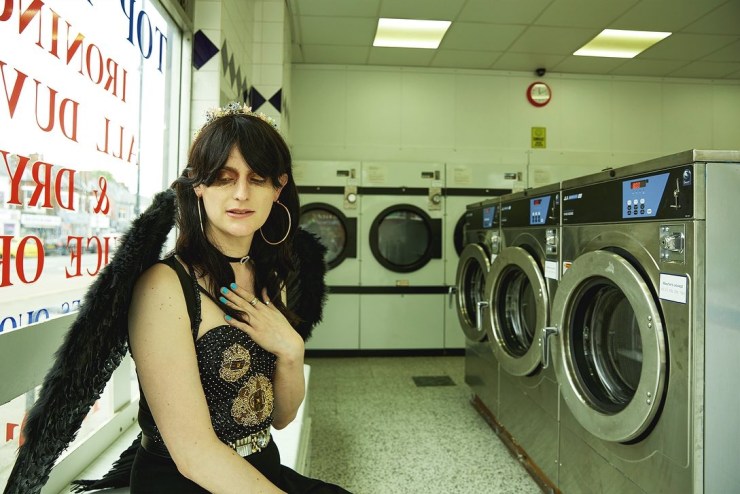
Having received acclaim from the likes of the New York Times and queer publication them, and collaborated with big names such as Hayley Williams (Paramore) and Julien Baker (boygenius), Nashville artist Becca Mancari has just released their latest album, Left Hand. Rippling throughout with a beautifully heartfelt emotion and twinkling musicality, it offers a dreamy and gently empowering reflection on queer identities and our relation to the natural world; a shimmering and relatable ode to being your true self.

We caught up with Becca to discuss their new album, processing past trauma, being a queer artist today, and more. Have read below, and make sure you check out the exquisite new album!

Hi Becca, and welcome to Get In Her Ears! Are you able to tell us a bit about how you initially started creating music?
I actually started at a very young age! I felt safe when I was making music, and I always loved how the act of writing music helped me really feel connected to myself. I had so much fear as a young kid, and this helped me not feel alone! 

I really love your dreamy, twinkling musicality and emotion-rich vocals, but who would you consider to be your main musical influences?
I think the emotional music came from listening to Sharon van Etten, and then I also used to listen to mewithoutyou, and they helped me explore my religious trauma. 

And how much would you say your religious upbringing feeds into what you now create? 
I think that it really helps me see how it matters to find your own way, and to not be in a group think. The good parts that I received from my upbringing though were that I learned how to really be around so many different kinds of people. I learned how to love myself, with or without the love of religious people, and I am thankful for the chance to grow even deeper in love with the world around me! I fought for that hard! 

You’ve recently released your new album Left Hand,  which is very exciting -congratulations! It seems to reflect a lot on your childhood and family, are you able to explain a bit more about this?
I only started to fully process all of what happened to me as a kid recently, but it’s so important for me to keep healing and being in therapy! I started therapy in late 2020 and it was the first time that I had ever been in it, and it really did save my life. But for me, I process my feelings through music – I finally do feel like this is my last record about the past, and I am really looking forward to what’s next. 

And you also seem to draw inspiration from the natural world in your writing – how does this normally come about, and how do you feel it links to the emotions you’re expressing throughout the album? 
I grew up in a tiny town with only about 800 hundred people, so nature was such a big part of my childhood. I feel like I get physically sick and definitely emotionally unwell if I am not in nature.  So, I really wanted to honour what nature does for us all on this record, and also talk about how important it is for us to protect her!

It seems like you went through quite a difficult time after the release of your last record (The Greatest Part, 2020), was the process of creating this latest record a cathartic process for you? It certainly seems to emanate some really comforting uplifting energy and queer joy! 
Yes, this record really did bring me to the next level of self love and self acceptance! It’s been a really long journey for me in this way, and I am so glad that you feel the queer joy on this album! I make music for everyone, but especially the queer community! 

After initially starting the studio session to record the album with a producer, you then made the decision to produce the album yourself. What lead to this decision? And how was the process for you?
The process with that other producer was so terrible that I left it feeling like I needed to make a change to really start learning how to produce on my own! And thankfully my longest collaborator and dear friend Juan Solorzano was ready and able to co-produce the record with me, and it ended up being a record that really changed my life. I was on a path that was not really the right one, and by making this record myself I really feel like it changed the whole course of my life. 

You’ve collaborated with various other artists on the album (including personal favourite Julien Baker!). How did you decide on who to work with for the album? And how did the collaborative process go? 
So, living in Nashville for so long it was just a natural thing to make friends with other artists, and I feel so lucky to be able to collaborate with them on their music as well! We just end up working together because it’s fun and easy. With Julien, I knew that she was getting into engineering, and so I was like hey “Jb, do you want to engineer your own vocals?”, and she was just super down for it!   

You’ve played a lot of exciting live shows over the last few years, including one with Hayley Williams (Paramore) in Madison Square Garden, and sharing a stage with the likes of Sheryl Crow and Brittany Howard at Nashville’s LGBTQ+ benefit Love Rising. How were these experiences for you? And is there a particular show you’ve played throughout your career that stands out as a highlight?
I really appreciated Hayley asking me to do the Love Rising show because that show really meant so much to me and the community that I am in. It’s always really nerve-racking to be asked to play someone’s music with them because you want to make sure that you do it well, but H is just one of the best people I know, and has always made me feel seen and supported! 

As a queer person making music today, how do you feel the industry is for new artists at the moment? And do you feel much has changed over the last few years in its treatment of gender non-conforming and LGBTQ+ artists? 
I do think that there are way more opportunities for us than there were, but it’s STILL such a struggle and the industry is still geared to cis straight white people. So, my true hope is that the industry changes completely from the ground up! As queer people we are still fighting for our lives, and so I really hope we are not only respected for our music, but also that our lives are protected.

As we’re a new music focused site, are there any other upcoming artists you’re loving right now that you’d recommend we check out?
Bloomsday! They are a great non-binary queer band out of Brooklyn, and they are opening a bunch of dates for me! 

Finally, what does the rest of 2023 have in store for you? 
Tonnes of touring all over the United States, and then making a plan to come to the UK and EU early next year!

Huge thanks to Becca for answering our questions! We can’t wait for them to come over to the UK sometime soon!

Left Hand, the new album from Becca Mancari, is out now via Captured Tracks. Listen / order here.

Photo Credit: Sophia Matinazad

INTERVIEW: Mykki Blanco

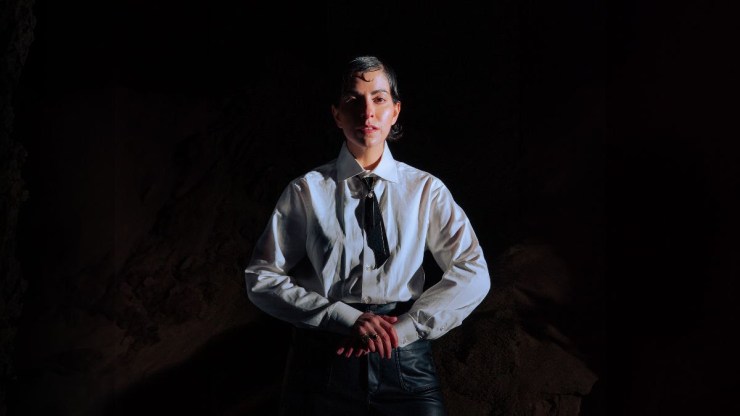
Mykki Blanco really doesn’t need any introduction from us. We’ve been massive fans of the queer pioneer and innovative artist for many years now; they’ve been a huge inspiration to the team and have dazzled us with their live performance more than once. So, we’re super excited that they’ll be releasing a brand new EP later this month. 

Postcards From Italia is set for release on 22nd September, and offers an instantly uplifting collection of colourful, danceable anthems. Fusing together influences ranging from Euro dance beats to Country hooks, we can’t get enough of the funk-fuelled energy and effervescent spirit that runs throughout. 

Fresh from celebrating Copenhagen Pride, Mykki spoke to our Tash Walker last month about the upcoming EP, how the music industry’s changed over the last decade, their queer inspirations and more. Have a read, and make sure you tune into our next show on Soho Radio on Monday 18th September to hear some of the chat there! 

We’re massive fans of you, and it’s an honour to have you speaking to us today! We obviously have quite a few questions for you, but we’d love to focus on your upcoming new record Postcards From Italia, which feels quite different from your previous albums. So, how are you feeling about its release?

So, Postcards From Italia is an EP – it’s only 15 minutes long! But sonically, it really continues the musical journey that started with releasing Broken Hearts & Beauty Sleep in 2021, and then Stay Close To Music, which was a very, very contemplative, very melodic record, in 2022. Most of the songs for Postcards From Italia, even though they’re upbeat, were actually recorded in that same kind of time period as those other two records, so it just really continues a very stark departure into kind of what my music sounds like now, and not what my music has sounded like for roughly the last ten years. I think if a musicologist were to note any markers on my sonic journey, there’d basically be the beginning of my career up until the pandemic, and then the pandemic kind of marks a very stark difference in not only the quality of my music, but just the sonic journey. And I just think that, for me, everything that I’ve come out with since 2020, has, has been like “this is my sound” – this is the music that I make, and less and less of kind of an ever winding journey. I don’t know. I mean, I guess there’’ll always be an element of a journey. But yeah, I think what I’m now creating reflects more how I really feel.

You’ve described this as your “Italian Cowboy Era” – can you explain?

I didn’t say that actually. I think someone from Pitchfork or one of the first music journalists that got the new press release kind of put their own spin on it after listening to some songs, and they said that, and then the record label said that and now people are saying that… Which I guess I’m okay with!

I think the label of “Italian Cowboy Era” maybe came from the lead single ‘Holidays In The Sun’ – the way in which my tone and cadence, and the way in which I delivered the lyrics, is a reference to country music – country music like over Euro dance production… And there are two other songs where I give a similar country western vibe, like ‘Magic On My Back’…  Wow, I get it, that’s why they probably said that! 

You got it. You reclaim it! 

I just reclaimed it. Not joking. I had not thought about that.

You’ve mentioned it already, but ‘Holidays In The Sun’,  the current single, is such a tune. I love the ‘90s dance vibe. The first time I heard it, I think in just the first ten seconds my head and my shoulders were moving away – it’s so infectious. And then magical. And ‘Magic On My Back’ was another one – it’s so sexy. It’s got this really sexy groove to it.

Thank you! I just wanted to release something upbeat – something really fun. So, I’m actually about to start grad school. I’m moving to Switzerland to do an MFA in Fine Art, because I want to focus on Environmental Humanities in painting. I’m really interested in ecology, but kind of like post colonial ecology. So, like ecological studies through Africa and Asia and South America, rather than through a Eurocentric lens – like environmental chronology. The programme is almost two years long, so I wanted to put out something fun before I start school, because once I start, I’ll have to have my head down to study! 

I also read that you didn’t start writing until you were 25. So, it’s interesting now that you’re going into this other phase of going to grad school and looking into art and ecology. Why is that do you think? Was it a conscious decision to start writing at 25? Or was it just the right moment, just something that you were you were drawn to?

It was really my first manager that pushed me into music. As a child, I lived in two places – I lived in the Bay Area outside of San Francisco, and I also lived in North Carolina. And I was just always naturally very drawn to theatre; I loved performing in front of people, and I also loved creative writing. Then, as a teenager, that manifested into me doing more theatre and I found out about performance art. But then I went to art college – well, I went to two different art colleges and dropped out of both, but still very much thought that the trajectory of my adult life would be centred in the art world. I thought I’d figure out some way of working as a contemporary artist and writer, but I never saw myself as a person who would go on to do journalistic writing. But, about ten years ago, I published a book of poetry, and one of the things I am really invested in doing this year, in grad school, is beginning to actually really write either a novel or (very) short story. But, back to your question! I thought I was very much going to have this trajectory as a contemporary artist in the traditional sense, and it was not until I met someone named Charles Damga, who owned a record label called UNO Records in New York, that I started to think more about writing. Basically, Charlie came to a few of my performances – I was doing these performances at different parties, and I was starting to release things online and, I guess for that time, it felt very original, on the cusp of something that people had not seen before. And I just remember, Charlie and I had this conversation where he said something along the lines of “I feel like you’re making music and you don’t know that you’re making music”, but I was still very much in this art world context about everything. And he asked me if I enjoyed songwriting, and if I’d ever considered working with producers, and I was like “I don’t know what a producer is…” So, he suggested giving it a try and pairing me with someone, and I was like “Sure”, and he linked me up with about four different producers and I started to understand that I can communicate certain ideas and together we could translate the production into a song. I didn’t really know what I was doing, I was just enjoying myself, but then over a couple of years I realised that, though I didn’t know how to produce in a traditional sense, I always know sonically the cornucopia of songs or influences that I want. And it was really this exercise in, not only growing in confidence with myself, but as a songwriter, that helped me understand that I could do it, even though I’m not ‘classically trained’ in composition or anything. It was also the community of producers in the community and other musicians that helped me reocognise that I had a talent for something, even though it was undefined. 

Looking back at your career, it’s been amazing! You’ve worked with some really incredible artists, but you’ve also clearly worked really hard to get where you are today, doing lots and lots of touring. How does it feel to you looking back over the years, to where you are today?

One thing I would say is that I’m very fortunate to have come along at the time that I did, because I don’t think I would enjoy the politics of being a brand new artist right now. I feel that with every generation that crops up every five or so years, there’s some select artists who really push the envelope sonically, through their imagery and aesthetics through their message. The universe seems to equip them in ways to persevere beyond whatever challenges the music industry, or society in general, might be placing on them. But I think there are a set of challenges right now for new artists which mean it’s just become harder; I would say it’s become harder for new artist to really make a living and to have a real quality of life. Even though I’ve experienced so much transphobia and homophobia, and had certain media outlets be so rude and inhumane to me at certain parts of my career, I think at that time many paradigms around being queer and being trans were being completely blown open. I was able to explore, or maybe come to terms with, my gender, maybe a path was widening that did not exist before. A true spiritual experience. 

I feel that, unless you were a musician during the last ten years involved in a certain kind of underground culture, maybe you wouldn’t understand this… But, from around 2012 to 2020, something happened where, because of the internet – things like Tumblr and Twitter, and the whole nature of social media – it really transformed and changed communities all over the world. People were able to say “Hey, listen to this indie / feminist / punk band / queer rapper”, and people were able to hear their music on the internet and book them. This created a network globally, where historically artists that would have really dwelled in the underground were able to have agency; to actually make money, to actually look forward. And that’s really important, and I don’t hear people talk about that enough. Sadly, with the pandemic, a lot of that has been diminished; and the effects of that are not completely over. There has been such a reduction in independent venues; a reduction in bookers and people who are willing to book independent underground acts. The network globally is still there, in a sense, but it has diminished. I really see now, again, the dominance of pop stars in a way that I saw it ten years ago, because pop stars are always going to be there. But in the last nine years, it seemed like music listeners were getting more invested in indie underground artists. And ok, your pop fans are always going to be your pop fans, but I’m seeing this dominance again of major label artists. And that kind of scares me, because it feels like we’ve gone back in time, and it’s such a shame because it felt like things were starting to really shift for artists at certain tiers that were not a part of the major label system. 

This comes back a bit to what you were saying about what you were experiencing within the industry – I remember I think maybe it was around, 2016, I saw the video of your days reciting the Zoe Leonard poem, ‘I Want A Dyke For President’, and it was just so perfect. It felt so powerful and apt to bring those words to life at that period of time. You’re an artist who is always pushing for people to see the world differently, I think. And I think sometimes I also think that when you’re queer, and you’re born into a world where you don’t make sense, you sort of have to break it down and build it back up in a way that you can then insert yourself into it. Which allows us, or some queer people, a chance to see the world so differently, and to think differently. And I’m really glad to have had that experience. But I wanted to ask you, who helped you to see your future when you were growing up?

Yeah, I feel like – even though it’s well intentioned – there is a very neoliberal need to commodify and kind of glamourise queerness. But I get it, because then it becomes or can lead to the celebrated education of queerness. But it sort of is like we’re only seeing the pretty people… When I look on Instagram, and I look on Twitter, I love seeing a trans male activist with 850,000 followers, and I love seeing all the trans women who are gaining accolades and I love it when I’m able to connect with other gender-nonconforming queer people who now have large platforms. But it’s still this thing where a lot of the people that shaped me are what you might consider ‘outlaw’ queer people; people that don’t necessarily live in the big cities, that may have existed through sex work, or through anarchist or more community networks. They are just being naturally gender nonconforming, and so much of society – even mainstream LGBTQ society – might find them unruly, or even unattractive. But it’s these people, my friends from these communities, that I would say have really nurtured the radical ideas that formed the foundation of my true virtues. 

When I think about specific people that you might know, there’s Brontez Purnell who I’ve known since I was 18. And I think Alli Logout from Special Interest is someone whose politics are on the money and I feel like whenever I’ve encountered them, they’re always giving me this nice, fresh perspective on something. Then there’s Ericka Hart, who I would consider an activist; she talks a lot about intersectionality, and her partner is trans. They just had a baby and so she talks a lot about this intersection of being black in America, and queerness.

 And, finally, I’d like to name one more – Munroe Bergdorf. I’ve known Munroe for a long time and she inspires and interests me. I’ve really followed her journey closely, and she does feel to me like an infiltrator, because she is able to slip into the mainstream, glamorous radar, but she knows her shit and she knows the real deal. No matter how glamorous she is, and no matter how many talk shows she goes on, I never hear her giving a palatable answer just for the sake of making the mainstream feel comfortable or better about themselves. 

Yeah, I met her about 10 years ago when she DJ-ed for this charity and LGBT helpline charity that I volunteer for, and it was just before she started to, like jump onto the platform that she’s on now. It’s been amazing to watch her, and she’s never faltered in her her views or her purpose – she is she knows who she is, and she knows what she’s going for. 

Okay, I’m conscious that I don’t want to keep you for longer than you have to! So, lastly, I see you’ve hit up a couple of dates across a number of European festivals over the last couple of months, and we’ve all seen you a bunch of times in London, at Southbank Centre and Village Underground when you played there, which was outstanding! We were left absolutely buzzing, like properly fizzing under our skin! So, has there been a particular event you’ve played that’s stood out to you over the years? 

It’s so difficult to answer this question because it’s been almost 11 years of so many different kinds of gigs… But I would say that, honestly, I can be in any room; it doesn’t have to be 1000 people, it could be just 400 or 500 people who are really engaged and watching me, singing the words back. I’ve had that big festival experience, and maybe one or twice in my career when that huge big room didn’t feel any less powerful than a smaller one. But when 400 or 500 people are just completely engaged in what you’re doing – sweating and pouring our hearts out into each other – it feels very special. I like to create a moment sonically and aesthetically, and when it all comes together cohesively, and people are engaged with what I’m doing, that feels good. Because I’ve been doing this long enough to know – I mean what is a career, but a string of continuous moments? 

Totally. I feel like that about archiving as well.  The lack of archives there have been past a certain point, and censorship and all of that sort of stuff. And so, you doing these things on an ongoing basis as an artist is so important. 

Thanks so much for taking the time to chat with me, Mykki. And, best of luck with the record!

Okay, thank you so much for having me. And big love to all of you out there!

Hugest thanks to Mykki for taking the time to chat to us! Their upcoming new EP, Postcards From Italia, is out 22nd September via Transgressive.

Photo Credit: Cecilia Chiaramonte