INTERVIEW: Becky Laverty (Roadburn Festival)

Founded in 1999 and celebrated as an inimitable showcase of heavy and experimental music, Roadburn Festival has been on Get In Her Ears’ radar for some time. Although we’ve never attended the Netherlands festival in person, each year we take note of the eclectic line-up and kick ourselves for not organising a trip to Tilburg to see the unique presentation of new and established artists from alternative music scenes.

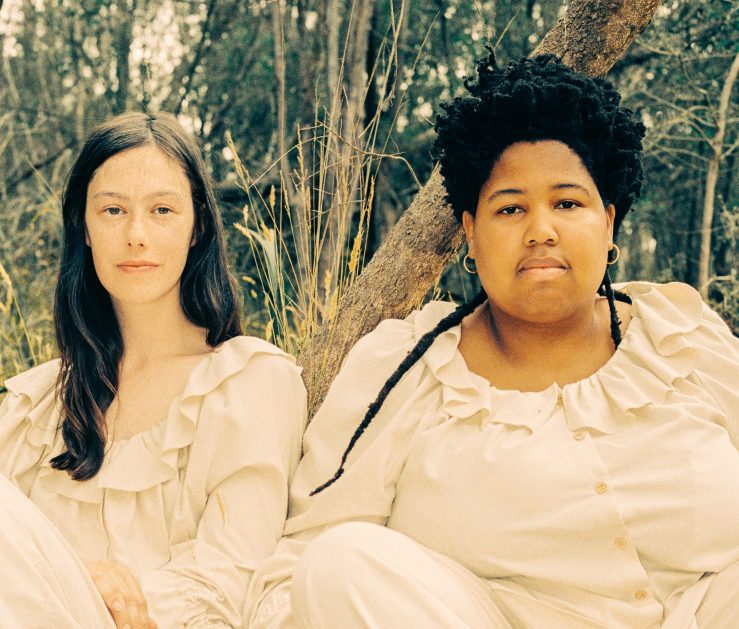
This year, GIHE favourite American multi-instrumentalist and audio engineer Madeline Johnston aka Midwife is one of the festival’s Artists in Residence. She will perform three different sets across the weekend (17th-20th April), including a premiere performance of her collaborative EP, Orbweaving, with slowcore/shoegaze visionary Vyva Melinkolya. Other GIHE faves on the line-up include Penelope Trappes, LustSick Puppy, Faetooth, The Body & Dis Fig, SUMAC & Moor Mother, Tristwch Y Fenywod and Witch Club Satan.

Whilst we are enamoured with the idiosyncratic and unusual sounds of each of these artists, we were also curious to know how the team behind Roadburn put together these immense line-ups every year, as well as their side programme of Q&A events and discussions. Originally attending the festival as a fan back in 2013, Becky Laverty is now a key member of the Roadburn booking team. Her enthusiasm for showcasing experimental and heavy music is evident from the moment we begin speaking on Zoom and so is her unwavering dedication to the Roadburn community..

“I’ve met so many people through Roadburn who have enhanced and enriched my life in ways I could never have imagined,” she shares. “Of course people might think that’s an obvious thing to say – this is my job – I spend hours, weeks and years of my life thinking about this festival. But I felt this way even when I was just attending Roadburn. I would meet people and make connections with them and it was always a magical experience to be at the festival. Now that it takes up more of my life, I feel that even stronger.”

Originally from East London, Becky now lives in a town called Glossop on the edge of the Peak District. “I’ve started putting on shows here which is madness,” she laughs. “The Saturday before Roadburn, I have Thou playing in a pub in Glossop. When they announced the tour dates, people were losing their minds. They were like ‘Where the fuck is Glossop? Why aren’t they playing somewhere normal like Leeds?’” We joke that she’s determined to put Glossop on the map and with her extensive experience in booking and press communications, she’s the right person to do it.

Taking a leap of faith like this is something that has fortunately paid off many times for Becky. Before she became a freelance music publicist, she worked in admin at a University. She would occasionally help friends who were in bands to organise shows and tours, but she had never seriously considered a career in music. It was a brief conversation in the back of a tour van that effectively started it all for her.

“I had booked a tour for two UK bands – a grindcore band called Narcosis and a sludgy band called Mistress – and I went on tour with them,” she shares. “The drummer from Mistress is a guy called Mick Kenney, and he was setting up his own record label with his long time friend Shane, who is the bass player in Napalm Death, and he asked me if I knew any journalists.” Becky laughs as she recalls reading the press release that Mick had drafted and telling him it was “rubbish”. She ended up re-writing it herself. “I didn’t really know what I was doing, but I did know some journalists just from being involved in music and meeting people in bands. So basically I just started emailing people. Then other bands started approaching me and offering to pay me for this work and I said yes and kept going.” Since then, Becky has worked for Earache, Relapse and various other labels as a freelance publicist over the years too.

It’s this combination of tenacious music fandom and learning on the go that led Becky to meet Roadburn’s Artistic Director, Walter Hoeijmakers. She’d been attending the festival in a work capacity for a few years by this point, which led to the pair being introduced. Shortly after that, Walter came to London for a Roadburn related trip and asked if he could crash on Becky’s sofa. “He hung out with my cats and we went to see Godflesh together,” she remembers, two things that cemented their early friendship. “Then a couple of weeks after that, he called me and asked if I would be interested in working for Roadburn, and I was like ‘YES, I would!’ – so I went and told my partner and they were like ‘a job doing what?’ and I realised I had no idea. Hopefully it was something I knew how to do, because I’d already said yes.”

The role that Becky had accepted was that of International Press & Communications for Roadburn. “I’ve always said that the ‘communications’ part of that title did a lot of heavy lifting. It basically means you can be emailing anyone about anything,” she laughs. “So although a big chunk of my job was publicising the festival and inviting press, I started to take on more things every year. I started to arrange the side programme, which consists of artists Q&As and panel discussions and things like that. I was in close contact with Walter throughout, and he would ask my opinion on bookings. It was a quite natural process where my role just got bigger and bigger. It was a bit of a fuzzy time during the pandemic, but it was around then that my role [as a booker] became more formalised. So I’ve been doing that for a few years now.”

The core booking team for Roadburn now consists of Walter, Daan who is the Head of Music at the O13 venue in Tilburg, and Becky. When asked what kind of process the team undertakes for selecting artists to play the festival, Becky insists that most of it is based on intuition and a “gut feeling,” as well as Walter’s artistic overview of what he wants to do. “Sometimes he has an idea for a band, or an idea for a direction he wants to go in, or a particular scene that he wants to explore a bit more, then we build the festival around those ideas,” Becky shares. “So that does vary year-on-year in what direction we’re going in.”

“There’s months and months of conversations about the artistic direction and what will and what won’t work. It’s a lot of gut feeling. Of course we have to sell tickets, so we have to look at what people want from the festival, but it’s definitely based on an artistic vision much more than what’s commercially viable at any given time. One of the things that we really draw inspiration from is the underground, and a lot of the bands that play Roadburn, even on the main stage, have come up through the underground. It’s very rare for a band to come crashing out of nowhere and appear on our main stage.”

The marvellous Chelsea Wolfe played the main stage at last year’s Roadburn, but she had originally played the festival ten years prior on a much smaller stage. Becky explains that Midwife, who first played in 2022, has had a similar journey. “Her music is so gentle in a lot of ways, so delicate and very intimate, it’s almost like she’s singing just to you,” Becky recalls. “So we knew that she was a special artist from that show, so to have her back as an artist in residence this year is fantastic.”

Something that Becky and the Roadburn team are particularly proud of is how the festival has evolved and shifted the idea of what “heavy” can be. Whilst stylistically it can be argued that Midwife’s musical style is not necessarily “heavy” – it’s often sparse and ambient – the emotional gravity that permeates her music is – therefore making her the perfect candidate for a Roadburn performance. Becky explains that there’s no “formula” that can be replicated when it comes to defining what specifically constitutes a “Roadburn band” – it’s based on that important “gut feeling” and a well established level of trust and respect between the members of the booking team.

“As individuals, not just in the Roadburn team, but as music fans, most of us have very eclectic taste,” she shares. “Last week I went to see FKA Twigs, who I love and who is amazing. I’m sure if she came to Roadburn she’d have a lovely time, but I’m not sure that her performance would work at Roadburn. We have this saying that we’ve said amongst ourselves for a long time but it’s become a bit of a slogan to describe Roadburn now, which is ‘redefining heaviness’ – and I think that’s one of the core things that we’re looking for. So whilst I think FKA Twigs has a certain kind of heaviness and some of her music is quite bleak in places, I’m not sure that it fits the type of heaviness that works at Roadburn.”

Becky goes on to explain that a specific set that she feels was a “turning point” in redefining what heaviness in music could be, was when Emma Ruth Rundle played the festival as solo artist on a smaller stage back in 2017, and returned to play the main stage in 2022. “Emma performed, just her and her guitar, on what is now called The Neck stage, which is a 700+ capacity room,” Becky recalls. “It was rammed, but she just held everybody captive for an hour. For me, this was also as heavy as something with big riffs or blast beats or screamed vocals. This had an emotional heaviness to it. So sometimes, whilst there’s no fixed guidelines, that’s one of the sets that I often have in mind. It was undoubtedly heavy and it was also very gentle and very beautiful.”

Something else that Becky feels is unique and important to Roadburn is the specially commissioned projects and one-off collaborative performances that the festival presents to its attendees. This year, SUMAC and Moor Mother will present their album, The Film, on both the 17th and 19th of April. The piece is described by Moor Mother as more than an album or a collection of songs, with the core focus being to “create a moment outside of convention…in an industry that wants to force everything into a box of consumption.” Accurately promoting and celebrating eclectic projects like this is something that Becky and the Roadburn team feel especially passionate about. The team takes great care in capturing the essence of these performances through the language they use in their promotions and the aesthetics they adhere to across all areas of press and communications.

“To expect people to turn up and watch something entirely new from an artist that they don’t know for an hour and to be completely captivated by that – maybe we are asking a lot,” Becky reflects, “but I think people come to Roadburn knowing that that’s part of the experience. If you want to experience something totally brand new and see where this music is going to take you, then that opportunity is there. It’s really special.”

Something else that’s special to Becky are the curated playlists that fill the venues between artist’s sets at Roadburn. Walter originally created these playlists himself, but he has since handed this responsibility over to Becky and her colleague Joel.

“I always say I have no musical talent, but Emma [Ruth Rundle] said to me ‘that’s nonsense, your talent is your ears,’” Becky beams. “I’ve always been a music fan, I would say to the point of obsessiveness as a teenager. When you’re a teenager, did you not just want to pick the music that people listened to and tell people about the artists? That’s essentially what my job is now. Sometimes on our socials people are asking ‘does anyone know what that song was that played just before so-and-so came on?’ and I can be like ‘I do know actually, because I made that playlist!’ so I get to be that obsessive music fan. I think there’s loads of people out there like that and now I have an outlet for it.”

The passion, excitement and dedication from Becky and her team to making sure festival goers get the full Roadburn experience is something we admire profusely here at GIHE. We joke that we’re considering booking a last minute flight to attend this year’s edition and Becky is quick to support this decision. “It’s a slippery slope though,” she laughs, “because once you’ve been, you will want to come again. I know everybody says that, but it’s true. Most people come and are immediately like ‘I want more of that!’ Once you’re addicted – that’s it.”


You can find the full line-up info & tickets for Roadburn via their official website

Follow Roadburn on Instagram, Facebook & X


Photo Credit: Nona Limmen (Official Roadburn 2025 Visual Artist)

Kate Crudgington
kate_getinherears

New Track: Moor Mother – ‘Guilty’

Following critical acclaim for her 2021 album Black Encyclopedia Of The Air, innovative artist Camae Ayewa – aka Moor Mother – has now announced the release of her 9th studio album, The Great Bailout.

Our first taste of the album comes in the form of new single ‘Guilty‘, a collaboration with Lonnie Holley, Mary Lattimore and Raia Was. Oozing a mystical energy, it encapsulates the sentiment of the album – a poignant and necessary message, bringing to our attention crimes committed by our ‘fair isle’. With a glistening splendour, layers of chiming instrumentation swirl together with vocals, intertwining to create a truly stirring anthem. As its whirring musicality provides a backdrop to lists of ‘great’ Britain’s injustices against humanity and the harsh realities of colonialism, the juxtaposition of the horror of ‘Guilty’s message with the beauty of its musicality is stark. At over ten minutes long, I urge you to immerse yourself in this hauntingly beautiful offering; one that we need to pay heed to, now more than ever. An urgent message encased in an evocative sonic grace.

Of the track, Ayewa explains:

“Displacement and its effects are not discussed enoughThe PTSD of displacement should be a focus, and as we have the opportunity to learn about things happening in the world, we also have the opportunity to learn about ourselves. We’ve been through so many different acts of systematic violence.

Watch the affecting lyric video now:


The Great Bailout, the ninth album from Moor Mother, is set for release on 8th March via ANTI-. Pre-order here. Catch Moor Mother live in London or Bristol in March, info and tickets here.


Mari Lane
@marimindles

Photo Credit: Ebru Yildiz

INTERVIEW: Divide and Dissolve

Fuelled by Takiaya Reed’s doom-ridden saxophone sounds and Sylvie Nehill’s phenomenal percussion, Divide and Dissolve create idiosyncratic instrumentals designed to erode the foundations of colonialism and liberate the land for indigenous communities. Flowing with a unique gargantuan grace, their second album Gas Lit has been haunting our ears since it was released in January of this year. We caught up with Takiaya to talk about the record, the reception that it’s had, the new Remix EP that it’s inspired, and a shared love for Radio 6 presenter Mary Anne Hobbs…

Hello Takiaya, how are you doing today?

I’m good, I’m in finals right now, so I’m studying a lot and trying to drink enough water to feed my brain. I’m studying psychology. It’s intense, but I feel super chill about it, because it’s all just a pseudo science. It’s kind of comical trying to find ways to talk about things that are extremely inaccessible and continuing to perpetuate all these things that are sometimes helpful, and sometimes not. The mind is so mysterious and vast, and we’ll never really know what it’s capable of…

I think you should put that in your final essay. You should just end it with that sentiment.

Yeah, they’ll be like “50 Points off for not using enough empirical evidence…”

That’s true, maybe don’t listen to me…

Musically, let’s start from the beginning. Can you remember who, or what first inspired you to start making music? And how Divide & Dissolve first came together too?

It was my dad who first inspired me. I started out playing piano but then he was like, “hey, you look like a saxophone player,” and I was like, “what? A sax player, really? I thought I should play trombone or something?” but he said “I know you’re a sax player. I play trumpet, so we could play duets” So he got me started on playing saxophone and I felt this intuitive almost spiritual connection with the instrument. I still roll my eyes at my dad for what he said about looking like a sax player, but I think there’s something to him having had that knowledge.

Then later on, I was inspired to play guitar because I met my friend Osa Atoe, who does Shotgun Seamstress and was in a band called New Bloods. She showed me how to put on shows, how to set up a PA and she told me to play guitar. Osa was super inspirational in terms of me not playing classical music, which is what my first passion was.

With Divide and Dissolve, I just had a good friend say to me “Hey, you should meet Sylvie, you two are going to love each other” and we instantly just got along. It’s not a very eventful story, it’s just more like, “hey, you’re cool. Okay, cool. Let’s play music. Sweet!” We’re both super chill people, so it just works. I’m trying to trust in that. When making decisions about life, sometimes it just feels super right, like you’re just supposed to be there. Those are probably very good guiding principles.

It sounds like you rely a lot on your intuition, which surely can only lead you to the right kind of people and the right kind of things.

The music you make as Divide and Dissolve, is fuelled by a powerful anti-racist, anti-white supremacy, anti-colonialist message. Do you feel like your music is uniting and educating people about these issues?

I can only hope that it is. It feels amazing to be able to talk about the things that we want to talk about, and be able to experience relationality with our ancestors, our relatives and our kin, and to be able to talk about the Earth in this way and just feel all the resonance. That’s just what we’re about in general. So I feel super grateful and I don’t want to take any of that for granted. I want to be able to continue to connect with people in these really positive and meaningful ways. That’s just how Sylvie and I are.

We’re pretty focused and we want to directly communicate our message. We would like the systems that continue to perpetuate genocide to end. If you can imagine something ending, then it can end. Instead of living in the world where you feel like, “oh well, that’s not possible” – you should try to believe that anything’s possible. That’s where I’m at.

That’s a really refreshing and hopeful sentiment. You do a magnificent job of making listeners feel this way on your most recent album, Gas Lit. What would you say you were most proud of about this record?

I remember having a conversation with Ruban Nielson (Unknown Mortal Orchestra) who produced the record, and I just told him, “I hope people can understand exactly what this album is about.” We put a lot of intention into the album when we were writing it. We put a lot of effort and love in, and we consulted with our ancestors. So when it was released, the way people were writing about it and talking about it felt so attuned. They knew what the album was about without me even specifically telling them what it was about. It was abundantly clear and that still feels incredibly special. It’s so amazing to want to communicate something, and then to have it actually happen. It makes me feel super inspired to continue playing music. I love that Sylvie and I get to do that with one another. It feels like such a blessing.

Do you have a favourite track on the album? Is there one that you enjoyed recording the most or one that you enjoy playing live the most?

Do you know what, I don’t feel properly equipped to answer that question yet, because we have been in a pandemic and this music hasn’t been played live. But, I feel like I’ll know the answer once we go on tour. I’ll be like, “Oh my God, it’s this song!”

The creation of all of the songs was so unique, so it will feel awesome to learn more about the album in terms of performance when we play it live. It feels so wild to be able to do such a thing, because we haven’t had the opportunity to. I’m very excited to play live. I feel optimistic and hopeful that live music will return in a way that feels meaningful and good.

I can’t wait to catch you live when you’re here in the UK. You’ve recently released a Gas Lit Remix EP, featuring tracks by Moor Mother (‘Mental Gymnastics’) and Chelsea Wolfe (‘Far From Ideal’). Talk to me about how this EP came to life…

Our label, Invada, thought it would be cool to do some remixes and I just knew who I should hit up. I feel so connected to both of Camae (Moor Mother) and Chelsea. I think they are both amazing people who do amazing things. It feels so special that they would want to work with us. It just makes me smile a lot.

I’ve just seen that BEARCAT has also remixed a track for you, which is cool!

The visuals that you’ve shared to accompany the Chelsea Wolfe remix and the Moor Mother remix – shot by artist, writer, and filmmaker Sophia Al-Maria who currently has a sculpture at the Serpentine in Hyde Park – compliment the songs so well. 

I love music videos. I don’t know how to make them myself, but the visual world is so interesting. I love it when people who have an understanding of it decide to connect with us and tell another story. Maybe they make it deeper, maybe they don’t. It feels special to try and achieve deeper communication. I think it enhances the music and I love that. Anything that helps us to be able to feel this feeling deeper is awesome. But also, maybe the videos help you not feel things as deeply, and that’s awesome as well, because maybe that’s what someone needs.

I agree, I think there’s a nice balance between the visuals and the sounds.

We’re big fans of Divide and Dissolve her at GIHE, and someone else who also is also a big fan of yours is Radio 6 presenter Mary Anne Hobbs. How do you feel about that?

I really want to meet her, she seems so cool. Sylvie and I want to hang out and eat food with her. She’s across so much cool music, she has really great energy and it feels like such a huge blessing to have her understanding of what we’re doing. I admire her, I think she’s awesome.

We think she’s amazing too. Maybe this will be the interview that she reads and then she invites you to dinner?

Finally, what else is on the horizon for Divide and Dissolve? 

We’re going on tour soon and we’re playing Roadburn in 2022, so that will be fun!

Thanks to Takiaya for speaking with us.

Order your copy of the Gas Lit Remix EP here

Follow Divide and Dissolve on bandcampInstagramSpotifyTwitter & Facebook

Photo Credit: Jaimie Wdziekonski

Kate Crudgington
@KCBobCut

ALBUM: Moor Mother – ‘Black Encyclopedia Of The Air’

Following 2016’s Fetish Bones, Camae Ayewa – aka Moor Mother – has since been wowing fans with 2017’s The Motionless Present and 2020’s innovative project with Swedish musician Olof Melander, Anthologia, which raised money for disability justice. Now, following much critical acclaim, she is set to release a poignant new album – once again recorded with Melander. In short, Black Encyclopedia of the Air is a remarkably unique and absorbing collection, constituting a scattered and beguiling exploration of idiosyncratic ideas and reflections on modern life.

We open in a free-floating sound realm – ‘Temporal Control of Light Echos’ – which immediately lifts us off the sofa into an antigravity dream where space-time operates in an unfamiliar and unsettling manner. This sensation forcibly synchronises our sense of reality with that of Moor Mother, poet/activist/musician/(fortune teller?)/(sorcerer?) and co-founder of Black Quantum Futurism, a collective invested in rethinking our understanding of and interaction with the past and the future…

As soon as we begin to settle into the opener, we are thrust unceremoniously into the next. This album is full of fast cuts between immediate tunes, most of which nestle under the two-and-a-half minute mark. It feels like more of a collection than an album, with threads picked up and dropped with equal vigour. Rather than being an ‘Encyclopedia’ as the title proclaims, it feels like an open notebook; making synaptic flips between ideas, ranging from oblique sketches (see especially ‘Obsidian’) to striking candour (‘Race Function Limited’, ‘Made a Circle’). Where the latter perhaps were more of a feature on Moor Mother’s vitally charged debut Fetish Bones, it is generally the more mysterious elements that impress on Black Encyclopedia Of The Air.

As a whole, the album is possessed by murk – not in a lazily muddy or ‘moody’ way, but with a dedication to explore the world that darkness speaks of. Synth bursts choked by cut-off fall slow and sinuous like blood in water and swirl alongside breathy vocals and distant cries of jazz elements. Moor Mother proclaims the importance of free jazz to her approach as a writer, an influence that makes itself felt across her instinctive writing and disorientating music. This influence makes itself felt in particular on more rhythmically unconventional tracks like ‘Rogue Waves’ and ‘Iso Fonk’, two of the album’s standouts.

It really comes together on its second side, finding cohesion within its chaos. ‘Tarot’ stands out as the longest and most patient track, justified in its length as it stretches into drones and percussive rings backing what seem like oblique prayers to a strange god. From here, the album coalesces, the final three tracks streamlining into a powerful close, centred around ‘Zami’, which drills into your head and spins it like a fairground ride. 

As a whole, Black Encyclopedia Of The Air feels like its own unique universe of strange sounds and intimations. We are left to chase Moor Mother’s philosophy down sonic abysses and lyrical mazes, and if we could only catch them we might just be rewarded.


Black Encyclopedia Of The Air, the new album from Moor Mother, is set for release on 27th September via ANTI-. Pre-order here.

Lloyd Bolton
@lloyd_bolton

Photo Credit: Bob Sweeney