Track Of The Day: Bas Jan – ‘You Have Bewitched Me’

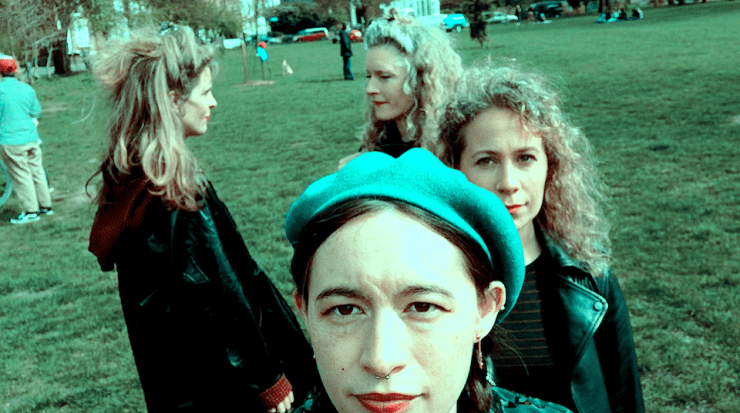
Having initially formed back in 2015, London experimental collective Bas Jan was co-founded by songwriter, vocalist and multi-instrumentalist Serafina Steer, and now features Rachel Horwood (Trash Kit, Bamboo, Jenny Moore’s Mystic Business), Emma Smith (the Elysian Quartet, Jarv Is, Seamus Fogarty) and Charlie Stock. Following 2018’s Yes I Jan, the ensemble has now shared their first new music in three years.

Propelled a swirling ethereal majesty, ‘You Have Bewitched Me‘ offers an effervescent reflection on the mesmerising power of first attraction and new love. As steady bass and sweeping strings flow, the track builds with a lilting, twinkling energy to a burst of vibrant colour and heartfelt blissful joy. With the delicate grace of its sparkling harmonies, ‘You Have Bewitched Me’ showcases the subtle power of crystalline voices coming together in unity to create a truly euphoric soundscape. As an eclectic array of shimmering sounds are interwoven with a captivating allure, ‘You Have Bewitched Me’ treats the ears to a beautiful calming cacophony.

Of the formation of the track, Serafina explains:

“It was a result of an Arts Council funded project… For Bas Jan to rehearse and record live at a performance space [Cafe Oto, London] during lockdown in Autumn 2020. It was then mixed by Capitol K at Total Refreshment Centre. ‘You Have Bewitched Me’ marks a new era of collaborative writing as a four-piece – more of which to be revealed soon.”

Watch the new video for ‘You Have Bewitched Me’ here:

‘You Have Bewitched Me’ is out now via Lost Map Records, as part of Lost Map’s PostMap Club monthly subscription service.

Mari Lane
@marimindles
INTERVIEW: Grace Petrie

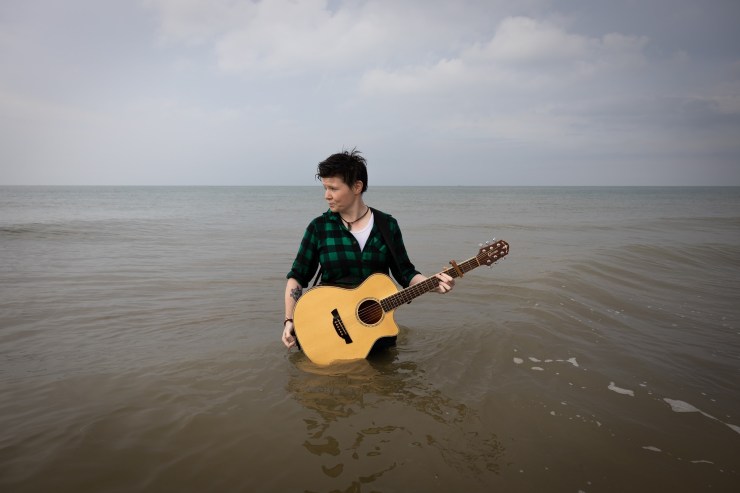
Having been a big fan of Grace Petrie and her politically-charged, but beautifully catchy, folk-strewn anthems since first hearing 2018’s Queer As Folk, I was excited to hear that she’s set to release her brand new album, Connectivity, on 5th October. Ahead of the album’s release, I was lucky enough to chat to Grace about the new album, the struggles of the last eighteen months, the joy of playing live and being a butch lesbian woman in the music industry today.

Settled at home, her dog Frank firmly positioned on her lap (who only interrupted once with a small growl when someone put something through the door), Grace is still on a high from playing her first non-socially distanced show since Covid hit last night. Playing as part of the City of Culture events in Coventry, it was an amazing experience – “it was unbelievably emotional actually, I even burst into tears at the end of the show.” Having desperately missed the experience of playing live over the last eighteen months, she was once again reminded of the feeling of playing to a room full of people singing along to her songs – “There’s just nothing like it in the world. It was wonderful to be back at it, and it left me with a hope that it’s possible that there’ll be an end to all this.”

It’s lucky that she enjoyed it so much as, following a couple more festival appearances over the summer, Grace’s UK tour starts in September, pretty much non-stop through to December – “I’ll have to keep taking my vitamin C and eating Weetabix for that run of tour dates!” This upcoming tour is actually the culmination of about four tours into one – “I had the Spring 2020 tour, then those dates got moved to the Autumn, then both of those were moved into 2021, and then more were scheduled this year. So, some people must have bought tickets about 2 years ago – that’s a long wait, so a lot of anticipation. I just hope I can live up to people’s expectations!” 

It hasn’t been an easy wait for this return to ‘normality’ however. Having suddenly had to cut her Australian tour short last March, Grace went abruptly from having the time of her life to lockdown; questioning whether she’d ever play live again – “I’ve never taken for granted being able to play gigs and I’ve been immensely lucky. I always thought if it ends today I would have had a really good run. But it really did feel that we had reached the pinnacle; we had this amazing experience thinking ‘how could life be this good?’, then all of a sudden it stopped! There was an element of living my dreams and then it all being over.” On 12th March 2020, Grace and her fiddle player Ben Moss had played to a sold out crowd in Sydney at Marrickville Bowling Club – “it’s quite unassuming, it almost looks like a working men’s club. But it was packed, and it was so much fun. We had this amazing gig and went out for beers afterwards.” Then sadly, they were soon thrust into reality – “We were watching all of our friends on social media start to get worried, but we were so detached from it on the other side of the world. There was a period of about 48 hours when we went from not imagining that Covid would impact us, then 24 hours after that, a festival we were supposed to play was cancelled. So then we thought we could just hang out in Sydney over the weekend until our flights home the next week. But over the course of that day, the Friday, it just all started to look a lot more serious. I began to think we should change our flights. So, we left on the Saturday and I think we were lucky to get out. When we got home on the Sunday, it was like whiplash: three nights ago we’d been playing this amazing gig, then suddenly we were back at home and not allowed to leave the house.” Thankfully, however, Grace did not have to go through lockdown alone as Ben ended up having to stay with her for six months – “I’m just grateful I wasn’t on my own, it was good to have a pal with me going through what was a bonkers time. We’ve come out of it much closer than we were, there’s not many people I could spend six months locked in a house with. But we got through it!” 

Grace and Ben didn’t just get through it, they made the most of their time together musically by posting a series of cover songs on social media throughout the first lockdown. “We posted a song beginning with each letter of the alphabet. It got more difficult the further down the alphabet we got – it turns out there’s really not that many songs beginning with X, but we got there!” And what started out as something just for fun then turned out to be something incredibly worthwhile in more ways than one – “After a couple of days, people started offering money to donate towards the songs. I was fortunate that I had the government self-employment fund, so we directed funds towards to The Big Issue, which obviously struggled a lot throughout lockdown as none of the vendors were able to sell it. So, that felt like a really good thing to do, every day posting these covers. It was nice to feel that in some way we could be a little bit useful at a time when we felt utterly useless. By the end of the run I think we’d raised £11,000, which felt like a really worthwhile use of time.” As well as these intimate cover song performances, Grace and Ben also took part in a number of fundraising live streams – “We did a live stream benefit for Bush Hall and The Y Theatre in Leicester – just little things. But I know a lot of people who were doing really essential work throughout the lockdown, and I felt quite useless, so it was really good to do something of benefit with our skill set.”

This interaction with her fans via social media was massively important, and a real source of comfort, to Grace throughout the lockdowns – “Ultimately it was engagement with the audience that kept me sane. I’m a very extroverted person, I’ve always wanted to perform. So, I think I would have been really unhappy without this interaction. Like lots of people, my mental health has been up and down, I’ve managed to keep the worst of it at bay, but if it weren’t for the internet I would have really had a terrible time. Just knowing that there were people checking in, and watching our videos – as daft as they were. The idea that people are out there, and they will be there when this is over. That’s the thing that kept me sane.” Receiving messages of gratitude and hope from fans in response to the songs and live streams that she was posting throughout the pandemic really brought home for Grace that, although she may have a ‘non essential’ job, what she does can really help people connect and has an important impact on people’s lives – “It really made me think: people really do need that connection. Music offers us something different. It gets to a different part of the brain, to a different part of the heart.”

It’s this sense of connection to, and solidarity with, other people to keep us going through hard times that has formed the main basis of the new album, as is even evident in its title, Connectivity. “The older I get, the more I believe that we all need human connection more than anything else. We need to know we’re working for the common good. I don’t think it’s good for anybody to just be looking out for yourself and fuck everyone else, even though the whole system of capitalism is based around that.” 

Written and recorded throughout the pandemic, Connectivity promotes a message of resilience and solidarity through the most chaotic and lonely time – “None of us have ever been through anything like we have over the last two years… There was something incredibly simultaneously inspiring and creatively difficult about the experience. We were all going through this same thing together. There’s never been anything in my life that’s been so universal, everyone in the world going through the pandemic. But what everyone was going through was total isolation. And it was this weird feeling of being in the same moment, but all so separate from each other.” Whilst the album reflects on both these personal feelings of isolation and hopelessness, as well as more universal political themes, Grace emphasises how the two are inextricably linked, how the politics of the pandemic are inherently personal – “… It chimed a lot with me, as someone who considers themselves as very left wing, my brand of politics/what I believe in are certainly not winning in the world at the moment. I think coming immediately off the loss of the 2019 election virtually straight into the pandemic, I was in this space where I was trying to find a handle on how you keep going with the knowledge that we might never win, how it’s starting to look like we might not win this in our lifetime. And then the pandemic happened and it was this massive feeling of despondency and hopelessness, but also this feeling of incredible resilience and solidarity and compassion that I think the pandemic strangely brought out in people.” Although we’re being governed by a right wing government who’d tell us otherwise, what has got so many of us through this tough time has been a sense of community and togetherness that perhaps we took for granted or weren’t aware of before; Grace reflects – “I’ve lived in my street for two years and it was the first time I felt a sense of community, the neighbours were checking in on each other. I remember being in the supermarket and interacting with the cashiers and having these profound moments of conversation and connection with them, being so grateful for what they were doing and then immediately afterwards thinking ‘why did I never say that before?’ I’m so grateful for what they do and their contribution. This team needs everybody to work.” So, whilst it’s been the most traumatic of times, Grace feels there are threads of hope and humanity to be found – “In the way that we rebuild, there is an opportunity to look after each other. That’s ultimately what my politics is and what I try to get across with these songs.”

However, whilst inherently political, Grace feels that Connectivity is a much more intimate body of work than its predecessor, Queer As Folk, partly because of the different way in which it was written and recorded, due to the restrictions of the pandemic – “It was a strange process writing it with the pandemic happening. I am a very live orientated artist, and I’ve always written songs on the road. My style of writing is that I workshop the songs whilst on tour, and I might change it depending on how it’s reacted to live. For most bands and singers it’s the normal thing to have this album of material that no one’s heard yet, but for me it’s a really new, really strange feeling to have this body of work that I have no idea if it’s any good!” Whilst most of its predecessor was recorded live, in one take, making Connectivity was very different – “We took a lot longer to record this album, and it was quite a painstaking experience. Whereas with Queer As Folk it was mostly recorded live (what you hear me doing was all one take), this was very different. I was playing to clicks and the producer Matt, who has amazing ears, really demanded the best from me. It was good, it was what I needed.”

Writing the album in isolation, rather than whilst on the road, inevitably lead to more introspection than there might normally be – “On this album there’s a lot of songs that I think of as more confessional, more personal… I think some of that is massively because of the process that went into making it, just me and the producer in the studio. Playing it live for the first time last night, I realised how intimate some of it was, and I don’t know if it’s stuff that I would have written if I’d been gigging all the time. When you’re on tour, you feel you have to present a certain version of yourself, whoever that is, to this room of people, and have to do that again and again. But a bit of solitude and self-reflection is definitely conducive to more honest songwriting.” This isn’t to say that Connectivity stays clear of politics, but it’s a different sort of politics to when Grace was younger – “My politics has changed. When I was 20 and recording for the first time, I thought my generation would change the world. Now I’m 34 and every time I campaign for an election I lose! Although some sentiment on the record might come across as more cynical, I actually think it’s just a bit more mature. Socialism is a lifelong struggle and it always will be, and I certainly don’t plan to give up.”

Despite the implicit political angle to Connectivity, there’s “… less strident protest music that you might associate with Queer As Folk.” There is no ‘Black Tie’ on the new album, for instance; that was something that Grace needed to say at the time, and now it has been said – “‘Black Tie’ was probably the most important thing I’ve ever had to say. It was a message of self acceptance as a butch woman. It had taken me to the age of 30 to come to terms with that, and be able to stand on stage and say that I accept it. To get to that pride felt like a beautiful and amazing thing to share, and that song had a massive response, particularly from a lot of young, queer people.” As opposed to being explicitly political in the way that songs such as ‘Black Tie’ or ‘Pride’ are, the new album marks a different kind of protest – “I suppose you could say it’s a collection of reflections on how to keep going in a world that every day is telling you that you’ve already lost. That is a rebellion in itself: the whole system wants you to believe that the right thing to do is just shut up about it and look out for yourself. But some days the only thing you can do is to keep believing.”

Our first taste of Connectivity comes in the form of beautiful new single ‘Storm To Weather’, the song from the album that is “most tied to the pandemic”. A song with an uplifting message of hope, Grace wrote it during the first lockdown, with quite a few references that could be specific to that period of time. However, Grace hopes that this kind of thinking could apply to a lot of different situations – “I worry about writing things that are too topical, especially with politics, because things are constantly changing. With this album, I made a conscious effort to write things that are a little more general. Although I wrote this song thinking it was really pandemic specific, listening back to it now – 18 months later – I think it does apply to a lot of my political feelings generally.” And, as with the album as a whole, it carries an empowering message of solidarity and resilience – “The main line of the chorus is ‘I will love you forever and we’ll dance again next year’, and that’s a general political call to arms. Socialism and solidarity and progressive politics, these are things that will weather the storm, these are ideas that will stay forever. Better days will come and we will live to see them.” This sentiment seems particularly resonant now, at a time when – in addition to living with a global pandemic – we are also seeing some terrifying effects of climate change with a government who does not seem to care about anyone except the super rich; a time when, as Grace believes, socialism and left-leaning ideas are necessary for our survival. “I don’t think we’re going to survive if we keep going the way we’re going. I think that’s becoming increasingly clear. So, I’m really just trying to put across that message of resilience – we have to stay the course, and keep putting forward these ideas. And it’s going to be hard, and we’re going to get battered, but we’re in it together, even if we’re not side by side.” 

This necessary feeling of unity and togetherness is particularly important for the LGBTQIA+ community; a community that Grace is very much a part of, and is known for advocating for. We discuss how she feels that her identity as a butch lesbian woman is treated within the music scene – “I’ve definitely had mixed responses in the folk scene. It’s mostly a specific type of prejudice that butch women face: it’s homophobia, but it is misogyny as well. It’s a strange intersection between the two.” Grace recalls a number of times when a crowd’s reaction to her has been less than welcoming because of her appearance – “I’ve experienced a lot of people just not liking me from the moment I walk on stage… I can tell when there are people who are predisposed not to like me, so I can come prepared to tell jokes, be self-deprecating, and bring them on board. But I can tell it’s going to take me ten minutes to get to the point of acceptance that a feminine woman in a dress would start from. These people expect their acts to look and sound in a certain way.” She describes this as an unconscious sort of misogyny, this immediate reaction of suspicion or dislike from men just because they may not find her aesthetically pleasing – “I do still come up against members of the audience who are perturbed by woman who is uninterested in the male gaze; there is nothing about me that is appealing to men. That’s not to say I don’t have male friends and male fans, but I’m not trying to be attractive to men. I’m not trying to appease them. And I think there are still a lot of men who walk through the world which is designed for the male gaze, and find something disconcerting about a woman who doesn’t care about what they think.” 

However, Grace feels lucky that the majority of her audience tends to be female and non-binary (partly thanks to her involvement with The Guilty Feminist Podcast), though recognises that this may not always be the case – “I do think that it can still be quite a male dominated scene. So, that’s why it’s so good that there are initiatives like Get In Her Ears / Girls To The Front / Safe Gigs For Women. It’s great that we’re taking these actions to make it a less male dominated space. I think I’m quite unusual in that, in my audience, men are the minority, and it does always feel like a nice supportive feminist atmosphere when I play. And I think that’s entirely down to having had opportunities in comedy, which tends to be a more gender balanced audience.” Whilst Grace feels that things are getting better for women and LGBTQIA+ artists in the music scene, she still feels there’s a long way to go – “My major thing is that I still think line-ups need to be more diverse across the board. It is still shockingly unbalanced. And, at the end of the day, it’s something that women have been saying forever. But we don’t have the power to book ourselves, it’s in the hands of the big men who control the industry. We still have so far to go.” She is completely right, this is something that us at Get In Her Ears could rant and rave about forever! 

Something else that Grace and I have in common is our love of new music. Although Grace feels like she often struggles to keep up to date with new artists due to being too busy gigging herself to attend other gigs, she is making a post-pandemic resolution to go to see more live music, and would recommend we listen to Muncie Girls’ Lande Hekt who supported her gig in Coventry last night – “She’s such a brilliant songwriter”. Other current earworms include Anna Oakes-Monger who supported Grace on tour in 2019 and writes “really amazing political songs” and Australian artist Alex Lahey.

Having already probably taken up too much of Grace’s (and Frank’s) time, I thank Grace for speaking to me so generously, and let her get on with her day. Hoping to catch her live in Croydon on 12th November at Stanley Halls, I am incredibly excited to listen to Connectivity – a collection of songs that promises to be as uplifting as it is poignant, a perfectly cathartic listen for these strange times. A perfect follow up to the necessary power of Queer As Folk, showcasing the importance of artists like Grace Petrie in uniting us with the connection that music brings, offering a comforting message of solidarity and resilience at a time when we need it the most.

Connectivity, the upcoming new album from Grace Petrie, is set for release on 5th October. Pre-order via bandcamp now. And find tickets to her extensive tour dates this Autumn/Winter here.

Introducing Interview: 45ACIDBABIES

Having blasted into our ears with the quirky, fizzing sounds of ‘Mommy’s Favorite 1‘ and recent single ‘Only Class6 From Now On’, Dutch garage pop-punks 45ACIDBABIES have previously wowed crowds sharing stages with the likes of Sleigh Bells and Blood Red Shoes. And today they share brand new release ‘Don’t 4get To Smile‘ – a wonderfully obscure cacophony propelled by a swirling energy and vibrant, honey-sweet allure.

We caught up with the band to find out more…

Hi 45ACIDBABIES, welcome to Get In Her Ears! Can you tell us a bit about yourselves?
Thanks! So happy to be a part of this! We’re a four-piece. We make pop songs with a raw edge. We love to look for that thin line between sweetness and creepy, and try to follow that line with everything we make. The colour pink is our star of Bethlehem and one day we would love to paint this world pink. We want to create an environment to make you forget about the normal standards for a second so you can look at the world with the eyes of a newborn and be who you want to be!

How did you initially all get together and start creating music?
We went to a pop music school together. Herman Brood Academy it’s called. One of the subjects gave us space and time to create a set and perform it on stage at the end of a term. The teachers thought of the four of us as an interesting combination and they weren’t wrong. We stood out and that resulted in us joining the school tour where we played various venues with some of our schoolmates’ bands. At the last show of that tour we said yes to this rollercoaster of creative excesses and we were born.

You’re about to release your quirky new single ‘Don’t 4get To Smile’ – can you tell us a bit about this? Is it focused on any particular themes? 
With ‘Don’t 4get To Smile’ we enter a Black Mirror kind of world, where happiness and validation can only be found on the internet. Everyone shows their best side on social media, while in real life, no one is special and we’re all glued to our phone screens 24/7. We know something is grim about this way of living. We could do something about it, but we choose to be ignorant and go with the flow, because we’re way too small to turn things around. We can’t all be Neo, the one from the Matrix, right? EVERYTHING IS FINE.

We love your vibrant, fizzing obscure pop sounds, but who would you say are your main musical influences?
It’s different for every band member. That makes us the interesting match we are today! I think I can safely say that the movie Scott Pilgrim vs. The World is a good overall influence. For the visuals, as well as the music.

You’ve previously shared stages with the likes of Sleigh Bells and Blood Red Shoes, but has there been a particular gig you’ve played that stands out as a highlight for you? 
We loved playing with Sleigh Bells and the Blood Red Shoes. We also have very good memories of our tour with the Staat, one of the most important presences in the Dutch music landscape, our first real tour abroad. But I think our favourite gig ever was this very unexpected gig in the middle of nowhere. In a tiny DIY coliseum made out of pallets. It was filled with wasted people who were dancing like crazy and flinging with branches and making the coliseum quake by stomping on the beat. It was awesome. Big shout out to Piet Naus Memorial Festival. Always.

Being based in Holland, how do you find the scene is for new bands and artists there? Would you say it’s difficult to get noticed? 
We have this really cool event called Popronde. It’s a tour where 45 towns anticipate to give young bands a stage. Stages vary from real venues to the pub around the corner. We did Popronde at the beginning of our career. Performed a lot. Drove a lot. Slept very little. Shook a lot of glasses out of the pub’s cutlery cabinets by playing very loud. It’s not very difficult to get noticed, but it is difficult to hold on to the buzz. People’s concentration span is quite short and there are loads of cool bands running around in the Netherlands. Perseverance is key.

How have you been connecting with your audience and other musicians during the pandemic?
In the beginning I started riding my bike to deliver merchandise contactless to fans. Bands started playlists to support one another. Venues and organisations came up with live stream plans and creative ways to give artists a stage and the people at home gigs. We all became very creative with it. But I must say it has been exhausting. I really hope there will come an end to this soon because people are starting to lose hope and fun in what they do; you have no idea what a live audience and some interaction can do – it’s so so so important to do this together.

And has there been anything/anyone specific that has been inspiring you, or helping to motivate you, throughout these strange times? 
The time we had on our hands by not performing gave us space to develop as a concept and as individuals. Our concept is a lot stronger now than it was before.

As we’re a new music focused site, are there any other upcoming bands that you’d recommend we check out?
There’s this new Dutch band from Nijmegen called 4B2M – short for 4 brothers 2 mothers (you guessed it, the foursome consist of brothers from two different families). They all played or are playing in other Dutch bands and last summer they stormed the scene with this new collective and a couple of great singles like ‘This Is Happening’ and ‘Get It Done’. GO check ‘em out!  

Finally, what does the rest of 2021 have in store for 45ACIDBABIES?
We have two more singles coming up and the latest single release will be all the singles of 2021 bundled in an EP with some more goodies included, which we’ll keep a secret for now. Keep in touch and you’ll find out soon enough!

Massive thanks to 45ACIDBABIES for answering our questions!


‘Don’t 4get To Smile’ is out now. Listen on Spotify.

WATCH: She Drew The Gun – ‘Class War (How Much)’

Liverpool’s She Drew The Gun continue to storm out the blocks with the announcement of their upcoming new album Behave Myself, set for release in September. And now they have treated us to a poetic middle finger to the Tory government, seething with corruption, on the second single to be taken from the album – ‘Class War (How Much)’. 

The track gets rolling with a catchy bassline before the languid rhetorical refrain of “how much did you get paid for that?” kicks in – questioning the ethics of high-level nepotism in military contracts and PPE deals. Shiny synths cut through perfectly, pairing well with the accompanying animated ’80s arcade music video and humorously contrasting ‘Class War’s morose subject matter. She Drew The Gun’s singular half-spoken half-sung vocals are centre stage here alongside some playful electric guitar licks, boosting the witty wordplay of lyrics like “I’m a weapon of mass distraction”.

The Merseyside-based musician explains of the track:

It’s about how much we let corruption go in plain sight and accept a politician’s answer when these people are at the front of a ruthless class war being waged against those of us who live on the wrong side of Capital.” 

‘Class War (How Much)’ joins the excellent ‘Cut Me Down’ as fiery, politically-minded tasters of She Drew The Gun’s increasingly exciting upcoming album – Behave Myself – set for release on 24th September via Submarine Cat Records. Pre-order here.

Leonie Bellini
@teenpeachmovie