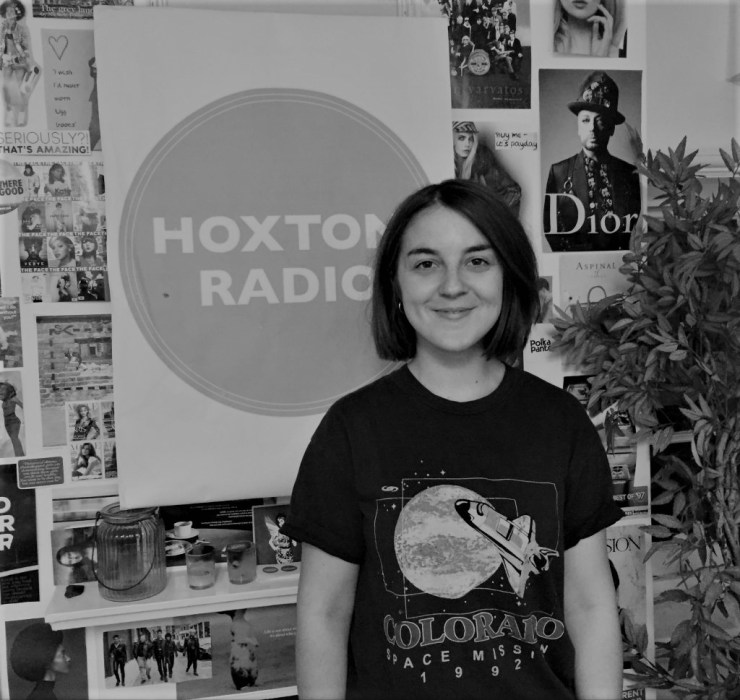
#ThrowbackThursday: GIHE w/ Charlotte Carpenter (02.11.17)

Due to the ongoing Covid-19 pandemic and lockdown in the UK, we’re unable to make it into the Hoxton Radio studio to broadcast our weekly live new music show from 7-9pm. Instead, we’re sharing previous GIHE radio show recordings as #ThrowbackThursday sessions, so you can still enjoy 2 hours of new music tunes & chats with some of our favourite artists each week.

Today, we’ve picked our November 2017 show with songwriter and Babywoman Records founder Charlotte Carpenter. Tash & Kate spoke to her about her EP Shelter, her gig at St Pancras Old Church, producing and releasing music independently, taking up skateboarding again and her on-going love for Courtney Barnett and Avril Lavigne. She also played stripped back versions of two of her tracks on air.

Listen back to the show below:

Tracklist
Nina Simone – I Put A Spell On You
Kllo – Dissolve
Miya Folick – Give It To Me
Skye Wallace – Scarlet Fever
Ailbhe Reddy – The Tube
PINS – Bad Thing
Kid Cupid – Easy
King Henry & Rhye – Moment
Nova Twins – Thelma & Louise
syrra – I Can Be Mean
REWS – Your Tears
The Franklys – Keeper
Just Because – All I Knew
Pale Honey – Get These Things Out Of My Head
**Charlotte Carpenter – Interview & Live Session**
Courtney Barnett – Pedestrian At Best
BERRIES – Wild Vow
LAD – Dancefloor
Shania Twain – Man! I Feel Like A Woman!


ALBUM: Nova Twins Presents ‘Voices For The Unheard’

A year after the release of their debut album Who Are The Girls?, Nova Twins have returned to share Voices Of The Unheard, a charity compilation LP that’s bursting with righteous energy. Driven by their desire to spotlight the work of underrepresented artists of colour in the heavy music scene, the duo (formed of Amy Love and Georgia South) have put together a blistering collection of alternative anthems that showcase an eclectic, tenacious range of talent.

Following their ‘Voices For The Unheard’ Spotify Playlists, an open letter to the MOBO Awards and their online conversations about racism and sexism in music, Nova Twins naturally gravitated towards curating an album that followed up these narratives. Dr Martens Presents (a multi-disciplinary initiative supporting emerging creative talent) brought their idea of a record to life, providing the funding for the physical release of the compilation on limited edition vinyl via Blood Records. Voices For The Unheard is only available for pre-order until 1st March and all profits will be donated to The Black Curriculum, a charitable initiative working to get black history on the UK school syllabus. It’s a deeply political record in many ways, but it’s also a gargantuan distraction from these important issues too.

Amy & Georgia kick things off with their thunderous single ‘Taxi’, filled with Nova Twins‘ trademark distorted bass lines, jagged riffs and ferocious lyrics. Narrowing the track-list down to twelve must have been tricky, as their stellar Spotify playlists include songs by Ho99o9, Bob Vylan, Sampa The Great and Rico Nasty, but the band have tried to give a platform to artists who are rooted in their underground scenes, whether that’s in the UK or further afield.

‘All My Friends’ by Canadian four-piece The OBGMs is a manic mix of punk and garage rock, followed by the gritty charm of Connie Constance‘s ‘Monty Python’. Her track is probably the quietest on the record, but her skill for subtle song-writing punches just as hard as the the visceral metal & hip hop beats on ‘Cross Me’ by Dallas-based UNITYTX. The track burns with corrosive fury, the final lyric “This is rock music motherfucker!” epitomising what Voices Of The Unheard is all about.

The thumping beats and pulverizing synths on ‘Goatmeal’ by New Yorker LustSickPuppy and the intense punk & rap cacophony ‘Scared’ by duo Death Tour both blitz by in under two minutes. Guttural groans, strung out vocals and feverish riffs fuel ‘Aggressive Evolution’ by Liverpool-based Loathe, and their fury is matched by the genre-defying sounds of ‘Green Vision’ by New Yorkers Oxymorrons, who dominate the ear drums from start to finish.

Brit trio Pussycat and The Dirty Johnsons keep things rolling with their classic rock rhythms on ‘Ain’t No Pussy’, followed by the dense beats and incredible vocals on ‘Trouble’ by North Carolina-based queer/trans artist Khx05, who impresses more each time they’re listened to. Washington rapper Zhariah mixes glitchy beats and candid lyrics on the biting ‘Bitch Boy’ before the infectious rhythms of black feminist punk trio Big Joanie bookend this eclectic mix of rap, rock, punk, metal and electronic music. We’ve waxed lyrical about how much we love Big Joanie before on GIHE, and the infectious rhythms on their Hermitage Works live rendition of ‘Fall Asleep’ still have us chanting the chorus in unison every time.

Listening to Voices for the Unheard should rile you up and re-energise your appetite for heavy music. The album showcases a group of artists who have been galvanized by their individual experiences of discrimination, but who are now united in their attempts to create the authentic, exciting music they wish they had heard growing up. Nova Twins’ battle cry for equality and diversity was loud and clear on Who Are The Girls?, but it’s echoed long after the record’s release. The duo are a force for fun, for fury, and most importantly: for change in an industry that is still dominated by white faces.

You can choose to be part of the solution and help to change this by listening to Voices for the Unheard, following the artists on the track-list and continuing to share the conversations that initially fueled the record’s development.

Pre-order your copy of Voices for the Unheard here.

Click on the name of each artist/band to head to their individual Spotify pages.

Kate Crudgington
@KCBobCut

Interview: Celeste Bell

With the release of the documentary Poly Styrene: I Am A Cliché set for early next month, we caught up with Celeste Bell – Poly’s daughter and co-director of the film (along with Paul Sng) – to talk about the inspirations behind the film, her relationship with her mother and the sexism that still prevails in the music industry. Currently based in Barcelona, where it sounds as though things are a little less fraught than in the UK right now, Celeste seems in good spirits – looking forward to the film’s release, despite not being able to promote it in the usual face-to-face ways. 

Anglo-Somali artist and punk maverick Poly Styrene (or Marion Elliott as she was born), of the band X Ray Spex, was one of the first women of colour to lead a successful rock band, and was a truly innovative figure both in music and for women generally. Chronicling her remarkable, and often troubled, life, Poly Styrene: I Am A Cliché includes never-seen-before footage of Poly throughout her life, and tells her moving story predominantly through the eyes of her daughter, Celeste. 

Discussing the inspiration to make the film, Celeste explains that it was the idea for the book Dayglo: The Poly Styrene Story that came first – a collection of archives put together and written about by author Zoë Howe (Typical Girls? The Story of the Slits; Stevie Nicks: Visions, Dreams & Rumours) and Celeste. “The original inspiration for the book was my mother’s diary entries. She had created a retrospective look of writing the album Germ Free Adolescents – for each track she had written a short diary entry, which she planned to publish all together with the title ‘Diary Of The Seventies’…”  Sadly, Poly Styrene passed away before she was able to do this, but sharing it has always been something that Celeste has wanted to do – “… And so I decided it would be nice to match the diary entries with her artwork. She had done all the artwork for the band herself, including an amazing collection of original posters and art she’d done by hand.” That’s when Celeste decided to get in touch with Zoë Howe: “I knew Zoë as she had interviewed me for a book before (How’s Your Dad? Living In The Shadow Of A Rockstar Parent). She interviewed me for that in 2008/9 backstage at a gig at Cargo – my mum was actually there in the audience. And I just have a clear memory of Zoë being a really lovely person, and that’s why I wanted to work with her again.”

It was whilst Zoë and Celeste were working on the book that the idea for a film came about: “Zoë introduced me to Paul Sng – the co-director of I Am A Cliche – who was looking to make a music documentary, and he had asked Zoë if she had any recommendations, and she mentioned our project. And it went from there – after that first meeting, two months later we’d started our crowdfunding campaign. It was like a runaway train – things moved very quickly after that. So, the first book project was actually happening in parallel to planning the film.”

For those of you that haven’t seen the book, Dayglo really is a wonderful collection: featuring some incredible artwork by Poly, alongside some stirring insight into her personality and life through diary entries and letters, it’s not only a moving read, but a visually exciting journey. Of her mum’s artistic skill, Celeste explains: “She had never had any formal art training – she was always self taught, and just had a natural creative ability. She did go to drama clubs and performing arts when in school, that was mainly what she was into as a child. But she just seemed to have a natural gift for visual art. And not just visual art, but also fashion design – anything she put her mind to, she was good at!” 

The film Poly Styrene: I Am A Cliché draws on the diary entries used in the book, as well as Celeste’s own memories, and plenty of never-seen-before footage of Poly throughout her life. “A big part of the journey of making the film was sourcing archive. This was very challenging as we obviously wanted to use as much archive from the time as possible, to bring my mum to life. There were a few sources that we had to go to and we used, for example the Arena documentary made in 1979 Who Is Poly Styrene? – there’s great footage that we used from that. There were also various other bits of my mum performing, in Top Of The Pops and things and interviews that she did at the time. There was also a great interview from ABC (the Australian Broadcasting Company), so we used footage from that.” As well as sourcing this archive, Celeste and Paul were also gifted some unseen footage of Poly Styrene by the widow of her manager, who had happened to also be filmmaker and shot a lot of her and the band throughout the time they were together. “So, we had lots of different archive sources, but it was challenging in terms of finding everything that was out there and then negotiating with the various owners in terms of paying for it, except for the archive we were gifted. Gathering it all together was a big part of the journey of making the film – it probably took us a lot longer to do this than to actually shoot contemporary footage.”

Throughout the film, it is evident what a pivotal figure Poly Styrene was, and continues to be. In addition to interviews with those that knew her personally, it features various people from the industry (including Kathleen Hanna, Pauline Black, Neneh Cherry) talking about her and the impact that she has had on their lives. Celeste explains the process of choosing those who they featured in the film: “We got in touch with the people that we wanted to interview. There were three categories of people that we interviewed: People who knew my mum – so contemporaries of hers in the punk scene, for example – or musicians who had worked with her; then friends and family – people who knew her in a more intimate way; then the third category was people who didn’t necessarily know my mum, but who were inspired by her – we learnt who they were through research, they may have mentioned being fans of hers in an interview, for example.”

Going through all this footage of her mum, and hearing people talk about her so fondly, was both an emotional and cathartic process for Celeste. Throughout the film, it’s not only inspiring to hear about all the incredible steps Poly Styrene took as a woman of colour in the world of punk, but it’s particularly moving to hear Celeste talk about her mother and their relationship. It’s wonderful to hear her talk about Poly Styrene not only as the innovative figure for women in music that she remains to this day, but as a mother and a person. Of the process of gathering all the information for the film together, Celeste adds: “Looking at all the interviews together and the process of writing the script (Zoë Howe and I were writing script for the film whilst making the book) really helped me build a much clearer picture of who my mother was before I was born – this whole process of researching and discovering really enabled me to understand my mum a little better.

Alongside the interviews, throughout the film extracts from Poly Styrene’s diary are narrated by the actor Ruth Negga (Preacher, Loving, Agents Of S.H.I.E.L.D ). Of the decision to cast Negga as the voice of her mother, Celeste explains: “It was a really fortuitous moment – one of those moments that fate puts in your path. I met Ruth Negga on a night out in 2017 or 2018, and it was shortly after we’d started on the film project. I was in Soho with my cousin Soloman – we’d been out, and just ran into her in the street. My cousin is very outgoing and a great people-person – he just started speaking to her, and it came up about my mum. Ruth said that she was a huge fan and my mum was inspirational to her. So, we ended up spending the evening with her and we had a great time. After that night I thought to myself that Ruth would be a great person to do my mum’s voice.” Although originally the plan had been for Celeste to narrate the diary entries, she then decided that this could get confusing as you hear her voice a lot throughout the film anyway, so a different voice was needed. “Ruth is such a great actress. She is so talented, and she was able to really nail my mum’s voice. I think it was the right choice, I can’t think of anyone else who would have done it justice in the way that she did.”

It is through these diary entries and Celeste’s own memories that we gain a poignant insight into Poly Styrene’s ongoing struggle with mental health difficulties throughout her life. Eventually diagnosed with Bipolar Disorder, after a previous damaging mis-diagnosis of Schizophrenia, the film charts her difficulty with being in the public eye, so often scrutinised by the media. One diary entry references her feeling that being “broke and famous was the worst of both worlds”, and we see that this feeling eventually culminated in her deciding that “Poly Styrene had to die so that Marion Elliott could survive”, bringing an end to her time in X Ray Spex. Discussing what may have triggered her mother’s breakdowns and deterioration in mental health, Celeste reflects: “The general experience of being in the public eye and having that brush with fame I think really tipped her over the edge. She was predisposed to having a mental illness – she told me that there were signs when she was very young, and she always had an understanding that there was something not quite right. But I think that if she’d never been in a band and hadn’t had that success and fame, I don’t think that it would have necessarily manifested as a full-blown disorder.” 

Throughout I Am A Cliché, Celeste also talks about her own experience of having a mother with Bipolar Disorder and the difficulties this could bring, including having to go and live with her grandmother on and off throughout her childhood. However, as is somewhat tragically highlighted in the film, her and her mother’s relationship changed as she got older; they became closer, working together to create Poly Styrene’s final album Generation Indigo, and Celeste even joined her mum on stage at the Roundhouse in 2008 – the footage of which is particularly moving, clearly a moment of joy and pride for them both. Talking about the experience of working together, Celeste tells me: “It was a great experience – we had a lot of fun. My mum was in a really good place when she was writing the songs, and we wrote a couple of songs together. And it was just pure fun. My mum didn’t put too much pressure on herself that time.” Having always felt an enormous amount of pressure in terms of having approval within the industry throughout her career previously, and having been very affected by criticism, by the time she started working on Generation Indigo, Poly seemed to be a lot more relaxed and comfortable with who she was – “… She’d reached a place of acceptance. And it was just a real pleasure for me to be on that journey with her and participate and see her in that environment – to see her be happy, relaxed with it, and it not stressing her out. It was just a joy to work with her and Youth, the producer – we would go to his home studio, which was a very warm and comforting environment. It was very different from going into a more corporate recording studio. So, the whole experience was very enjoyable.” Despite Generation Indigo being a step away from the raw punk sounds of X Ray Spex, its eclectic fusion of genres, futuristic themes and vibrant energy are equally as innovative as Poly Styrene’s previous projects and imply that she would have shared a lot more creativity had she lived longer. “I think after making that album she had a new lease of life and was feeling a lot more positive about the music industry. She’d had so many negative experiences before, that I think it took a lot for her to say ‘right, I’m ready to start making music again’. So, I think that if she hadn’t gotten sick, she would have continued to make music without a doubt. Hopefully she’s still making music, wherever she is now…” I’m sure she is. 

Poly Styrene was, and continues to be, a role model for many – as such an innovative woman in music, and a woman of colour, at a time when ingrained sexism was rife in the industry. We see snippets in the film of interviews with her, comprising questions that seemed to focus solely on her appearance or relationships rather than what she was creating, and she was repeatedly described as “not conventionally beautiful” in the media – something which understandably was a source of much frustration for her, and affected her own self-esteem. And the moments in the film where you see how explicitly she was treated differently from her male peers are certainly some of the most powerful – Celeste expands: “… The scrutiny that she came under from journalists and the focus on her physical appearance was really tough. There’s a moment in the film when my mum recalls that the record label had slimmed down her image on the Germ Free Adolescents cover – the cover where they’re in the test tubes. That really upset her. Also, there was this insinuation that she was big or chubby, but she wasn’t at all – she was actually very petite, just curvy. She just had a natural woman’s body! Even though she never played on being sexy and never wanted to use her body, she still came under all this scrutiny about the way she looked and it had a huge impact on her and her self esteem. It was something she was struggling with throughout her life – feeling that she wasn’t pretty enough or slim enough, or feeling that she had to make herself more elegant. So much attention was on her and the way she looked. Even though she was this prolific writer with so many important things to say, journalists would often ask her really stupid questions about why she wore braces and whether the braces were real, as well as comments about her being frumpy, or questions about her romantic life.”

It’s easy now for us to dismiss the way that Poly Styrene was treated by the media as symptomatic of society’s attitudes towards women in the ‘70s, of how sexist the music industry used to be, but Celeste feels that this is still very much an issue for female artists today: “It hasn’t changed for women. It hasn’t got better – it’s still the same bollocks. It’s a huge issue. In fact it may be even worse today.” A strong statement, but one which is hard to disagree with, and is evidenced by the fact that organisations such as ourselves at Get In Her Ears are necessary today: we’re forever fighting the ingrained sexism and sexualisation of women that is still so rife in the industry. “Women are more sexualised than ever. We’re sexualising ourselves. But you have to ask why – why are so many successful women today so overly sexualised? If you think about any pop star in the last twenty years – whenever they’ve put on a bit of weight, they’ve all ended up losing weight again, getting surgery. There’s always this beautifying journey. It always happens. It’s almost impossible to resist. It’s easy enough to sit back and say ‘I would never do that, I would never get surgery etc’. It’s easy to say when you’re not on the screen, when your picture isn’t everywhere all the time.” Reflecting on this begs the question, how can we go about changing this? “This won’t change until society changes. A drastic structural change. Entertainment just reflects society. Until we see some major societal shifts in how women are perceived in society, I don’t think it’s going to get any better in the music industry.” 

A somewhat depressing, but undeniably true, thought. However, the fact that we have strong role models to look to, such as Poly Styrene, is a definite comfort – the pivotal steps that these women before us have taken in a quest to be heard continues to inspire and motivate me every day. The songs that Poly wrote still seem so relevant and her lyrics are so poignant today, perhaps more so than ever before – take ‘Germ Free Adolescents’, for example – Celeste’s current favourite song of her mother’s: “It’s the most perfect song for this age of ‘antiseptic’, where we are all germaphobes and kind of OCD all of a sudden. Mum was actually inspired by OCD for the song, which wasn’t something that was talked about back in the ‘70s, but something that she was well aware of. So, ‘Germ Free Adolescents’ definitely seems like a very prescient choice.” It does – such a poignant and prescient sentiment when looking back now, and further evidence that Poly Styrene was somewhat ahead of her times in her awareness of mental health struggles and associated issues. 

Continuing to inspire women in music years on from the release of Germ Free Adolescents back in 1978, I wonder what current bands or artists Poly Styrene would be a fan of today. “There are so many great bands out there at the moment….”, Celeste begins, “I really love Big Joanie –  they’re just lovely people as well a great band, which helps! There are so many great underground punk bands around right now – Screaming Toenail are another one that I like. A really fabulous band.” Both fantastic bands that we love and promoted many times here at Get In Her Ears! “And there are so many artists that I see and can see my mum in them – often more in the pop world. People forget that X Ray Spex was more of pop-punk band really – very catchy, quite commercially successful. They did really well in the charts. So, Billie Eilish, for example – I see a lot of parallels with my mum in her. The main parallel being in the way she refuses to dress like a more ‘conventional’ pop star, and also the way the media have responded to that. Sadly, she seems to face the same sort of problems that my mum faced about her appearance now.”  Again, although the issue of the sexualisation of women in the industry continues to be a problem, there are plenty of women who are going against these patriarchal expectations of them and not holding in back in being who they want to be – “I see a lot of my mum in all these maverick, very independent women that are making music on their own terms: people like MIA, Grimes… There are just so many powerful women in music who are really original.” There really are, and I’m sure this is – in part – thanks to the innovative women, like Poly Styrene, that have paved the way for them in the industry. 

Poly Styrene: I Am A Cliché is both emotion-driven and informative; an insightful and poignant look at a true pioneer. It is not only deeply moving to hear Poly’s story and Celeste reflect on her mother’s life, but seeing some of the original footage of her playing live – the vibrant energy and ferocious charisma that she brought both on and off stage – is truly joyous; an inspiration to watch. As well as looking back, the film highlights how far the industry and society’s attitudes towards women still have to go, and evokes a feeling of motivation, a desire to revive some of Poly’s punk spirit – to unite, overcome adversity and bring about change, we could all do with being a bit more like her, to start to undo the bondage that binds us into this patriarchal society. In the words of Poly Styrene: “Oh Bondage, Up Yours!”.

Massive thanks to Celeste for taking the time to talk to us!

Poly Styrene: I Am A Cliché is directed by Celeste Bell and Paul Sng, and will be released via Modern Films from Friday 5th March. By purchasing a ‘virtual ticket’, viewers will be able to support a participating local independent cinema – the revenue will be shared with the venue. The World Premiere is the week before at the Glasgow Film Festival (details here). And, if you like the film and want to find out more about Poly Styrene, I strongly recommend you also check out the beautiful book Dayglo: The Poly Styrene Story (by Zoë Howe and Celeste Bell), still available to buy now.


Mari Lane
@marimindles

ALBUM: Weekend Recovery – ‘False Company’

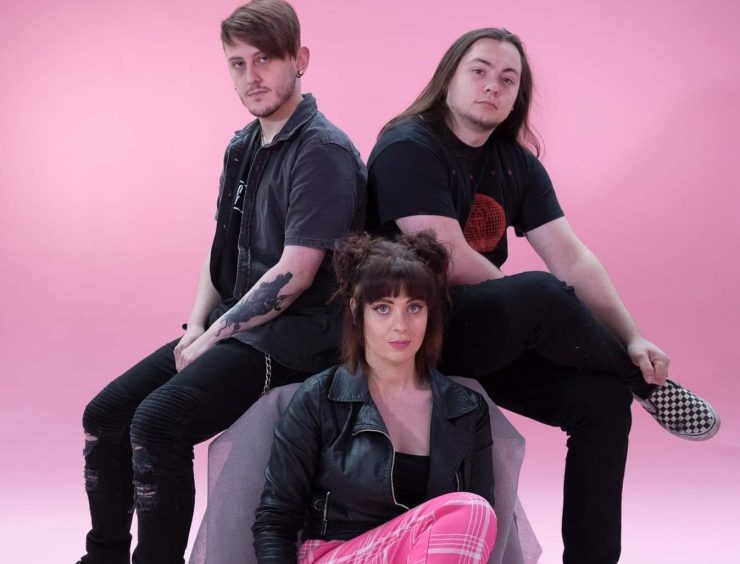
Fuelled by the fuzzy indie rock riffage of Jack White, and the anthemic pop melodies of Paramore, Weekend Recovery has evolved from a Kent-based punk-pop four-piece into a garage-rock trio from up t’North in Leeds; transcending genres through experimentation and their undeniable punk rock attitude. Releasing two EPs – 2016’s Rumours and 2018’s In The Mourning respectively – and their impressive debut LP, 2018’s Get What You Came For, Weekend Recovery return with their self-reflective sophomore album, False Company; ten tracks of infectious do-it-yourself rock and roll.

Opening with the crushing ‘Radiator’, lead singer and guitarist Lori Forster lays the groundwork for the rest of the album with the perfect unification of grunge-inspired guitar riffs and raw emotion (“Got to stay alive / We’ve got to eat you alive”), before tearing apart toxic friendships in ‘Night Creature’ (“Keep it together / Even though you know the truth”), and preconceived ideas of who the fuck Lori is in ‘I Can’t Let Go’.

Bassist Josh Fawn and drummer Marcus Webster instinctively let loose on self-reflective tracks ‘It Doesn’t Seem Right’ and ‘Going Nowhere’, with scuzzy pulsating basslines and thrashing drum beats bounded by Lori’s hook-laden guitar melodies. Lowering the tempo for their latest single – indie fuzz ballad ‘Surprise’ – Lori displays her pop sensibilities with impassioned multi-layered vocals. A deeply personal track conveyed through soft/loud/soft distortion: “If I knew what I knew now / Maybe it would have been different somehow”.

Everyone has suffered from insecurity at some point. Weekend Recovery drowns out this negative noise with the energetic, uplifting ‘There’s A Sense’; picking up the pace through a fusion of propulsive bass, rhythmic guitar, and ‘sing-song’ vocals that will thrive in front of a live audience. “You got to admit there’s a sense of insecurity / Get away, get away, get away, get away!”

Alternating between power pop melodies and raw, energetic rock and roll, the final three tracks – ‘Yeah?!’, ‘You Know Why’ and ‘Zealot’ – conclude False Company; an uncompromising, confident LP worthy of repeat listening, that oozes the DIY work ethic of garage rock/punk. And whilst it can be easy to draw comparisons to their predecessors – Lori, Josh and Marcus wear their influences on their sleeves – Weekend Recovery has crafted a darker, heavier sound that is uniquely their own.

False Company is out now via Criminal Records, and was produced by Ed Heaton and mastered by Joe Fisher of Rainy Daze Recording. Buy here.

Ken Wynne
@Ken_Wynne