INTERVIEW: Miki Berenyi (Piroshka)

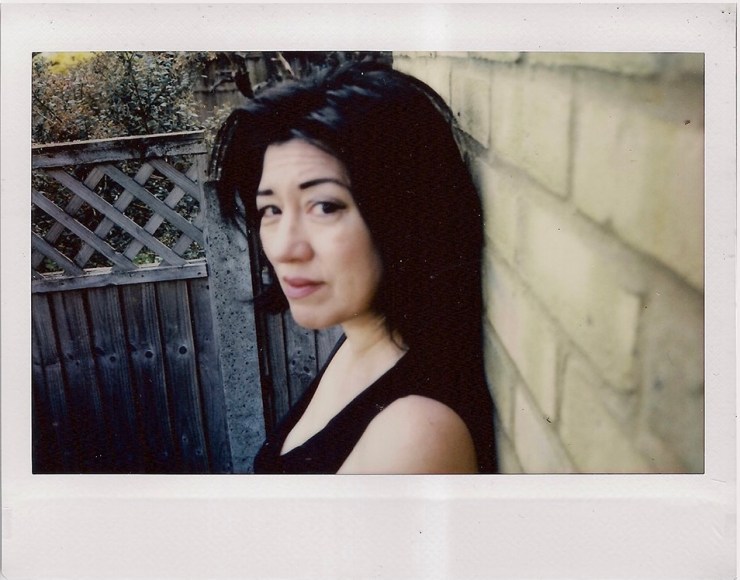
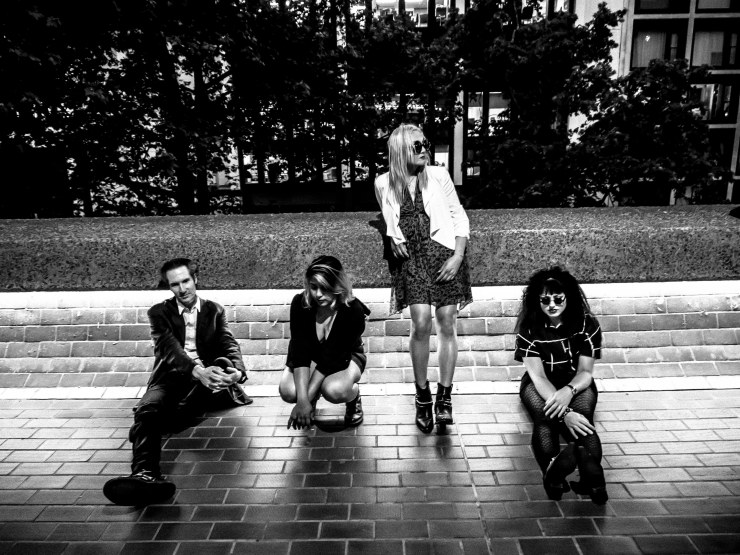
Having spent the ’90s fronting pivotal band Lush, in 2018 Miki Berenyi came together with musicians KJ McKillop (Moose), Mick Conroy (Modern English) and Justin Welch (Elastica) to form current project Piroshka. Following acclaim for 2019’s Brickbat, they are now releasing their second album – Love Drips and Gathers – tomorrow via Bella Union.

Offering a cinematic, immersive musicality and poignant, reflective lyricism throughout, LDAG oozes an ethereal, shoegaze-infused splendour. A collection that will both captivate and uplift with its heartfelt sentiment and sparkling grace, it showcases all there is to love about Piroshka; a beautifully stirring reflection on where the band are today.

We were lucky enough to catch up with Miki to find out more about the new record, her experience in Lush, the industry’s attitude towards women and more… Have a read!

Hi Miki, welcome to Get In Her Ears – thanks so much for joining us! How are you doing today?
As I write this, England have just qualified for the semi-finals of the Euros with a 4-0 win, so I’m in a pretty good mood!

Following 2019’s Brickbat, your band Piroshka have now announced a brand new album – Love Drips and Gathers – which is exciting! More introspective and mellow in sound than your previous release with some beautifully ethereal musicality, can you tell us a bit about it? 
Brickbat was recorded before we signed to Bella Union, so it started out as a self-funded experiment. We had no idea when we were writing and recording whether it would ever be released, and though I love that it captures the energy and momentum of the four of us forming Piroshka, there was very little time to develop the songs. It was a bit: first take, DONE! We’d be frantically coming up with ideas and getting them down before the studio time ran out.

With LDAG, we had time to let the songs sink in, think about the details and experiment with the sounds and embellishments. We were working throughout with Iggy B, who brought a consistency to the recordings and he was a great asset in directing and facilitating our ideas. I think of Brickbat as live, and LDAG as studio; and that may go some way to explaining the increased “introspective and mellow” vibe. But it was definitely a conscious decision to make this record more “beautiful”.

Are there any particular themes or inspirations running throughout the album?
Being in your 50s lends a certain perspective. A lot of the lyrics are about people we have lost and the memories they evoke, and the relationships that play out as you get older. Regret is not something you tend to worry about as a young person, but at my age there are things you have to accept – the life not lived, the unsaid things that it is now too late to say, or that it’s finally easier to say.

How does the writing process normally work within the band? Is it a very collaborative process? 
The writing process within the band is deliberately flexible. Everyone contributed to Brickbat, but a lot of the original direction came from me and Justin. This time around, there was a conscious decision to push more control toward Mick and Moose. These are subtle shifts – but I love that I am working with three uniquely talented people, who have different and separate ideas. We all collaborate and contribute, but allowing different elements to take precedence means – I hope! – that each record will have a different feel.

How have you found recording and promoting an album during these strange times? Have you had to adjust the way that you’d normally do things? 
We are all well into middle age, so yes – a virus that poses increased risk to old folks definitely made us cautious. But the recording wasn’t really affected as it was almost entirely completed before lockdown. And – apart from me and Moose, who live together – we are quite far flung, so it has always been a faff to arrange meet-ups. A lot of our interaction takes place online so it’s not been a major change. The main disruption was having to wait for the mix (Iggy’s studio was closed during the first wave), waiting for backlogs to clear at pressing plants (which delayed release date) and difficulties with filming videos. Promo really isn’t a problem, since our days of doing face-to-face interviews and photo sessions are long gone! That said, we couldn’t get together for band photos, and I have become such a slob during lockdown that I’ve almost completely forgotten how to make myself presentable. 

And, ahead of the album’s release tomorrow, you’ve shared poignant single ‘V.O.’, a tribute to 4AD’s late in-house art director and graphic designer Vaughan Oliver. Are you able to tell us more about this single and your memories of working with Vaughan? 
‘V.O.’ was an odd track because I originally wrote it as an instrumental but as the track grew, I was encouraged by the others to write lyrics for it. I went to Vaughan’s funeral in January 2020. There was shock and sadness and people travelled from far and wide to attend. I really wasn’t that close to him personally, but I loved working with him on Lush records, and we pretty much let him do what he wanted in designing the artwork (why wouldn’t you?). In fact, the titles I came up with – Scar and Split – were both partly inspired by Vaughan’s work: the vertical scratches on our first mini-album and the horizontal dividing line in the photographs used for the second album and EPs. The song is as much about the funeral than Vaughan himself. I used snippets of the speeches and memories of the day for the lyrics. As mentioned before, at my age you start to lose people, and it can hit you viscerally.

You formed Piroshka back in 2018, after having fronted ‘90s brit-pop band Lush. What made you decide to start another band, and how does the experience differ from being in Lush? 
I wouldn’t be in Piroshka if it hadn’t been for the Lush reunion gigs. I hadn’t played music for twenty years, and I didn’t realise how much I missed it until I started doing it again! During the last leg of the Lush dates, chatting on the tour bus, Justin (who stood in for Chris and played drums on the tour) kept encouraging me to continue with a new project, and when Mick stood in on bass for the final show in Manchester, the three of us did most of the prep and we really had a blast playing together. Then Justin started sending me tracks to work on (he was very persistent!) and it blossomed from there. So really, Piroshka was just a continuation of the momentum from playing together in the Lush reunion, and Moose was right there so we suddenly had a band without needing to make much effort. 

When I was in Lush, the band came first above everything. I absolutely loved writing and playing music and going to gigs, and the camaraderie of being with the band members, and making friends with 4AD/Warners bods, studio and touring crew, music journalists, other musicians etc. But it overwhelmed every aspect of my life and took up all my headspace. With Piroshka, we all have other bands/jobs/projects/kids etc that require separate space and attention. Of course, we are nowhere near as successful as Lush was, but I don’t think I could ever be full time in a band again. Having my career, income, social life, relationships – my whole identity, really – all reliant on the band’s success and continuation was emotionally exhausting.

And how would you say the music scene differs generally these days from back in the ‘90s? And would you say that the way that women in particular are treated in music has changed much since then?
The internet has changed everything. Back in the ’90s, music papers, record companies, radio stations etc all had vastly more power and reach. That was an asset if you were favoured, but it was difficult for anyone denied access to those platforms to be heard. Now anyone can make their music accessible, but most are overlooked in the vast ocean of what’s available. 

The online world often feels too thinly spread to really be a ‘scene’, but I am heartened that there are communities where women support each other. On the other hand, the wilful misinterpretation, bullying and abuse that women disproportionately receive is depressing. Lush was very fortunate to be on a label (4AD) that treated women with respect. We never felt patronised or overlooked in favour of male artists. The fact that we had two women in the band was neither here nor there – it was the music that was important. And I see other labels – Bella Union, Lost Map, Milk – to name a few – who carry that same spirit. From my own perspective, I notice that there are a lot more women in bands who continue to make music beyond their 40s. It’s hard to be a pioneer – most of us need living examples to visualise what’s possible, and be inspired to follow in their footsteps. The same must also be true for younger women. I watched the TV show We Are Lady Parts recently, a sitcom about an all-female Muslim band, and it was so funny and energetic and showed how exciting and liberating it can be to be in a band and play music. It was genuinely inspirational, and must have reached a wider audience than a lot of bands’ music does these days. I hope lots of girls watched that and thought “that looks amazing, let’s form a band!”

Unfortunately, in the wider context, I continue to see female musicians treated as a separate category to the (male) norm. Of course, your sex, age, race, class etc will have an influence on how you perceive the world, and therefore the art you create, but I despair at ‘femaleness’ being treated like some niche perspective, when we make up than half the population, and sexism being normalised by pandering to the notion that, for example, certain festival crowds prefer all-male bands because… what? A mostly male audience is so boorish and insecure that they are only going to tolerate the occasional woman on stage, primarily to provide eye candy? It’s insane that anyone in a position of power even thinks that way. And this is not about some dry tokenistic exercise of ticking diversity boxes to ensure every minority is represented. This is about people in positions of power actually liking music – ALL music. People loved John Peel’s radio show because he had wide-ranging tastes and could see value in everything from heavy metal to hip hop, punk-rock to jazz – whatever the artist’s race or sex or class. We need more people with a similar passion in positions of power and influence, so women don’t feel like they are lucky interlopers, competing against one another for precious space because there is only room for a limited number of female voices. 

The last year has obviously been difficult for everyone in different ways, but has there been anything or anyone specific that has been inspiring you, or helping to motivate you, throughout these strange times? 
I got approached by Peter Selby, who was setting up a new imprint, Nine Eight books, with Bonnier, to write a memoir. The prospect was terrifying, but I knew if I said no I would regret it. So, I have been embroiled in memories and my own thoughts for months, which offers some escape from the trauma of the outside world – if not the trauma of my inside world!

And it’s obviously quite difficult organising anything right now, but – in addition to the release of the new album – what else does the rest of 2021 have in store for Piroshka?
We’ll be touring in November, with John Mouse supporting, so that will require rehearsals and planning, etc. Justin is already sending files and ideas for the next album, so we’ll be cracking on with that!

Finally, as we’re a new music focused site, are there any new or upcoming bands that you’d recommend we check out?
I’m very lazy at seeking out new music and rely a lot on Moose, who is more committed at scouring music blogs and websites. My last gig before lockdown was Big Joanie, who have become a staple favourite. And my first socially-distanced gig was a band called Lemondaze who supported us a couple of years ago. I also did a vocal for a band called Blushing from Austin, Texas, though I’m a bit behind and not sure if/when that’s out! The last albums on my turntable were by Jane Weaver, Pictish Trail, Callum Easter, International Teachers of Pop and Hachiku. But I suspect that a lot of these artists have actually been around for a long time since they have several records! I also heard Wet Leg the other day and really liked that.

Thanks so much to Miki for taking the time to talk to us!

Love Drips and Gathers, the new album from Piroshka, is out tomorrow 23rd July via Bella Union. Pre-order here.

Track Of The Day: Talking Violet – ‘Caterpillar’ / ‘Superego’

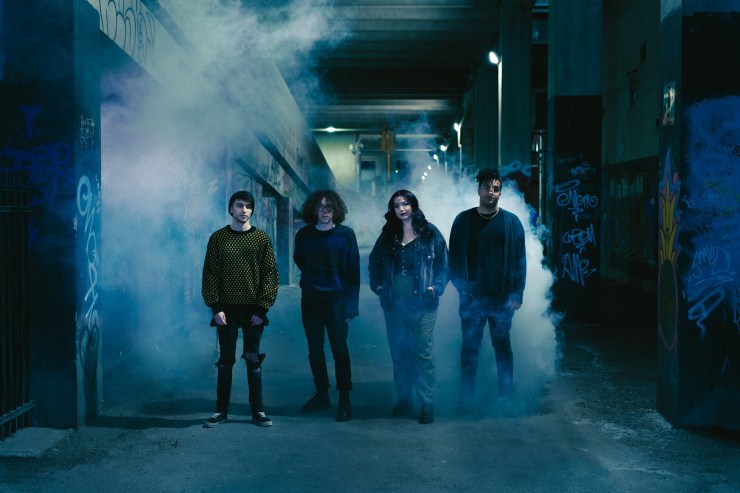
After taking listeners on an audible odyssey with their ethereal extended play, 2018’s Round Dreams – and following last year’s singles, ‘Bloom’ and ‘Indigo’ – Ontario four-piece Talking Violet have returned with ‘Caterpillar’ and ‘Superego’; two solid tracks of dreamy distortion and angsty lyricism which secure the band’s place as alt-rock scientists of dream-pop.

Self-described as “the loudest sleepy band you’ve ever heard”, Talking Violet have wasted no time pushing the boundaries of alternative rock with a cacophony of sonically sound elements; slowing down only to gaze at their guitar pedals. In their laboratory/studio, the Canadian quartet have cultivated their sound, crafting shimmering soundscapes that transcend genre.

First, guitarist Jay Turnbull provides lead vocals on the anxiety-driven ‘Caterpillar’, a hopeful song of self-discovery, and an ode to those of us that feel unsure of ourselves and the journey ahead: “It describes going through a time in my life where I was dealing with intense daily anxiety and felt unsure of how I was going to achieve the goals I set for myself.” From Jay’s strummed guitar melodies to the hazily picked shoe-gaze tones of guitarist Jill Goyeau, ‘Caterpillar’ is seething with emotion; further elevated by bassist Nate Blackton and Jill’s vocal harmonisation.

Next, Talking Violet tackle unhealthy friendships with ‘Superego’; a brooding performance from Jay, who reflects upon his own hesitation to end a close friendship, and accept that it was time to move forward. Jay’s haunting lyrics (“So if you stop and ask why I’m not around / Hope it doesn’t take long to figure it out”) are juxtaposed against a fuzzy soft/loud/soft dynamic reminiscent of The Smashing Pumpkins, building to a crescendo of distorted guitars, pulsating basslines, and Jeremie Brousseau’s crashing percussion.

Through the experimental use of guitar effects, Talking Violet have developed a dense, atmospheric sound that captures the feeling of dreams. So, grab your dream-pop mixtape, add ‘Caterpillar’ and ‘Superego’ to the tracklist, close your eyes, and press play.

Ken Wynne
@Ken_Wynne

Photo Credit: Kamryn Cusumano

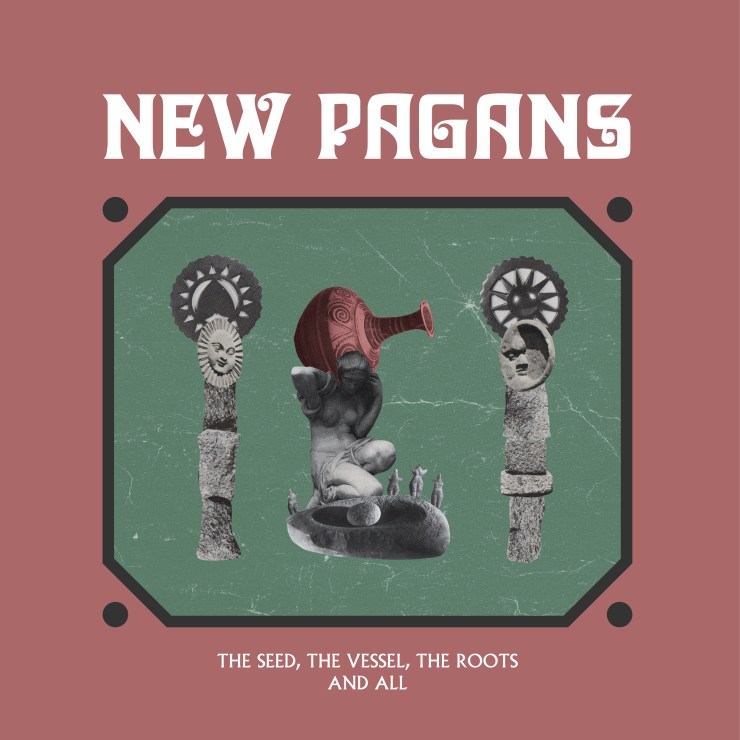
ALBUM: New Pagans – ‘The Seed, The Vessel, The Roots and All’

An intuitive rumination on the personal and the political, New Pagans’ debut album The Seed, The Vessel, The Roots and All is a gritty, deeply poetic consideration of inequality and social injustice. Released via Big Scary Monsters, the Belfast band’s first full length record dives into the paraphernalia surrounding religion, romance and women’s pain, and resurfaces having transformed these tired archetypes into aural talismans of strength and defiance.

Formed of Claire Miskimmin, Cahir O’Doherty, Conor McAuley and Lyndsey McDougall, New Pagans blend elements of post-punk, grunge and pop to explore internal & external conflict in their music. On their 2020 debut EP Glacial Erratic, the band crafted six abrasive, yet melodic tracks that have formed the foundation for their first full length record. With the addition of five new songs, The Seed, The Vessel, The Roots and All is a sharper, fully fleshed out vision that sees the band’s scathing, yet sensitive approach to song-writing flourish with defiant flair.

“The demand for perfection is disturbing,” sings vocalist Lyndsey on opener ‘It’s Darker’. Based on a real life confrontation she had at a party with an aggressive male musician, the track will strike a chord with anyone who has had their opinion publicly devalued. “Everyone’s looking and I’m upset” she reveals, working through the unsettling feeling of being spoken down to via relentless riffs and commanding percussion.

Informed by overheard conversations on a Belfast bus, ‘Charlie Has The Face Of a Saint’ flows with a stream-of-consciousness narrative. Throwaway phrases like “I’m doing my part” or “You’re easy to have when you’re down on your knees” float above the loud/quiet verse/chorus structure, with the conflicting voices unable to provide answers, they simply exist in the ether. The spiralling ‘I Could Die’ follows, with its manic riffs and urgent vocals, before the powerful ‘Bloody Soil’ breaks through. It feels like the soundtrack to a social uprising, with its intense riffs and chant-able chorus.

A tribute to the sister of artists William Butler and Jack Butler Yeats, ‘Lily Yeats’ is an aural confidence boost to the song’s protagonist, and to the women who need encouragement to step out of their brother’s shadows. “My daughter needs to know that she can do the same,” sings Lyndsey over erratic riffs and pummelling beats, before dual male/female vocals drive home the message that it’s everyone’s responsibility to amplify the volume of women’s stories.

Lyndsey’s sharp focus on weaving her own stories of pain, self-autonomy and motherhood with other historic female narratives is the lyrical lifeblood of the album. She allows her own joy, grief and frustration to run parallel to others, with the band’s driving rhythms creating a musical space for the resilience and strength of these women’s histories to shine through. Singles ‘Harbour’ and ‘Yellow Room’ epitomise this.

On ‘Harbour’, Lyndsey celebrates the joy and the struggle of her own pregnancy, while on ‘Yellow Room’ she unravels the conversations around women’s mental health and the lack of support that new mothers often receive. Inspired by Charlotte Perkins Gilman’s semi-autobiographical short-story The Yellow Wallpaper, ‘Yellow Room’ is a racing, urgent exploration of female isolation. Through the medium of Gilmans’ text, the band traverse these underlying doubts via crystalline vocals and charged, powerful riffs, challenging and updating the narrative around women’s mental health.

A humble, shimmering ode to the perseverance that’s needed to keep a long-term relationship going, the band’s treatment of love and its many faults on ‘Admire’ is far more romantic than any Valentine’s bouquet. “Let’s preserve our old ways / let’s preserve them always” sings Lyndsey, her voice floating above atmospheric guitars and swirling bass lines. The song builds to a cacophony of shoegaze noise, removing all sense of doubt about remaining faithful to your partner.

On ‘Ode To None’, the band rip up more outdated traditions of conventional storytelling, declaring “We’re the new pagans / dedicated to nurture”, while on the aspirational ‘Natural Beauty’, Lyndsey dismantles what it means to be an ambitious artist. It serves as a reminder to take your art seriously and to have confidence in your abilities, which is wonderfully expressed in the empowering sentiment: “It’s in her destiny to be better than you.”

A riotous, refreshing call for accountability and a take down of sexist double standards, ‘Christian Boys’ seethes with righteous fury against the unfair judgement of women who are involved with hypocritical men. Based on the experiences of Lyndsey’s friend – who had been having an affair with a Christian leader in Northern Ireland before his marriage to a virgin bride – The urgency in the repeated lyric “Christian boys are the worst I know / Christian girls should take it slow” exposes the hypocrisy underscoring the track’s narrative, calling out those who blame others for their own mistakes. It’s a powerful and necessary statement to close the record with.

On The Seed, The Vessel, The Roots and All, New Pagans uproot musical genres, challenge stunted narratives around social history, gender and relationships and manage to cultivate a powerful sonic resilience against them. It’s a hugely refreshing and impressive album that deserves all of the praise it’s received so far.

Order your copy of The Seed, The Vessel, The Roots and All here.

Follow New Pagans on bandcampTwitterInstagramFacebook & Spotify

Kate Crudgington
@KCBobCut

Track Of The Day: Zilched – ‘The Knife’

A murky grunge-pop tune exploring the unexpected emotions that continue to interrupt us after a breakup, Detroit-based musician Zilched has shared her latest single ‘The Knife’. Taken from her debut album DOOMPOP, released in 2020 via Young Heavy Souls, the track smoulders with a feeling of unrest, ushered along by reverb-heavy guitars and Zilched’s sweet yet sullen vocals.

“‘The Knife’ is about love/hate,” Zilched aka Chloë Drallos explains. Working through the simultaneous disbelief and genuine upset that follows heartbreak, Drallos’ new single fizzes was palatable yearning, reflected in the track’s accompanying self-directed video. “I wanted the video, with dancing improvised by Morgan McCaul, to visualize an inner monologue where those different emotional powers start to take over and ultimately lead to release of that power,” Drallos explains.

Inspired by 90s guitar icons like Nirvana and The Jesus and Mary Chain, Drallos channelled her influences into a collection of compelling noise-pop tracks on debut record DOOMPOP. “It’s an honest reflection of my attempts to grow up and make sense of absurdity,” she explains about the album. “I wrote the first song in my last month of high school at 18, and finished recording & producing just a month after my 20th birthday. With these songs, I wanted to go as deep into my insecurities and confusion, however immature I felt. Just write what I felt when I felt it in order to move on.”

Fuelled by her desire to move on from a difficult time, ‘The Knife’ is a cathartic slice of grunge-pop that gracefully faces up to the gritted teeth and flowing tears at the end of an intimate relationship.

Watch the self-directed video for ‘The Knife’ below.

Follow Zilched on bandcamp, Spotify, Instagram & Facebook for more updates.

Kate Crudgington
@KCBobCult