
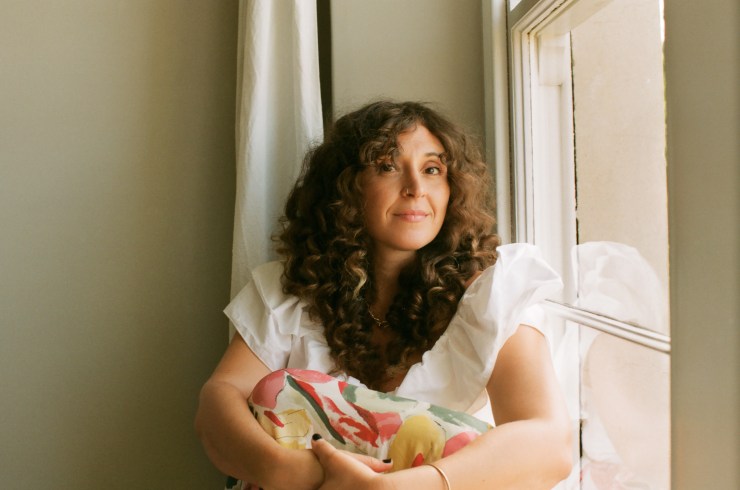
Having released her debut album. Ancestry, towards the end of last year, Bristol-based artist Samantha Lindo has received acclaim from the likes of BBC 6Music and BBC Introducing, and is a regular on the live circuit, having performed at festivals such as Boomtown Fair and Bristol Jazz and Blues festival.
Having received support from the Arts Council and the Mobo Fund of Help Musicians UK to create and release the album, throughout the collection Lindo reflects on her compelling family history, whilst drawing on themes of climate justice and dual heritage identity with a stirring emotion; her rich, soulful vocals rippling throughout shimmering jazz-tinged soundscapes.
We caught up with Samantha to find out more about her experiences of writing and recording the album. Have a read and make sure you check out the album now!
Hi Samantha, welcome to Get In Her Ears! Are you able to tell us a bit about what initially inspired you to start creating music?
I’ve sung from when I was small – being in plays and concerts, where people came together around the arts, were some of my most cherished childhood memories. I guess once I was an adult and had been in several different projects singing other people’s songs, I was in a place in my life where I wanted to start exploring my own inner world and my own healing – and I started creating music from there.
I love your soulful jazz-tinged sounds, but who would you consider to be your main musical influences?
I would say genre-wise I would describe my sound as spanning the realms of spiritual jazz, gospel, folk and spoken word. In terms of artists, my sound is inspired by classic artists like Marvin Gaye, Carole King and Minnie Riperton, as well as contemporaries such as Robert Glasper, Cleo Sol, Sault, and Jordan Rakei.
You recently released your debut album Ancestry, which is very exciting! The album reflects back on your family history – are you able to explain a bit about what inspired you to focus on this as a concept?
During lockdown in 2020 I reconnected with my second cousin in Canada over WhatsApp and zoom. She lived in JA until she was seven, whereas my dad was born in the UK. She was so much more connected to our family history than my dad is, and has pictures, stories and all this amazing information. Viewing it all through the lens of the BLM movement and world issues, gave it all a different dimension. It felt so healing and strengthening to connect to the heritage and history that I’d come from and gave me a new perspective on the future. I felt really inspired to delve deeper into those stories and that process through music.
And what was the writing and recording process like for you?
It was a multi-layered process. The original jamming and improvising around each story was really intimate: me connecting to my different ancestors and being open to what emerged. I’d then share that with my partner Dylan who might structure some chords and musically respond to what I had heard. Then I took a set of rough songs to Alex Veitch, who workshopped each one with me, disrupting my usual process, and finding different chord flavours and structures. We then took the rough recordings to producer, Doug Cave, who helped me imagine each track as a full arrangement before we took them into rehearsals with the band for several days before we recorded the main full band tracks. After that there was a lot of reflection and layering with various session musicians and recording of all the harmonies. I found the labour of all the harmonies the hardest, whereas the performance of the lead vocals flowed really easily. I honestly loved the process. We did most of it in Doug’s house, and I’d bring home cooked lunches and we’d hang out in the garden so there was a really relaxed but hard working feel to it all.
You also received funding from the Arts Council to help with the album – how did you find the experience and applying for this, and what advice could you give to other musicians when applying?
Find your own narrative, what you are saying and why, and also know who you are wanting to talk to, who your audience is. Think of some measurable goals that will let you know you have made the thing you want to and delivered it to the people you wanted to. Be as specific as possible. And get someone to help you who has done it before. There are also sessions you can go to to give you more information about the funds and how to apply.
What can fans expect from your live show?
Playing live is my favourite thing about being an artist. You can expect a compelling, moving vocal performance; storytelling that helps you connect with the music and yourself and a new and different way. And the musicians are also at the top of their game, so it will be an all round immersive, beautiful experience, I hope.
And when you’re out on tour, are there any particular essentials that you like to take with you to keep you going when away from home?
I tend to prioritise keeping as well as I can. Echinacea & apple cider vinegar to keep colds at bay. Diffuser with essential oils for good sleep. Yoga mat for pre-show stretching and warm-ups, and my massive water bottle.
As we’re an organisation keen to support new artists, we just wondered how you feel the industry is for new artists at the moment? And do you feel much has changed over the years in its treatment of female and queer artists?
I think the platforming of female and queer artists has increased massively over the last decade. Having had a baby this year, I’m also really excited about groups emerging of mothers in music, exploring how to advocate for and support one another when so much of the industry is way behind on being aware of inclusivity in this area.
And are there any other new artists you’d recommend that we check out?
Marla Kether & Holyseus Fly.
Now that the album’s out, what are you looking forward to in 2024?
My live show at the Bristol Beacon in April, and then festivals in summer. I can’t wait to be playing the album live. I look forward to seeing you at one of the shows!
Ancestry, the debut album from Samantha Lindo, is out now.


 Get In Her Ears