Interview: SKIN

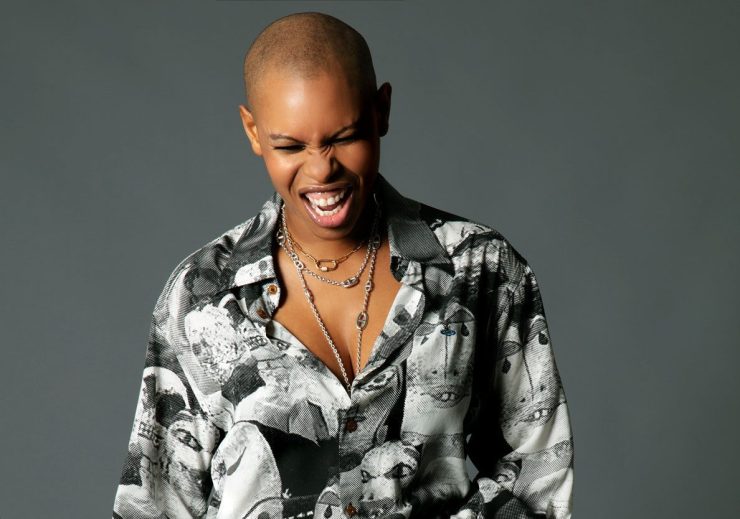
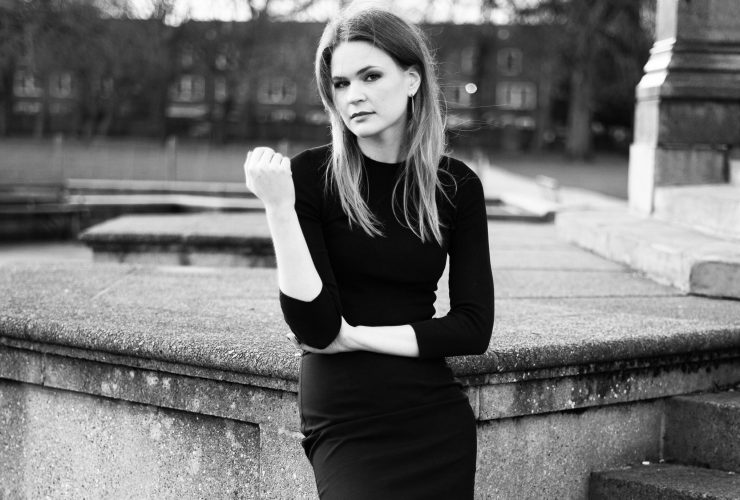
Having had an epic, inspirational career as front woman of Skunk Anansie, and as a solo artist, Skin has just released her autobiography It Takes Blood And Guts – named after the album track on 1995’s Paranoid & Sunburnt. Our Tash caught up with Skin and music journalist and writer, Lucy O’Brien, who co-wrote the book.

Not to fangirl too hard, but we love Skunk Anansie and your solo work at Get In Her Ears! Your music was so integrated into my teen year – growing up, throwing myself around to your songs, from my bedroom and the dance floor, to strutting down the street. But I’ll never forget when I found out that you were into women, and it just blowing my mind as a young gay kid who literally didn’t know anyone else who was gay. To see someone who I admired and respected being so open, it was incredible. 

You’ve made such a big impact on peoples’ lives by simply being you, openly yourself. And I mean that in all aspects of your identity, as a black gay British woman in music… And I wondered what that feels like for you?

Skin: Embarrassing! If I’m honest, I’m not very good at taking compliments. You just want to be yourself and that’s in your mind – this kind of drive to do what you want to do, the way you want to do it. And you don’t really think about everybody else and what everybody else is doing. For a lot of people in rock music, it’s angsty music, it’s aggressive music, it’s “I JUST WANNA BE ME” music. So, if I’m honest, I don’t really think about that a lot. I mean, it’s great when I hear your stories, it makes me think – “Ah that’s good, it’s worth all the struggles, that’s good.” But yet I’m still inside, a little bit timid and I get a little bit bashful. 

Let’s talk about ‘It Takes Blood and Guts’, co-written by both of you – how did this project come about, and how did you both end up working together?

Lucy: I first met Skin in about 1995 when Skunk Anansie were sent over to LA to film a scene in Catherine Bigelow’s film Strange Days and I was writing for Vox Magazine. I was commissioned to travel out with them and interview them and we spent three or four days in LA and it was brilliant, we got on really well. Got up to all sorts of mischief, and stayed friends! 

*Both laugh*

We didn’t throw the hotel TV out the window, but we did throw plant pots out the window, God knows why… We were young! Fast forward to two years ago and we were on the phone, and Skin was talking about how she’d been to see ‘I, Tina’ the musical in the West End and what an amazing story Tina Turner had had as a black woman in music. And I was thinking “bloody hell Skin, your story is really inspiring, you should tell your story.” It grew from that really, starting off as a series of conversations, then drafting chapters, sending them back and forth. Skin was in New York and I was here – we were doing everything through Skype, talking through all the stories, and it just grew from that. 

Skin: I think I went to your book launch, the Dusty Springfield one. I was round the corner. Did you say something to me then? I can’t remember…

Lucy: By then you had tentatively agreed. But I had to woo you a bit! The thought of writing a memoir is quite a scary thing – to put yourself out there and tell everyone about your life.

Skin: I mean, yeah, it’s a scary thing to talk about personal stuff for me because I’m quite a private person. But also, how else would we do this? I definitely wanted to co-write it and not have it written for me, and I think it took about three months before I started returning your emails.

*Lucy laughs*

I just felt I like I didn’t have anything to say – like “what am I going to talk about?” Then you sent me three chapters and I was like “ok, this is a start…” You wrote something and sent it to me, which was the catalyst. 

Lucy: Yeah, I gave Skin something to work with – drafted out the first section, sent it to her and naturally she then looked at it, and amended. 

Skin: Yeah, for me I needed a template because I’ve never written a book before and you start editing, and writing – that was the first explosion and it just got better and better from there. 
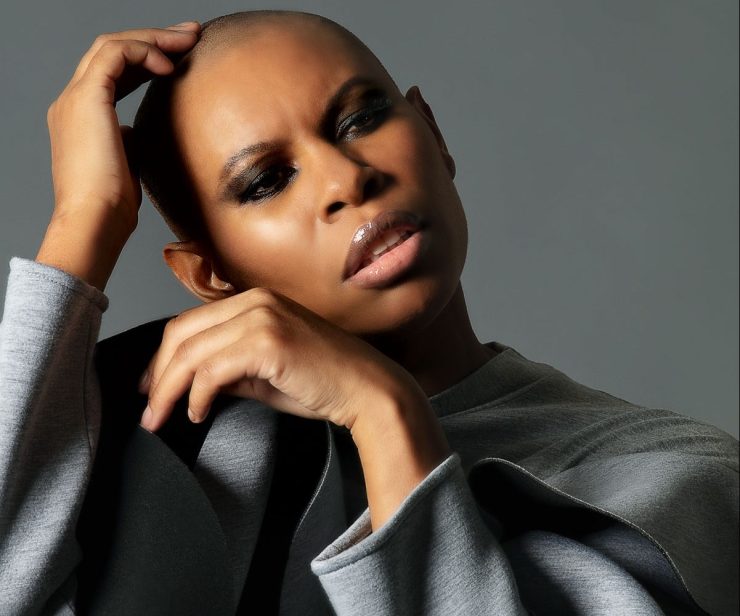
How does it feel to reflect back on the book with your perspective now, especially throughout the pandemic, where everyone is doing a lot of reflection? 

Skin: I have to say, sadly and happily, that the silver lining of Covid actually gave us the time that we needed to get into the book and I’m not sure if we would have had that time otherwise. I would have been on tour and it would probably have been a very different book. But it is a silver lining: I was in New York, Lucy was in London, and I was writing up to fourteen hours a day, especially nearing the end when we were editing. Literally writing until my brain stopped functioning and I don’t have that time normally. I think if I were to take something out of Covid that was positive, that would be it. 

The book spans your life, from growing up in Brixton, through to the present day – was there a particular period that was more difficult than others to write about? 

Skin: All of it! It’s one thing remembering things, but it’s another thing writing things down. What’s interesting in writing a book with Lucy is that your memory works in mysterious ways – you’ve remembered that thing over and over constantly for a long time. For example, I thought I went to university/polytechnic from 1989 to 1992, actually it was 1986 to 1989! It’s so funny how in your head you’ve lost years, so I wanted to write the book from my memories of what happened rather than trying to actually pinpoint what actually happened, which Lucy did very well. “Is that what actually happened, Skin? Is that the right date?”

Lucy was making sure everything was researched and correct. My role I guess was to write about how I remembered things and how I felt about things, especially grabbing stories from other people – other witnesses – which makes you have a much more wholesome version of what happened. Which is interesting when you start to dissect how memory works; memory doesn’t actually work in this lucid perfect way, it actually works in snapshots, snapshot after snapshot. When you are looking back at things you have to try and collate those snapshots in the right way. But really how you feel, or how you felt, is what’s more important. 

Reflecting back on the actual memory. But of course, every time you remember something you are just remembering the last time you remembered it?

Skin: Exactly, I remember how I felt. There are things that I remember very distinctly and very clearly because that is what you remember over and over again. Some things you sort of put aside, and some things you have to go back and remember. I would say that at this point in time nothing really hurts me in terms of memories because it’s all so far away. So far away that it doesn’t really re-hurt you, it doesn’t hurt you again. It hurts for five or ten years, then it’s over. Time is a healer, and that’s what makes things feel better.

Lucy: Skin, don’t you also think that also your music is a healer and it’s healed you, and other people when they go to your gigs? I thought Rochelle put it so well when she said you leave transformed because when you are in that live performance you give your all. Your songs are about that, there’s an element of catharsis isn’t there?

Skin: Yeah, when you write a song about something that happened it’s the same kind of snapshot. There are songs that are written about one specific thing, like ‘Hedonism’- it’s all about this one particular thing that happened, you know. But ‘Secretly’ isn’t: ‘Secretly’ is like a snapshot of lots of different people and things, it’s not about my personal experience because I never had an affair, but it’s about that personal experience of maybe being in that situation and what that would be like. 

What songwriting is eventually really about is writing a really fantastic song, and how you get to it is interesting and not interesting, but the result is much more interesting. How you get there is interesting for me and for some people, but the actual resulting song is more crucial and more important than anything else. 

Lucy, you have already touched on this – Skin, there is so much in your music and in your book about embracing your emotional reactions to things. Talking and shouting about what you are experiencing: from sexism, racism and homophobia, to general inequality. As Lucy’s mentioned, it’s so empowering and inspiring how you own those experiences, through your work and live performances. 

Watching you on stage performing there is so much passion, power – it’s infectious and it’s electrifying. How does it feel to perform in that way and have such a reaction from the crowd?

Skin: How does it feel? It feels fucking great! There are two sides of it. The first side is that you manage to pull it off, you manage to actually be on stage singing songs with a successful band which is really quite a difficult thing to do. There are only a few people in the world who actually manage to do it, and even less people who are able to make a career out of it – especially a lot of British bands from the ‘90s, there’s not very many.

So the first thing I think is that it feels really great and although a lot of the songs are difficult and sad, when I’m on stage I feel this is the best thing ever – this is all I’ve wanted to do and this is how I’ve wanted to do it. And how you want to do it is important. I was in lots of bands before I was in Skunk Anansie and I didn’t like it – I was back up singing, I was singing jazz and all of this stuff that was not what I wanted to do. You know the difference when you finally get there, you’re like “yes, I’m finally here.. in my own band singing songs that we’ve all written and it feels great.” You never really forget that feeling – it’s a real honour and a privilege to be in that position. We’re lucky that we can continue it. It feels wonderful when you get that circle of love from the audience and it spurs you on! 

But I can only imagine how that was met in the music industry run predominantly by middle-aged cis white straight men…? 

Skin: You know, I don’t really worry about them, I really don’t. I’ve never been concerned what people who didn’t like me were thinking and doing. The beautiful thing about music is that there are so many different types of artists and styles and genres, and different kinds of people, and I’m just not going to worry about the people who weren’t into it. So, I’m much more concerned with what we are doing and how we feel, and making ourselves happy. In turn, I know that people who see and understand it are going to get it and it’s great – we’re all in our bubble together. The white male industry is in every industry in the world: whatever you do in this world you are going to be caught by that circle, so why overly concern yourself with it and destroy your own creativity worrying about it? I think the most important thing is to do what you do to the best of your ability and do it really well and people will see it. They will get it, and if they don’t they don’t. None of my family like my music *laughs* – literally none of them – but if they don’t like it, they don’t like it!

You’ve got to have big broad shoulders and allow things to roll off you like water from a duck because it’s hard, and some of the insulting or negative things stick to you like velcro. I prefer to have a waterproof back than a velcro back, because you just get weighed down by it and none of it’s yours. Other people have stuck their stuff on you and you’ve let it stick – fucking weird analogy, I have no idea where I got that from! But that’s what it feels like; it’s not my problem, I’m about being happy and everyone else can join in. Our way of  beating that kind of mentality was being five or ten times better than everybody else. And stop seeing it as a competition – we talk about it when we talk about the NME tour in the book. If Cass did some of the things that 60 Ft Dolls did (it was this whole attitude of let’s smash things up, take fire extinguishers, take pictures of it all and write about it in the NME and it will look really good) – if Cass had done that he would be in prison, if I had done that I would be in prison. The 60 Ft Dolls can run around and smash things up and they’re just rock stars, rock stars being silly, being immature and behaving badly. If Cass and I did that we’d be criminals, and I think as a black person you have a strong sense of what you can and can’t get away with. Who is going to clean it up as well?! The NME isn’t going to clean it up, it’s going to be some underpaid worker who’s got five kids at home – as I say, rock vomit. 

Lucy: We did clean up the plant pots though!! We  picked up the earth and everything.

Skin: Not very rock ‘n’ roll is it Lucy? Smashing up these plant pots and then sweeping it all up, not very rock ‘n’ roll! 

Lucy: Going back to the question: what struck me in recent years is there’s been a lot on ‘90s and Britpop, and lots of books coming out with the usual suspects: Oasis, Blur, Elastica. Very white, very ‘cool Britannia’. And I started getting annoyed on behalf of my friend. I was thinking “Bloody hell, Skunk Anansie was such a big part of that ‘90s story…” And not just Skunk Anansie, but Drum ‘n’ Bass, Jungle, all the different kinds of music… The Prodigy. Lots of bands and different kinds of music has been overlooked in that mythologising of the ‘90s. I just felt there was a way in which the ‘90s music industry didn’t quite know how to deal with Skunk Anansie because you didn’t play the game in the usual way.

It’s like if some old record company guys don’t know how to market you, especially as a woman, they just kind of don’t market you. Well, don’t market you properly – if they can’t sell you in a way that’s obvious.

Skin: Yeah, if it involves them thinking outside the box, thinking differently. A lot of these guys aren’t trained to do that – they are trained for everything to be given to them on a tray, especially white males. They are trained for everything to be handed to them on a plate and they’ve just got to do their job and take the glory. And now it’s different, they’ve had to do the work, they’ve had to learn how to speak to different people of different genders, and work out how to deal with black artists more. In those days, there was none of that going on so they didn’t have to do the work. So, if they didn’t understand it and it made them feel awkward, it made them feel uncomfortable because it was taking away some of their power. They just didn’t know what to do, and that made them lose some of their masculinity or whatever, so they’d just ignore it or talk about it in negative ways. 

One of the things that those people say to me when they don’t understand me (they can’t criticise the songs, they can’t criticise the band because we’re amazing live, the songs are huge, they can’t criticise our look, so the ultimate diss is) is “I just don’t like her voice”…  Madonna doesn’t have the best voice in the world, everybody knows it but who cares, it’s the songs and the attitude and the dancing, and Madonna that counts. So, when they say “I don’t like her voice”, what they are saying to me is “I’m going to reject you because you make me feel uncomfortable and that makes me feel vulnerable and I don’t want to put any work in, so I’m just going to say – ‘I don’t like your voice’”!  

Like you said earlier, projecting all their issues, insecurities and putting it back onto you…

Skin: My analogy, which I have had in my head for over twenty five years now, is that what this racism, fascism, transphobia, sexism – all of these things – are about a group of people who have all these feelings of insecurity, vulnerability and losing confidence because they don’t know what to do or how to understand these other people. It’s outside their remit, so what they do is they take all that shit like a boulder and they hand it to these other people who then have to carry the weight, so they can continue being who they are. So I was just like, you know what? I’m going to give that straight back to you. I don’t have any chips on my shoulders, my shoulders are clear, and I’m happy, and if I carry the weight of your insecurities and you not being comfortable with me, I’m going to weigh myself down because, how many boulders can you carry? You can’t even carry one. 

You know, it’s not my problem. It’s not up to the black woman to help the white man feel good about the black woman’s music. It’s so important to not get weighed down. For example, if you are trans, you feel happy now; do not take on the weight of anyone else now that you feel happy, keep your shoulders free and clear. It’s a very simple way to be able to fight for the things that you want to fight for because you are coming from a place of confidence and strength.  

And I also think you have to give people time to get there, not everyone gets there as fast as we do. I think when it comes to gender politics, and things like Black Lives Matter and Me Too, not everybody is there yet. Not everyone is on social media, you also have to give people a minute to get there. 

Lucy: What’s interesting about this – what you’ve described there Skin – is the old music industry and the new music industry. The old music industry is like the boulder becoming a bit fossilised and actually starting to recede, and I’ve got a lot of hope post-lockdown that it’s going to be quite a different industry that is going to emerge from this: one with all the brilliant artists who are black, female, non-binary, trans. I think that is the future of the industry, and it’s creating a lot of new and really exciting music.

Definitely, we have this calling out culture, but a positive move to a calling in culture as well. Like you were saying Skin, not everyone is going to get there so quickly – if you feel able to explain and help them understand, that’s great. But not everyone feels able to do that of course.

Skin: Yeah, but I think it’s important to be able to call the right people out about the right things. Some of it just drives me fucking crazy – I think there is a certain section of people that are  really drunk with power, they’re drunk with the fact that they can call people out over a wrong comment. I think the trouble is that left wing people tend to call out each other because it’s easier; because it’s more effective; because you’ll see results. But really they should be calling out the fight against white supremacism – that’s what’s been allowed to ride out free, with very little push back because no-one wants to deal with them because they are so fucking toxic. It’s easier to deal with our own, easier to call out the person, in your house, than someone you don’t know.  

We can be our own worst enemies. I just want people to call people out for proper serious things, not irrelevant nonsensical things. Nobody cares if Adele just got a Jamaican bikini when you’ve got the Proud Boys who want all of us dead. Call the right people out, find the racism and the fascism – call them out, get their power taken away from them. Not our allies, people who might make mistakes or aren’t there yet: we need our allies, we need to be in this together. That’s my two pence worth. 

I think this speaks to a wider point on history, and what you were both saying earlier about telling Skin’s story. Within the queer community, especially the British queer community, so much of our history goes untold. Today is the first day of UK Black History Month, add into that the fact that so many women, so many black queer British women are written out of the past – both within music and outside of that. I think this book and this story is changing that, and uplifting these voices. 

Lucy: We were talking about this when discussing the clubs like Venus Rising and its documenting a whole part of lesbian history that could have just disappeared, fade away. Not just lesbian culture and gay culture,  but also in terms of black British culture and music, and it was like a big blossoming in so many different ways, yet it was still under the radar. And that’s what I’ve really enjoyed in doing the book with Skin; uncovering that history again. It was also nice because Skin gave me contact numbers for friends – the guys in the band, her mum and dad. That was really great. getting their stories and talking them over with Skin, working their way into the book.

Skin: I’m reading a book at the moment called Black British History and one of the things that it talks about in erasing black histories is the fact that black people came to England with the Romans – Afro Romans from Algeria, from Senegal, the Arabic Moors, They didn’t come as slaves, they came as Romans. So, we have this idea that black people didn’t arrive in England until the 1950s. It’s like “actually, no, we’ve been in this country from before the Vikings, from before a lot of white people can take their heritage back. Why does nobody know this?” Black history just gets erased.

That’s one thing that really struck a chord with me when Lucy was talking to me about the book – she’s right it wasn’t just all Britpop, there was Drum ‘n’ Bass, Hip Hop,  a massive black R&B scene. I do think you can draw a line from Goldie and his album Inner City Life all the way up to Stormzy – on the way there you will hit 2 Step, Drum ‘n’ Bass, Jungle, Dubstep, and then you get to Grime. All these  electronic styles of music – that’s British history, all British history, it could not have been made anywhere else. If I think about Drum ‘n’ Bass and the way that it’s impacted music today,  it’s so much more influential than anything Britpop did. Think about the samples in Dubstep and Jungle – music now is watered-down reggae. 

Lucy: It’s really part of pop music now.

And now it’s becoming known as Black British History but it’s so integral to all of British History and it shouldn’t be erased from that bigger story.

Skin: Yeah, when black people do something and it’s amazing, white people then do it and it becomes pop. If you listen to some of the music now, what’s pop now? It’s what black people have been doing, but they’ve put a white face on it and cleaned it up a bit and then they take it as their own. And that’s a typical thing that has happened in music throughout history – from the 1920s onwards. This is where the difference between appreciation and appropriation comes through. 

And finally, I have to ask, as we’re talking about music and blurring into today, what music are you both listening to at the moment?

Skin: I’ve been listening to loads of music for my new radio show with Absolute Radio, so I’ve been listening to Sevdaliza’s new album. Serpentwithfeet. He has a very strange voice, bit of an acquired taste – high vibrato.

Lucy: Yusu who does electronic music – Chinese-born, now based in Vancouver. I love her stuff. And there’s Landshapes whose new album is fantastic, it’s called Contact and they’ve really hit their stride. 

Massive thanks to Skin and Lucy for answering our questions, and for such an insightful chat!

It Takes Blood and Guts, by Skin and Lucy O’Brien, is out now  in hardback, audio and e-book, via Simon & Schuster UK.

Photo Credit: Marco Ovando
Premiere: Mags on Earth – ‘The Good Man In Town’

Mags On Earth has now shared the first song and video from her upcoming debut album For What Began By Putney Bridge. Following last year’s EP Girl In The City, it’s a visual album about the journey of coming to terms with the loss of a relationship.

Flowing with twinkling hooks and a majestic, ethereal splendour, new single ‘The Good Man In Town’ fuses together an eclectic range of influences to create a beautifully melancholic, electro-tinged soundscape. A song about coping with being left acknowledging an idealisation of a significant other, it’s propelled by the shimmering emotion of the vocals, alongside glitchy effects; a truly dreamy offering, oozing an eerie aura of resplendent mystery.

Produced by good friend and long time collaborator producer Jose Manuel Cubides, you can stream ‘The Good Man In Town’ below.


For What Began By Putney Bridge, the upcoming debut album from Mags On Earth, is out 16th October.

Mari Lane
@marimindles

Photo Credit: Fiona Regan

INTERVIEW: Rising Damp

A creator of brutal yet captivating soundscapes, Dublin based artist Rising Damp describes her recent EP, Petrol Factory, as “the quaking barrier between the end of the end of time and the end of the world.” Her dystopian visions are fleshed out with hypnotic electronics, dense drum beats and deadpan vocal delivery, and her live performances are a blend of improvised sounds and intriguing visuals.

We caught up with Rising Damp (aka Michelle Doyle) to talk about her recent EP, what she’s been creating during lockdown, and her upcoming contribution to A Litany Of Failures: Vol. III, an eclectic compilation album of music from grassroots Irish artists which is set for release on 2nd October…


Hello Michelle! Your EP Petrol Factory was recently featured in The Quietus’ 2020 ‘Albums Of The Year So Far‘ chart. What are you most proud of about this record?

I’m most proud about the journey of the album. Most songs were made in response to live gigs, and were never cast in stone, always improvised. Playing to bigger audiences forced me to have to professionalise my practice. It has made me think more visually about the stage show, creating of the band and a how video links this all.

Do you have a favourite track? If so, why?

My favourite song is ‘The Bank’. It was composed as part of an exhibition exploring subculture in Ireland. In Dublin, all the punks, skins and goths used to hangout at Central Bank, in the city centre. I was a late stage central banker and started hanging out as hoardings and gates went up to stop young people sitting on the steps. The Bank is a landmark of Irish modernism, but also where protests would start or finish and where Occupy was. The place is a site of both financial institution and protest. Everything that is done to Central Bank is to further the hostile architecture around it and create a fortress. The song is about building this space and the tension of holding onto it.


During lockdown you were recording shows for Dublin Digital Radio, playing tracks by Throbbing Gristle, Gazelle Twin & Nyx Drone Choir (all GIHE faves). Talk us through how you curated these shows and what you enjoyed most about recording them.

Often I curate a show by taking one theme and building a repository around it. For example, I did a vocal special about people using voice as an instrument without singing. Sometimes I approach the show as research for songwriting. Other times I just want to play some high energy music. I’m using Mixxx as I can’t access the DDR studio at the moment. I miss the cdjs and the tactile way they can make you create tunes on the fly.

How have you been coping during the ongoing Covid-19 pandemic generally? Any advice for similar bands or artists who may be struggling right now?

My own feeling has been to reassess what your output should be. I was working on a live band towards playing festivals, and arranging with them and practising twice a week. When lockdown came, we had to stop and only got back in in May. Now we are taking a break during phase 3 again. As we can’t play live gigs, we are going to get back in to the studio and re-record songs from Petrol Factory as a live band and put them out. We’re also aiming to create videos to accompany. My most prized possession as a teenager was music video VHS and DVDs. I especially liked Sonic Youth’s for a DIY video art aesthetic. So trying to use the time now as a time for writing, editing and creating visual art.

Something positive during this time is your contribution to A Litany Of Failures: Vol. III. Your single ‘Cannibal’ features on the record. Talk us through what the track’s about and why you chose it for the compilation.

‘Cannibal’ came from playing in clubs between DJs who were DJing “hard drum” music. Originally it began as a jam and the lyrics came from a time I had just been in the dentist for an emergency tooth pull. A wisdom tooth was tearing flesh in my mouth, and gave me a serious infection. I’d written part of the song and finished it during the first lockdown. It seemed to change and become about feeding off past experiences and thoughts while isolated. Vocals recorded at home during lockdown were always pulled back as I live in a large group house.

Besides your own track, do you have a favourite track or a favourite band that also features on the compilation?

I love the Grave Goods and Extravision songs. It’s a great release, I’m super excited to be on vinyl.

What else is on the horizon for Rising Damp during these “unprecedented” times?

I’m putting together applications for exhibition/gigs in galleries where I can design a set, lighting and objects. Working on videos and new songs always.

Finally, are there any bands or artists you’d like to give a shout out too?

One artist who has a huge output and amazing energy is God Knows. I’m so impressed by his ability to keep exploring sound and switch things up. I love that he’s super attentive to his scene, is the opposite to a gatekeeper and is constantly bringing people in from all around Ireland. He’s a total supporter and great musician.

I also urge everyone to checkout Fulacht Fiadh, Salac, Dylan Kerr, Lastminuteman and Maria Somerville. Right now I’m buzzing off listening to the labels Chicago Research and Detriti Records.

Thanks to Michelle for answering our questions.
Follow Rising Damp on bandcamp, Facebook and Instagram for more updates.

Kate Crudgington
@KCBobCut

INTERVIEW: CMAT

“I’d rather drink piss than drink Pepsi Max,” Irish pop-star CMAT candidly (and rightfully) declared on her Instagram Live broadcast a few weeks ago. The songwriter was half way through eating 80 pieces of popcorn chicken from KFC at the time, a challenge she committed to after over 100 of her fans liked a social media post saying she’d film the endeavor. She washed down her meal with cans of diet coke, whilst simultaneously being hilarious.

Whether it’s competitive eating or releasing highly relatable pop tunes, according to her Twitter account, everything CMAT does is “for the girls and the gays and that’s it.” Her latest single ‘I Wanna Be a Cowboy, Baby!’ epitomises this, with its blend of witty lyrics and country-tinged melancholy guitar riffs. To date, CMAT has shared three singles, ‘Another Day (kfc)’ – which inspired the popcorn chicken challenge – ‘Rodney’ – an ode to Rodney Dangerfield – and this most recent offering, which is currently sitting at no. 11 in the official Irish Homegrown Top 20 Chart.

We caught up with CMAT just before the release of her new single to talk about the popcorn chicken challenge, her love for Linda Nolan and Jedward, TikTok life, Jason Derulo and more…

Let’s start by talking about your greatest achievement to date: eating 80 pieces of KFC popcorn chicken in one sitting on Instagram Live. Is this a world record?

Every interview I do now is so funny because it starts with this question. I’m absolutely not mad about it at all, because I am ready and willing to talk about eating 80 pieces of popcorn chicken. I don’t recommend it to anyone.

My housemate was at work all day, and when she came in she saw the aftermath. People had been texting her about it saying “do you know what’s happening in your house right now?” and she came home and I was flat out on the bed. I had loads of friends texting me during the broadcast saying “please stop doing this to yourself, please make yourself vomit like in Roman times because this is going to damage you,” but I thought that was cheating. When I say I was in pain for the next two days, I mean it. It was just not right or healthy.

It was so silly, I saw the sign for [80 pieces of chicken] and I was like that’s so gas. I put up a post saying if I got 100 likes I would eat it live on Instagram, thinking that I wouldn’t actually have to do it. But I got the likes, and I was like “you bastards, you absolute bastards,” but I brought it on myself, and it was actually really fun. I’m going to do another one.

I don’t think it’s an actual world record unfortunately. I thought it was, and that I was great and that I was a legend, and then I looked up actual competitive eating and I was like “I’m never getting into that world”. There’s a woman in England who is like “I’m the number one female competitive eater and no-one can beat me.” She does this thing where she grabs fistfuls of stuff, pushes it into her mouth, and pushes it so it just jams down her throat. It’s terrifying. She does it once a week and I’m like…girl…

I’ve decided that the precedent I’ve set for myself is that I’ll only do it when I want to promote something, and that’s it.

I think that’s a good decision. Your songs – particularly ‘Another Day (kfc)’ – describe quite painful events like heartbreak and loneliness, but you filter them through a humourous lens. How do you manage to make music that’s genuinely funny but also on some level, cripplingly painful?

That’s good, that’s what I’m going for! I think this is a thing that I have going on in my own psychological make-up, which is that I like to take the big things and make them small. And I like to take the small things and make them big and dramatic. For me, KFC has Godly importance, but it’s also important to take heartbreak and love and pain, and bring that back to KFC, and that’s my general rule of thumb.

A lot of songwriting today, especially in the money-making beast that is chart pop, where you get a lot of “band aid” type songs where they’re like “we’re gonna sing a song about something really important and dramatic, and we’re gonna make it sounds really big and important and dramatic,” and fit this massive thing into a song without even trying to look at it through a more focused lens. I think that’s where it comes from. I think I also do it in life as well. A lot of people say I’m kind of like a man and I’m very bad at talking about things seriously. I can’t have a serious conversation about my emotions, or how I’m feeling. I’m just like “Yeah I’m absolutely fine, totally grand, no worries,” I do that all the time. I think that’s just carried on into the song writing, but I think that’s pretty transparent.

Something that is transparent is your love for American comedian Rodney Dangerfield on your second single ‘Rodney’. Do people know who he is when you’re referencing him? What inspired you to write a song about him?

I don’t know, and I didn’t really care whether people knew about him or not, because I LOVE him. What I said before about not being able to talk about emotions, he’s the exact same. Everything he does is super self deprecating, he hates himself, and everyone around him hates him. Everything is a one-liner, and he makes the big things really small.

I’ve wanted to write a song about him for ages, The “one-liner” in the song is “I’m the Rodney Dangerfield of your ex girlfriends,” because his catchphrase is “I don’t get no respect!” and I’m like “omg same I don’t get no respect either!” I didn’t just pick him for his catchphrase though, I picked him because he is very representative of me. He’s a one-liner comedian, and I’m a one-liner musician, because I’m all about the song, and the song being in its own kind of universe. That’s just my own personal take on it. I don’t like relying on an album, or a body of work to give context to individual pieces, I like the song to be the beginning and the end of it. I don’t think all art has to be that prescriptive though.

My only focus with my music career at the moment is just to keep writing really good songs that are really fleshed out. Not just for myself, but for other people that I’m working with too. All these little co-writing jobs that have been popping up since I started releasing my own music, I have real tunnel vision for whatever the song I’m working on is, I’m like “this has to be the best song in the world”. I don’t really care too much about an album at the moment. There’s a couple of concept projects that I’d like to work on, where it might be an EP or a collection of songs. I had an idea to work on just pure country music duets, do a “CMAT and friends” type thing, but that’s the only way I’d be able to think about it. I wouldn’t be able to put my own songs into a collection and be like “this is cohesive and they’re all related to each other,” because they don’t at all. It’ll have to be a greatest hits album. I don’t think people will mind.

We certainly wouldn’t mind a CMAT Greatest Hits record. Let’s talk about your recent online interactions with two iconic Irish pop groups – The Nolans & Jedward…

The Jedward thing I don’t think is that special to me as an individual. They seem to know who I am now, because they sent me this really specific DM where they called me a “glowing princess” and told me to keep doing what I was doing, they’re so funny. They do seem to be messaging everyone though, saying “keep on keeping on, love John and Edward.” I’m obsessed with them, I think they’re great.

They must be independent now, I don’t think they have any relations with a label because they’ve been so political and outspoken on really meaty topics, and doing an amazing job of it. It’s almost as if they’ve been waiting to do this for ages, and now they’ve been set free they’re like “fuck you Jim Corr!” and they’re dead right. Fuck Jim Corr, what the fuck is he doing? [Jim Corr is a member of the Irish folk/rock band The Corrs.] We can take the conspiracy theories thing, maybe he has weird opinions about the events of 9/11, but the far-right weird movements that are popping up over here in Ireland – Jim Corr is substantiating their views with his weird fucking twisted conspiracies, and also just not wearing a mask during a global pandemic. So for Jedward to be the ones stepping up to the plate and just telling him to go and fuck himself is so sweet. It’s exactly what you want from a popstar, in my opinion. I want to feel like someone has my back if they’re a popstar, and I feel like Jedward have everyone’s backs at the moment.

The Nolans thing is a much longer story…
I don’t think anyone is more important or less important in terms of the Irish musical pop canon, but, for me, I’ve been obsessed with The Nolans since I was about thirteen. My teenage years were spent watching re-runs of Old Grey Whistle Test and Top Of The Pops and BBC4 on the weekend until about 3am. I love music television and I love old music television. So from that era I’m obsessed with Bob Harris [presenter of Old Grey Whistle Test] and he loves country music. So Bob Harris and The Nolans are kind of the same level of importance for me in terms of music discovery. I was always tweeting about them, and then all of a sudden The Nolans just started seeing that happening and Linda Nolan started DMing me, and Maureen would retweet me when i released a single and be like “listen to this, it’s fantastic,” and I was like “what is going on?! This is the most exciting thing in the world! (for me, personally).”

Then, I found out that a lot of people in England really don’t like them, because they were much more famous in England and they have more negative associations over there? I dunno why, I guess people still have that mindset of “it’s manufactured pop music, therefore it’s bad.” I noticed that people were slagging them off, so I would get really defensive and be like “Fuck you! Don’t talk to The Nolans that way, how dare you!” They’re Queens. Linda sends me DMs from time to time just giving me advice about the music industry, and what to watch out for. She was also telling me that The Nolans were one of the first Irish acts to play the USSR, and they were having a party because it was Colleen’s 18th birthday. They party got shut down because guards came into their hotel room and held them up with AK47s and were like “you have to go to bed!” So they waited for an hour before sneaking back into each others rooms, and kept drinking for the rest of the night. It almost sounds made up, but I’ve actually read it in a couple of interviews with them, so it’s real! I’ve also read Linda’s autobiography and she mentions it in there too.

I also did a tweet that said “Who would win in a fight: Jedward or The Nolans?” and then Linda DMd me and was like “obviously we would. Lemmy from Motorhead used to be scared of us and said we were the most aggressive girls that he’d ever met,” and I was like…where am I? She’s a fucking legend and I love her so much. I’m also so receptive to anything she tells me, I’m just like “YES! TELL ME MORE!” I think I might be the number one Nolans fan in the world. Also, on a genuine level, I love their music.

A place where you seem to have a lot of fans is on TikTok…in Poland? Talk us through how that happened?

I don’t really understand how to work TikTok, I had to get my 8 year old cousin to show me how to do it. They showed me how to check which videos are using the same song, and the first time I checked there were 50 videos using ‘Another Day (KFC)’ as a background song, and they were all from Poland. I have no idea why. I get streaming stats on my phone from Spotify so I can see which countries stream me the most, and Poland is not up there. There’s this gardening lady who’s all about houseplants and my song is just playing in the background of all of her TikTok videos. It’s weird, I don’t really know how the internet works, it’s terrifying.

It is a bit, but lots of artists seem to get number one hits nowadays purely from uploading music to TikTok…

I think it’s fantastic in a way. Curtis Waters had a single that was out for about a year, and then people started using it on TikTok and he now has a career out of it. Listen, I know we all work with music labels and music promoters, but the rebel in me is obsessed with user-made, user-directed applications where it doesn’t matter what PR you’re doing, or what label you’re on, it all gets overtaken by people power or people who are just obsessed with things. But then it gets weird, because you get artists who are specifically making things for TikTok, and that’s grim. That’s no good at all. Jason Derulo is making minute and a half long songs, sampling songs that have already gone viral for other reasons, and you’re just like “Jason, stop. Cut it out.”

He does seem to have had a massive “comeback” recently actually, he is everywhere…

I think that’s because he was in Cats as well. I’ve seen the film five times. It’s horrible and gross and disgusting and I love it. His character in particular is one of the most offensive characters in it. He does have some really great songs in his back catalogue though, and he works with a co-writer a lot who I love called Lindy Robbins. I think Jason Derulo is just one of those people who’s like “I can do anything, and there’s no way you can stop me” and I kind of like that about him.

And he does have that unforgettable trademark of introducing himself in the beginning of all of his songs…

I actually like that about him! I like people who keep a thing like that going throughout their whole career. It’s a very country music type thing to do, where you have a tag somewhere in the song so that people know it’s you, but his is just his name.

Speaking of country music, your next single ‘I Wanna Be a Cowboy, Baby!’ is due out in a few days. Talk to us about what inspired it…

The visuals for the chorus are based around this VINE that was really popular from a couple of years ago of a load of guys drinking cans outside in a playground saying “I wanna be a cowboy baby!” I always loved it, but I had a bit of a deep thought about it which was like “that’s so indicative of male freedom in the world, that they can just do things like that”. The song is basically about a time when I was extremely, extremely isolated. It was the end of my time living in Manchester, I was living alone after going through a breakup, and the breakdown of the band that I had been in for years. Because I was in Manchester, I didn’t really have any friends there, so the old fashioned way of curing loneliness in the cowboy/western films is that you just go to a bar, hang around the bar, and wait for someone to be friends with you. I was like, “why can’t I just do that?” I feel like it’s this weird, unwritten thing where women are just afforded a significantly less amount of freedom than men in the world. I guess we’re addressing it now, but I legitimately want to be a cowboy. I want to walk around by myself, and have no fear and just have the freedom to go wherever I want and meet whoever I want without fear of literally getting murdered for doing it.

That’s kind of what the song is about, but it’s also about general urban isolation. It doesn’t have to just be about gender, I think there a lot of people out there who have really bad social anxiety, and it seems to be really quite relevant now because when you spend a significant period of time alone in your bedroom, or on your phone or your computer, it gets harder and harder to leave. I feel like that’s another thing I was trying to address, that the fear is put into you the more that you stay alone. It gets harder to leave, and it gets harder to become the cowboy. I don’t know what’s going to happen after this lifting of the lockdown, but I have friends who have got anxiety about things so badly that they still haven’t left the full lockdown mode. There are people who’ve been staying inside the whole time. It’s about a lot of things, but it’s mainly about the loneliness that comes with living in a capitalist, heteronormative, misogynist society.

We certainly resonate with that. Something a little more positive though, are there any bands or artists who you’d recommend we listen to right now?

Pillow Queens! There’s loads actually. Limoncello are a great folk act from Dublin, Maija Sofia released an amazing album last year. There’s an artist called Rachael Lavelle who’s released one single, but she’s incredible. There’s a rapper in Ireland at the moment called Denise Chaila who I’m obsessed with, there’s so many! Ailbhe Reddy is about to release an album and it’s fucking class.

There’s bountiful women in Ireland who are releasing really good music right now. I think women in Ireland have definitely had a bit of a rough time in the music industry, because I think there’s a notion of if you’re not a man with an acoustic guitar writing songs then nobody cares – but I am literally just a woman with an acoustic guitar, there’s basically no fucking difference. The perception is that the music is not authentic if it’s coming from a woman and she has even a lick of make-up on her face. So we’ve all been let loose and we’re doing what we should’ve been doing a few years ago. I love them all.

And we love you CMAT!
Follow her on bandcamp, Instagram, Spotify and Facebook for more updates.

Photo Credit: Sarah Doyle