WATCH: CMAT – ‘I Don’t Really Care For You’

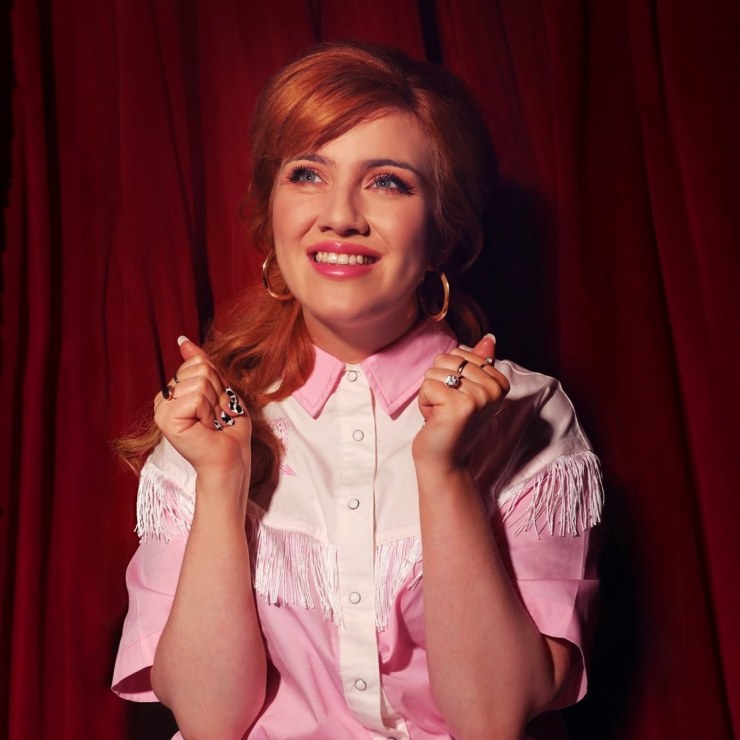
Inspired by Nestlé TV adverts, K-Pop music videos and the Oscar-nominated 70s film Five Easy Pieces, Irish pop icon CMAT has shared a new video to accompany her fourth single ‘I Don’t Really Care For You’. Adorned in a fabulous snake-skin blazer & skirt combo, the pop starlet performs an impressive and joyful dance routine opposite a mute bearded beauty who’s Instagram followers are set to double in the next few hours.

“The director Eilís approached me some time ago to make a music video, and I really wanted it to be for ‘I Don’t Really Care For You’ because I knew she would be able to capture the high energy mood of the song, and also we are into the same old, niche and ugly design stuff,” CMAT explains. “The dream sequence was inspired by a Nestle ad from the 1980s. The choreographer, Nick, made my dreams come true. I was like, ‘I want to dance like Blackpink, but I have absolutely no technical ability whatsoever.’ I think that much is evident in the video but we pulled it off!”

Full of CMAT’s lush, yearning vocals, relatable lyrics and Americana-tinged guitars, ‘I Don’t Really Care For You’ is a song that sees her swallow her pride and admit to sometimes being “the bigger dickhead in a relationship.” The witty set of accompanying visuals show CMAT at her finest, exuding a charisma that lights up the screen as she leans into “the Marian Keyes of it all.”

Watch the video for ‘I Don’t Really Care For You’ below.


Follow CMAT on bandcamp, Instagram, TwitterSpotifyFacebook 

Photo Credit: Sarah Doyle

Kate Crudgington
@KCBobCut

Track Of The Day: Maud – ‘Nobody’

A shadowy electro-pop gem that champions personal growth and self-autonomy, Norwegian producer & songwriter Maud has shared her latest single ‘Nobody’. Released via her own imprint Maud Records and taken from her upcoming album, the track smoulders with a hard earned confidence, reflected in Maud’s dense beats, moody synth textures and direct lyrics.

Maud aka Kristine Hoff grew up in a relatively isolated part of Northern Norway and studied electronic music at Kristiansand’s University of Agder. She channels her personal experiences into her distinctive, dark-pop sounds and has released a string of singles to date, including ‘Bad Things’ ‘Baby Girl’ and ‘Alone Together’ to date. On her latest track ‘Nobody’, Maud pushes her boundaries of self-acceptance and arrives at a place of inner strength.

“‘Nobody’ is vulnerable and intimate, but it also substantiates the chaos we may feel inside of us from time to time,” Maud explains. “Even though the song may come off as distressing, I want the listener to feel empowered and fearless when listening to it. ‘Nobody’ is the inner voice telling you to stay true to yourself and stop worrying about what others think.” Through her pulsing beats and commanding electronics, Maud has crafted a beguiling new soundscape that radiates with her new found confidence.

Listen to ‘Nobody’ below.

Follow Maud on Spotify, Instagram, Twitter & Facebook

Kate Crudgington
@KCBobCut

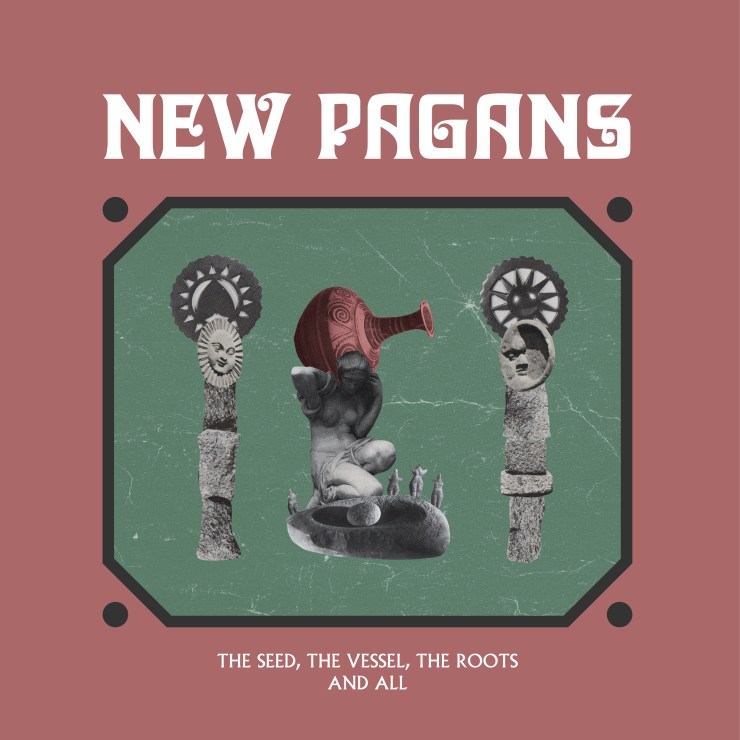
ALBUM: New Pagans – ‘The Seed, The Vessel, The Roots and All’

An intuitive rumination on the personal and the political, New Pagans’ debut album The Seed, The Vessel, The Roots and All is a gritty, deeply poetic consideration of inequality and social injustice. Released via Big Scary Monsters, the Belfast band’s first full length record dives into the paraphernalia surrounding religion, romance and women’s pain, and resurfaces having transformed these tired archetypes into aural talismans of strength and defiance.

Formed of Claire Miskimmin, Cahir O’Doherty, Conor McAuley and Lyndsey McDougall, New Pagans blend elements of post-punk, grunge and pop to explore internal & external conflict in their music. On their 2020 debut EP Glacial Erratic, the band crafted six abrasive, yet melodic tracks that have formed the foundation for their first full length record. With the addition of five new songs, The Seed, The Vessel, The Roots and All is a sharper, fully fleshed out vision that sees the band’s scathing, yet sensitive approach to song-writing flourish with defiant flair.

“The demand for perfection is disturbing,” sings vocalist Lyndsey on opener ‘It’s Darker’. Based on a real life confrontation she had at a party with an aggressive male musician, the track will strike a chord with anyone who has had their opinion publicly devalued. “Everyone’s looking and I’m upset” she reveals, working through the unsettling feeling of being spoken down to via relentless riffs and commanding percussion.

Informed by overheard conversations on a Belfast bus, ‘Charlie Has The Face Of a Saint’ flows with a stream-of-consciousness narrative. Throwaway phrases like “I’m doing my part” or “You’re easy to have when you’re down on your knees” float above the loud/quiet verse/chorus structure, with the conflicting voices unable to provide answers, they simply exist in the ether. The spiralling ‘I Could Die’ follows, with its manic riffs and urgent vocals, before the powerful ‘Bloody Soil’ breaks through. It feels like the soundtrack to a social uprising, with its intense riffs and chant-able chorus.

A tribute to the sister of artists William Butler and Jack Butler Yeats, ‘Lily Yeats’ is an aural confidence boost to the song’s protagonist, and to the women who need encouragement to step out of their brother’s shadows. “My daughter needs to know that she can do the same,” sings Lyndsey over erratic riffs and pummelling beats, before dual male/female vocals drive home the message that it’s everyone’s responsibility to amplify the volume of women’s stories.

Lyndsey’s sharp focus on weaving her own stories of pain, self-autonomy and motherhood with other historic female narratives is the lyrical lifeblood of the album. She allows her own joy, grief and frustration to run parallel to others, with the band’s driving rhythms creating a musical space for the resilience and strength of these women’s histories to shine through. Singles ‘Harbour’ and ‘Yellow Room’ epitomise this.

On ‘Harbour’, Lyndsey celebrates the joy and the struggle of her own pregnancy, while on ‘Yellow Room’ she unravels the conversations around women’s mental health and the lack of support that new mothers often receive. Inspired by Charlotte Perkins Gilman’s semi-autobiographical short-story The Yellow Wallpaper, ‘Yellow Room’ is a racing, urgent exploration of female isolation. Through the medium of Gilmans’ text, the band traverse these underlying doubts via crystalline vocals and charged, powerful riffs, challenging and updating the narrative around women’s mental health.

A humble, shimmering ode to the perseverance that’s needed to keep a long-term relationship going, the band’s treatment of love and its many faults on ‘Admire’ is far more romantic than any Valentine’s bouquet. “Let’s preserve our old ways / let’s preserve them always” sings Lyndsey, her voice floating above atmospheric guitars and swirling bass lines. The song builds to a cacophony of shoegaze noise, removing all sense of doubt about remaining faithful to your partner.

On ‘Ode To None’, the band rip up more outdated traditions of conventional storytelling, declaring “We’re the new pagans / dedicated to nurture”, while on the aspirational ‘Natural Beauty’, Lyndsey dismantles what it means to be an ambitious artist. It serves as a reminder to take your art seriously and to have confidence in your abilities, which is wonderfully expressed in the empowering sentiment: “It’s in her destiny to be better than you.”

A riotous, refreshing call for accountability and a take down of sexist double standards, ‘Christian Boys’ seethes with righteous fury against the unfair judgement of women who are involved with hypocritical men. Based on the experiences of Lyndsey’s friend – who had been having an affair with a Christian leader in Northern Ireland before his marriage to a virgin bride – The urgency in the repeated lyric “Christian boys are the worst I know / Christian girls should take it slow” exposes the hypocrisy underscoring the track’s narrative, calling out those who blame others for their own mistakes. It’s a powerful and necessary statement to close the record with.

On The Seed, The Vessel, The Roots and All, New Pagans uproot musical genres, challenge stunted narratives around social history, gender and relationships and manage to cultivate a powerful sonic resilience against them. It’s a hugely refreshing and impressive album that deserves all of the praise it’s received so far.

Order your copy of The Seed, The Vessel, The Roots and All here.

Follow New Pagans on bandcampTwitterInstagramFacebook & Spotify

Kate Crudgington
@KCBobCut

FIVE FAVOURITES: Phé

Inspired by the unpredictability of modern life and the captivating electronic sounds of La Roux and New Order, Yorkshire-born, South London-based songwriter & producer Phé has recently shared her new EP, Moodboard. Blending her lush vocals with catchy beats, she’s created a collection of alt-pop soundscapes that meander through themes of self-acceptance and personal growth.

We think one of the best ways to get to know an artist is by asking what music inspired them to write in the first place. We caught up with Phé to ask her about her “Five Favourites” – five songs that have inspired the music on her new EP. Check out her choices below and scroll down to listen to her Moodboard at the end of this post.

1. The Strokes – ‘Soma’
It was difficult to pick a favourite Strokes song, most of their lyrics resonate with me, but this one stands out at the moment because I can’t seem to stop playing it. I appreciate songwriters who are aware that they are flawed, especially those who don’t sugar-coat it in their lyrics. Whether they aim to resolve their flaws or not isn’t necessarily what’s important, but it’s their desire to creatively articulate what their weaknesses are in a way that people can relate to that I find inspiring. There’s so much passion and anger in Julian Casablancas’ voice and for some reason whenever I hear it I feel so overwhelmed that I well up, no matter how many times I listen to it. It could be something to do with nostalgia because they narrated most of my childhood, or maybe it’s the fact you can tell there’s so much pain behind it, but the way Casablancas sings just feels incredibly authentic.

2. The Cure – ‘Just Like Heaven’
Love songs are wonderful things and I find it so interesting how timeless they can become through people’s personal experiences of them. This is one of my favourites of all time and I always tend to re-visit it when I’m busy romanticizing my own life in short bursts. Writing songs is such a personal experience, and it’s difficult to not recoil in despair when you listen back to what you’ve made sometimes, usually because you know you’re listening to how you actually feel rather than distracting yourself at all costs. ‘Just Like Heaven’ reminds me that it’s nothing to be ashamed of to express how you feel in your lyrics. It’s easy to get in your own head when you’re working on a project and I often forget that when someone listens to my music they’ll be having their own completely unique emotional response and I find that pretty comforting.

3. La Roux – ‘Let Me Down Gently’
It would have felt like one big whopping lie if I didn’t add La Roux as one of the main influences for this EP. Her approach to song-writing has been a real inspiration since I stopped writing songs with a guitar and moved towards a more electronic sound. I found it quite difficult to establish the kind of music I wanted to create at first and always felt like I was restricting myself, and the fact I wasn’t great at guitar probably didn’t help. Once I started using synths and making beats it pushed me in the direction that I’d been trying to go in, and it finally started to sound like my lyrics were matching the instrumentation. I find her style effortless with how she manages to be completely raw and direct in her lyrics, at times verging on cynical, alongside these really catchy synth melodies that are so simple but so effective. She manages to paint a world that is colourfully futuristic whilst staying honest with herself and the people around her, and that’s is the kind of world I want to live in.

4. Orange Juice – ‘Rip It Up’
I think anyone who makes music finds it incredibly frustrating sometimes because it’s a challenge to articulate yourself when there’s so many different ways you could do it. I didn’t really have much of an idea where I was going to go stylistically with this EP at first, but I was listening to a lot of folk and 80’s music at the time I was writing it and I guess that guided me through. As frustrating as it is, I also love the trial and error process of song-writing, and I took on the whole ripping-it-up-and-starting-again concept quite seriously because that’s what I did half-way through, and I’m glad I did because once I started re-writing it that’s when my thoughts started to come together and I had more of an idea of what I needed to say and how I wanted to say it.

5. Sudan Archives – ‘Come Meh Way’
Sometime last year I was listening to Sudan Archives on a walk round the moors in Yorkshire and I thought “God, I would kill to be able to play like that.” I ran home and dusted off my Mum’s old violin that was hibernating in the attic and started to teach myself. I’ve never heard anyone play the violin like Brittney Denise Parks, something about it is so haunting and atmospheric and adds a dimension to her songs that makes them so unique, and every time I listen to her I feel so moved. I love how her lyrics and violin seem to speak to each-other, and in this track her lyrics are rounded and gentle compared to this piercing violin arrangement – together it just produces such a mesmerizing sound and it definitely influenced elements of Moodboard.

Thanks to Phé for sharing her favourites with us!
Listen to Phé’s Moodboard EP below.

Photo Credit: Anna Rakhvalova